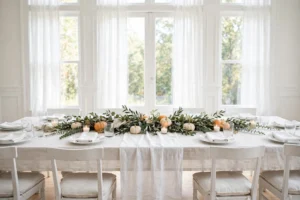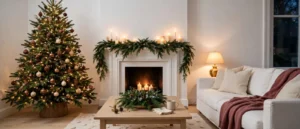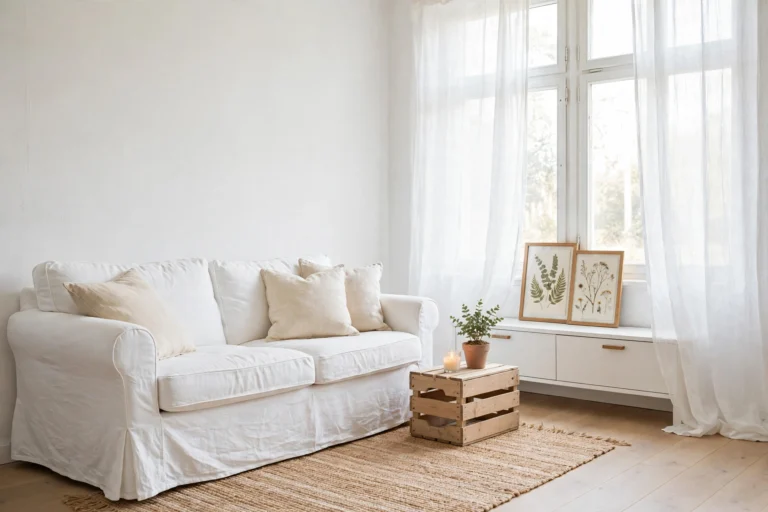
Winter Dining Room Decor Ideas: 16 That Make Every Dinner Feel Warmer
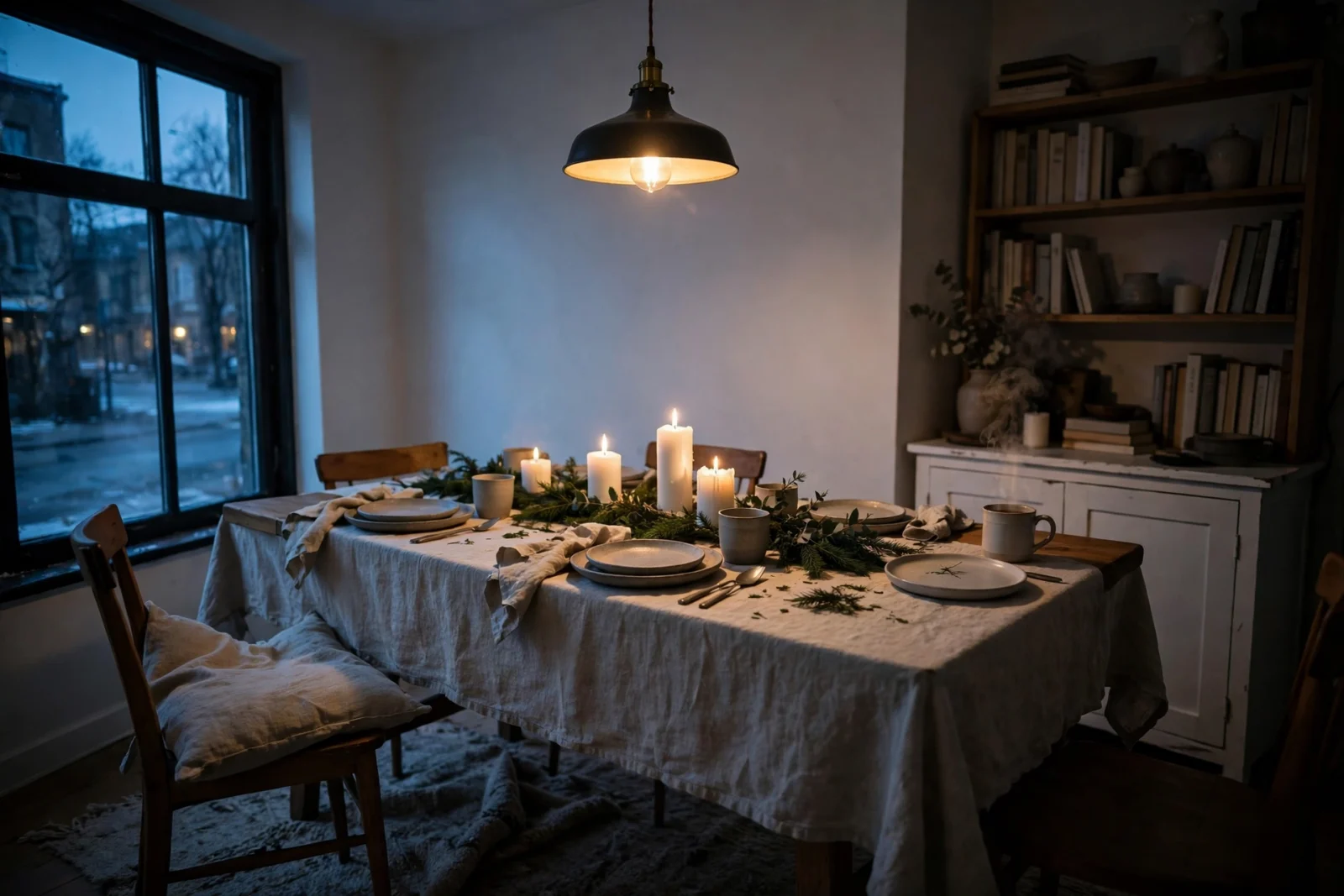
The short answer: strip the Christmas red, keep the plain greenery and the warm lights, and dress the table in layers — a heavy linen cloth, a wool runner, candles at three heights and one calm colour. The whole reset costs under $90 and one weekend afternoon, and the room stays warm and usable until spring.
Key Takeaways
- Winter dining is about light and layers, not ornaments: low warm light plus linen, wool and wood does the whole job.
- Do the Christmas test first — anything that only makes sense in December goes back in its box.
- Candles at three heights beat one centrepiece every time, because the light spreads across the whole table.
- Keep the table usable between meals: a bare wood table or a plain cloth, never a display nobody can eat on.
- One calm colour (pale blue-grey) repeated in three places is the whole palette — the rest is white, oatmeal and wood.
Pick an Idea by Room and Time
| Idea | Where | Time | What you need |
|---|---|---|---|
| Christmas or winter test | Whole room | ~20 minutes | One labelled box |
| Swap the table linen | Table | ~10 minutes | Linen cloth + napkins, $20–30 |
| Bare wood table | Table | None | A stoneware bowl |
| Restyle the sideboard | Sideboard | ~20 minutes | Evergreen sprigs, candles |
| Wool runner | Table centre | ~5 minutes | Wool runner, $15–25 |
| Sheepskins on chairs | Chairs | ~10 minutes | 2 sheepskins, $20–30 |
| Warm rug | Floor | ~30 minutes | Low-pile rug, $35–50 |
| Winter drinks station | Sideboard | ~15 minutes | Kettle, mugs, jars |
| Candles at three heights | Table centre | ~10 minutes | Candles + holders, $8–15 |
| Dim the pendant | Ceiling light | ~15 minutes | Warm bulbs + dimmer, $10–15 |
| Amber tealights | Windowsill | ~5 minutes | Amber holders, $6–10 |
| Lantern centrepiece | Table centre | ~5 minutes | Lantern + candle, $12–18 |
| Bare branches | Empty corner | ~20 minutes | Tall vase + branches |
| Citrus bowl | Table centre | ~5 minutes | Bowl + citrus, $5–8 |
| Layered place settings | Each place | ~10 minutes | Chargers + napkins, $15–25 |
| Basket of throws | By the table | ~10 minutes | Basket + throws you own |
If you’re looking for winter dining room decor ideas that work after Christmas is packed away — not another December list — you’re in the right place. The tree comes down, the red goes back in its box, and suddenly the dining room looks… bare. But winter isn’t over: January, February and most of March are still cold, dark by five, and made for long slow dinners — and the dining room is where you feel it most, because it’s the room where the whole household actually sits down together. The good news is you don’t need to buy a whole new season of decor. The best winter dining rooms are built the HomelyNook way: a white base, plenty of texture, warm low light, and just one soft seasonal colour — this year, a pale blue-grey that feels like a snowy morning. Most of it you already own, nothing here needs a big shop, and every single idea still leaves the table usable, because a dining table still has to hold real dinners. Here are 16 ideas that actually work in a real dining room, in a real winter: warm, doable, and cheap enough to try this weekend. Our full winter living room decor ideas guide dresses the rest of the house the same way, if the dining room makes you want the whole evening to match.
Some links in this guide may earn us a small commission at no extra cost to you — it keeps the warm lights on.
Winter rules — read this first, it saves every idea below.
Three rules for the whole article: 1. One palette only. White, oatmeal, pale blue-grey and natural wood — pick those four and repeat them from the tablecloth to the last candle, so the room reads as one calm winter instead of sixteen different ones. 2. Keep the Christmas test. Hold up anything before it stays out and ask: would this look right on a snowy evening in February? If it only makes sense in December, it goes back in the box. 3. Light before stuff. A dining room with candles at three heights and nothing new still feels like winter; a room full of new decorations under one cold ceiling light does not.
How we test: every idea below was tried at a real dinner table first — we ate under the pendant, moved the chairs, lit the candles at four o’clock and timed how long the room stayed warm — before it made this list.
Part 1 — The Reset: Christmas Comes Down
The reset is the first four ideas, and it costs nothing — it is just deciding what stays and what goes. Do this part first, on the day the tree comes down, and the rest of the article becomes easy.
1. Run the “Christmas or Winter?” Test on the Dining Room
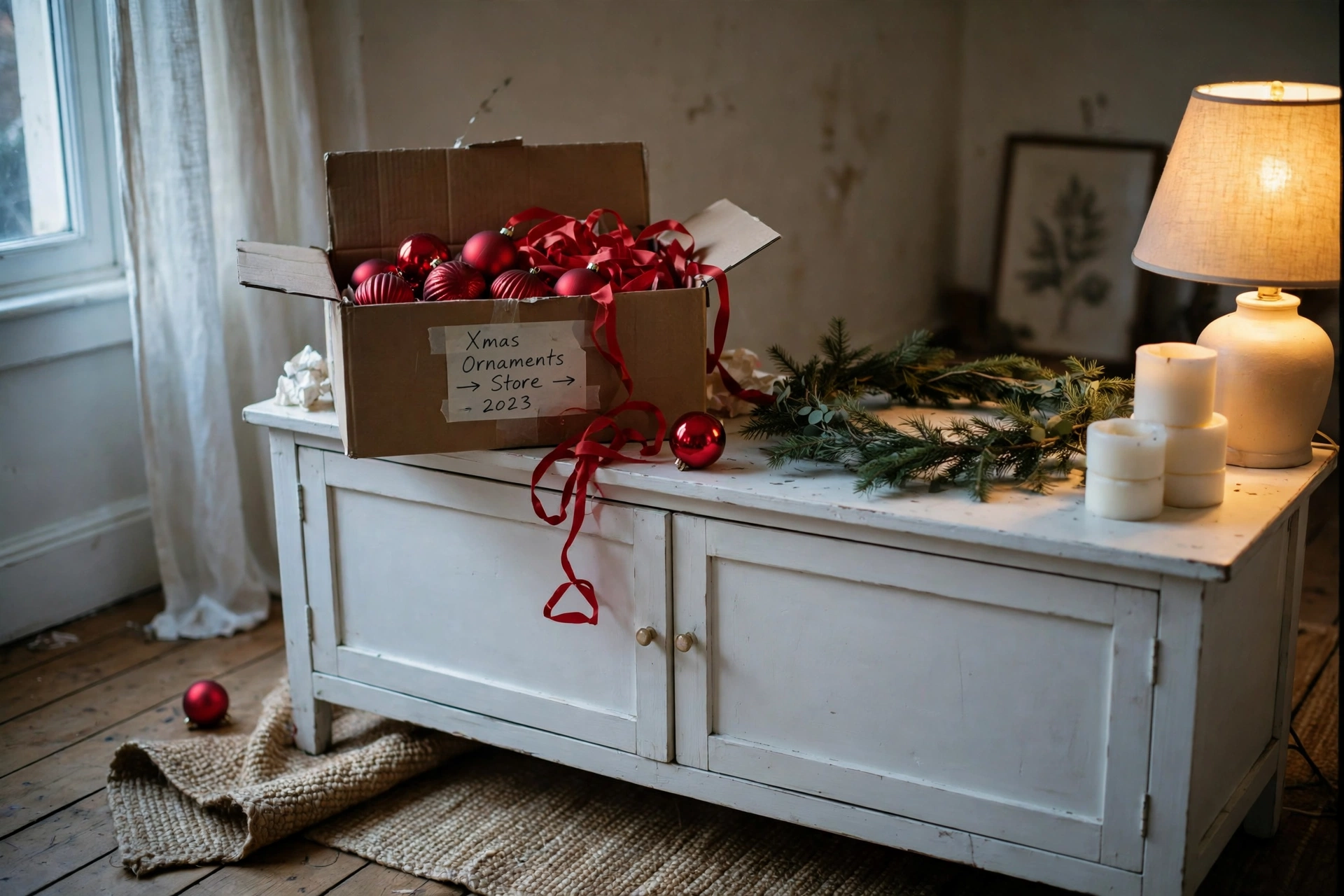
Hold up every decoration in the dining room and ask one question: would this look right on a snowy evening in February? Red ribbon, ornaments, stockings and anything with Santa on it only make sense in December, so they go straight into a labelled box. Plain evergreen garland, pinecones, white candles, warm-white lights and wool throws belong to cold weather itself, so they stay right where they are. We tried this the day our own tree came down, and the dining room test took about twenty minutes — one box for December, everything else already winter. The test works because it stops the “maybe keep it” pile: once something fails the February question there is nothing left to argue about, and what survives the test is your winter decor already, bought and paid for. Do the sideboard and the windowsill in the same pass, because a room with one red corner left reads as December all over again.
You need: one labelled box and a free evening. Time: ~20 minutes.
2. Swap Red Table Linen for Oatmeal, Cream and Pale Blue-Grey
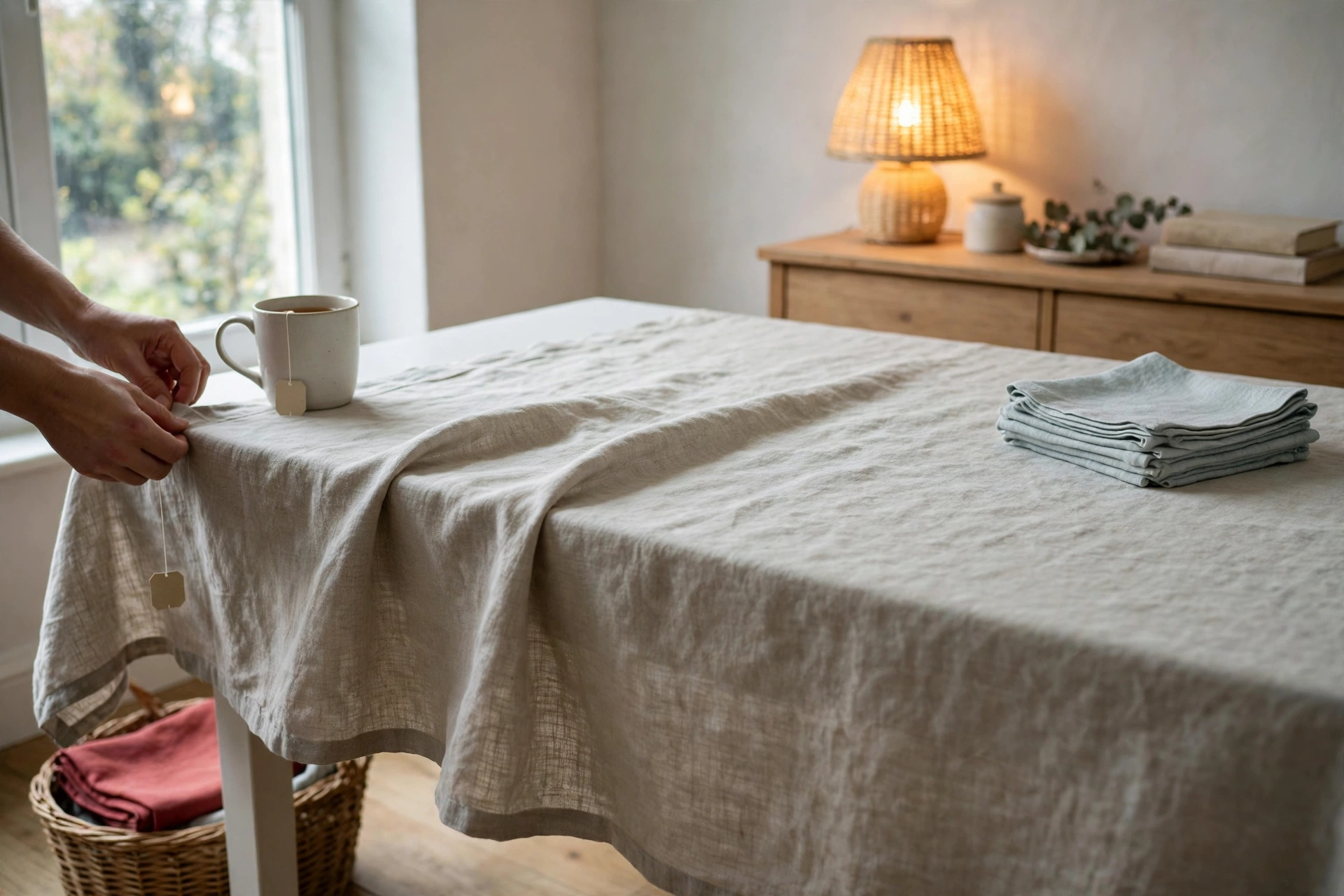
Red belongs to December; January belongs to oatmeal, cream and one pale blue-grey. Swap the tablecloth and the napkins — not the whole table, just the cloth and the folded squares — and the whole room changes in ten minutes. A washed linen tablecloth costs about $20–30, which is a third of what a new table setting costs, and the red cloth goes into a basket for next December instead of the bin. Pick one winter colour and repeat it in three places: a pale blue-grey napkin at each place, a blue-grey book spine on the sideboard, a small blue-grey bowl on the windowsill. The repeat works because the eye reads the colour three times and decides the room was planned, not assembled by accident — and our Christmas table decor ideas guide shows where all of it started, if you want to see the December version of this same table.
You need: one washed linen tablecloth + 4–6 napkins, about $20–30. Time: ~10 minutes.
3. Leave the Table Bare Wood Between Meals
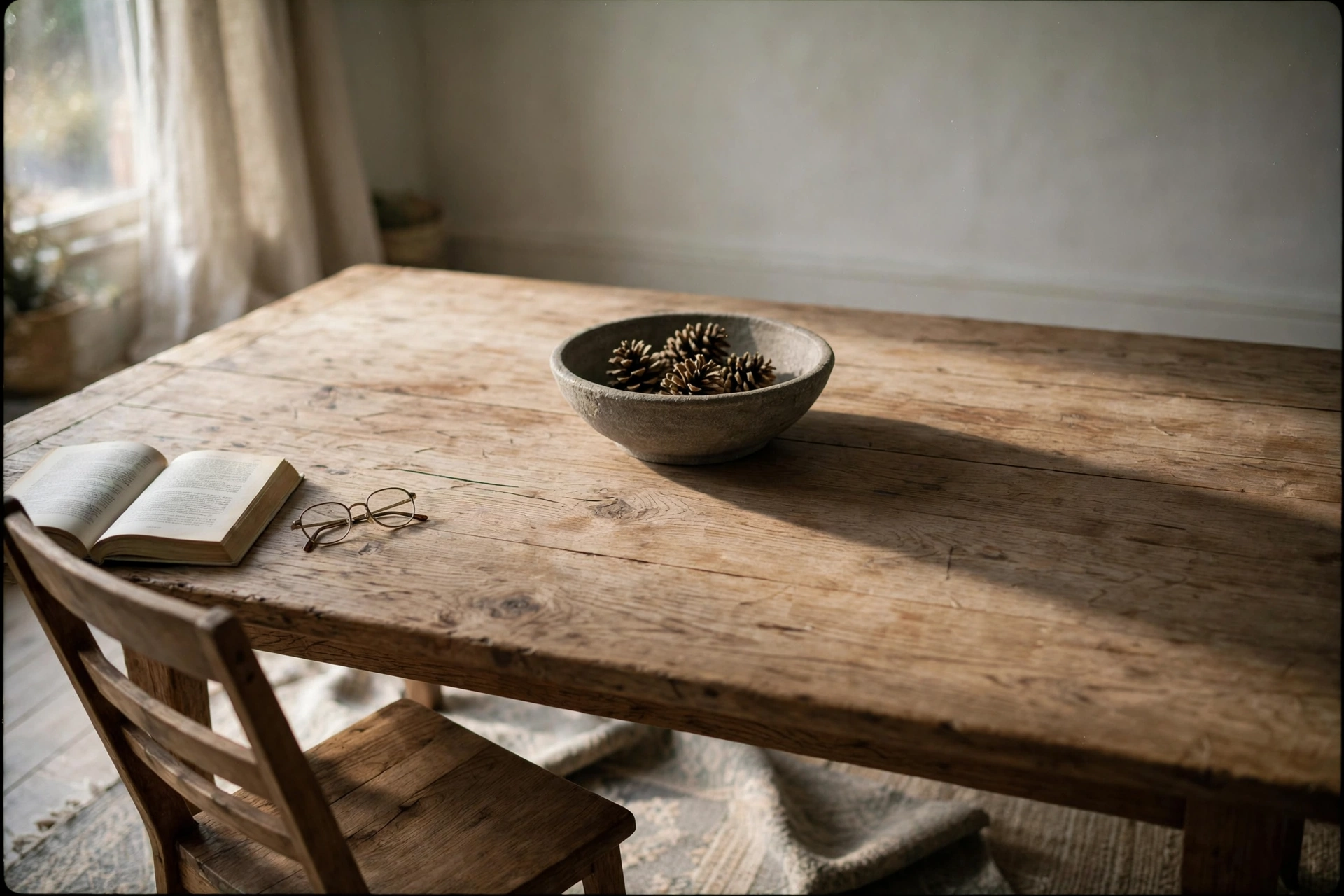
A dining table that stays dressed all day is a display, not a table — and in winter, when everyone eats at home more, the table needs to work harder than ever. Strip the cloth between meals and let the bare wood show: one low stoneware bowl in the centre with a few pinecones, nothing else, and the room instantly feels calmer and bigger. The bare table works because wood is already a winter material — warm to the touch, matte, honest — and it makes the dressed-up dinner table feel like an occasion instead of the everyday. Keep the cloth folded on the sideboard so setting the table takes two minutes, not a hunt through the linen cupboard, and wipe the wood down once a day, because a bare table shows every ring and crumb. If the wood is scratched, that is the point: a family table with marks on it looks lived-in, not damaged.
You need: one low stoneware bowl + a few pinecones. Time: none — it is the absence of a job.
4. Restyle the Sideboard Without the Christmas
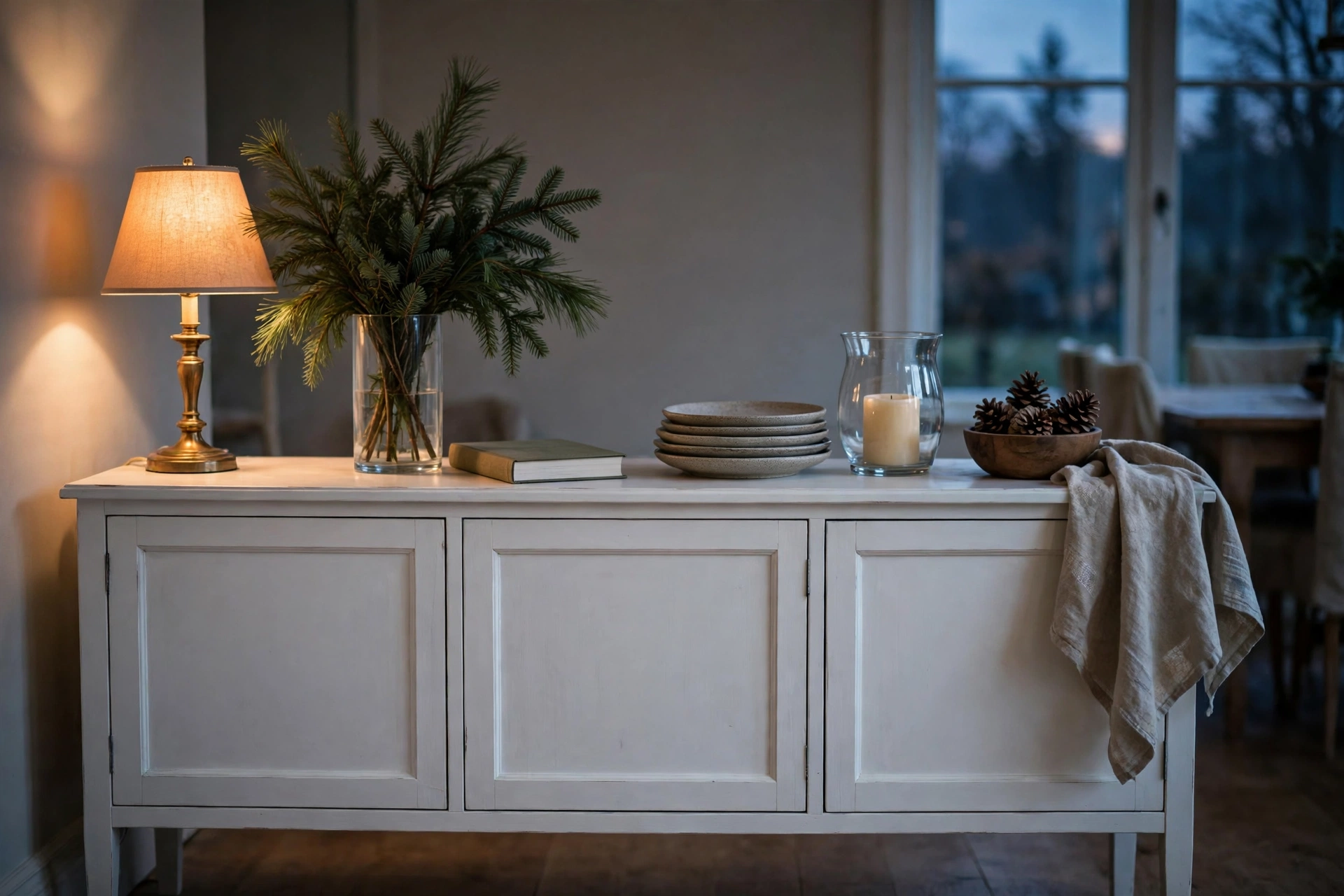
The sideboard is the dining room’s second table, and after Christmas it is usually the messiest surface in the house — a graveyard of cards, ribbon and one lost bauble. Clear it completely, wipe it down, and put back only four things: evergreen sprigs in a tall glass vase, a stack of everyday stoneware plates, one cream pillar candle in a glass hurricane, and a small wooden bowl of pinecones. Four things work because the sideboard is seen from the table at every meal, and a surface with four calm objects reads as styled while a surface with twelve reads as storage — and the eye needs somewhere quiet to rest between courses. Leave the middle of the sideboard empty on purpose, because that empty space is where the serving dishes land at dinner, and a sideboard that cannot hold the food is a sideboard that fails at its one job.
You need: a vase, evergreen sprigs, a stack of plates, one candle, a small bowl. Time: ~20 minutes.
Part 2 — Warmth You Can Touch
Winter is felt before it is seen. If the dining room looks warm but the chairs feel cold and the floor bites bare feet, nobody lingers over dinner — so this part is all texture, and it is the part your hands and feet will thank you for.
5. Lay a Wool Runner Down the Table
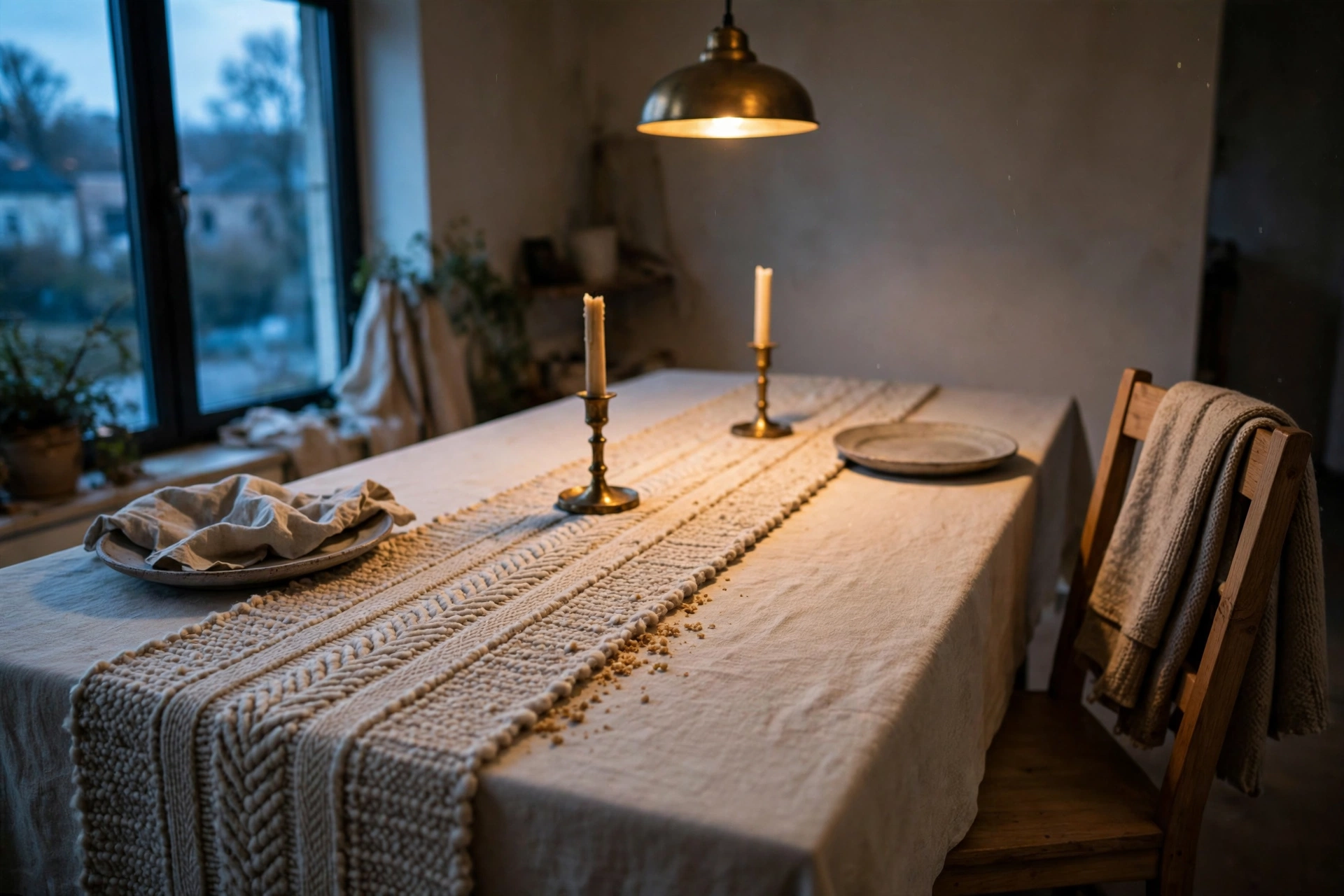
A runner does for a dining table what a rug does for a floor: it gives the eye a centre line and the hands something warm to touch. Lay a woven wool runner in oatmeal down the full length of the table, over the linen cloth or straight on the wood, leaving about 12 inches of bare table at each end so the runner never fights the place settings. A runner about 14 inches wide and 6 inches longer than the table on each side is the right size for most tables — too narrow and it looks like a ribbon, too wide and the plates sit on it. The runner works because it turns the middle of the table into a stage: candles, greenery and the serving dishes all sit on one warm band instead of sliding around on bare cloth, and the wool softens every clink of a plate. Choose a washable weave, because a table runner in winter gets gravy on it — that is not a flaw, that is the runner doing its job.
You need: one wool runner, about 14 in wide, $15–25. Time: ~5 minutes.
6. Warm the Chairs with Sheepskins and Cushions
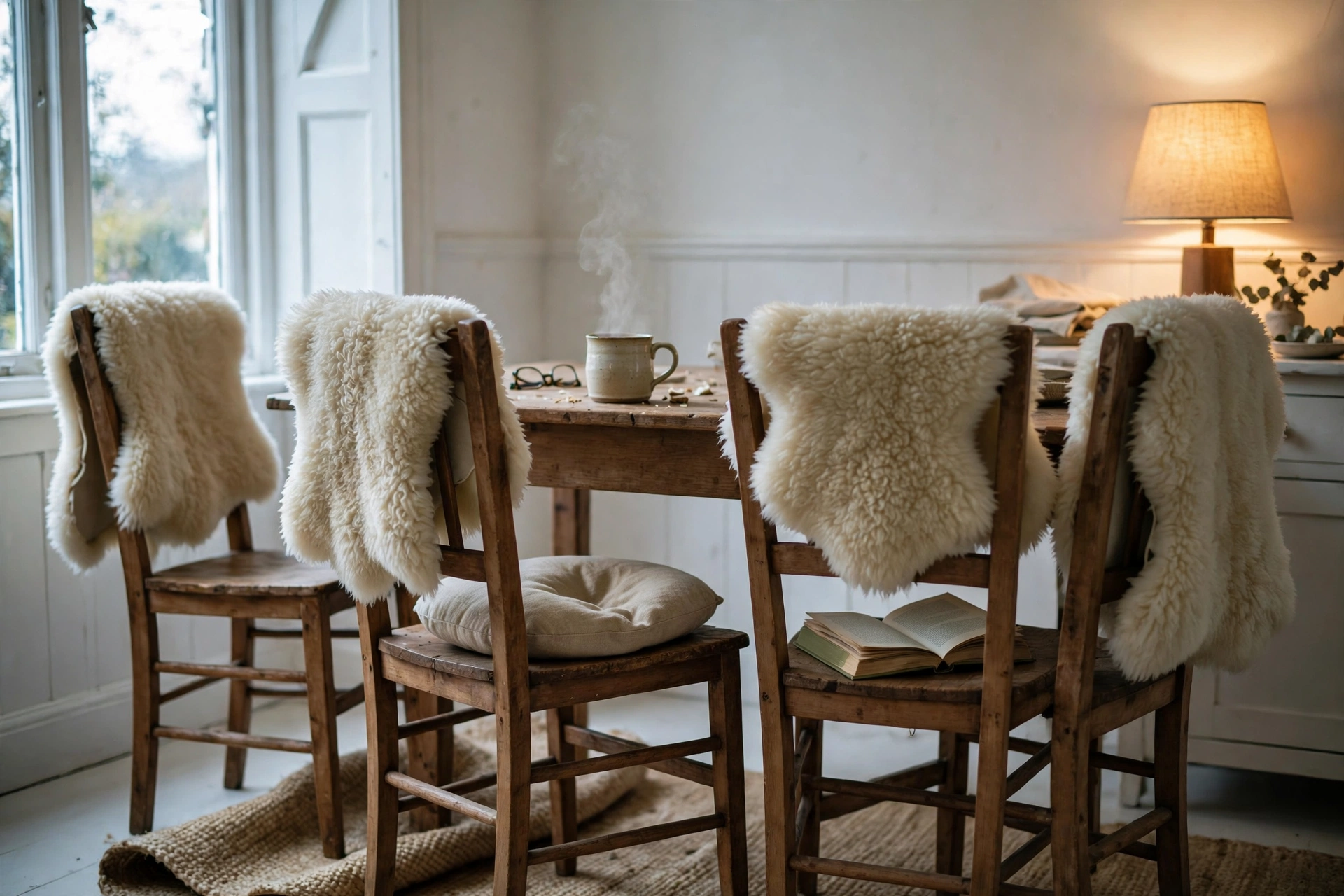
Wooden dining chairs look beautiful and feel freezing in January, which is why dinners get shorter as the nights get colder. Drape a cream faux sheepskin over the back of each chair — or just the two at the ends of the table, where the hosts sit longest — and add one small oatmeal cushion with a tie so it never slides off. Two sheepskins cost about $20–30, and they change the whole evening, because a warm back is what keeps people at the table for the second cup of tea instead of drifting to the sofa. The sheepskin works because it insulates exactly where the body touches the chair, and it looks like a treat rather than a repair — nobody sees a cold chair, they see a chair someone cared about. Keep one spare sheepskin folded on the sideboard for the guest who always arrives cold, and shake the skins outside once a week so they stay fluffy.
You need: 2 faux sheepskins + 2 tie-on cushions, $20–30. Time: ~10 minutes.
7. Ground the Table with a Warm Low-Pile Rug
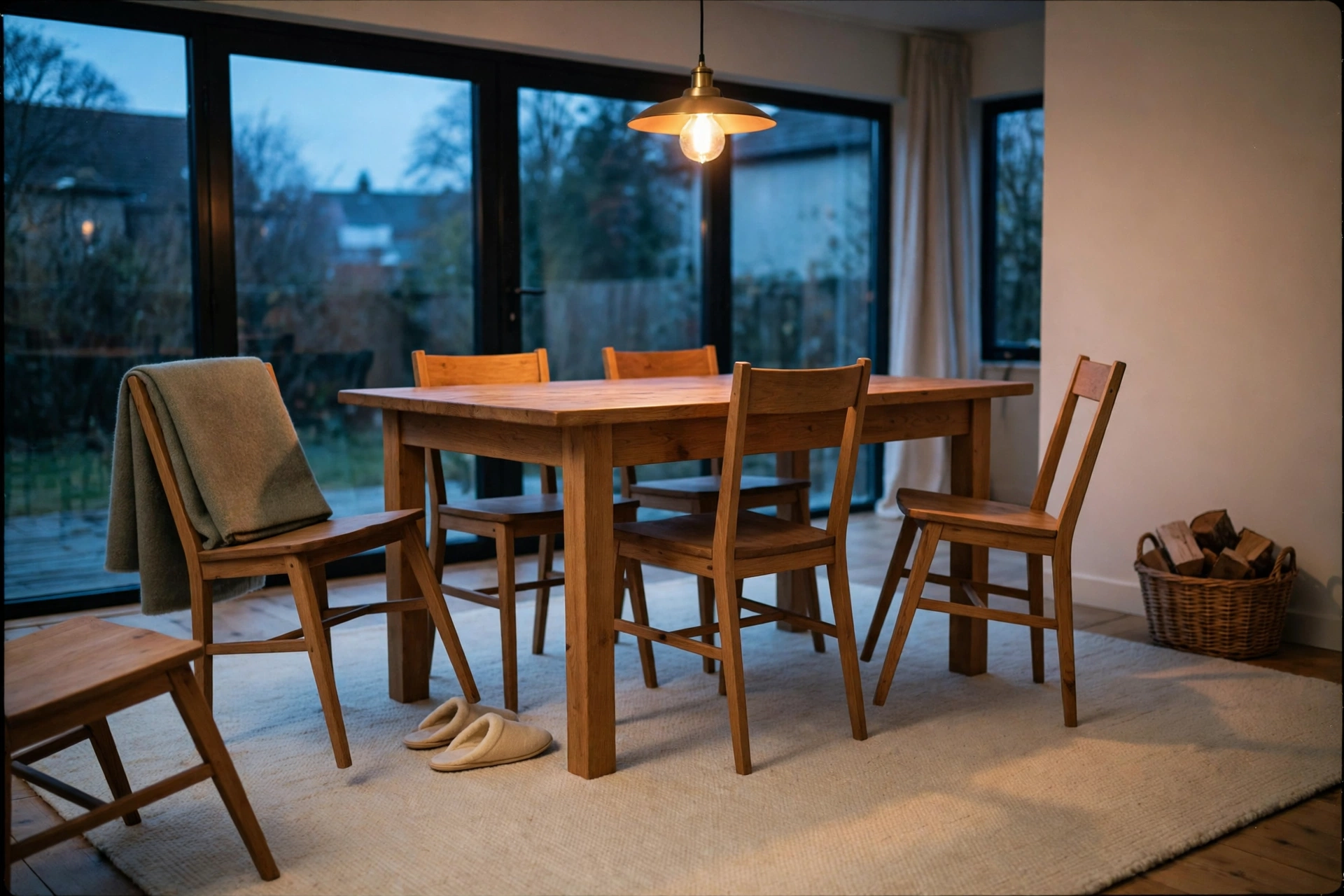
Cold floors undo every warm thing above them, so warm the floor first. Lay one low-pile wool rug under the dining table — a rug about 24 inches wider than the table on every side, so the chairs still sit on it when they are pulled out — and add a rug pad underneath so it never slips when someone pushes back from the table. A low pile matters because a thick rug under a dining table traps crumbs and chair legs, while a low pile brushes clean in two minutes and lets the chairs roll out smoothly. The rug works because feet land on wool instead of cold wood or tile at every meal, and the whole room feels warmer without touching the thermostat — it is the single biggest warmth gain in this article for the money. We tried this on the coldest week of January, and the difference was immediate: the floor stopped being the thing everyone noticed first, and dinners got longer by half an hour.
You need: one low-pile rug (table + 24 in each side) + rug pad, $35–50. Time: ~30 minutes.
8. Set Up a Winter Drinks Station on the Sideboard
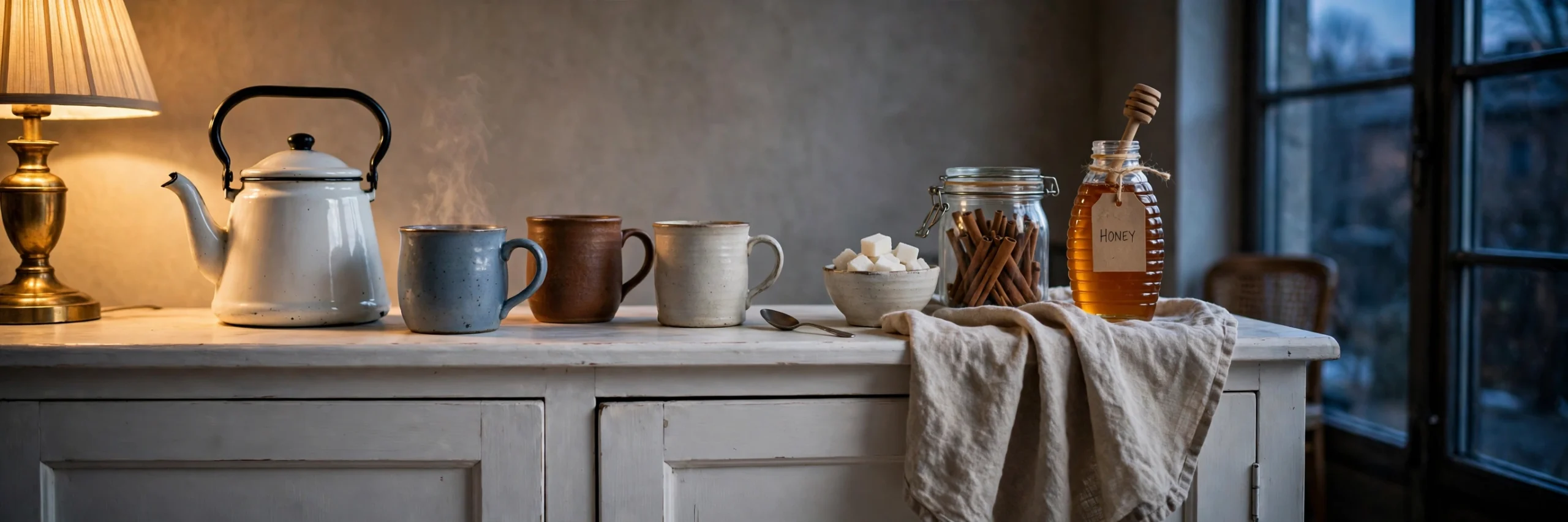
Give the sideboard a real winter job: holding the drinks. Put the kettle at one end, three mismatched mugs in a row, a glass jar of cinnamon sticks, a small bowl of sugar cubes and a bottle of honey — and leave a tea towel draped over the edge so the station always looks in use, not on display. The station works because it moves the tea and coffee out of the kitchen and into the room where people actually sit, and the second cup of something warm is what turns a twenty-minute dinner into a two-hour evening. It costs nothing if the kettle and the mugs already live in the house — you are only moving them six feet, to where cold hands can reach them — and it saves the cook from getting up five times a meal. Refill the jars on Sunday night, the same time you change the tablecloth, and the station never runs empty mid-evening.
You need: a kettle, 3 mugs, a jar of cinnamon sticks, sugar, honey. Time: ~15 minutes.
Part 3 — Light for the Dark Evenings
By five o’clock in December it is dark, and in January it is darker still — so in winter, lighting does more decorating than anything you can buy. Get the light right and the dining room is already half done.
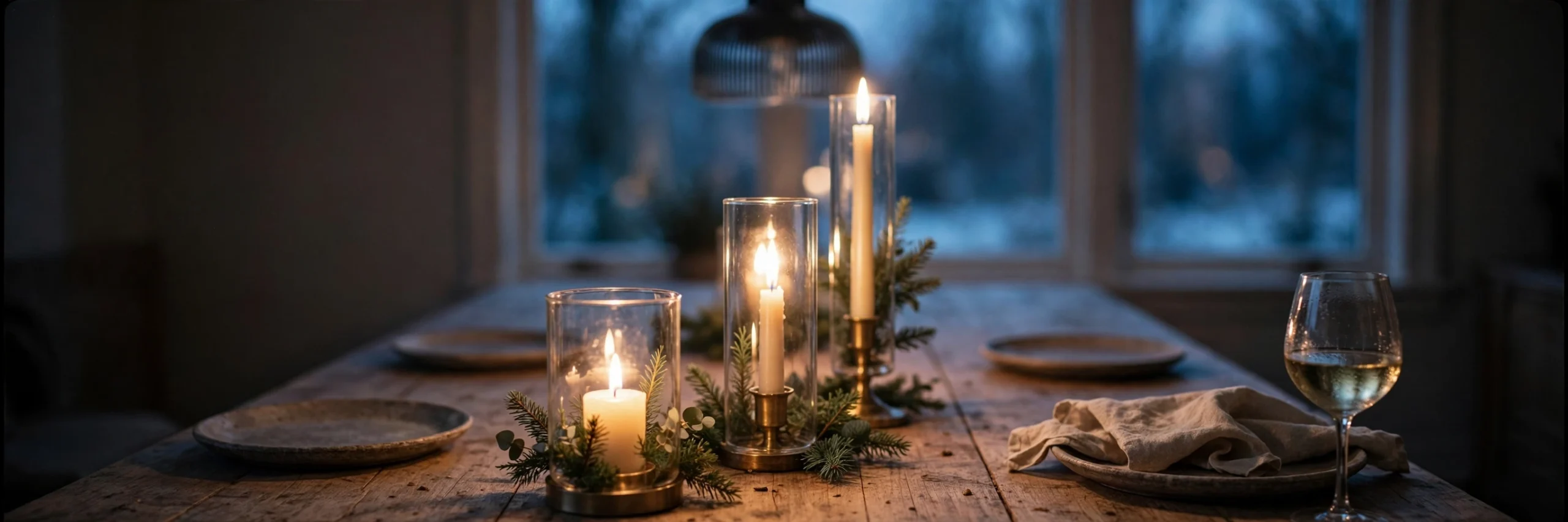
9. Group Candles at Three Heights Down the Centre
Three candles at three different heights, grouped tight down the centre of the table, are the whole lighting story of a winter evening — and they are the detail guests actually notice when the room goes dim. Put a tall taper in a brass holder at one end, a medium pillar in a glass hurricane in the middle, and a short tealight cluster at the other end, all on the wool runner so the wax never touches the cloth. Three heights work because the light spreads across the whole table instead of pooling in one bright spot: faces glow, plates glow, and nobody sits in shadow while someone else sits in glare. Use flameless candles if the runner and the napkins are anywhere near the flames — they flicker like the real thing, they cost less than a takeaway, and nobody has to watch them. Light them at four, not at eight — winter light starts early, and so should the candles.
You need: 3 candles at 3 heights + holders, $8–15. Time: ~10 minutes.
10. Dim the Pendant and Switch to Warm 2700K Bulbs
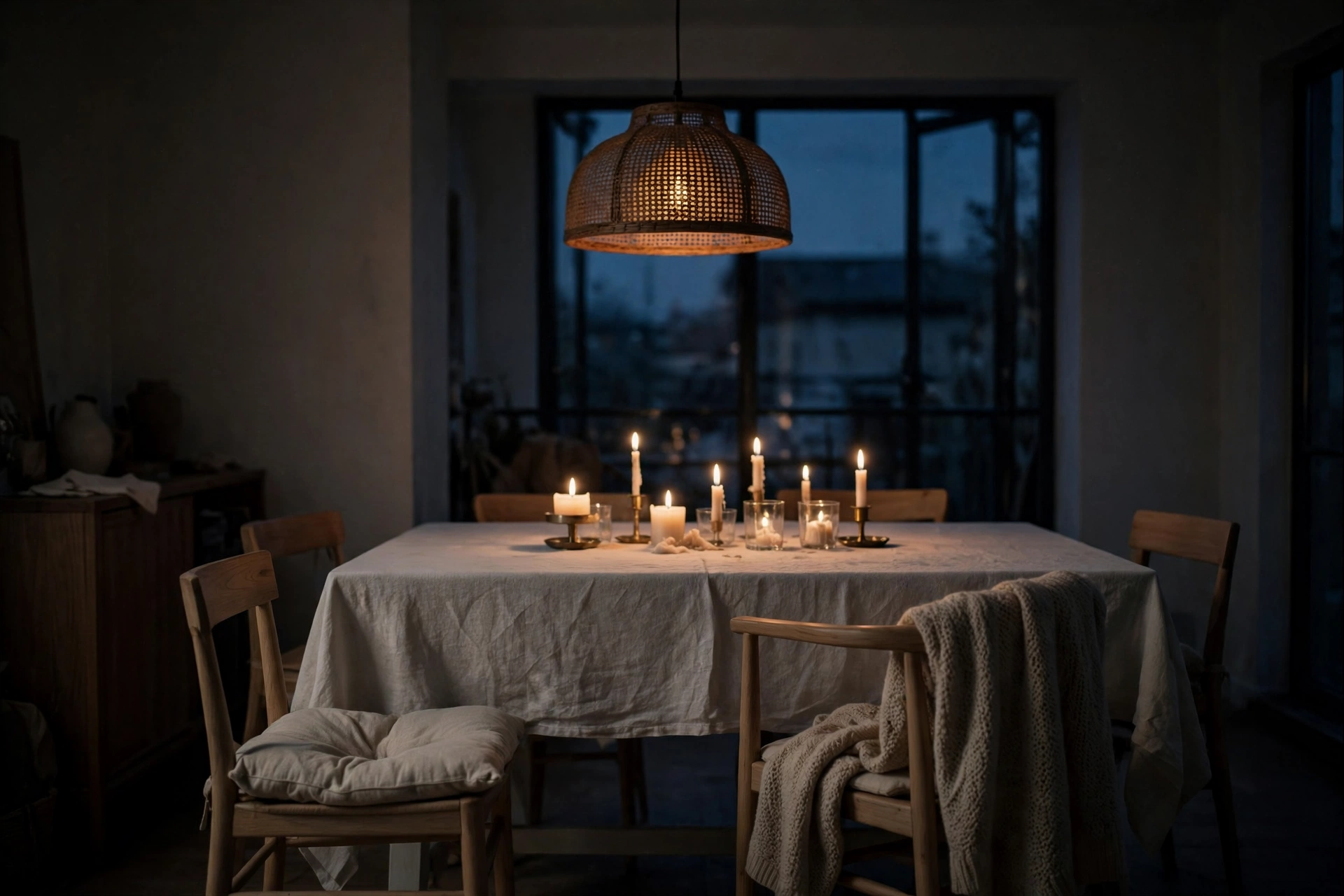
Turn the ceiling light down and let the table do the glowing. Put the pendant on a dimmer — a plug-in dimmer costs about $10–15 if the switch is not dimmable — and swap the bulb for a warm white 2700K one, then set the pendant to about half brightness at dinner time. One cool ceiling light makes a cozy dining room feel like a waiting room; one warm low light makes even a plain table feel like an evening out. The dimmer works because the eye relaxes when the light drops to the level of the candles: the room stops being a room you eat in and becomes a room you linger in, and the candles stop competing with the ceiling. Keep the pendant high enough that nobody’s head blocks it — about 30 to 36 inches above the table — and if the bulb is visible from the chairs, choose a frosted one so nobody stares into a bare filament all evening.
You need: 1 warm bulb (2700K) + plug-in dimmer, $10–15. Time: ~15 minutes.
11. Line the Windowsill with Tealights in Amber Glass
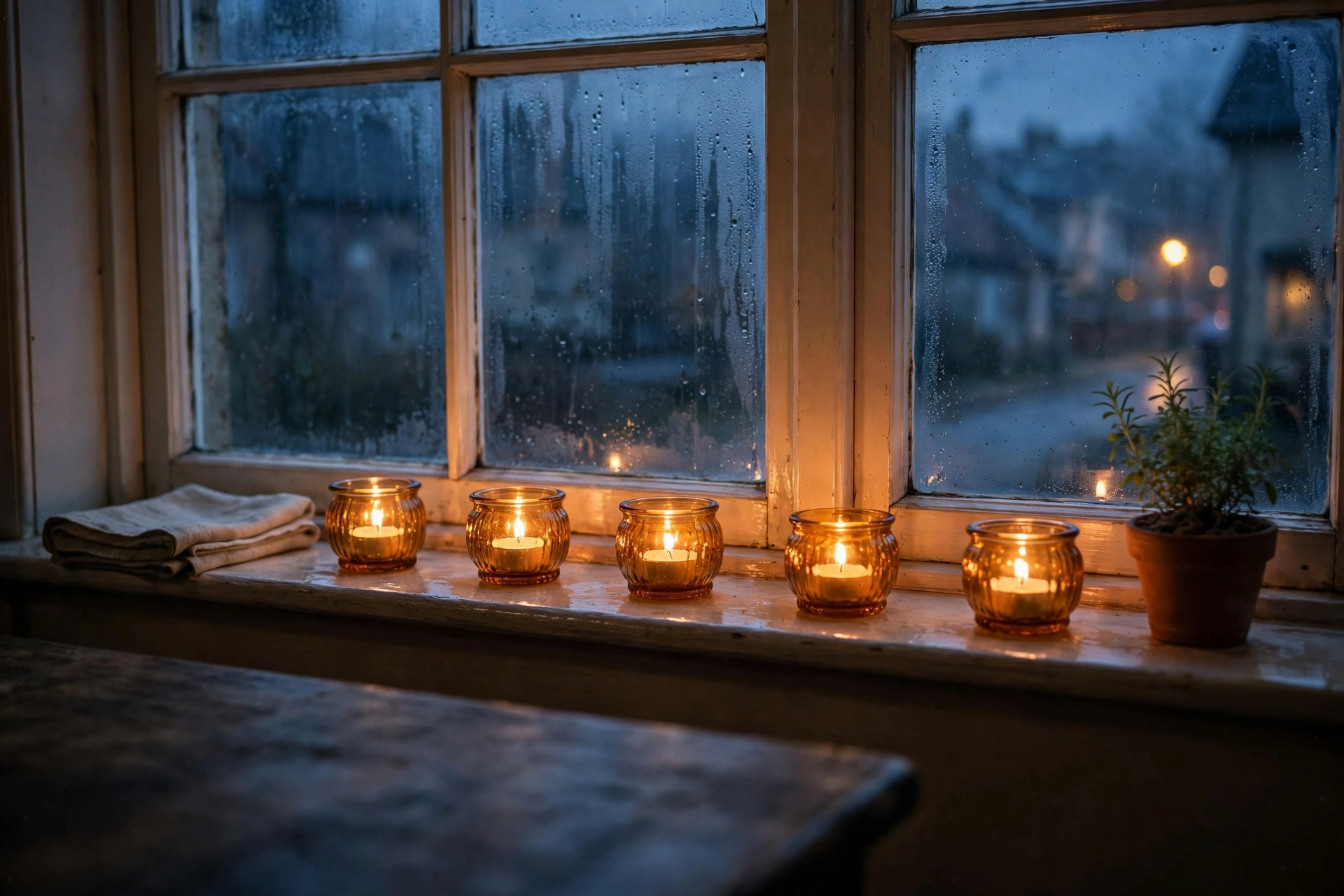
The windowsill is the dining room’s forgotten shelf, and in winter it is also the coldest surface in the room — so give it a job that uses the cold. Line up five or six tealights in amber glass holders along the sill, spaced about 6 inches apart, and light them at dusk. Amber glass works because it turns plain tealight flames into pools of honey-coloured light, and the window glass behind them doubles every flame, so six holders look like twelve from the table. Our Christmas window decor ideas guide hangs the same warm lights as a curtain on the glass, so if the windows make you want to dress every pane, start there — but the sill alone is enough for the dining room, because the light lands on the faces at the table instead of on the glass. Keep the holders away from the curtains, and use flameless tealights if the sill is narrow.
You need: 5–6 amber glass tealight holders, $6–10. Time: ~5 minutes.
12. Build a Lantern Centrepiece with a Candle Inside
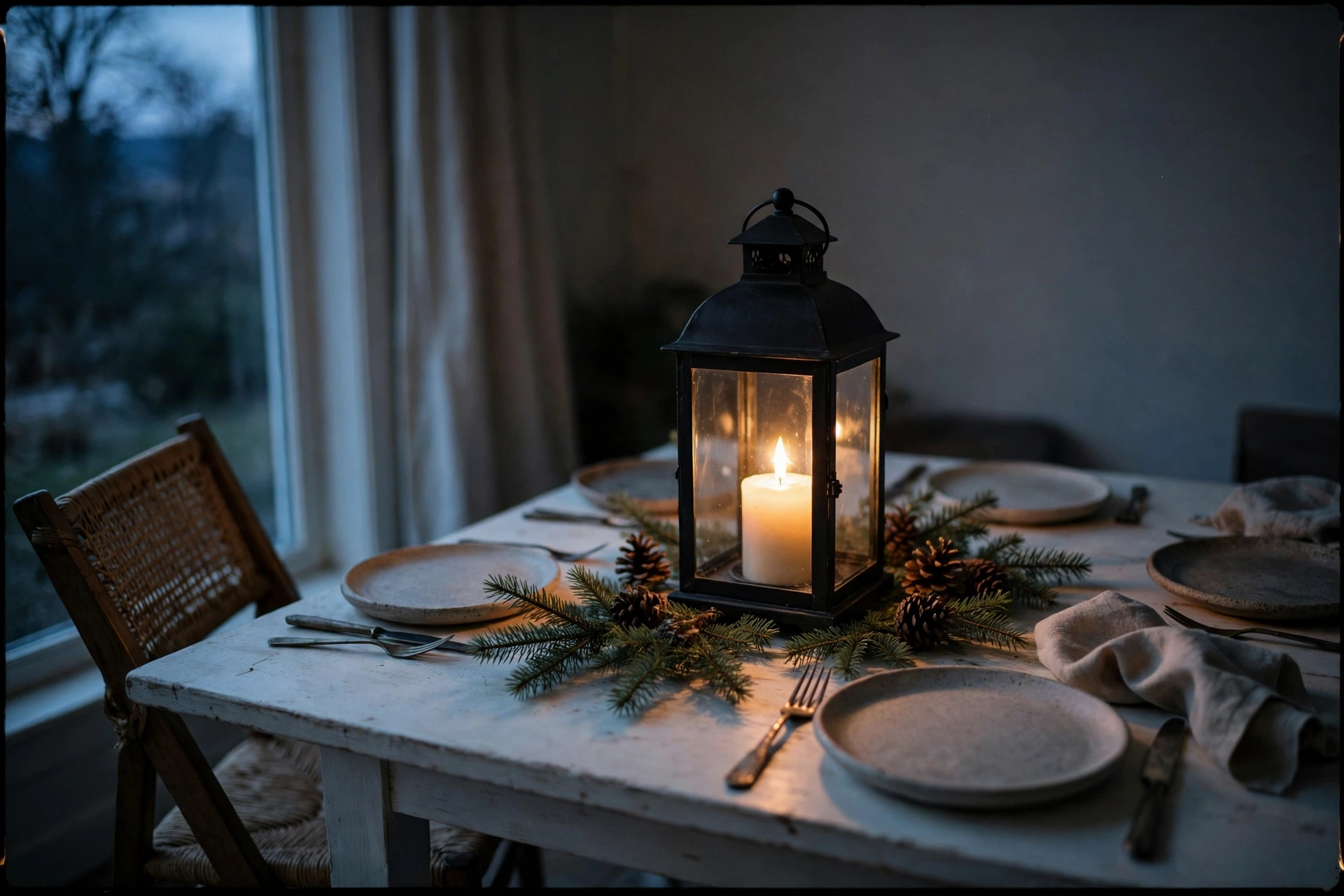
A lantern centrepiece is the one decoration that does two jobs at once: it is the table’s centrepiece and its second lamp. Put one black metal lantern — about 10 to 12 inches tall — in the centre of the table, a pillar candle inside it, and a few evergreen sprigs and pinecones around its base on the runner. The lantern works because the glass shields the flame from every draft when someone passes the table, and the metal frame throws a pattern of soft shadows across the linen that a bare candle never makes — the table looks dressed even before the plates go down. One lantern is enough: two lanterns fight each other, and three turn the table into a hardware display. Light it first, before the candles, because the lantern is the anchor the other lights gather around, and when dinner is over it is the last light you blow out.
You need: one lantern (10–12 in) + one pillar candle, $12–18. Time: ~5 minutes.
Part 4 — Small Touches, Whole-Room Feel
The last four ideas are the finishing layer: the empty corner, the table centre, the place settings and the basket by the table. Small, cheap, and the reason the room feels finished instead of just decorated.
13. Fill the Tree’s Empty Corner with Tall Bare Branches
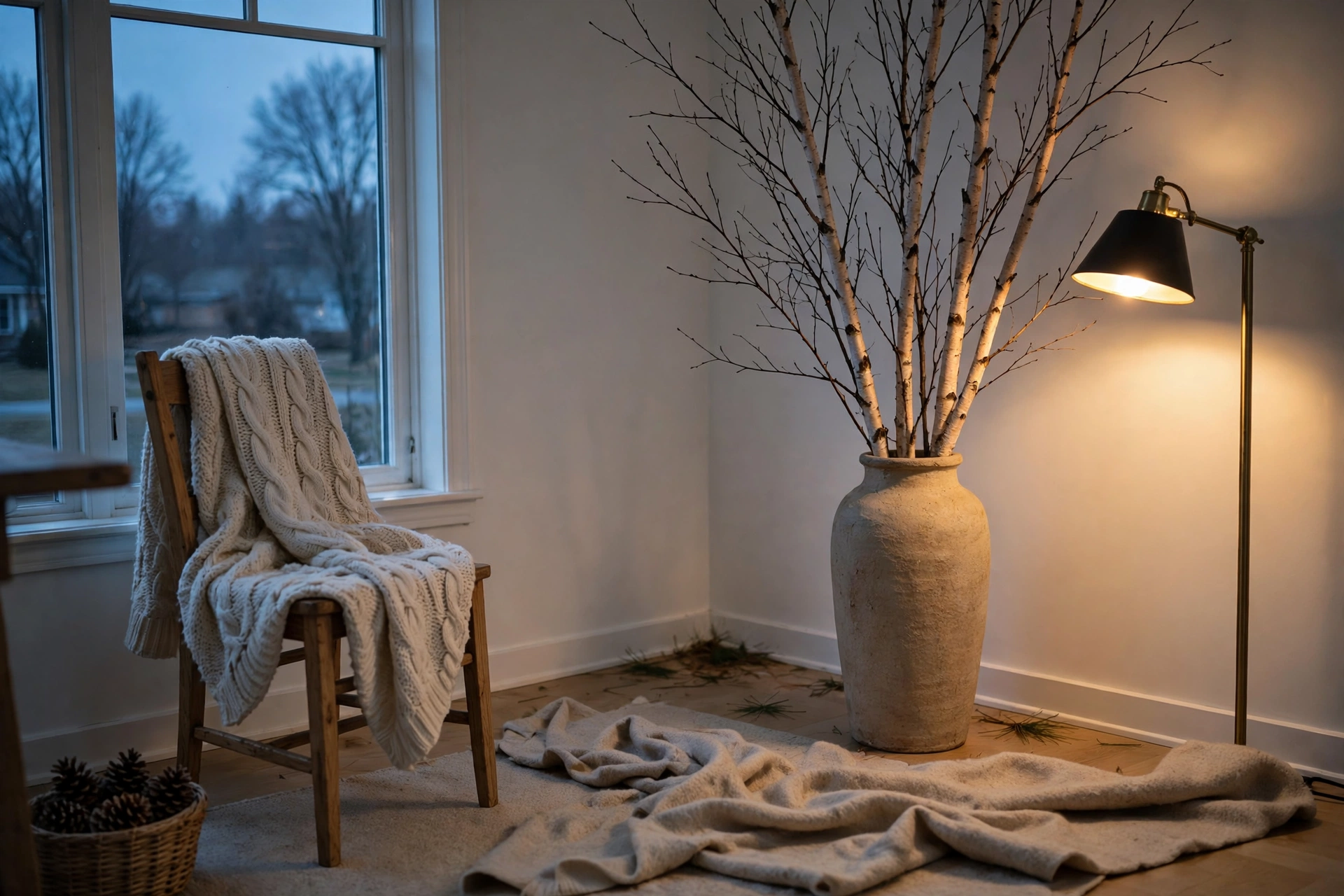
A Christmas tree quietly did three jobs at once: it gave the room height, it glowed at half past four, and it made its corner worth sitting near. When it leaves, the corner feels like a hole — so give the height back first. Stand one tall ceramic vase in that corner and fill it with bare birch branches, nothing else. No baubles, no ribbon: bare branches are winter, not Christmas, and they stay right until March. The branches work because they give the eye the same vertical line the tree gave, without any of the December meaning — and a tall thin shape in an empty corner makes the whole room feel taller, not emptier. Put the floor lamp beside the vase so the branches catch the light at dusk, and drape the heavy throw over the nearest chair so the corner pulls you in again. One vase, one bunch of branches, twenty minutes, and the hole where the tree stood stops being a hole.
You need: one tall ceramic vase + a bunch of bare birch branches. Time: ~20 minutes.
14. Set Out a Bowl of Winter Citrus
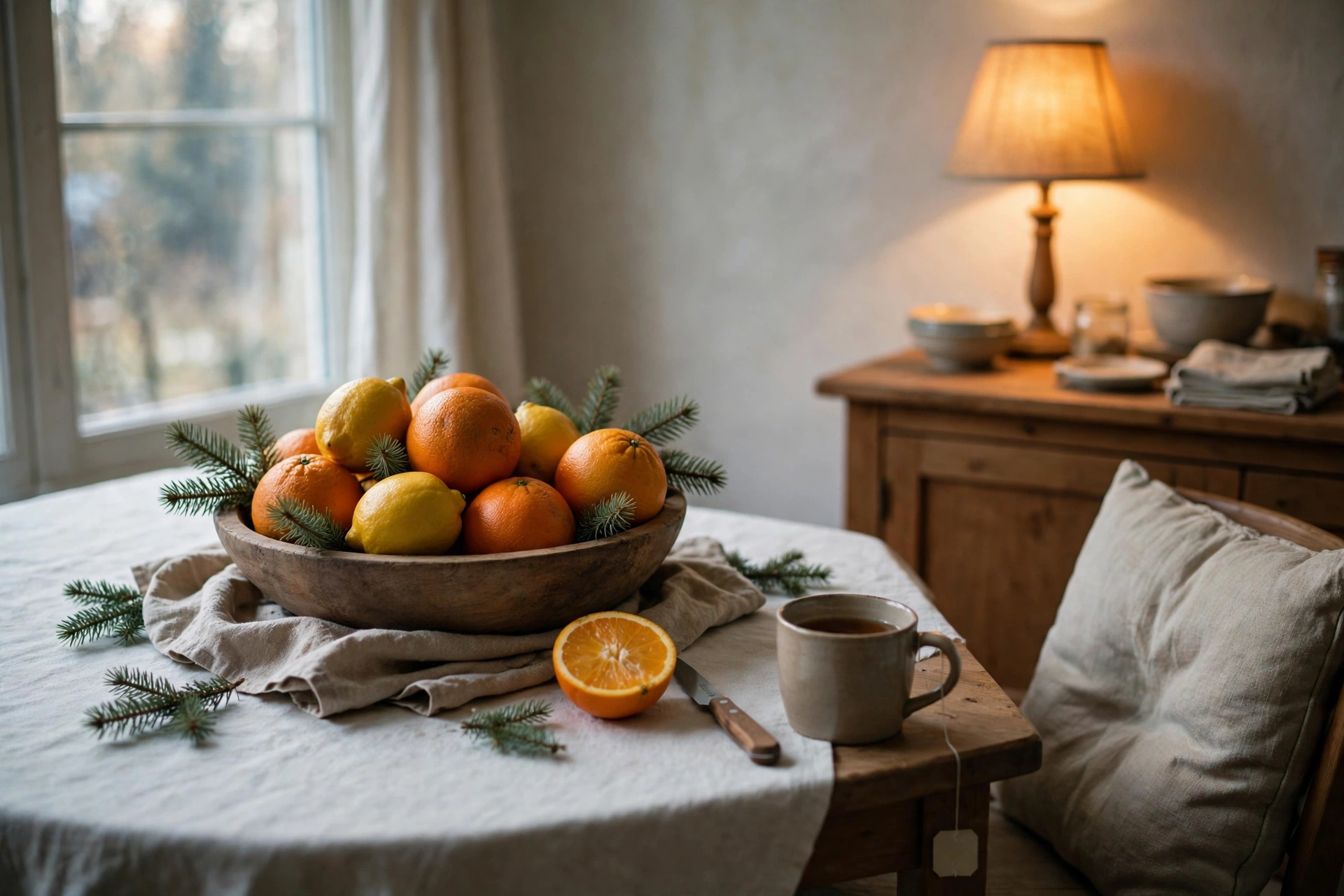
A wide wooden bowl of winter citrus is the cheapest centrepiece in this article and the only one you can eat. Fill a low bowl — about 12 inches across — with oranges, lemons and a few clementines, and set it in the middle of the table with one orange half-cut beside it, as if someone just came back from the kitchen. The citrus works because it is the one colour winter allows without looking like Christmas: warm orange against white linen and pale wood reads as fresh and alive, and the smell does half the decorating before anyone sits down. Refill the bowl every week, because a bowl of three tired oranges looks worse than no bowl at all, and keep the fruit you actually eat in the kitchen — the table bowl is for looking at, and for the guest who reaches for one after dinner. Five dollars, five minutes, and the table has a centrepiece that never needs dusting.
You need: one wide wooden bowl (~12 in) + citrus, $5–8. Time: ~5 minutes.
15. Layer the Place Settings: Charger, Plate, Linen Napkin
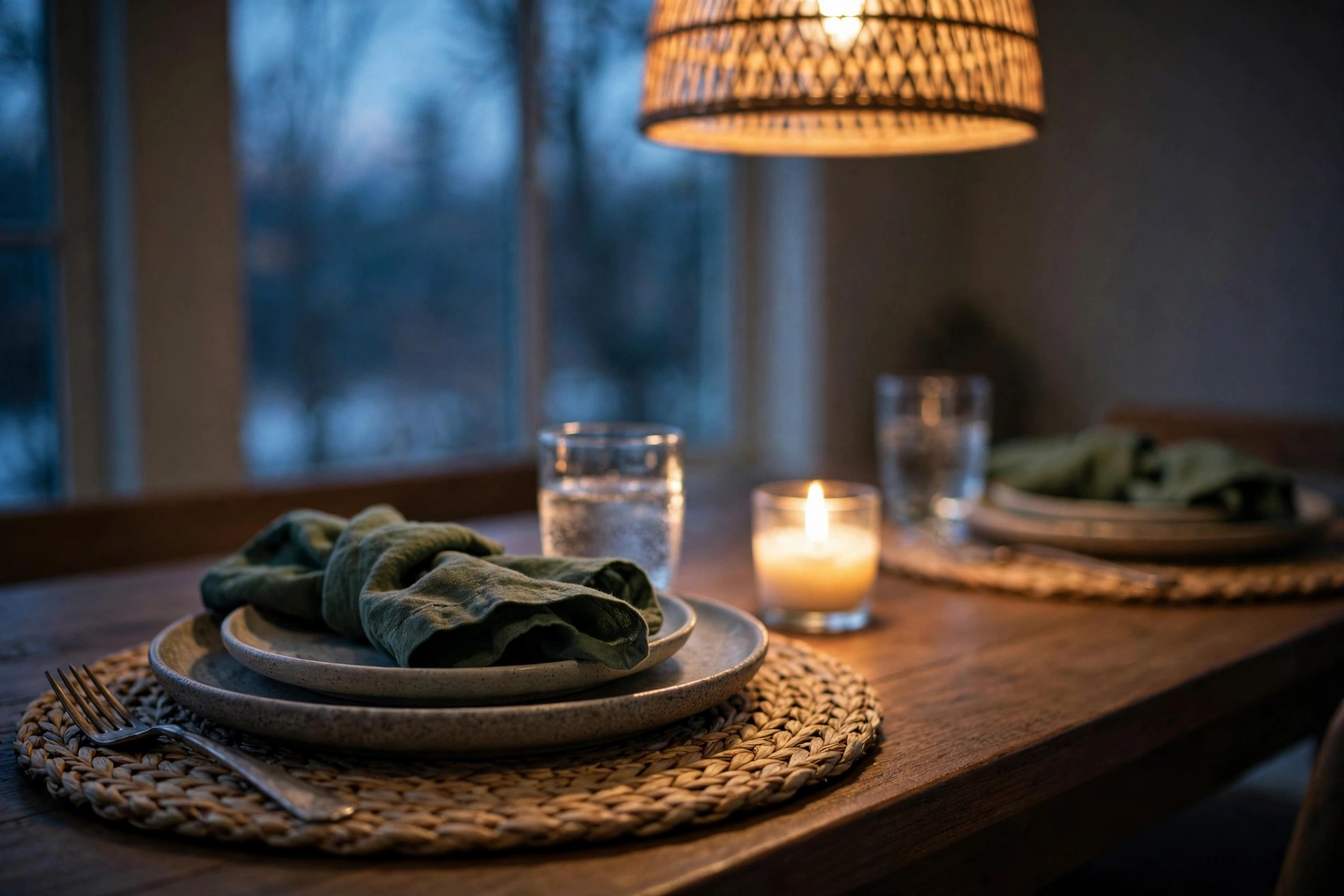
Build each place setting in layers: a woven or wooden charger at the base, a stoneware dinner plate on top, a smaller salad plate above that, and a folded linen napkin in forest green or pale blue-grey resting on the plates or beside the fork. Layering works because it gives every guest the feeling of a restaurant table without a single expensive thing on it — the charger costs about $3–4 each, the plates you already own, and the napkins wash and fold back into a drawer when spring asks for white again. Keep the layers low, because a place setting that towers over the candle line blocks the faces across the table, and winter dinners are for talking across the table, not around a tower of plates. We tried this for a Sunday dinner, and the table looked dressed before a single dish arrived — which is exactly the point, because the room should feel like an occasion before the food does the work.
You need: 4 woven chargers + 4 linen napkins, $15–25. Time: ~10 minutes.
16. Keep a Basket of Throws by the Table
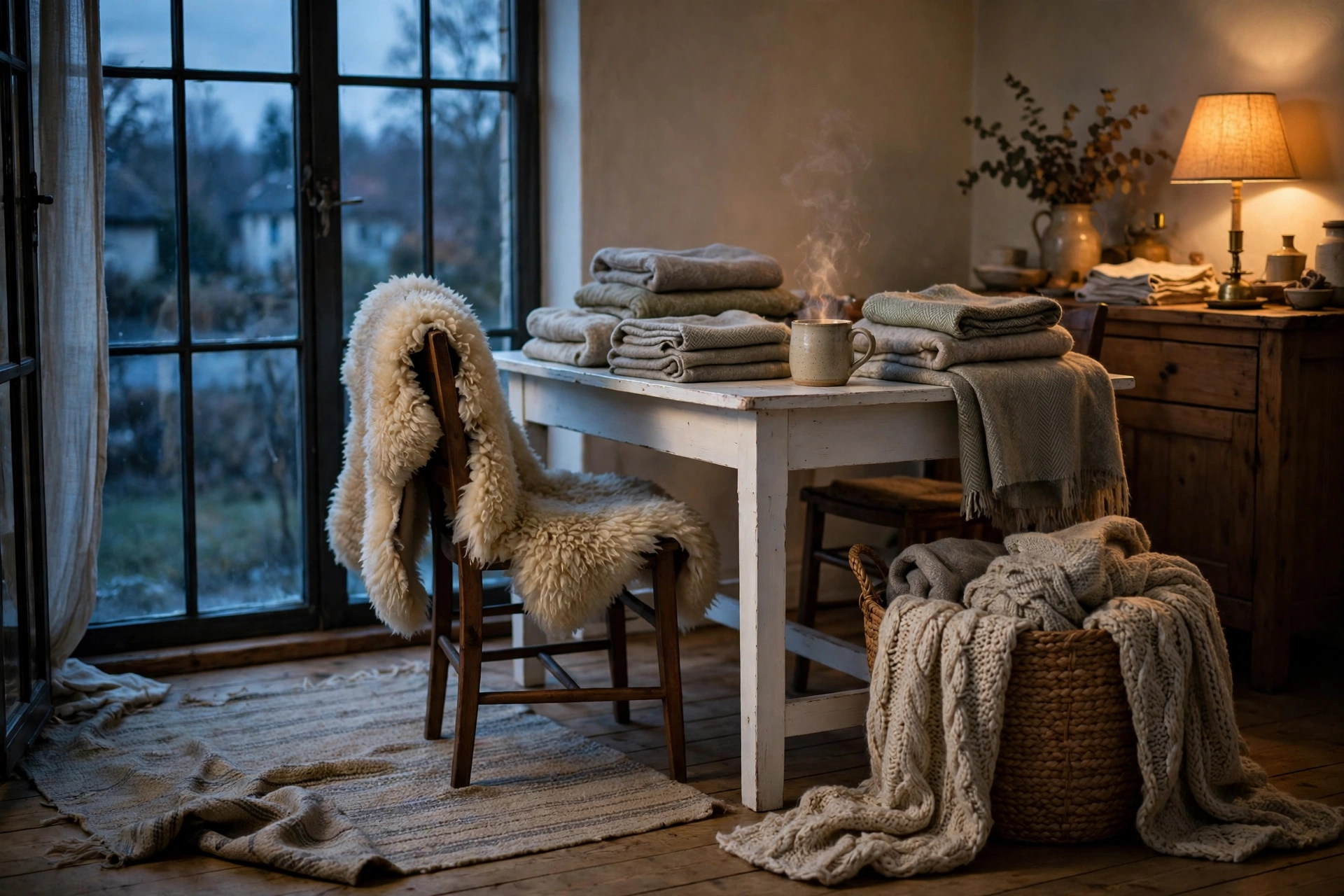
A basket of warm layers by the dining table makes long dinners easy, because a thick shawl and a soft throw sit within reach instead of in a cold closet across the room. Put a woven basket beside the table — about 16 inches wide, big enough for the layers but small enough to fit the gap — and fill it with the things you actually reach for at 9 p.m.: shawls first, then the throws on top, folded loosely so they look used, not staged. The basket works because winter dinners run long and rooms cool down after dark, and the guest who is a little cold never says so — they just leave early, and a throw within reach is what keeps them at the table for the last cup of tea. Refill it on Sunday night, the same time you change the tablecloth, and the basket never runs empty.
You need: one woven basket (~16 in wide) + shawls and throws you already own. Time: ~10 minutes.
Common Mistakes to Avoid
- Buying a whole new table setting when swapping the tablecloth and napkins does the same job for a third of the price.
- One cold ceiling light plus a pile of new decorations — light first, decorations second, or the room still feels cold.
- A centrepiece so tall nobody can see across the table — keep everything below the candle line, or dinner becomes a shouting match around a tower.
- A rug with a high pile under the table — it traps crumbs and chair legs; low pile brushes clean in two minutes.
- Leaving “just one corner” of Christmas red up — it makes the whole room read as December, not winter.
If you do one thing tonight, light the candles at three heights (idea 9). One tall taper, one pillar in a hurricane, one tealight cluster: about $8–15, ten minutes to arrange — and you feel it the first evening you eat by them. Everything else in this article makes the room look warmer; this one makes the light warmer, and in winter the light is the room.
Winter Dining Room Budget: What Each Idea Costs
| What you need | Rough cost | Time it takes |
|---|---|---|
| Washed linen tablecloth + napkins | $20–30 | 10 minutes |
| Wool runner, 14 in wide | $15–25 | 5 minutes |
| Faux sheepskins + cushions | $20–30 | 10 minutes |
| Low-pile rug + rug pad | $35–50 | 30 minutes |
| Candles at three heights | $8–15 | 10 minutes |
| Warm bulb + plug-in dimmer | $10–15 | 15 minutes |
| Lantern + pillar candle | $12–18 | 5 minutes |
| Whole reset, everything above | under $90 | one weekend afternoon |
Prices checked November 2026, US stores. Most of it you already own — the greenery, the candles, the throws and the stoneware came out of the Christmas boxes. Buy only what the Christmas test left you missing.
Winter Dining Room Decor Ideas: Your Questions, Answered
How do I decorate my dining room for winter without Christmas?
Pack away anything that only makes sense in December — ornaments, stockings, Santa figures, red ribbon and glitter — and keep what belongs to cold weather: plain evergreen, pinecones, white candles, warm-white lights, wool throws and linen. Then layer the table, light with candles at three heights, and one calm colour like pale blue-grey. That is winter decor, and it stays right until March.
How can I make my dining room warmer in winter?
Warm the light first: dim the pendant, switch to warm 2700K bulbs and light candles at three heights down the table. Then warm the touch points — sheepskins on the chairs, a low-pile rug under the table, a wool runner down the centre. Those four moves warm the chairs, the floor and the table without touching the thermostat.
What colours work for a winter dining room after December?
Warm white, oatmeal, cream, natural wood, soft grey and one pale accent — icy blue, pale sage or dusty blue-grey — work from January to March. Pick one accent and repeat it in three places: the napkins, the sideboard and the windowsill. Avoid bright red and glitter green after December; they read as Christmas, not winter.
How do I make my dining table look cozy on a budget?
Swap the tablecloth instead of buying a new setting, lay a wool runner down the centre, and group three candles you already own at three heights. Those three moves cost under $40 and change the room more than any new decoration. Add warm bulbs on a dimmer and the room glows every evening for pennies.
How long can I keep winter dining decor up?
Plain winter decor — greenery, pinecones, candles, bare branches, citrus and warm lights — stays right from early January until the end of February or early March. Take it down when the days get clearly longer and you start wanting lighter throws; that is spring knocking, not a deadline.
What is the easiest winter dining room idea to start with?
The candles at three heights. One tall taper, one pillar in a glass hurricane, one tealight cluster down the centre of the table — ten minutes, no tools, no shopping trip, and the room feels like winter tonight.
Winter is the longest season in the house — longer than Christmas by two whole months — so it deserves more than an empty room waiting for spring. Start with the candles tonight, do the reset this weekend, and let the room earn its keep until March. And when the first pale morning of spring arrives, you will only have to swap the throws and put the branches away: the white base underneath was always the point. For the whole house — not just this room — our winter decor after Christmas guide does the same reset room by room.
About HomelyNook — The HomelyNook Team decorates real homes on real budgets: white walls, small rooms, and furniture that still has to be sat on. Every idea on this site was tried in a lived-in house first, priced honestly, and written so you can do it tonight — not someday. Read more about us.