Winter Decor After Christmas: 18 Ideas for a Calm January Reset

These winter decor after christmas ideas start from one honest fact: the day the tree comes down, the house looks robbed. For a month there was a glowing corner, a pile of gifts, garland on the shelves — and then it all goes back into boxes, and what is left looks flat and a little bit sad. January gets a bad name for it, but the problem is not January. The problem is that most people strip the house bare instead of editing it.
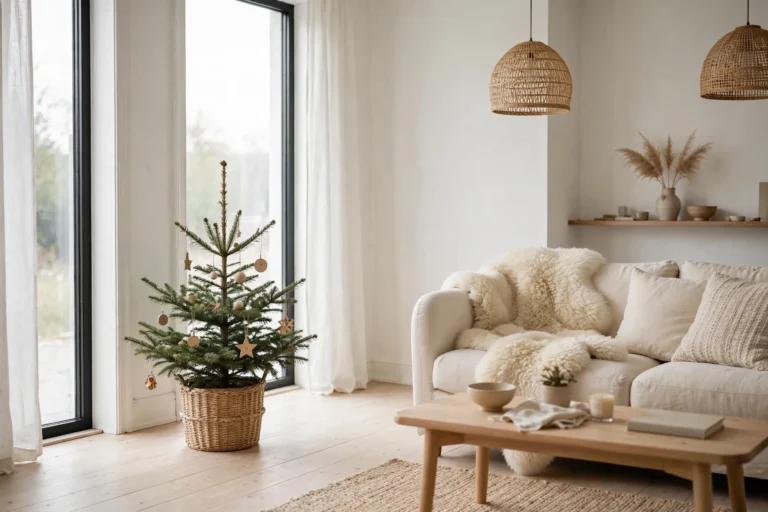
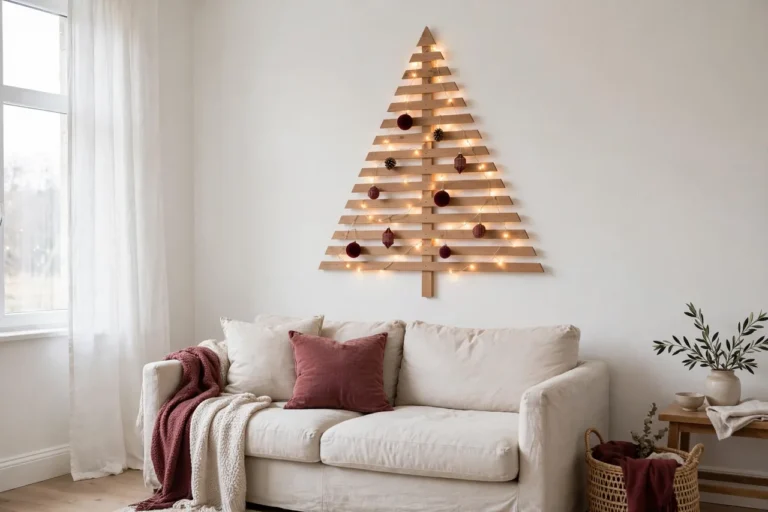
So this is not a list of things to buy to fill the gap. Almost everything below is already in your home: the lights, the greenery, the throws, the candles. The trick is keeping what says winter and packing what says Christmas — one evening, three boxes, and the house feels calm instead of empty. Pick two or three ideas, do them tonight, and January stops feeling like the month after the party.
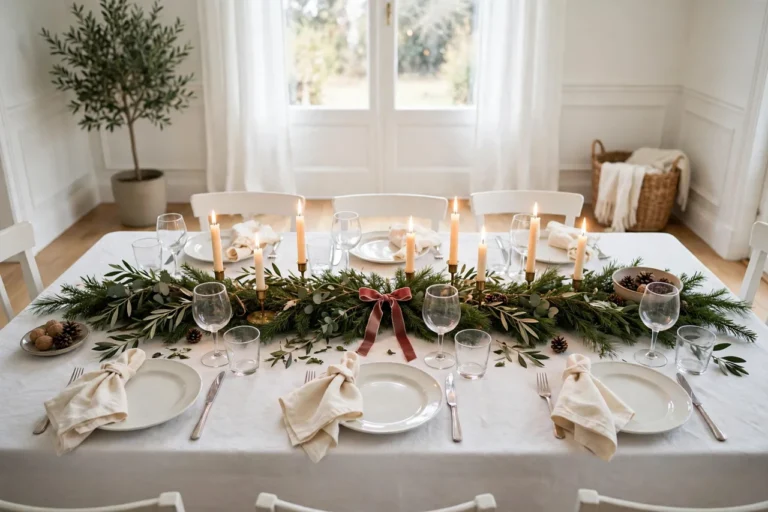
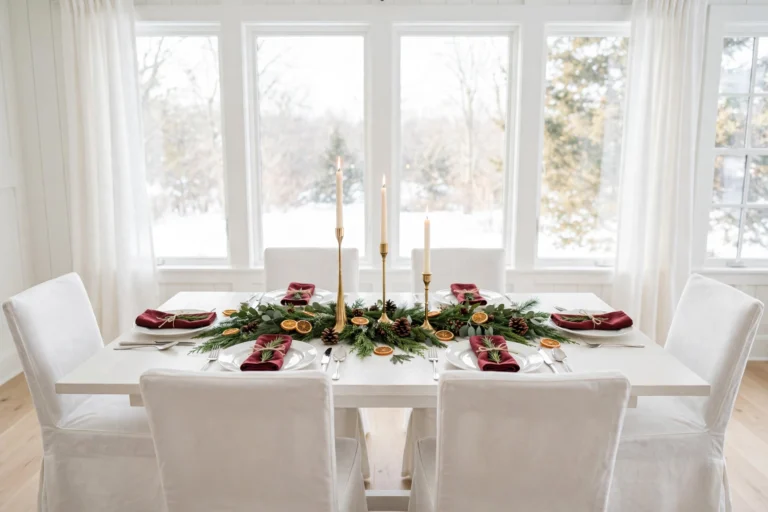
One rule runs through all eighteen: keep the season, drop the holiday. If it says winter — light, greenery, texture, warmth — it stays. If it says Christmas — red and green together, ornaments, bows, anything with words on it — it goes in the box.
For the rest of the house, start with our Christmas Decor Ideas pillar — that is where the seasonal cycle begins.
1. The Keep-Swap-Pack Sort
Before you buy or move a single thing, sort. Three boxes on the floor, one evening, and every decoration goes into one of them: keep (it says winter, not Christmas), swap (it needs a change to stay), pack (it is unmistakably Christmas). Warm white lights, plain greenery, pinecones, candles and knit throws go in keep. Red pillow covers and plaid go in swap. Ornaments, bows, stockings, Santas and anything that says Noel or Merry go in pack. The sort is the whole reset, really — everything after this is just putting the keep box back in prettier places.

2. Fill the Tree Corner
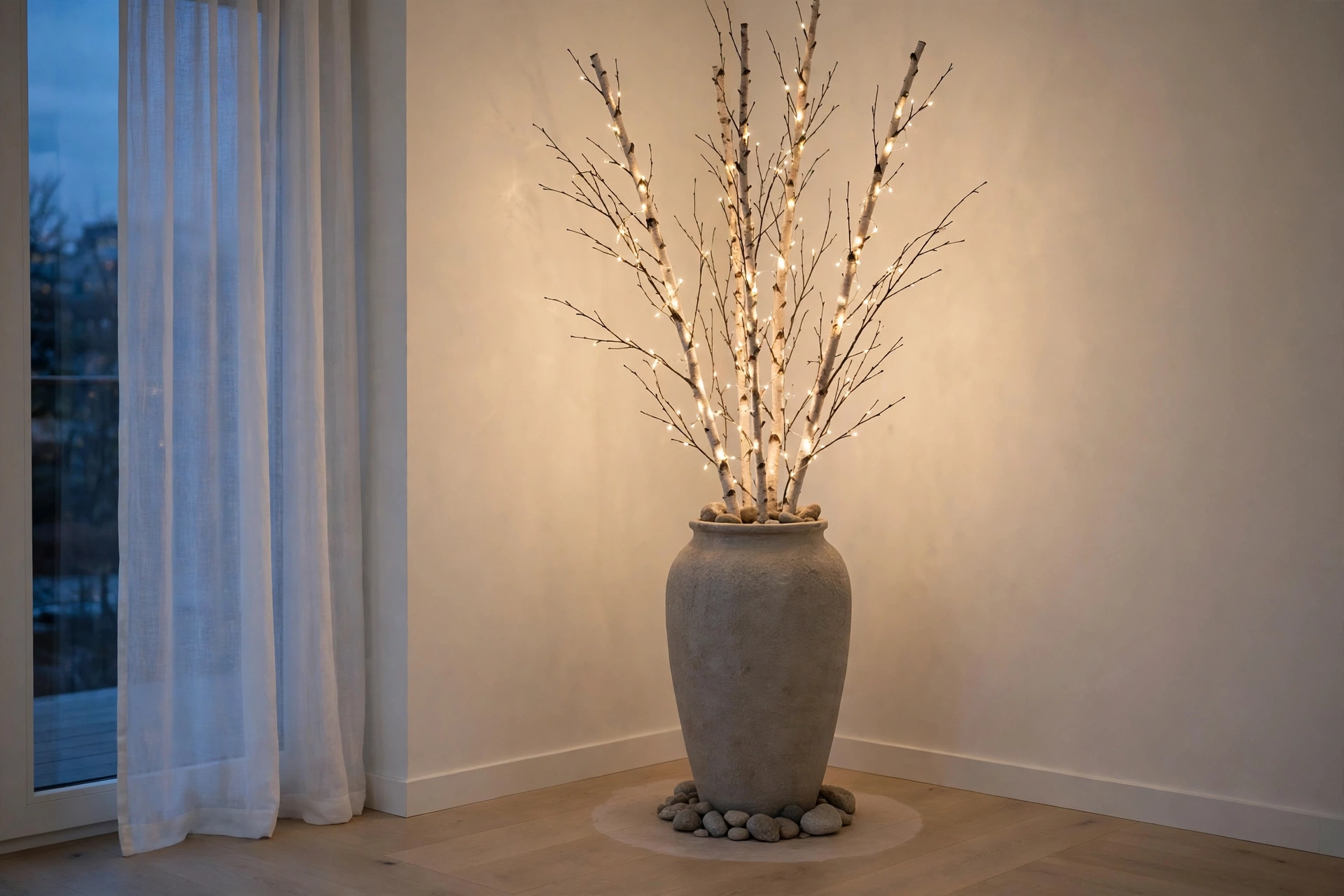
The empty spot where the tree stood is the first thing you notice, so fill it before you notice it. A heavy floor vase with tall bare branches — birch is the classic, but any pruned branch from the yard works — wrapped in the warm white lights you already own, turns the hole into a new place instead of a gap. The branches cost nothing, the lights were going back in a box anyway, and the corner glows again at 4:30 in the afternoon when January goes dark.
3. Strip the Red, Keep the Green
The biggest mistake in January is packing all the greenery away with the ornaments. Pull the red ribbon, the glass berries and the glitter-tipped pinecones out of the mantel garland, and the same garland becomes winter greenery. Same for the wreath and the banister: take off everything that says December 25 and what is left — cedar, pine, eucalyptus — is just nature, and nature is allowed until March. Fresh indoor greenery dries out, so once it turns brittle, compost it and switch to faux; outside, on the porch or at the front door, the real stuff lasts much longer in the cold.

4. Move the Lights, Don’t Pack Them
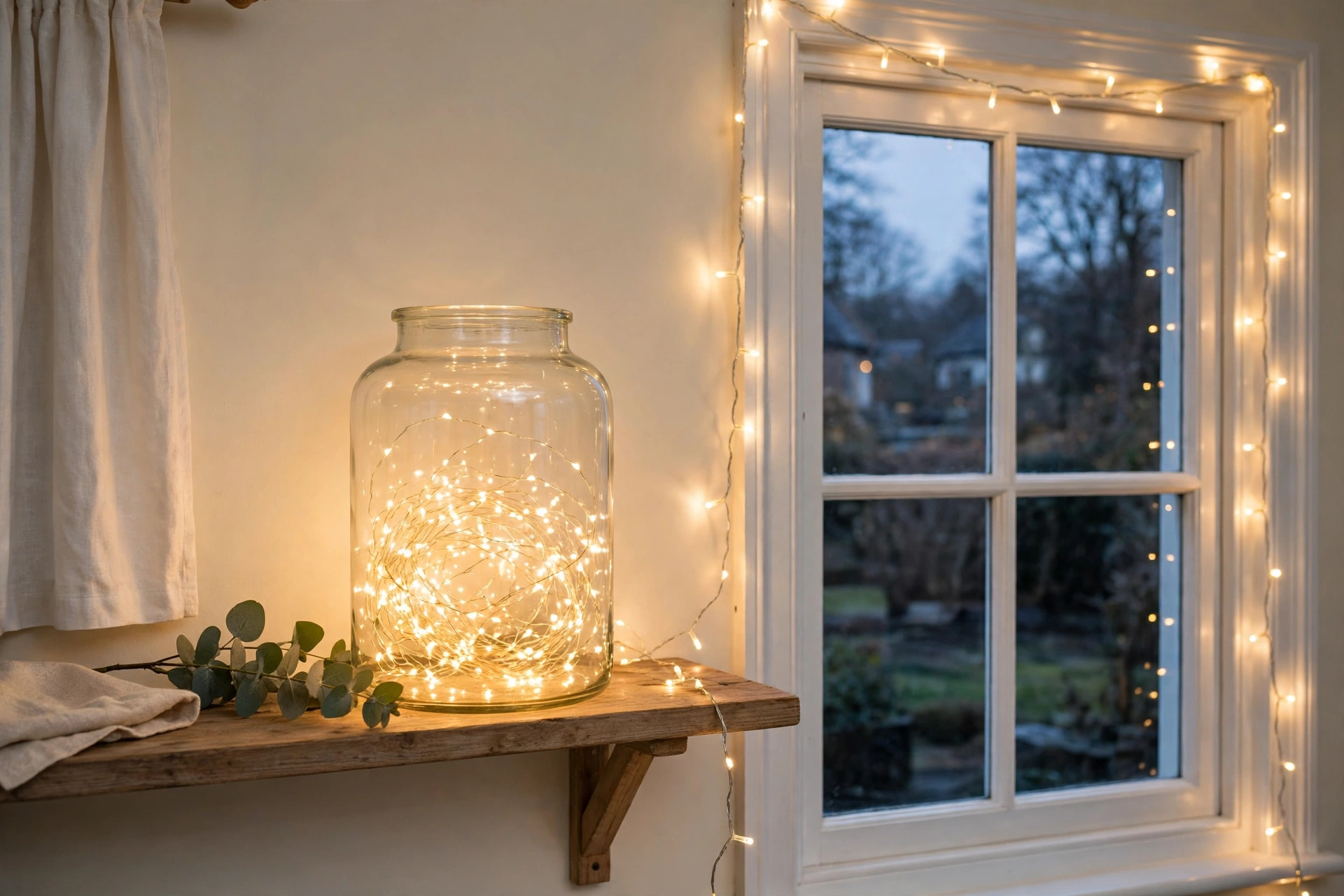
Keep the fairy lights and take down almost everything else. The instinct in January is to strip the house of anything that twinkles, and it is the wrong instinct: at 4:30 in the afternoon you have three hours of dark to fill and no daylight to fill it with. Move the warm white strands off the tree and into places that need them — a big jar on the shelf, along a window frame, around a mirror, behind the headboard. Warm white only, on copper wire rather than green cord, and on a timer so they switch themselves on at dusk. The lights stay up until March, and nobody will call them Christmas lights, because they are not. They are winter lights now.
5. Three Lamps, No Overhead
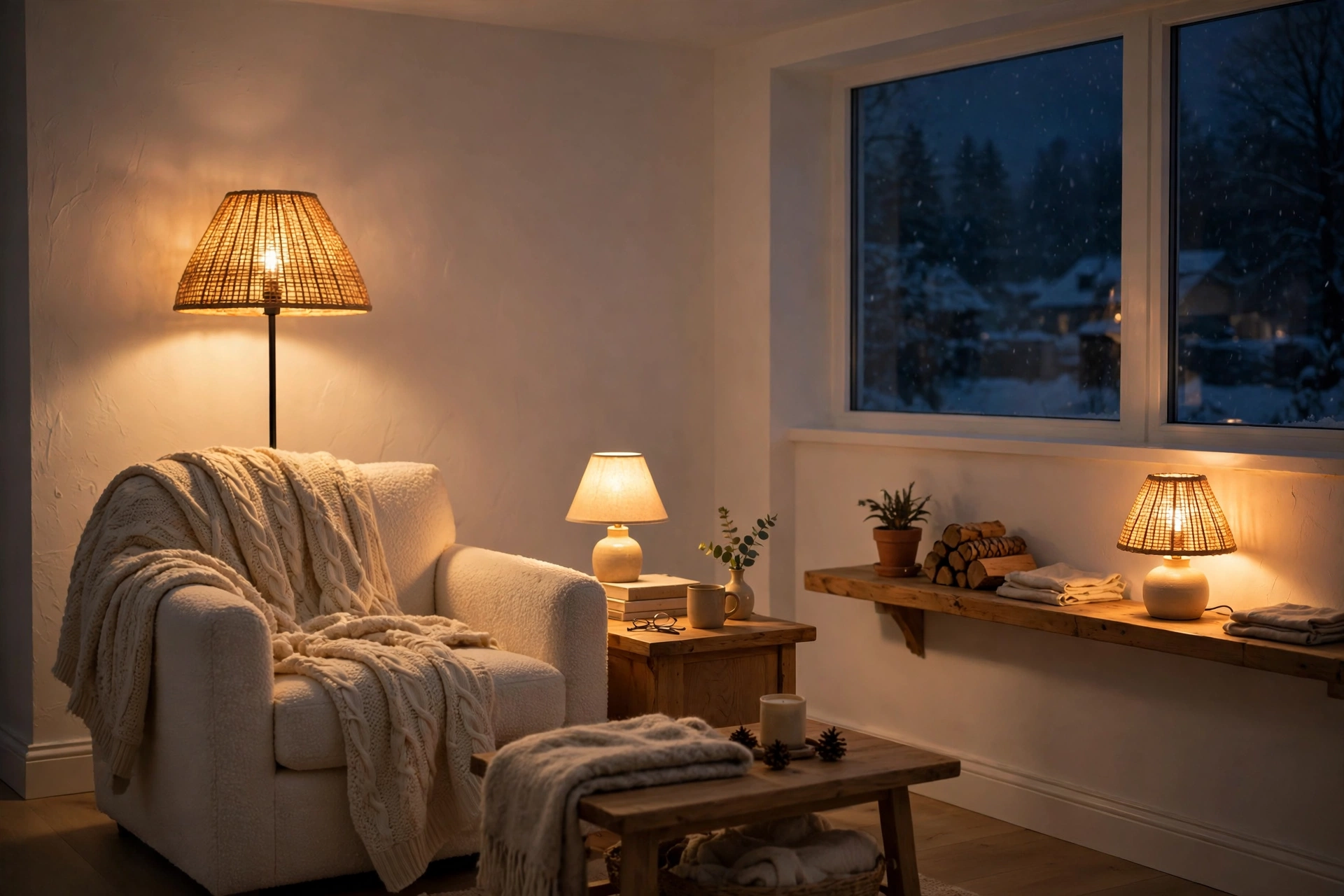
The ceiling fixture is what makes a January room feel like a waiting room. Turn it off and run three lamps at different heights instead: a floor lamp behind the reading chair, a table lamp at sitting height, something low on a shelf or a sideboard. All three at 2700K — warm, never cool white, which turns a cozy room blue and cold. Three small pools of warm light beat one big cold one every time, and the room suddenly feels like somewhere you want to sit after dark instead of somewhere you are waiting to leave.
6. The January Wreath
Take the Christmas wreath down, cut off everything that says December — the bow, the red berries, the tiny ornaments — and what is left is a plain green wreath, which is a January wreath. Add a few pinecones and a sprig of eucalyptus, hang it back up with no bow at all, and the door looks dressed instead of decorated. A wreath with no bow reads as winter, not as a celebration, and it can stay up until the first warm week of March. If the original wreath is too far gone, a plain grapevine wreath with a handful of cedar tucked in does the same job for a few dollars.

7. Paperwhites on the Windowsill
The best living winter decor blooms after the holidays, not before. Paperwhite bulbs in a shallow bowl of pebbles and water need no soil and no cold period, and they bloom in three to five weeks — which means bulbs planted the week the tree comes down are flowering by late January, exactly when the house needs something alive. Amaryllis takes longer, six to eight weeks, but the payoff is a huge bloom on a bare stem. One honest warning: both are toxic to cats and dogs, and the bulbs are the worst part, so keep the bowl high and out of reach if you have pets. On a sunny windowsill, with nothing else around it, a bowl of paperwhites is the whole centrepiece.

8. Forsythia, Forced Early
Cut a few forsythia branches in late January or February, put them in a tall vase of water indoors, and the house gets flowers three to six weeks before the yard does. Forsythia is the reliable one — it usually blooms indoors in one to three weeks, a spray of small yellow flowers on bare branches, which is the first real colour of the year. The trick is not cutting too early: before the branches have had their cold weeks, the buds swell, stall, and drop. Wait until late January, cut on a mild day, and change the water every few days.

9. A Bowl of Winter Citrus
January is peak citrus, which is the one seasonal fact the winter decorating internet keeps ignoring in favour of dried orange slices from November. A wide wooden bowl of oranges, lemons and a grapefruit or two — fresh, glossy, smelling faintly of sunshine — is the January centrepiece that beats a bowl of ornaments, and it lasts for weeks on the table. It costs a few dollars at the grocery store, it gets eaten instead of packed away, and when the bowl is half empty you just top it up. Put it where the ornament bowl sat in December, and the table never looks bare. If you want the dried-orange look too, slice one orange thin, dry the slices in a low oven, and tuck two or three among the fresh fruit.

10. Pinecones, Plain
A wooden bowl of plain pinecones — no glitter, no glue, no fake snow — is the most honest winter decoration there is, and it costs nothing if you collected them in the autumn. The mistake is dressing them up: glitter and glue turn a pinecone into a Christmas craft, and January does not need crafts. Just the cones, in a bowl you already own, on the coffee table or the mantel, maybe with a sprig of cedar tucked underneath. They last all winter, they never look dated, and when spring comes they go back outside where they came from. If you did not collect any, a bag from the garden centre costs less than a coffee, and it will last you three winters.

11. Epsom Salt Snow Jars
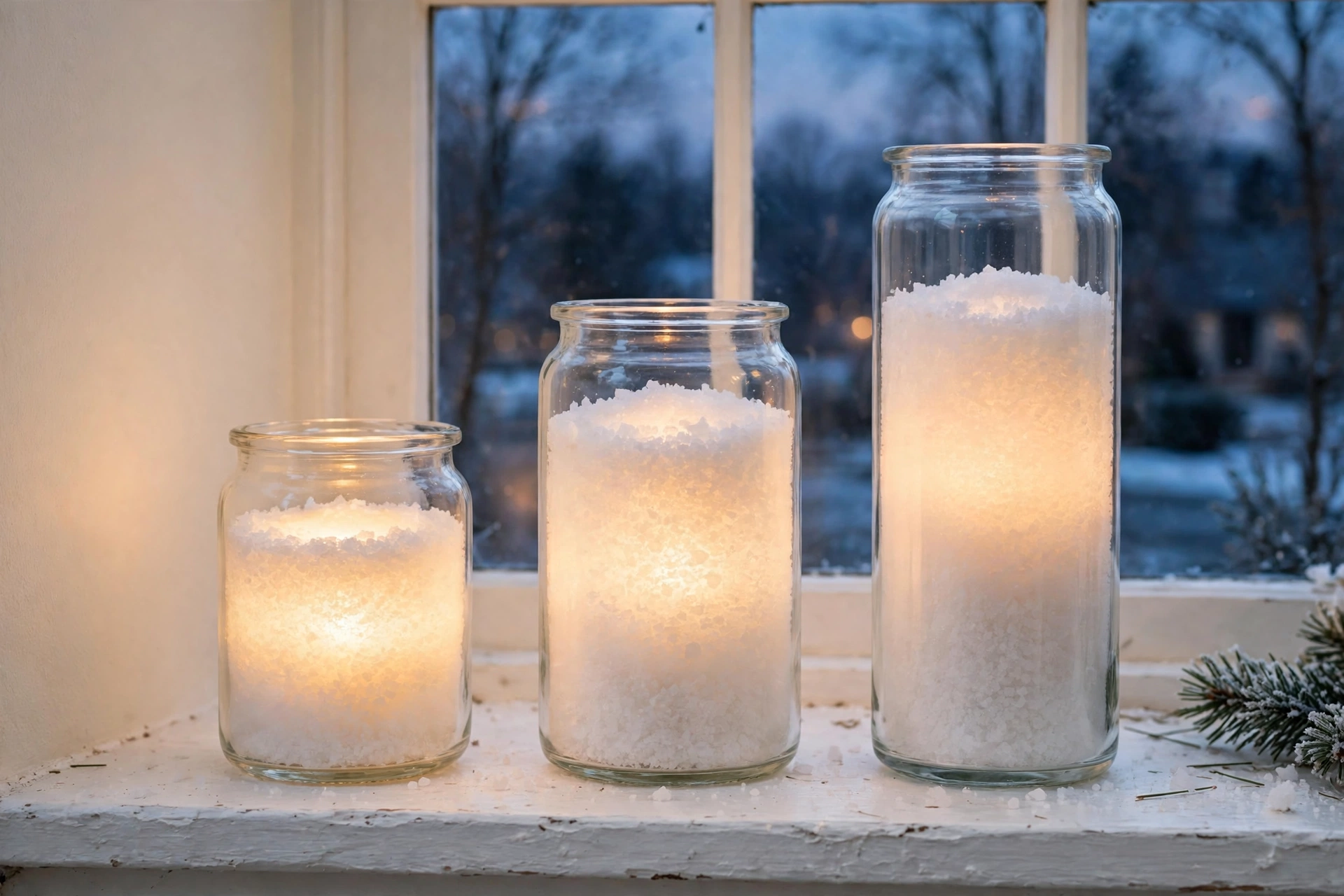
The one snow effect worth doing: a big glass jar, a few inches of Epsom salt in the bottom, and a flameless candle pushed into the middle. Lit after dark, the salt glows like fresh snow and the candle flickers through it, and the whole thing looks like a tiny winter night on the shelf. Three jars in different heights on the mantel or the windowsill do the work of a whole decoration scheme, and they cost almost nothing — a bag of Epsom salt, jars from the cupboard, candles you already own. Real candles work too, but flameless means you can leave them on a timer and forget about them, which is the point of January: less fuss, same glow.
12. The Pillow Cover Swap
Pick the palette with the pillow covers: cream, oatmeal or warm white as the base, one deep colour (forest green, navy or charcoal), one metal (brass, silver or copper). Red is the colour most tied to Christmas, so pack most of it away — a deep burgundy can stay, bright red cannot. Swap the plaid and red covers for knit, boucle or velvet in winter neutrals, and the sofa changes season without you buying a single piece of furniture. Two covers are enough; the rest of the pillows can go back to the plain ones you had before December. Store the Christmas covers in the same box as the ornaments, and next December the swap takes ten minutes.

13. The Heavy Throw, Doubled
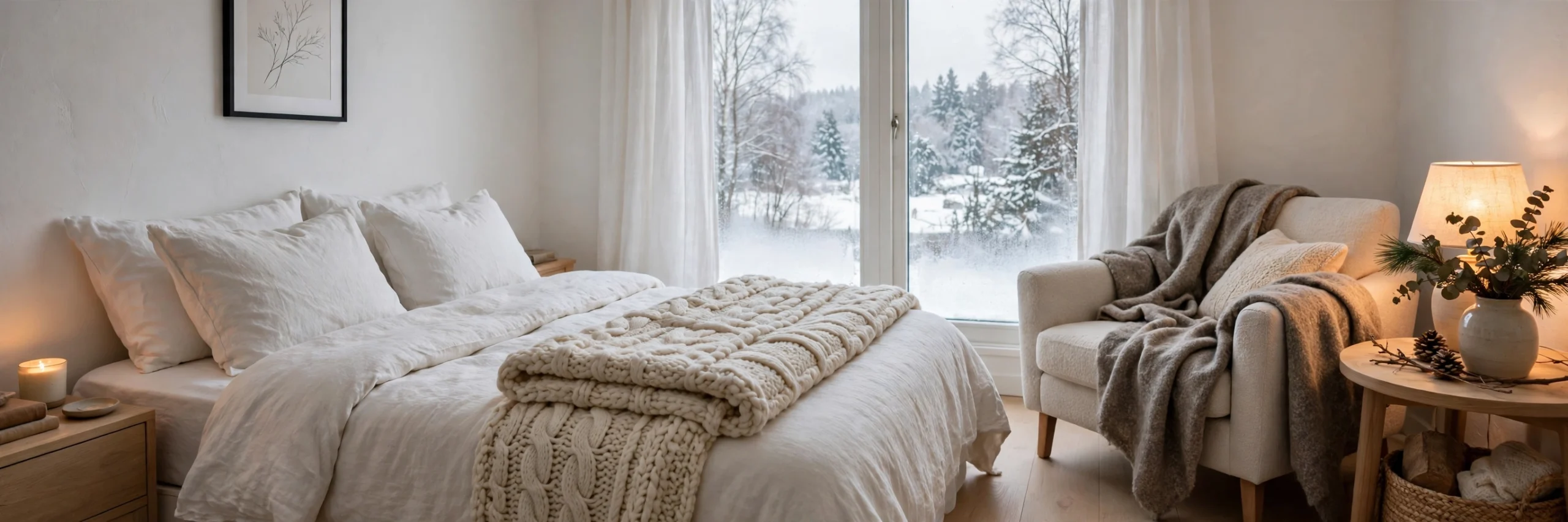
January is when the heavy textiles earn their place. Swap the light throws for wool, sherpa or chunky knit, and then double up: one folded across the arm of the sofa where hands can reach it, one across the foot of the bed. A throw people actually grab on a cold evening is doing two jobs — it looks like winter, and it keeps you warm — and a throw that only looks good is doing none. Keep the colours plain: cream, oatmeal, charcoal, one deep green. One pattern per surface is enough, and the throw carries the pattern, so the pillows can stay quiet.
14. A Warmer Rug Underfoot
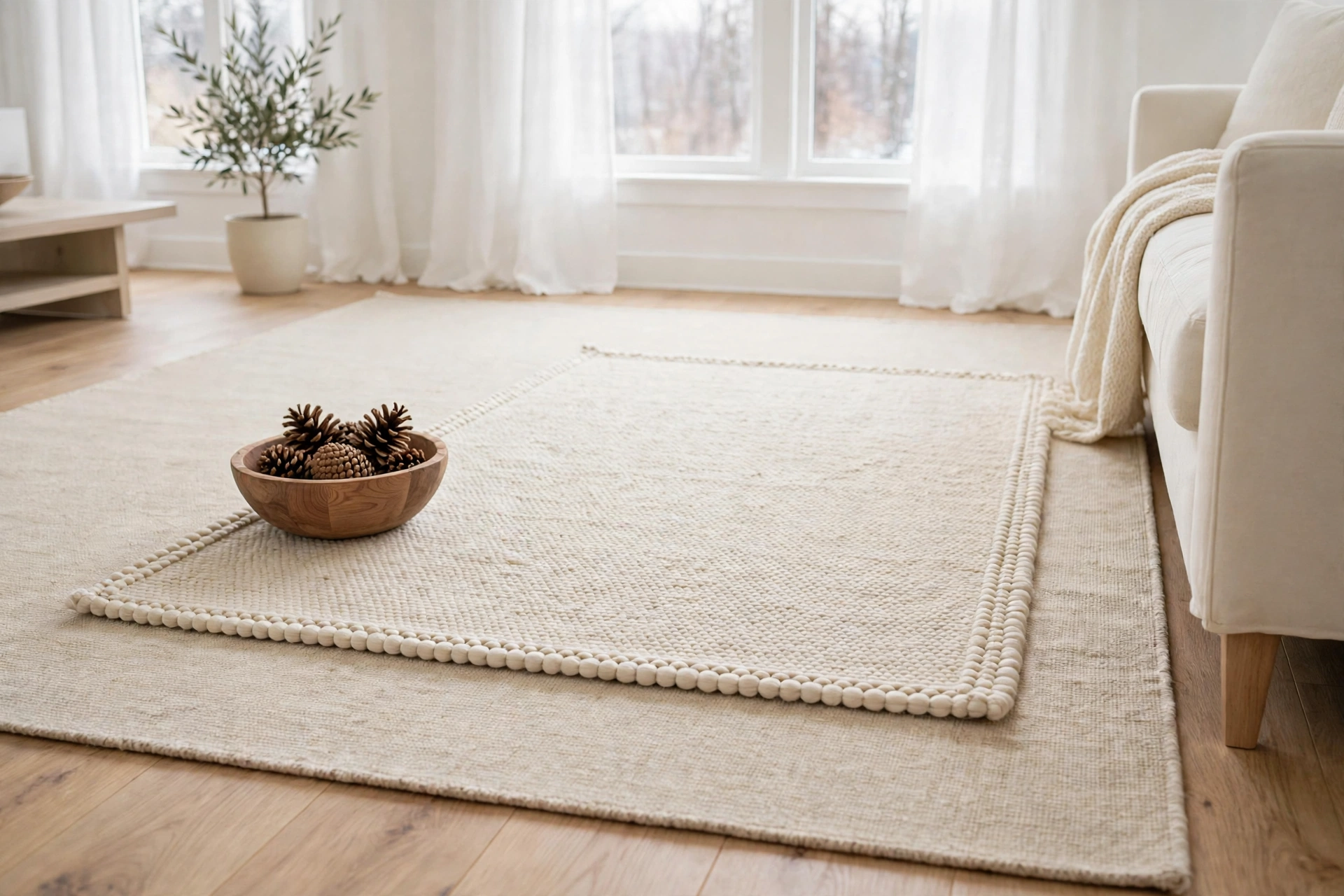
A thick wool rug, or a second rug layered over a flat-weave, makes the room feel warmer the moment you step in — and in January, the floor is the coldest thing in the house. Layering is the trick: a larger plain rug underneath, a smaller textured one on top, with a border showing all around, so it looks deliberate instead of accidental. It also covers the spot where the tree stood, if the carpet underneath is a little flattened or marked. No need for anything new if you already own two rugs; just move one. And in the bedroom, a small rug beside the bed means the first step of the morning is not onto a cold floor. If your living room is small, our Christmas Decor for Small Living Rooms guide shows how the same layering works when space is tight.
15. The Mantel Reset
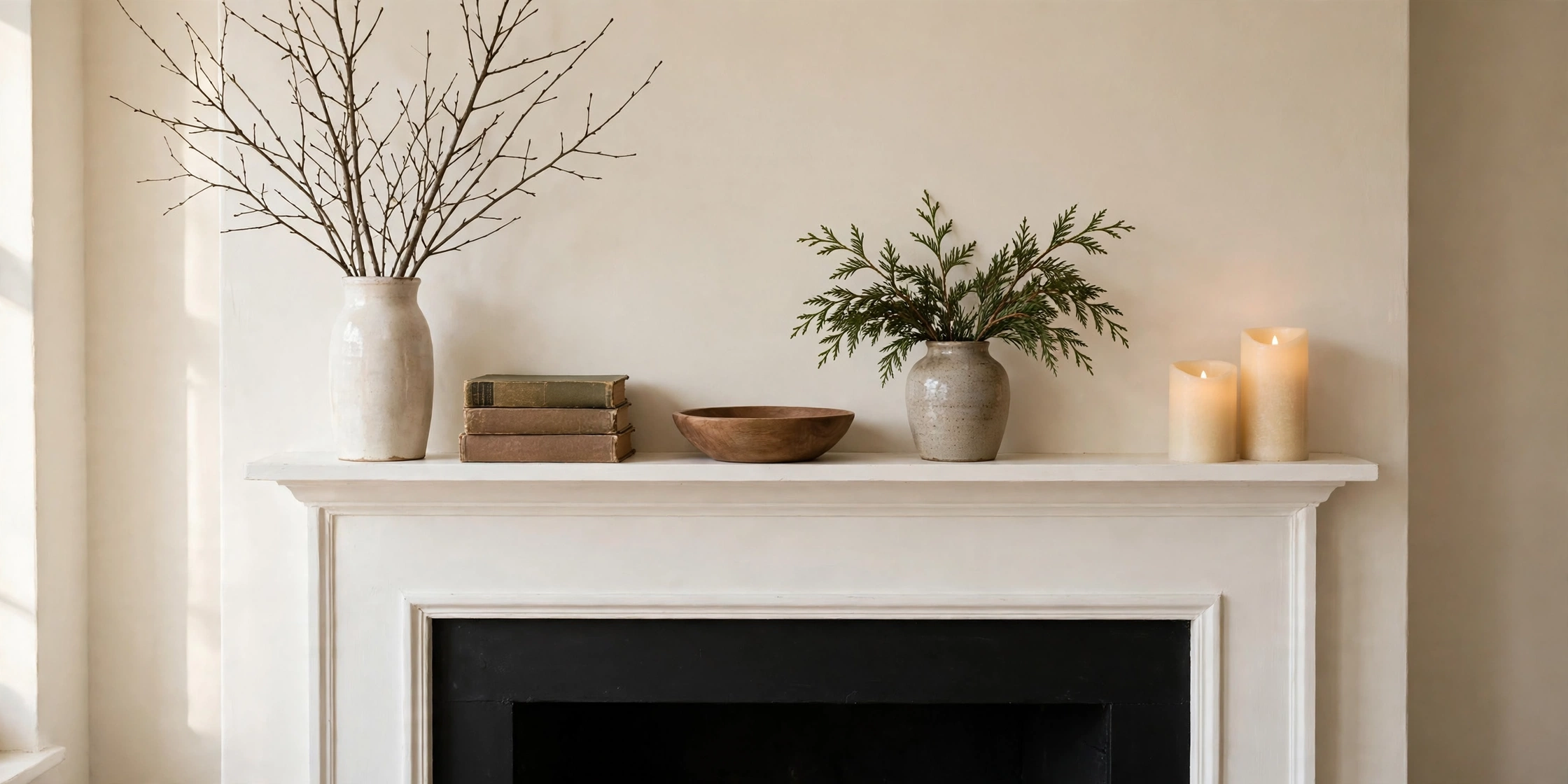
A Christmas mantel feels surprisingly bare once the garland comes down, so rebuild it with just three types of pieces: something tall, something low, and something with texture. A vase of bare branches is the tall piece. A small stack of books or a shallow bowl is the low one. A woven basket, a stoneware vase or a bit of plain cedar brings the texture. That is the whole formula — tall, low, texture — and it works on a mantel, a shelf, or a sideboard. Keep it to three types and the mantel looks calm instead of cluttered, which is the entire point of a January reset: less stuff, better chosen. If the mantel still looks empty, add candles; never add more objects.
16. One Winter Picture
Swap one piece of art for a winter one, and the whole room changes season. A pale snowy landscape, bare trees, frost, low sun — anything that reads as winter, not as a celebration — hung where the holiday piece was, at the same height, on the same nail. Snow, bare branches and pale light read as winter from January through March, which is why they outlast the holiday pieces. The centre of the picture should sit 57 to 60 inches from the floor, and over a sofa it should be about two-thirds of the sofa’s width. One picture is enough; the rest of the walls can stay exactly as they were. Print one at home, frame it in a frame you already own, and the January wall is done.

17. The Entryway, Winter-Ready
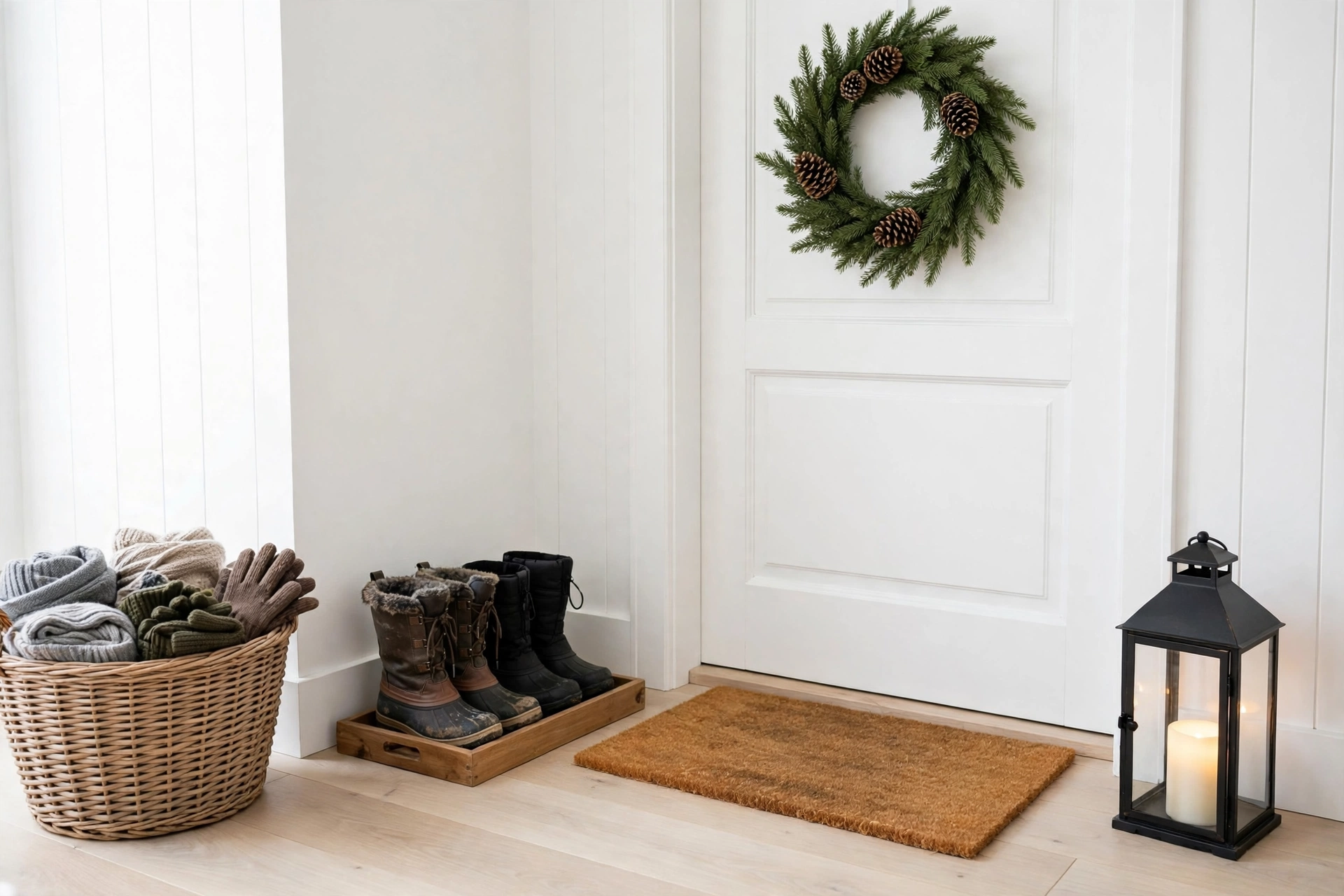
January entryways have a different problem from December entryways: it is not about the welcome anymore, it is about the wet. The boot tray stays, the basket for scarves and gloves stays, and the Christmas wreath on the door becomes the plain January wreath from idea 6. Swap the festive doormat for a plain coir one, keep the lantern by the door with its flameless candle on a timer, and the entryway is ready for actual winter — mud, snow, salt and all. Our Christmas Entryway Decor guide dressed this same space for December; this is the same entryway, one month later, with the holiday layer taken off and the practical layer left on.
18. The Bedroom Winter Retreat
Finish where you sleep. Straighten the layers you already use, add a soft blanket at the foot of the bed if you need one, and choose a pillow arrangement you will not redo every morning. The bedroom rule from our Christmas Bedroom Decor guide still holds in January: warm light at bed level, nothing glittery at eye level, and a timer that switches the lights off. A small lamp on the bedside table at 2700K, a heavy throw across the foot of the bed, and one plain green stem in a vase on the dresser — that is a winter retreat, not a redecoration. January nights are the longest of the year; the bedroom should be the warmest room in the house, and the calmest.

What it costs — the budget table
Most of these ideas are cheap on their own. The table below shows the rough cost of each one, so you can see the whole reset at a glance.
| Idea | Approx. cost | Where it goes |
|---|---|---|
| 1. Keep-swap-pack sort | $0 (boxes you own) | Whole house |
| 2. Tree corner branches | $0–15 (vase if needed) | Where the tree stood |
| 3. Strip the red, keep green | $0 | Mantel, wreath, banister |
| 4. Move the lights | $0 (lights you own) | Jars, windows, mirror |
| 5. Three lamps | $0 (lamps you own) | Living room |
| 6. January wreath | $0–10 (pinecones, eucalyptus) | Front door |
| 7. Paperwhites | $5–12 (bulbs + bowl) | Windowsill |
| 8. Forsythia, forced | $0 (cut branches) | Tall vase, table |
| 9. Bowl of winter citrus | $4–8 (fruit) | Dining or coffee table |
| 10. Pinecones, plain | $0–5 (bag if needed) | Coffee table, mantel |
| 11. Epsom salt snow jars | $5–10 (salt + candles) | Mantel, windowsill |
| 12. Pillow cover swap | $15–30 (two covers) | Sofa |
| 13. Heavy throw, doubled | $0–25 (throw if needed) | Sofa arm, foot of bed |
| 14. Warmer rug underfoot | $0–40 (layer a rug you own) | Living room, bedroom |
| 15. Mantel reset | $0–15 (branches, books) | Mantel or shelf |
| 16. One winter picture | $0–10 (print + frame you own) | Main wall |
| 17. Entryway, winter-ready | $0–12 (plain coir mat) | Entryway |
| 18. Bedroom winter retreat | $0–15 (throw, stem) | Bedroom |
| Whole-house starter set (ideas 1 + 4 + 7 + 12) | ~$20–50 | The four-piece starter set |
Prices are typical US store prices (Target, Michaels, dollar store, grocery store) for new items; most ideas cost $0 if you already own the pieces.
The welcome continues into January — our Christmas Entryway Decor Ideas guide dressed this same space for December.
Winter Decor After Christmas: Frequently Asked Questions
When should I take Christmas decor down?
Take the real tree out first — it dries out fast in January and that is the one piece that should not wait. The rest can come down any time from New Year’s Day to Twelfth Night on 5 January, or Epiphany on 6 January if you follow the traditional date. The winter pieces in this list — lights, greenery, pinecones, candles — stay up until March, so the house never goes bare in between.
What winter decor stays up after Christmas?
Anything that says winter, not Christmas: warm white lights, plain greenery, pinecones, faux or outdoor greenery, candles, knit throws, snowy prints and bare branches. Pack away ornaments, bows, stockings, Santas, reindeer and anything with words like Noel or Merry on it. Red and green together reads as Christmas; cream, oatmeal, forest green and wood read as winter.
How do I make January feel less bare without buying a lot?
Pick one focal point per room and stop. A bowl of paperwhites on the windowsill, the lights moved into a jar, one winter picture on the main wall — one star per room, then breathing room. Use what you already own first: the lights, the greenery, the throws and the candles are all still in the house. The four-piece starter set in the table above costs about $20–50 new, and most of it is reusable every year.
Can I do a winter reset in a rented home?
Yes — almost everything in this list is renter-safe. Nothing here needs a nail: the wreath hangs on a removable hook, the lights go in jars and around mirrors, the rugs layer on the floor, and the art swaps onto a nail that is already in the wall. Avoid anything glued or screwed, and everything comes down in March with no marks.
How much does a winter decor reset cost?
A good-looking January reset starts at about $20 — paperwhite bulbs, a bowl of citrus, a bag of Epsom salt and two pillow covers. The four-piece starter set in the table above (sort, lights, paperwhites, pillow covers) runs about $20–50 new, and most of the ideas in this list cost $0 because they use pieces you already own.
When do I take the winter decor down?
Around the spring equinox, about 20 March, when the evenings get longer and the first green shows outside. Take the lights and the heavy throws down first, keep the plain greenery a little longer, and swap the winter picture for something pale and fresh. If you decorated for Christmas with us, the Christmas Decor Ideas pillar is where the seasonal cycle starts again next year.