
A small apartment living room has an impossible job description. It must be a lounge, a cinema, a dining room, a home office, a guest room, and the place the laundry dries — in about 150 square feet. No wonder so many of them feel like a waiting room with a sofa in it.
The fix is not more space. It’s furniture that does two jobs, layouts that respect walking paths, and a few visual tricks that make walls politely disappear. These 18 ideas come from real small-space design — most are renter-friendly, several are free, and together they turn “we make it work” into “we love it here.”
Layout First: The Rules Small Rooms Live By
1. Float the sofa off the wall — or don’t. Measure first. In a genuinely tiny room (under 10 x 12 ft / 3 x 3.7 m), pushing the sofa against the wall wins back precious floor. In a slightly bigger small room, floating it a few inches creates the breathing room that reads as luxury. The rule isn’t “always float” — it’s “never waste the gap.” If the gap can’t fit a console, a plant, or at least your hand while cleaning, close it.
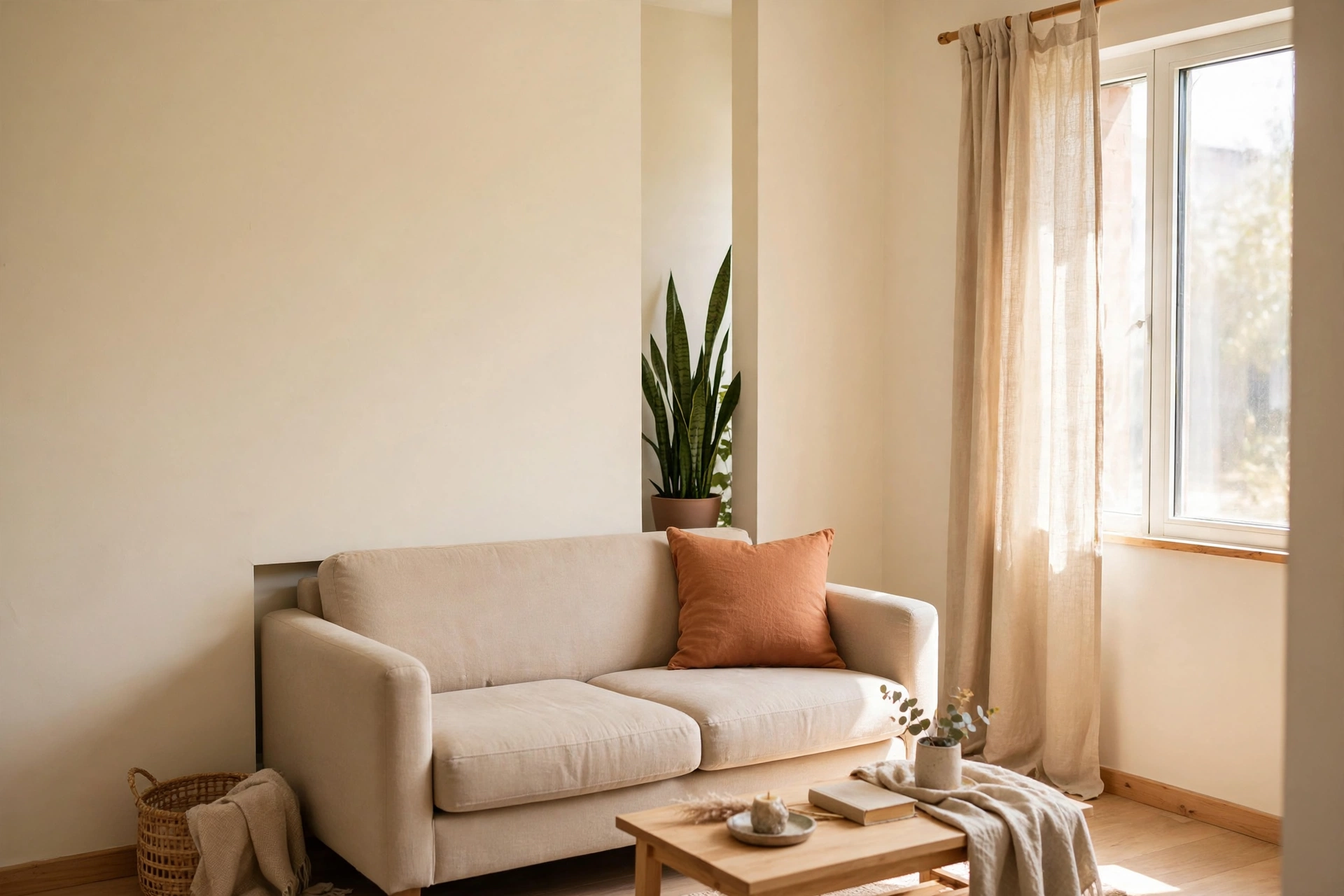
2. Build the room around one conversation zone. One sofa (or loveseat), one or two chairs angled toward it, one rug defining the group. When seating forms a loose U or L around a coffee table, the room feels intentional — and guests stop perching on armrests. Everything outside the zone (desk, dining) gets its own small rug or lighting pool so the room reads as two tidy rooms, not one confused one.
3. Protect your walkways like they’re furniture. You need one clear path from the door to the kitchen/bathroom that never crosses the TV zone. Minimum comfortable width: 30 inches (76 cm). If you have to turn sideways past the coffee table, the coffee table is too big or too centered — slide it, swap it, or lose it.
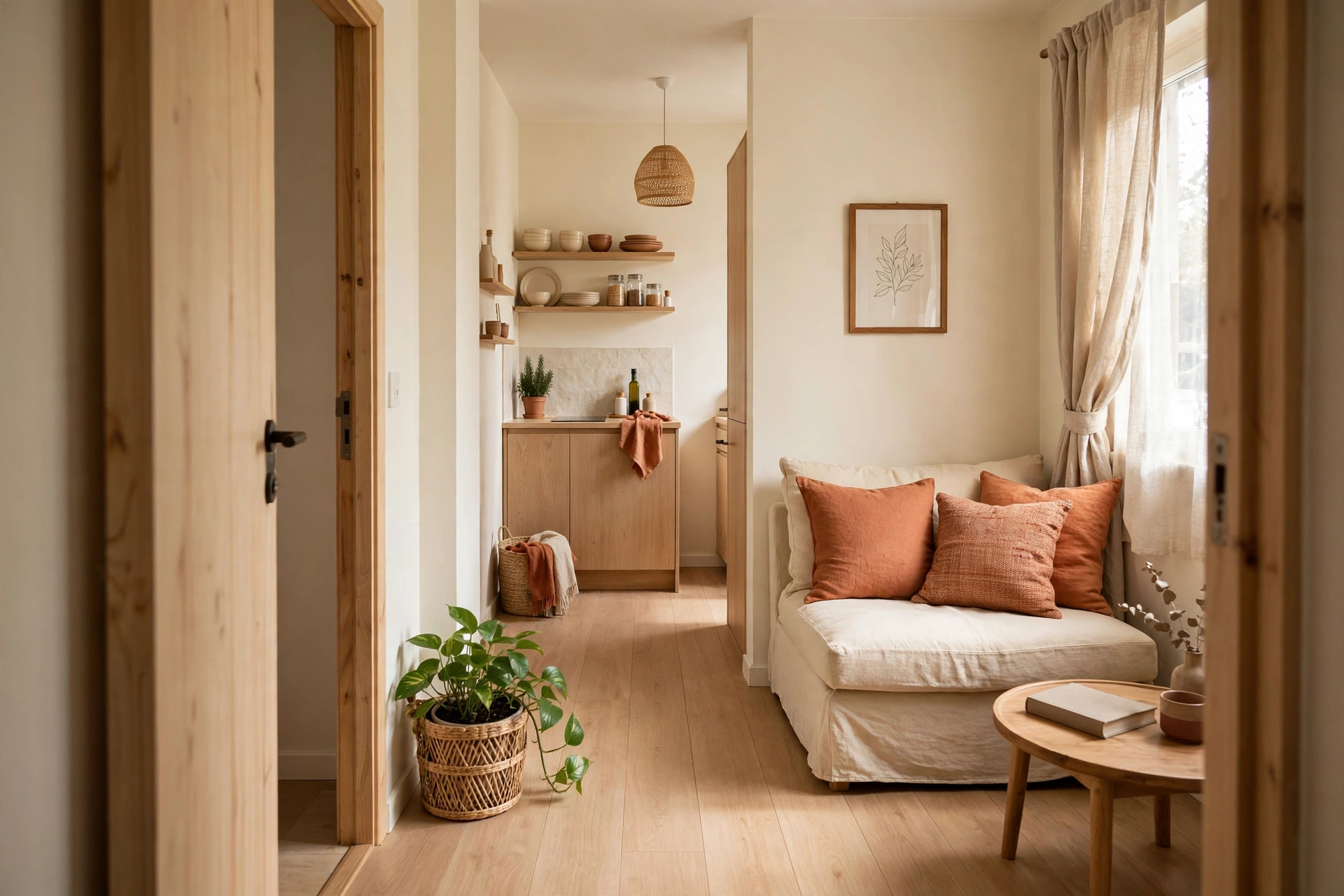
4. Use the corners — they’re free real estate. A corner reading chair with a small lamp creates a whole second “room.” A corner shelf or triangular desk claims space that rectangles can’t use. Corners are where a 150-square-foot room hides its extra 20.
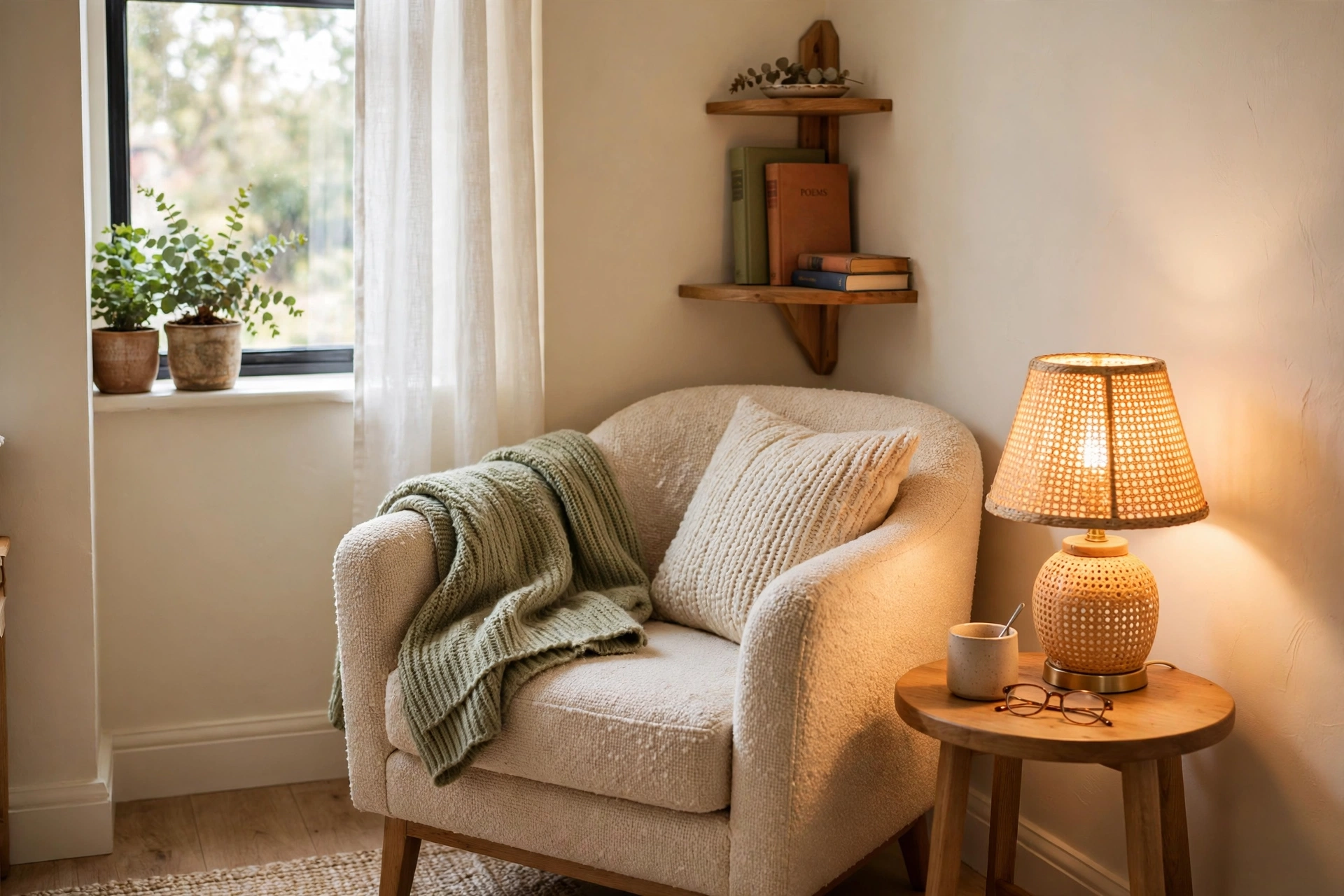
Furniture That Earns Its Place Twice
5. Choose a storage ottoman as your coffee table. Padded top for feet, tray on top for drinks, storage inside for blankets, board games, and the remote farm. In a small living room, a hard coffee table is a single-use luxury; an ottoman works three jobs and never bruises a shin.
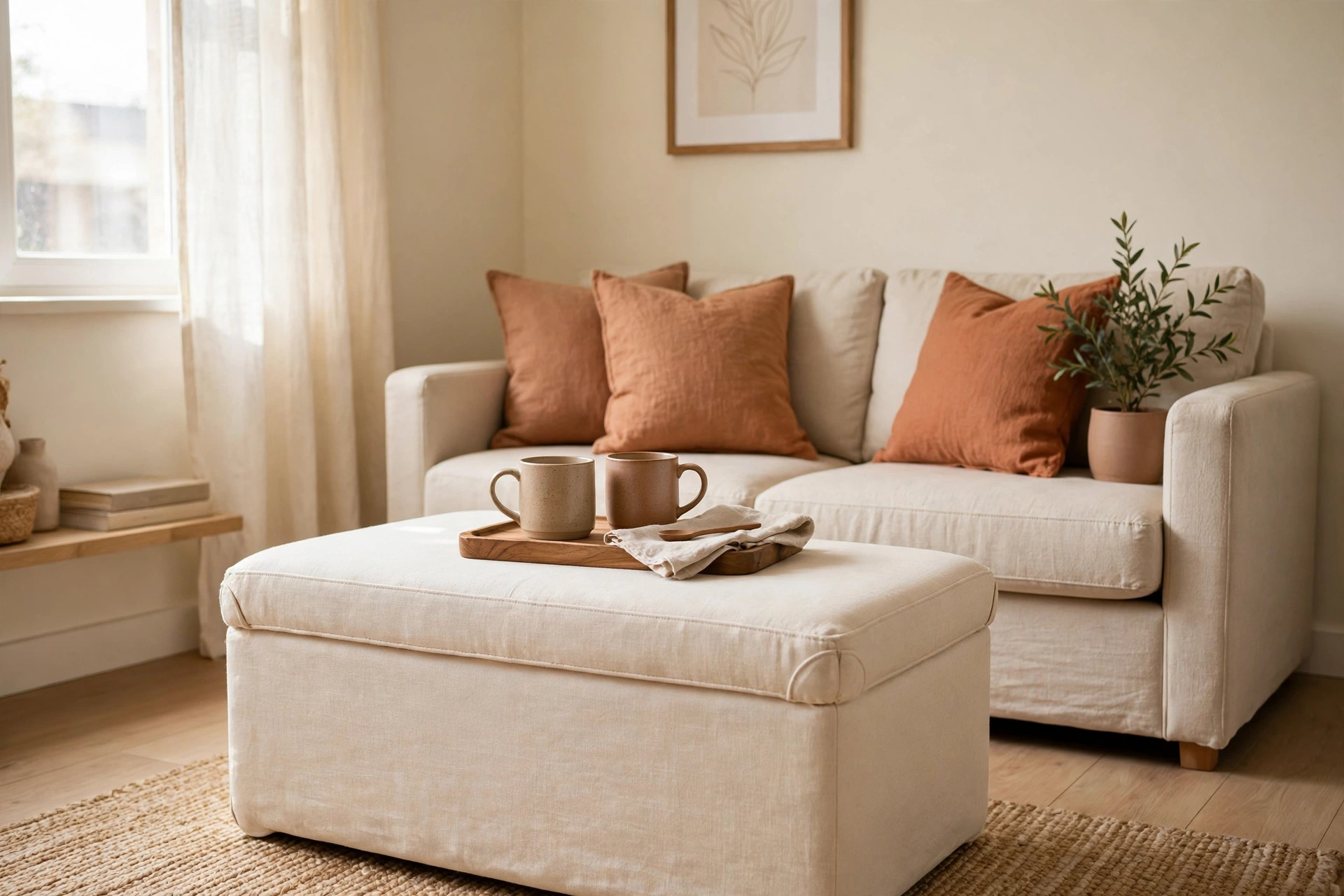
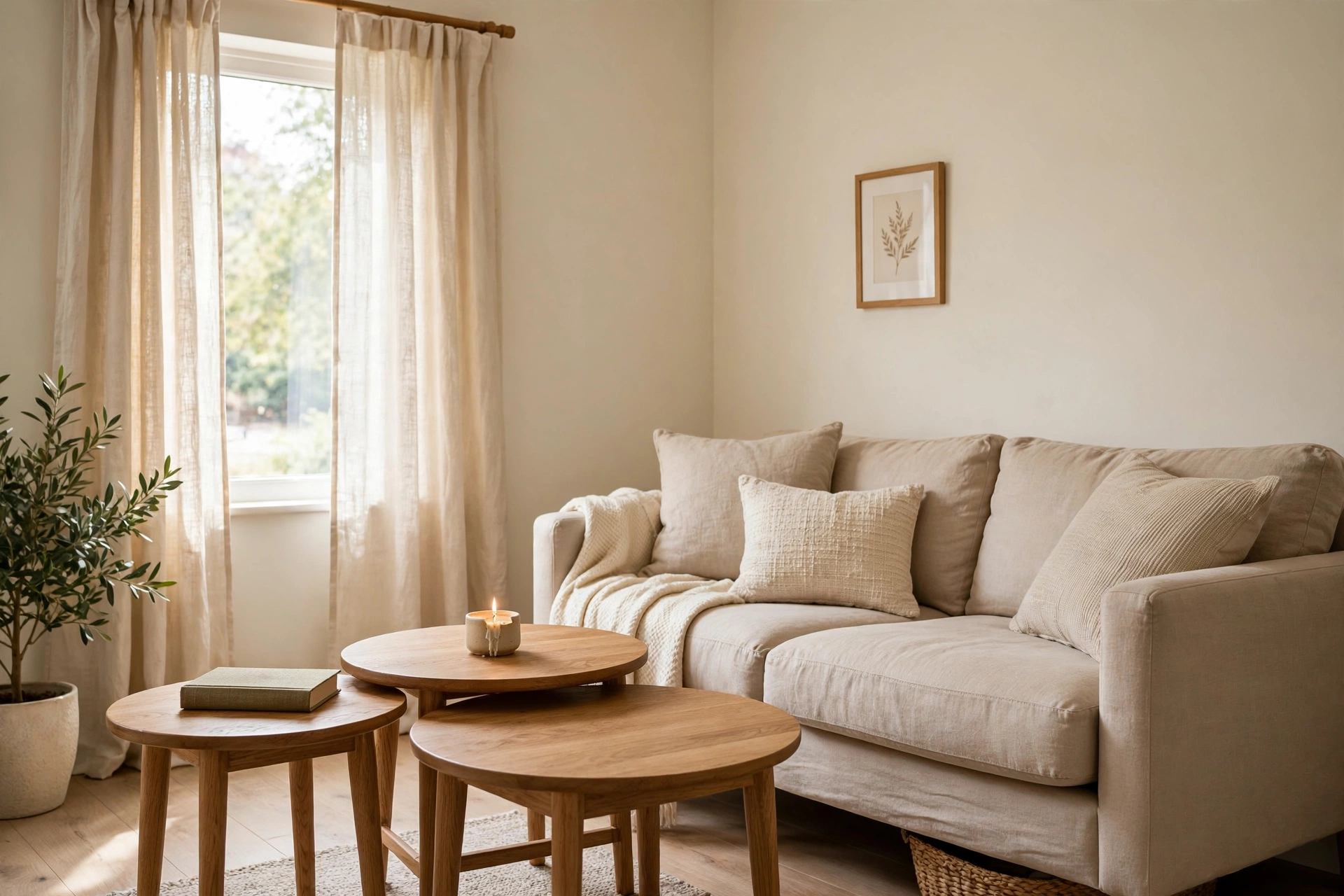
6. Nesting tables instead of side tables. Two or three small tables that tuck into one footprint. Pull them out for guests and drinks, nest them back for floor space. This is the closest thing small-space furniture has to magic.
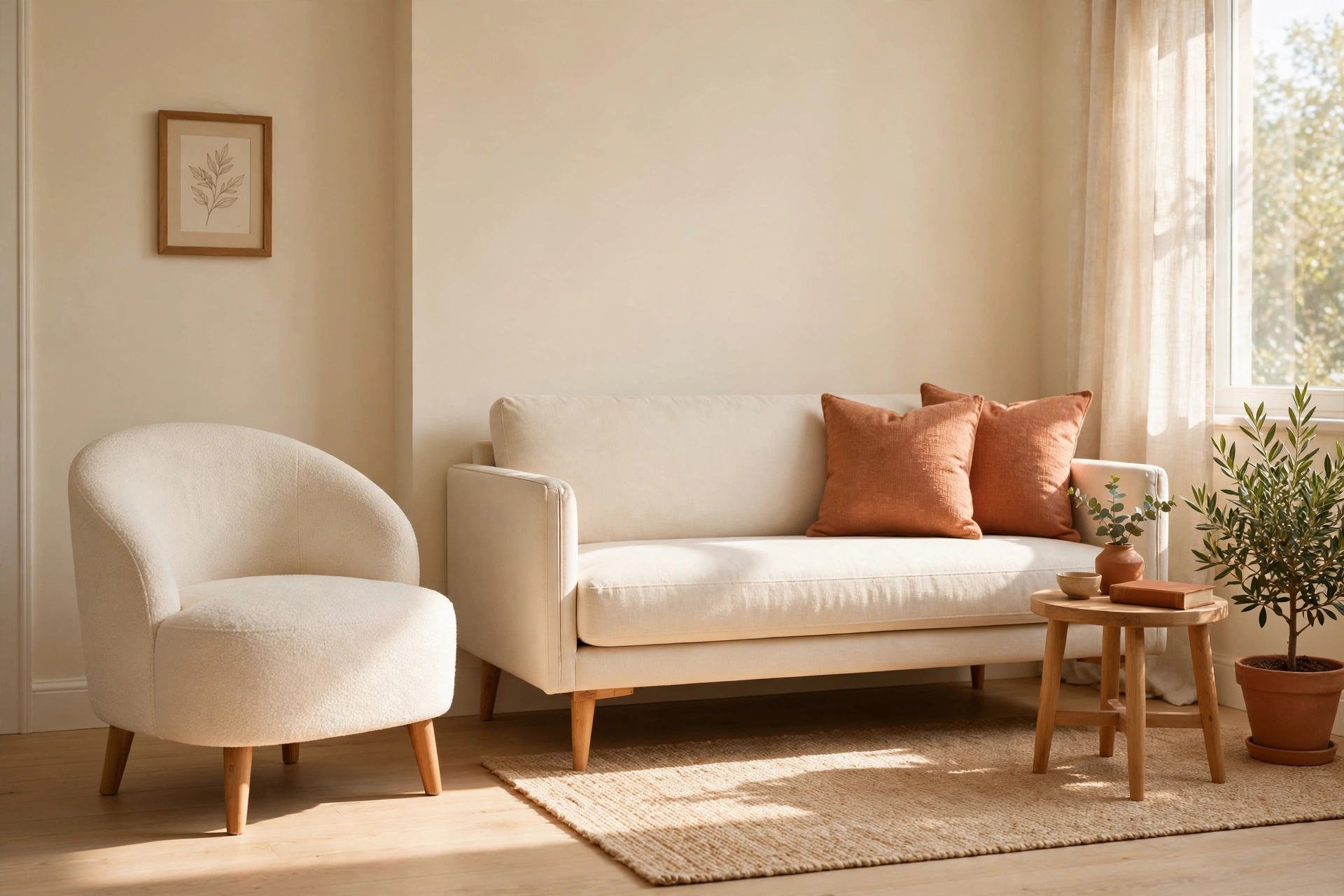
7. Armless and low-backed seating. Arms and tall backs eat visual and physical space. An armless slipper chair, a low-profile loveseat, or a sofa with slim track arms seats the same people in a noticeably smaller silhouette. Legs matter too: furniture raised on visible legs lets light travel underneath, and rooms feel bigger when light can move.
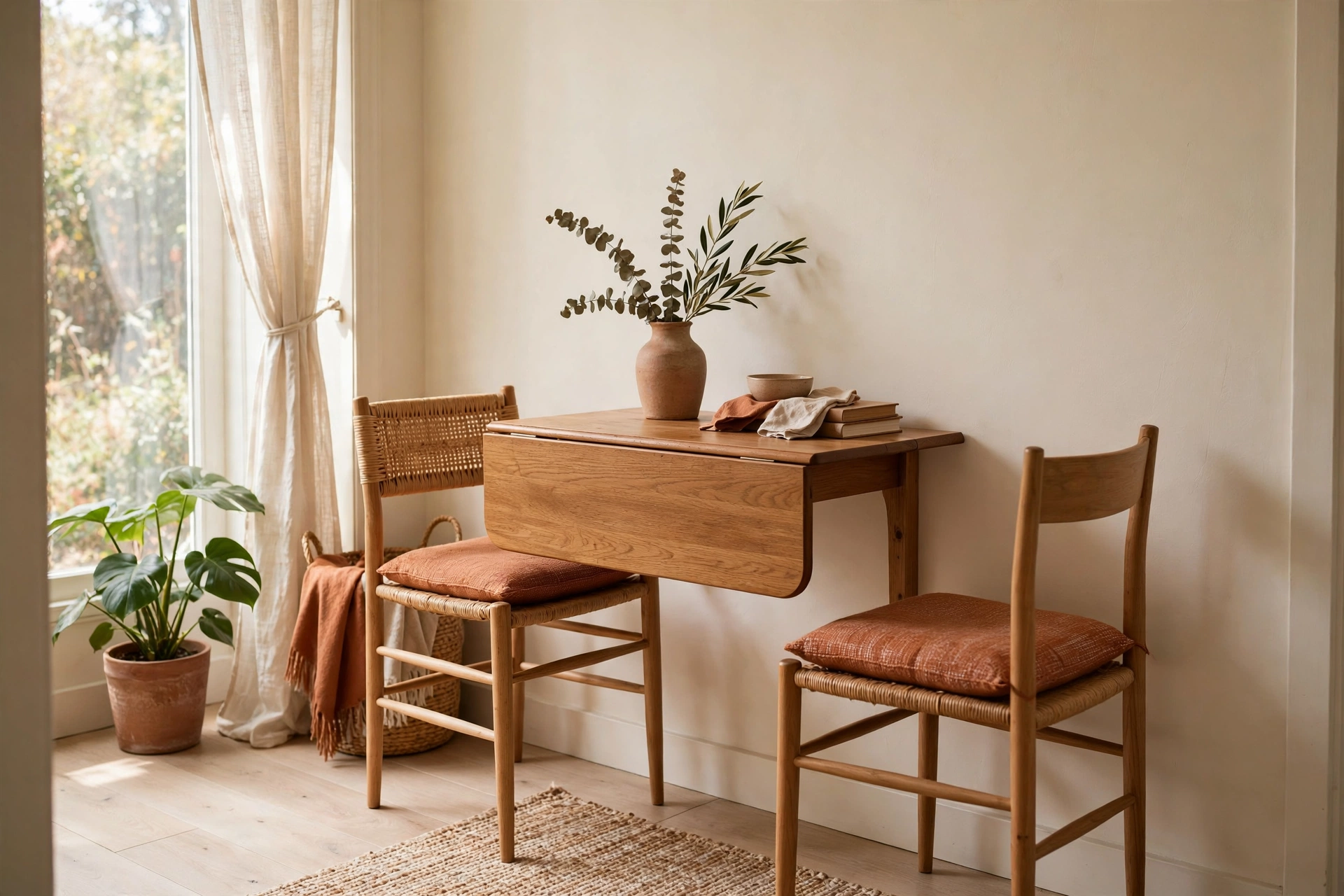
8. A drop-leaf or gateleg dining table. Seats two daily at 24 inches (61 cm) deep, seats six on holidays folded out. Tuck it against the wall as a console between meals. In studio apartments, this single piece replaces a desk, a dining table, and a work surface without apologizing for any of them.
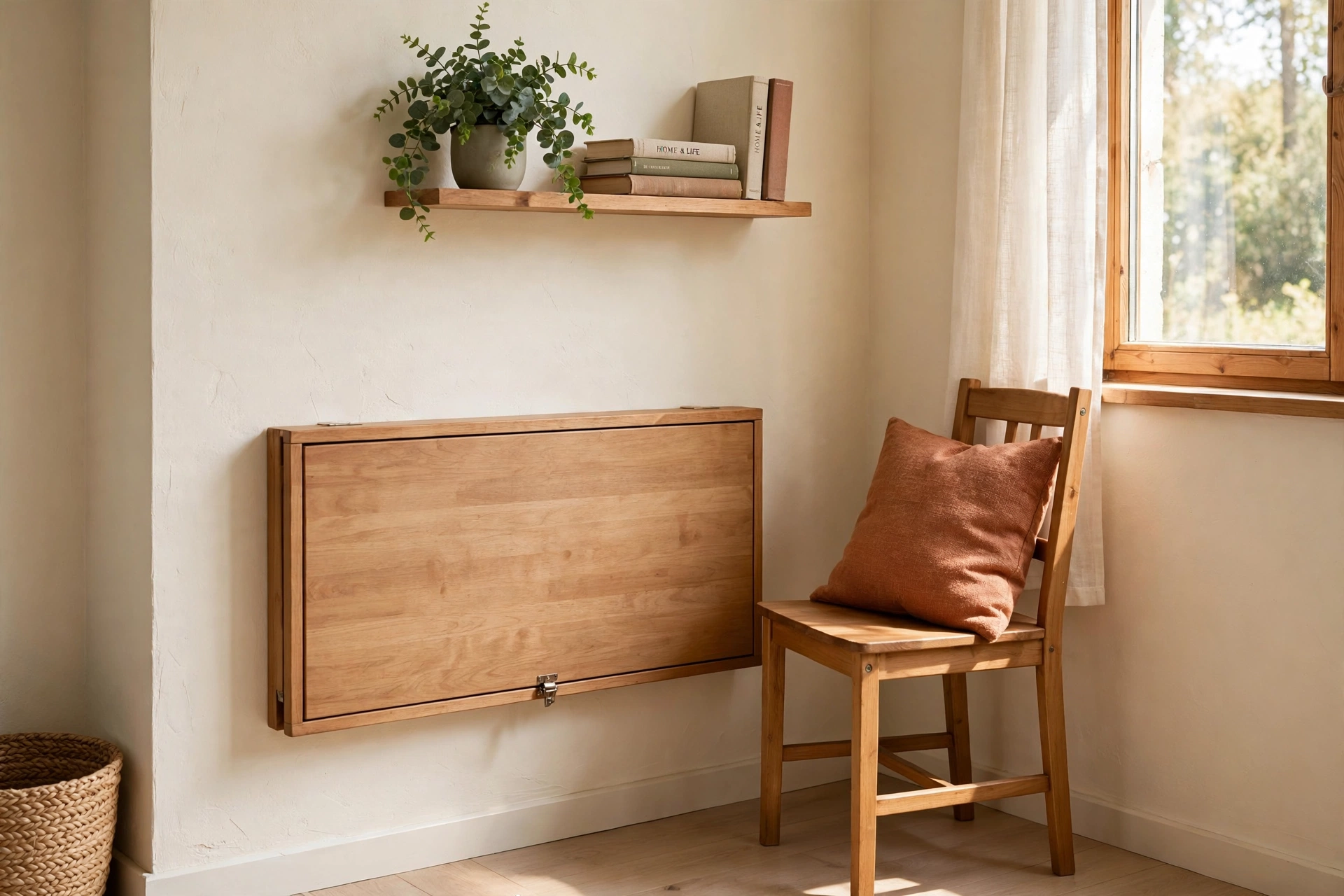
9. The wall-mounted fold-down desk. A desk that folds flat to 4 inches (10 cm) when closed. Work-from-home without surrendering a corner forever. Pair it with a dining chair you already own — dedicated office chairs are space hogs with wheels.
Visual Tricks That Add Square Feet You Don’t Have
10. Hang the biggest mirror you can. One large mirror (at least 24 x 36 in / 61 x 91 cm) opposite or beside the window bounces daylight through the whole room and visually doubles the wall it hangs on. Leaning an oversized mirror is renter-friendly and reads as a design choice, not a compromise.
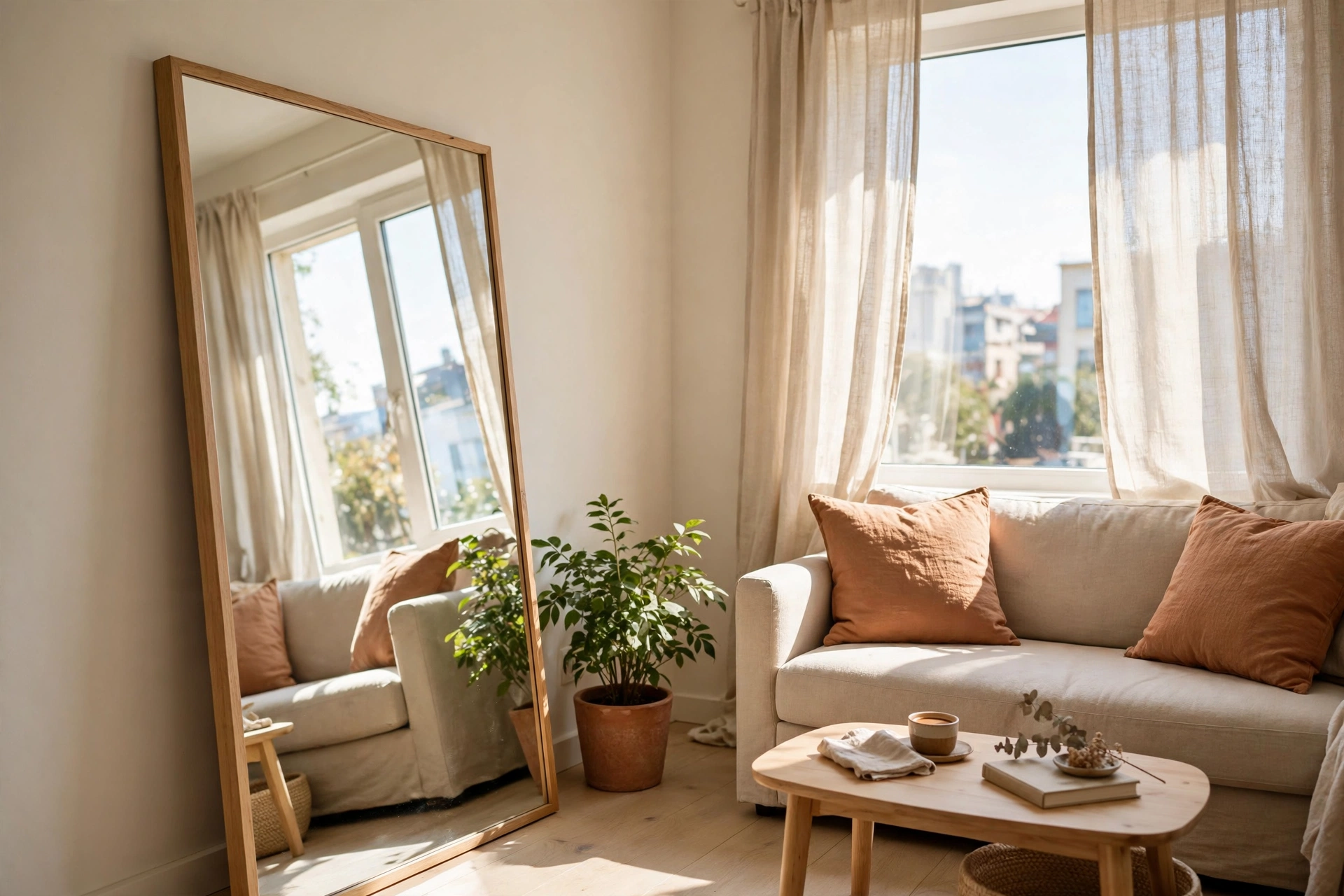
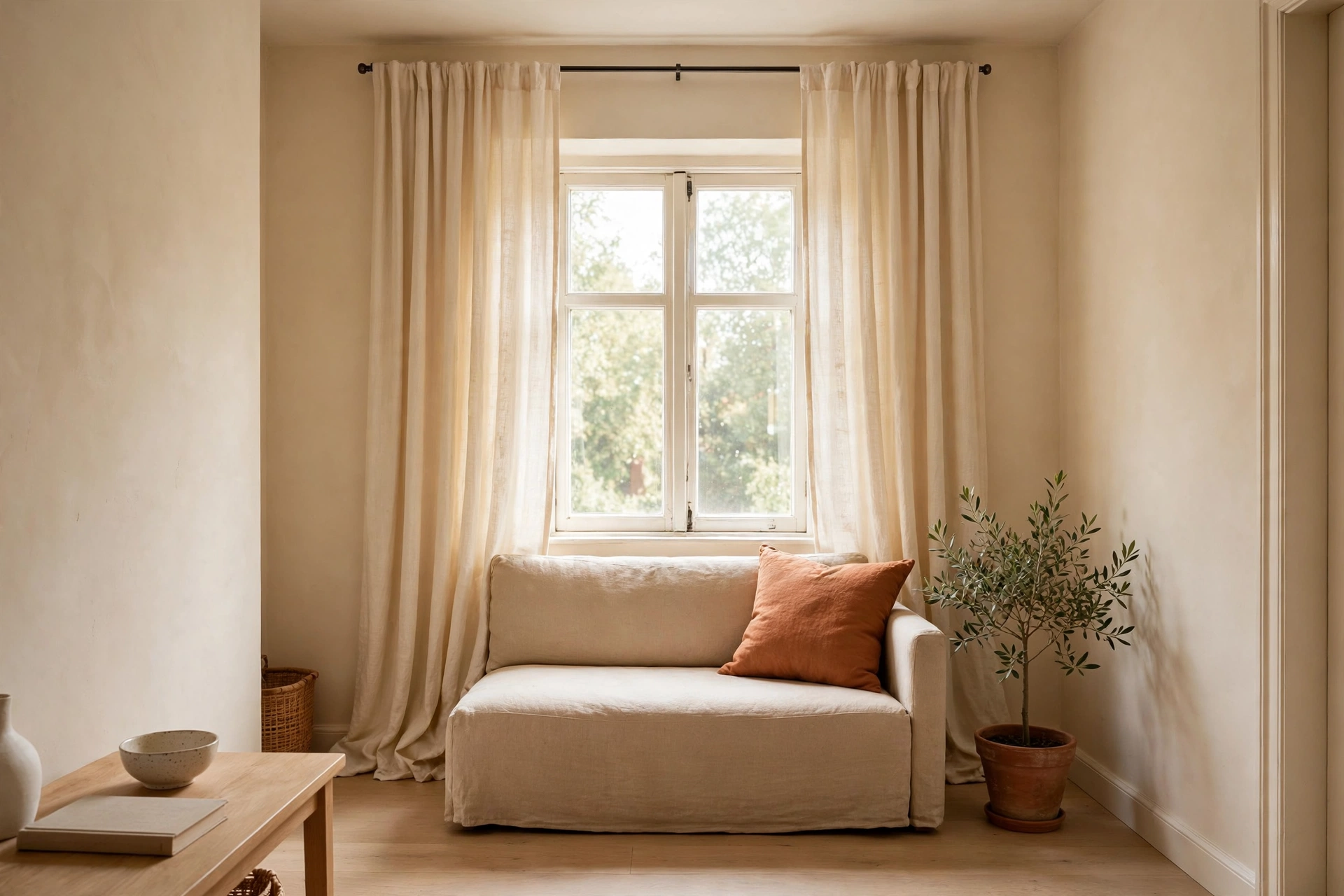
11. Curtains at ceiling height, in the wall’s color family. Mount the rod as high as it goes and let panels fall to the floor. When curtains roughly match the wall color, the wall reads as one continuous surface — taller and wider. High-contrast curtains chop the wall into stripes; matching ones stretch it.
12. One large rug to unify, never three small ones. A rug big enough to sit under the front legs of all the seating pulls the zone together and makes the floor read as one generous plane. Small rugs scattered around announce exactly how small each patch is. (Our budget makeover guide has the layering trick for when the big rug isn’t in the budget.)
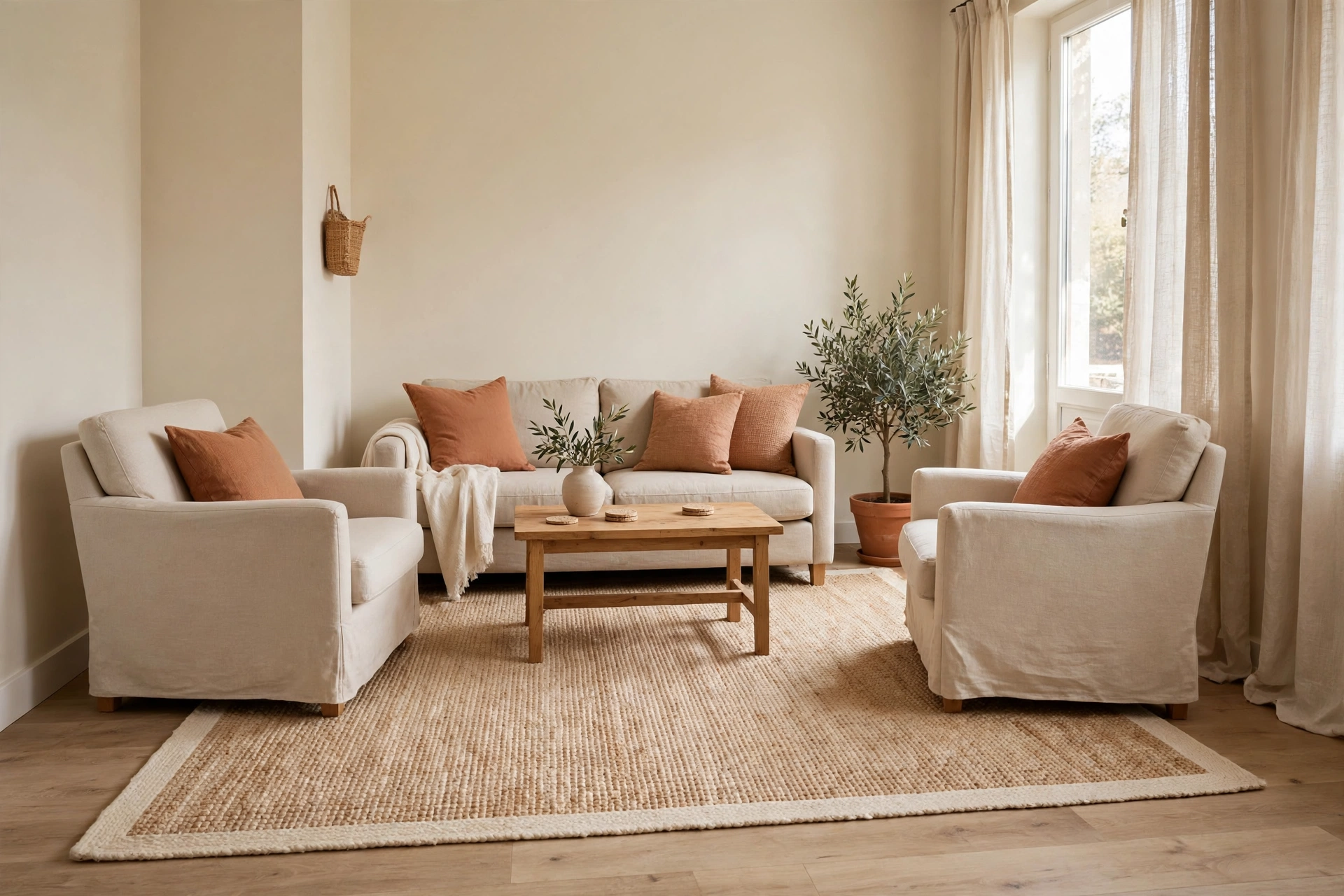
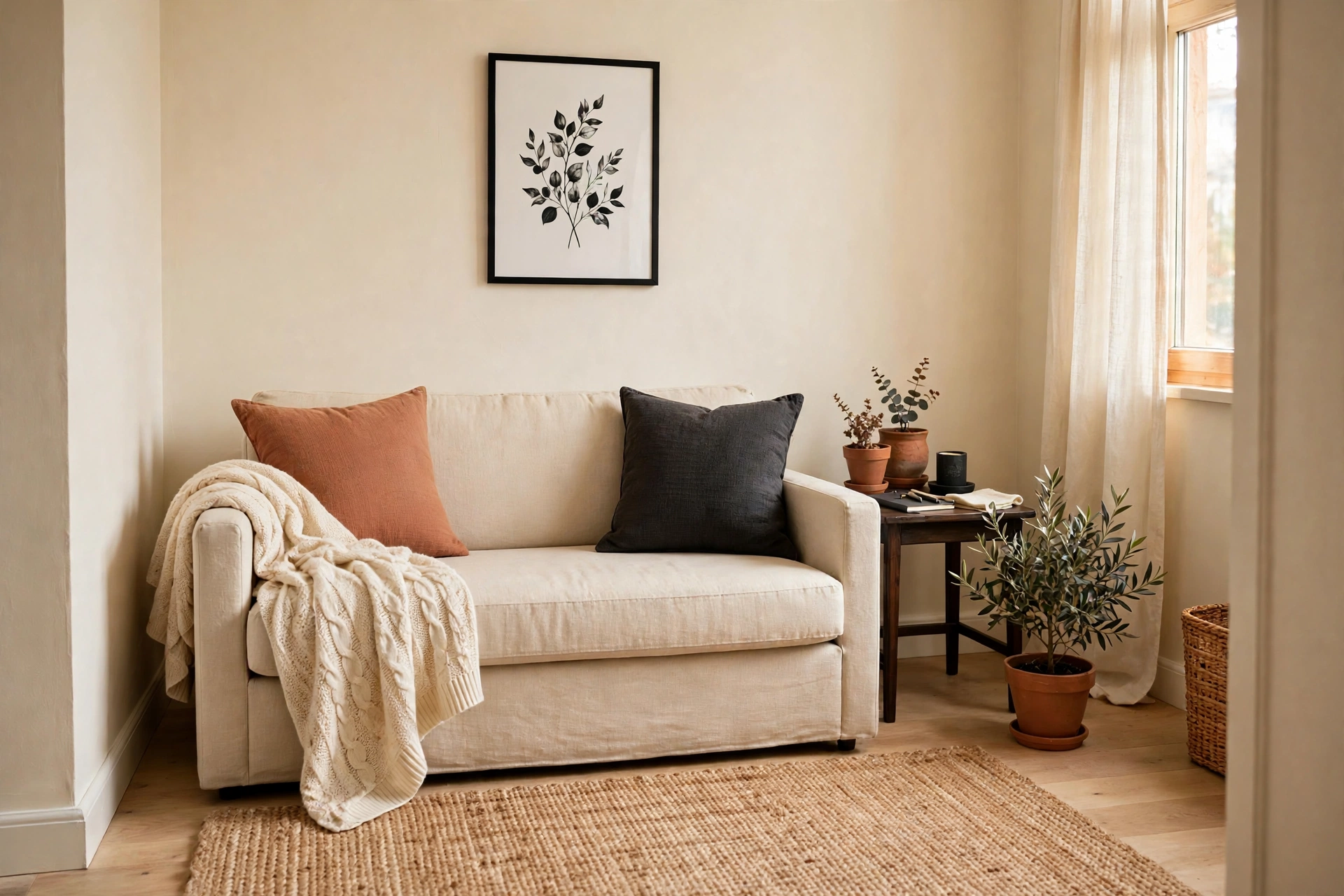
13. Keep the palette tight: 3 colors, repeated. Small rooms can’t absorb visual noise. One neutral base, one accent, one dark anchor — repeated in the rug, cushions, art, and throws — creates the calm that makes a room feel larger than it measures. This is also why stylists remove one thing after finishing: in 150 square feet, every object is 1% of the room.
Storage That Hides in Plain Sight
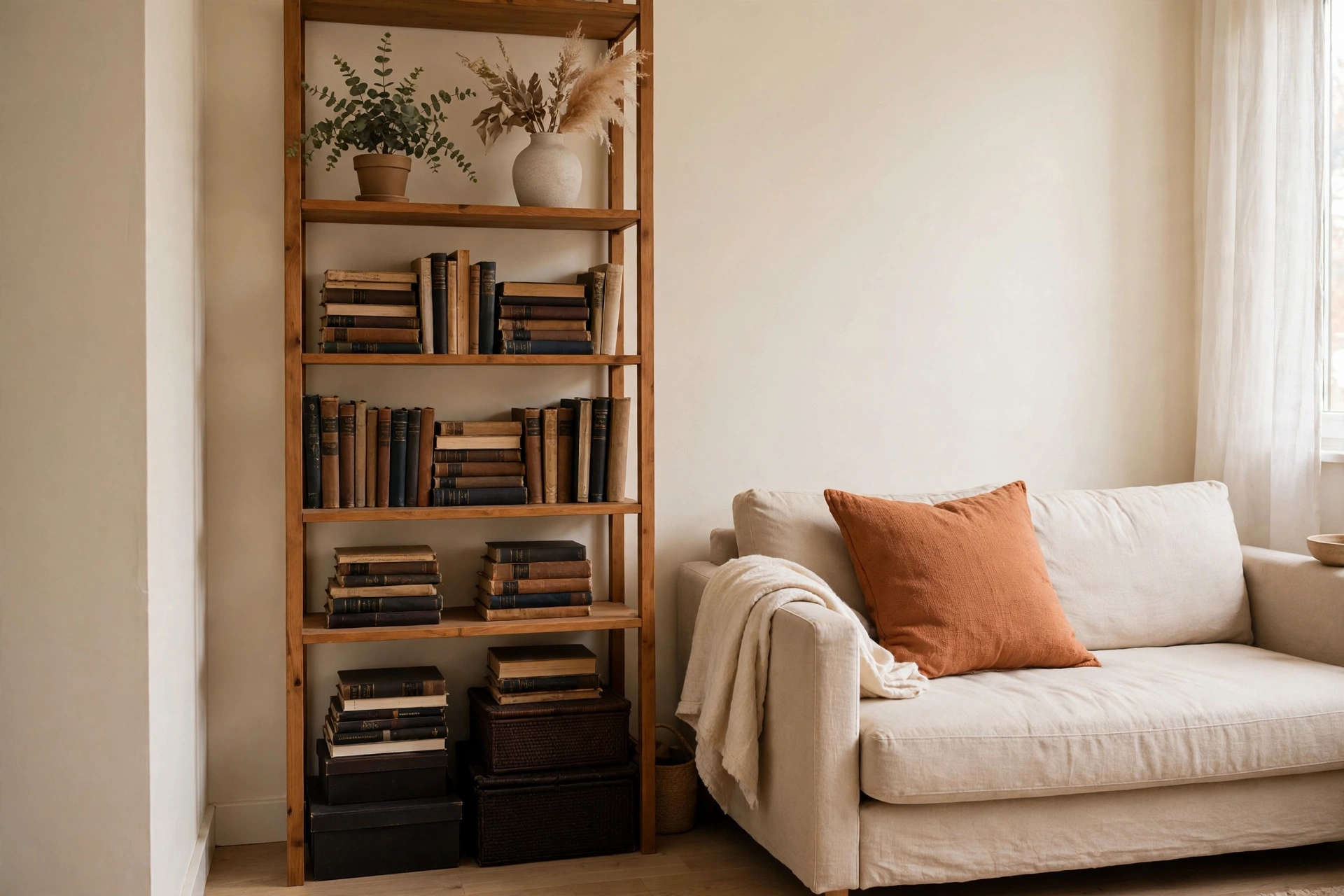
14. Go vertical with one tall, narrow bookcase. A 72-inch (183 cm) tall, 24-inch (61 cm) wide shelf stores more than a wide low console and uses wall that was doing nothing. Style rule: heavy and dark at the bottom, light and airy at the top — the room feels grounded, not top-heavy.
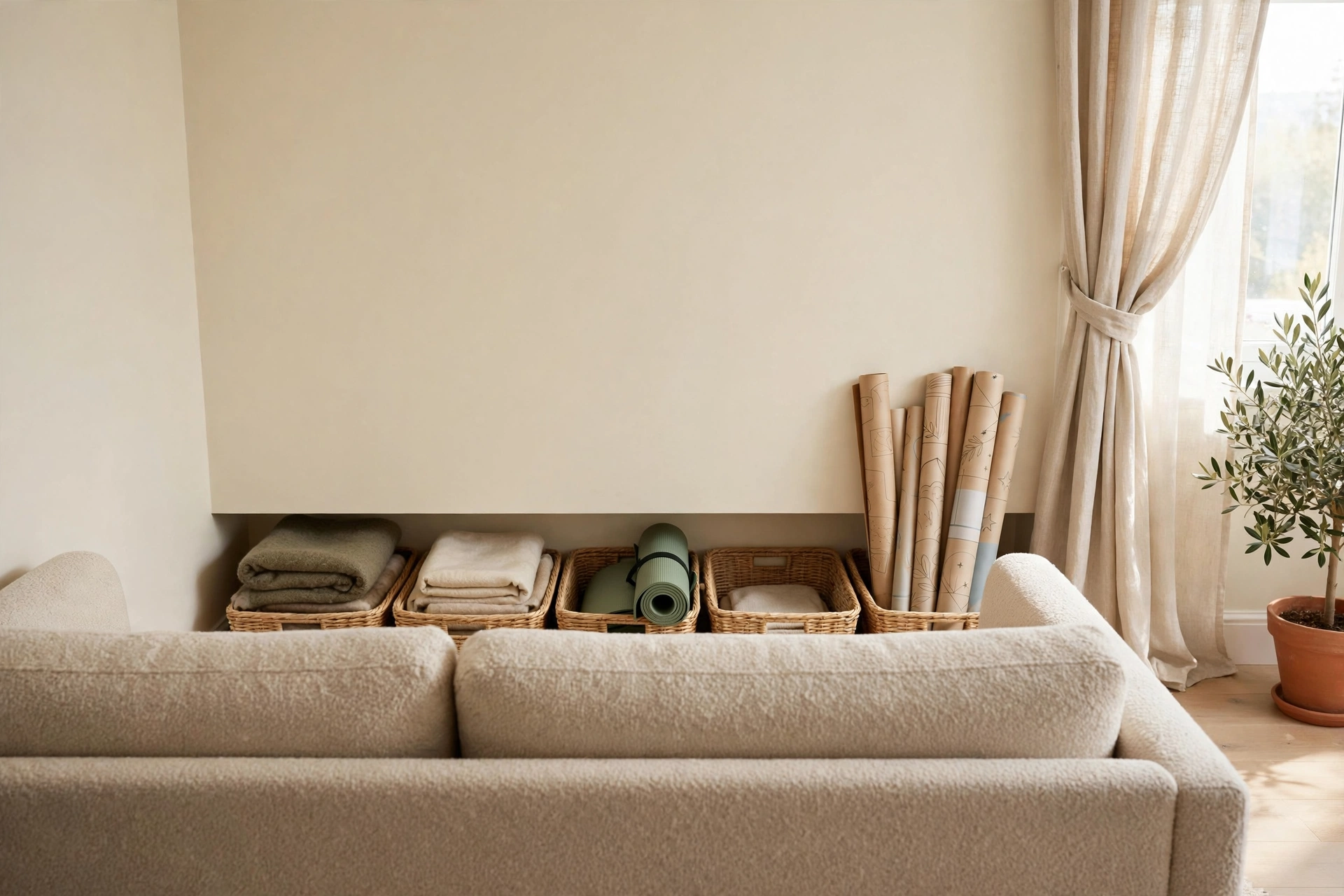
15. Behind-the-sofa is a storage aisle. If your sofa floats even 8 inches (20 cm) off the wall, that hidden strip holds a shallow basket row: blankets, yoga mat, wrapping paper, the ironing board. Invisible, instant, free.
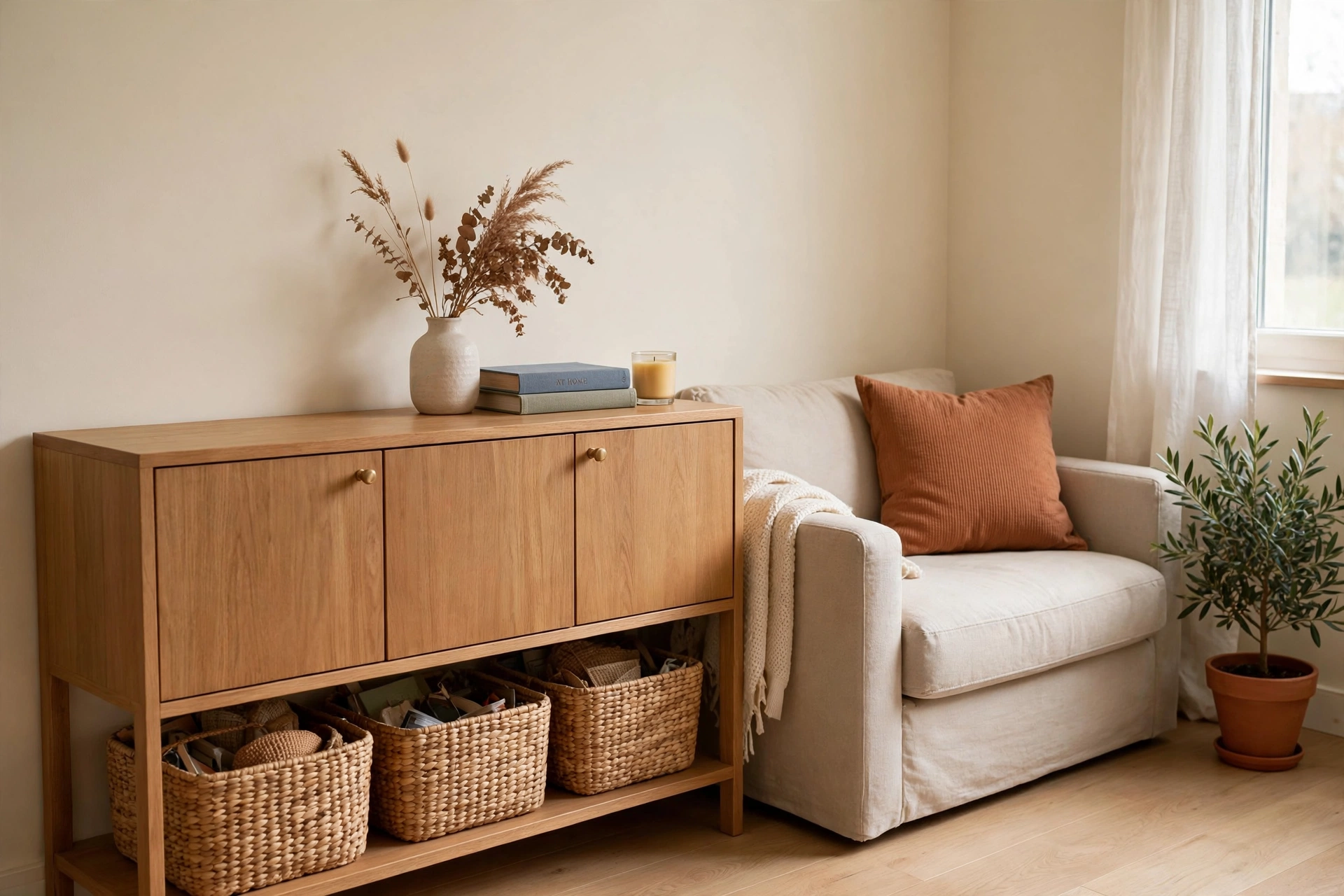
16. Closed storage for the messy middle. Open shelves look great in photos and chaotic by Thursday. The small-apartment compromise: closed cabinets or baskets on the lower shelves (chargers, games, paperwork), pretty objects up top. Visual calm is a storage strategy, not a personality trait.
Light and Life
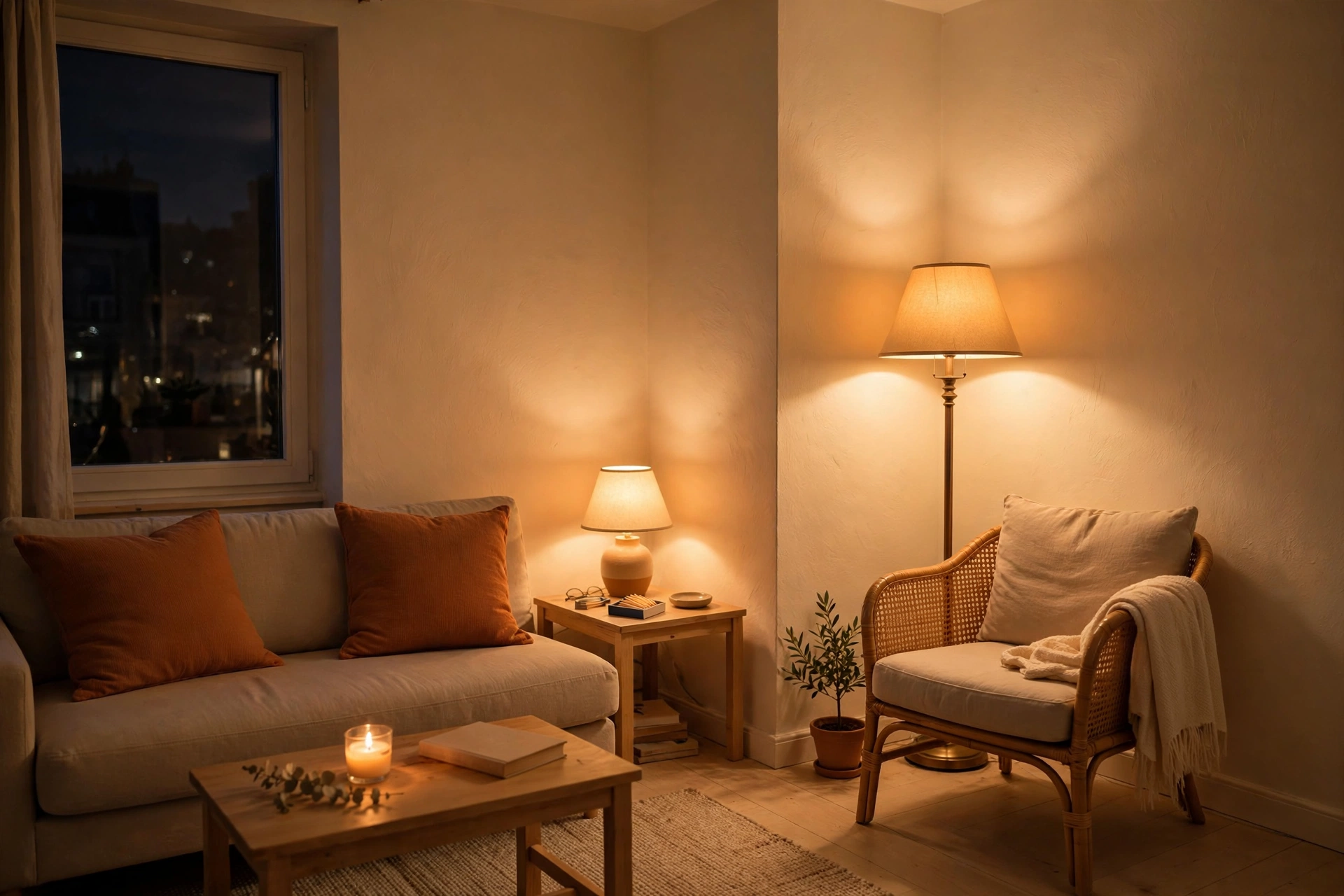
17. Three lamps, zero overheads after dark. A floor lamp by the reading corner, a table lamp in the seating zone, and one small glow (candle, LED strip behind the TV) make a small room feel layered and evening-sized. One ceiling light makes it feel like an interrogation with cushions. Wall-mounted swing-arm lamps are the renter’s best friend — light exactly where you read, zero floor footprint.
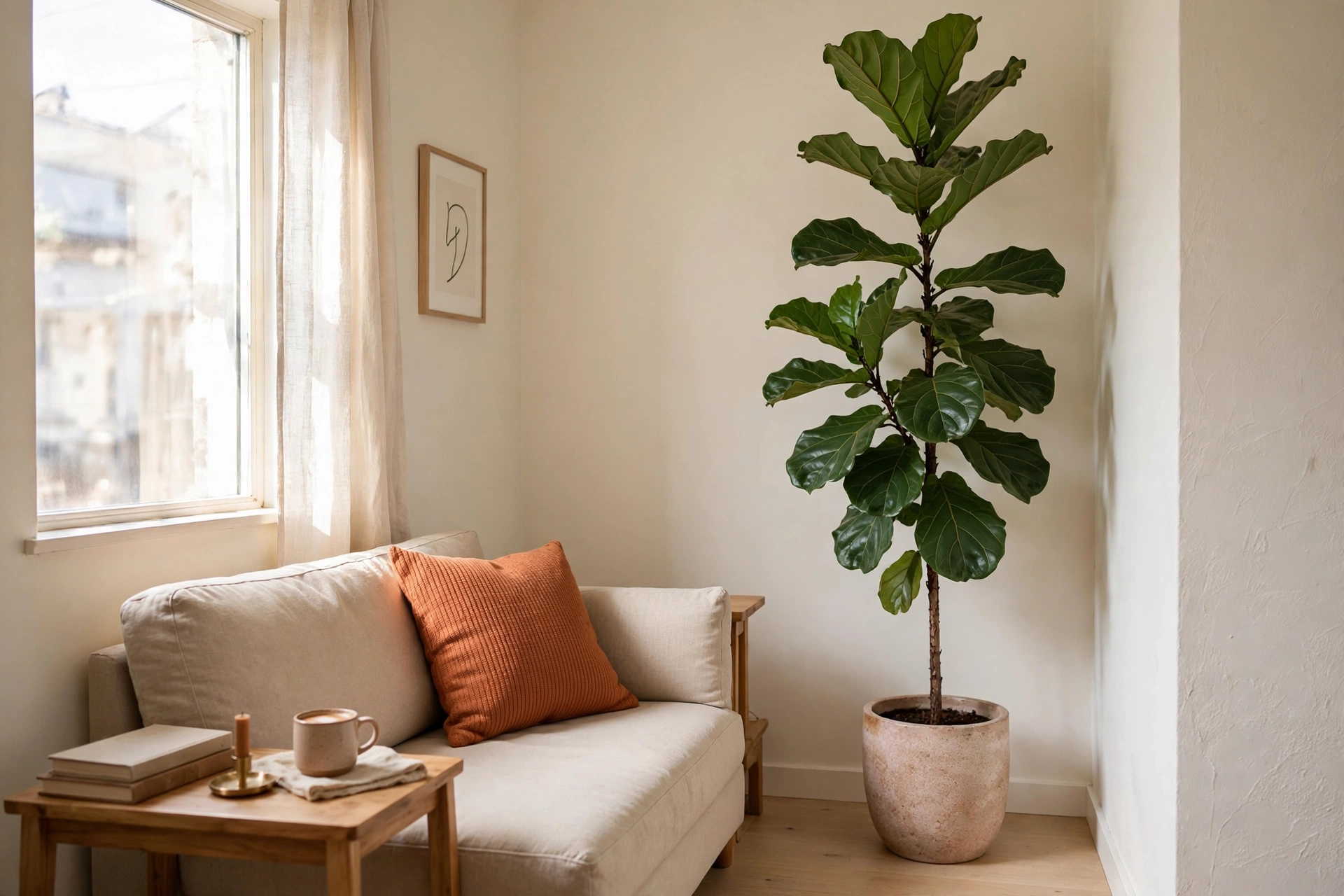
18. One plant with height. A tall plant in the emptiest corner (fiddle-leaf, snake plant, or a convincing faux) draws the eye up, fills the vertical void, and adds the organic shape that rectangles-on-rectangles rooms desperately need. Height is the small room’s most underused dimension — end the room at the ceiling, not at the sofa back.
A Weekend Plan for a 150-Square-Foot Living Room
Saturday morning: Pull everything out of the corners, set the conversation zone on the rug, restore one clear walkway. Cost: $0.
Saturday afternoon: Hang the big mirror and raise the curtains. Cost: $0–60.
Sunday: Add the storage ottoman or nesting tables (thrift stores are full of both), style the bookcase heavy-bottom/light-top, set up the three-lamp plan.
Result: a living room that seats friends, hides its clutter, and finally feels like the best room in the apartment — not the compromise.
Frequently Asked Questions
How do I arrange a living room in a small apartment?
Create one conversation zone (sofa + chairs on a rug), keep one 30-inch walkway completely clear, and assign every other function (desk, dining) its own small defined area. Float furniture only when the gap behind it serves a purpose.
What furniture is best for a small living room?
Pieces that work twice: a storage ottoman as coffee table, nesting side tables, a drop-leaf dining table, and armless or low-backed seating on legs. Measure everything — in small rooms, 2 inches is a decision.
What colors make a small living room look bigger?
Light, warm neutrals on the biggest surfaces, with one accent and one dark anchor repeated in small doses. Matching curtains to the wall color and using one large rug stretch the room visually more than any paint color alone.
How can renters make a small living room better without drilling?
Lean an oversized mirror, use tension-rod or no-drill curtain brackets, fold-down furniture, command-strip shelving, and plug-in lamps. Every idea in this guide has a no-drill route.
Should a small living room have a coffee table?
Only if it earns the space. A storage ottoman or a pair of nesting tables usually serves better; if guests constantly squeeze past it, the honest answer is no table — use side surfaces instead.
Decorating the bedroom next? Our 21 small bedroom ideas were written for rooms even smaller than this one — the corner-bed and raised-bed tricks are renter gold.