
Here’s the truth nobody on a home-makeover show will tell you: most living rooms don’t look tired because they’re ugly. They look tired because they’re arranged tired — sofa shoved against the wall, one harsh ceiling light, curtains hung at whatever height the last person chose. The bones are fine. The styling is what’s broke — and styling is the cheap part.
Every idea in this budget living room makeover costs under $35 on its own, and the full plan totals $95. Do three this weekend and the room changes. Do all fifteen and guests will ask what you “had done.”
The Free Moves First ($0)
1. Pull the furniture off the walls. Counterintuitive and completely free: floating your sofa even 3–5 inches (8–13 cm) off the wall, angled slightly with a chair pulled in, creates the “designed” conversation grouping every showroom uses. Pushed-flat-against-the-wall reads as “waiting room.” This single zero-dollar move is the highest-impact change on this list.
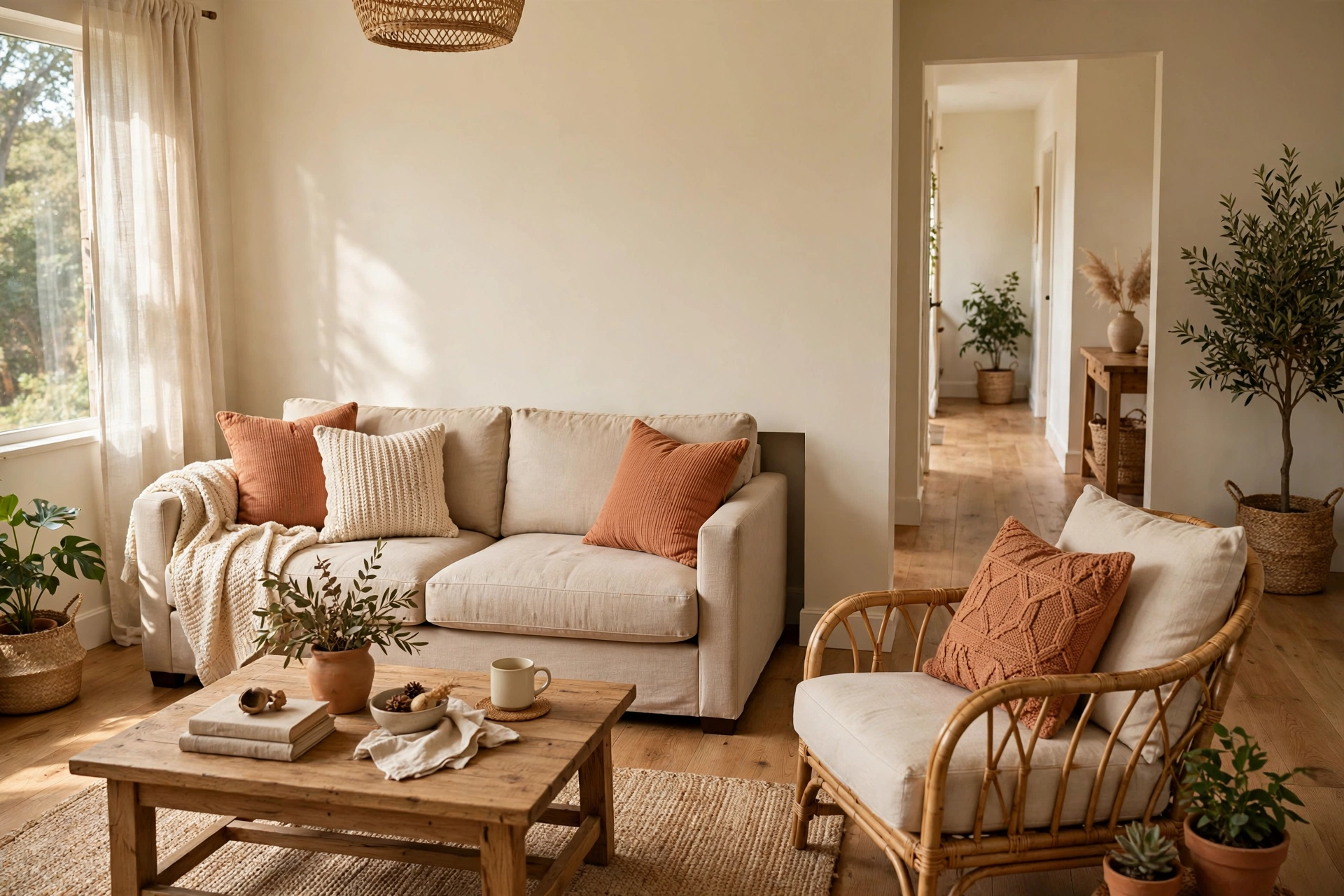
2. The great edit. Walk the room with a laundry basket and remove everything that isn’t furniture, lighting, or one of your top ten favorite objects. Clear surfaces read as expensive. Most living rooms are one ruthless hour away from looking 30% better — the “after” photos in most makeovers are 50% editing, 50% new stuff.
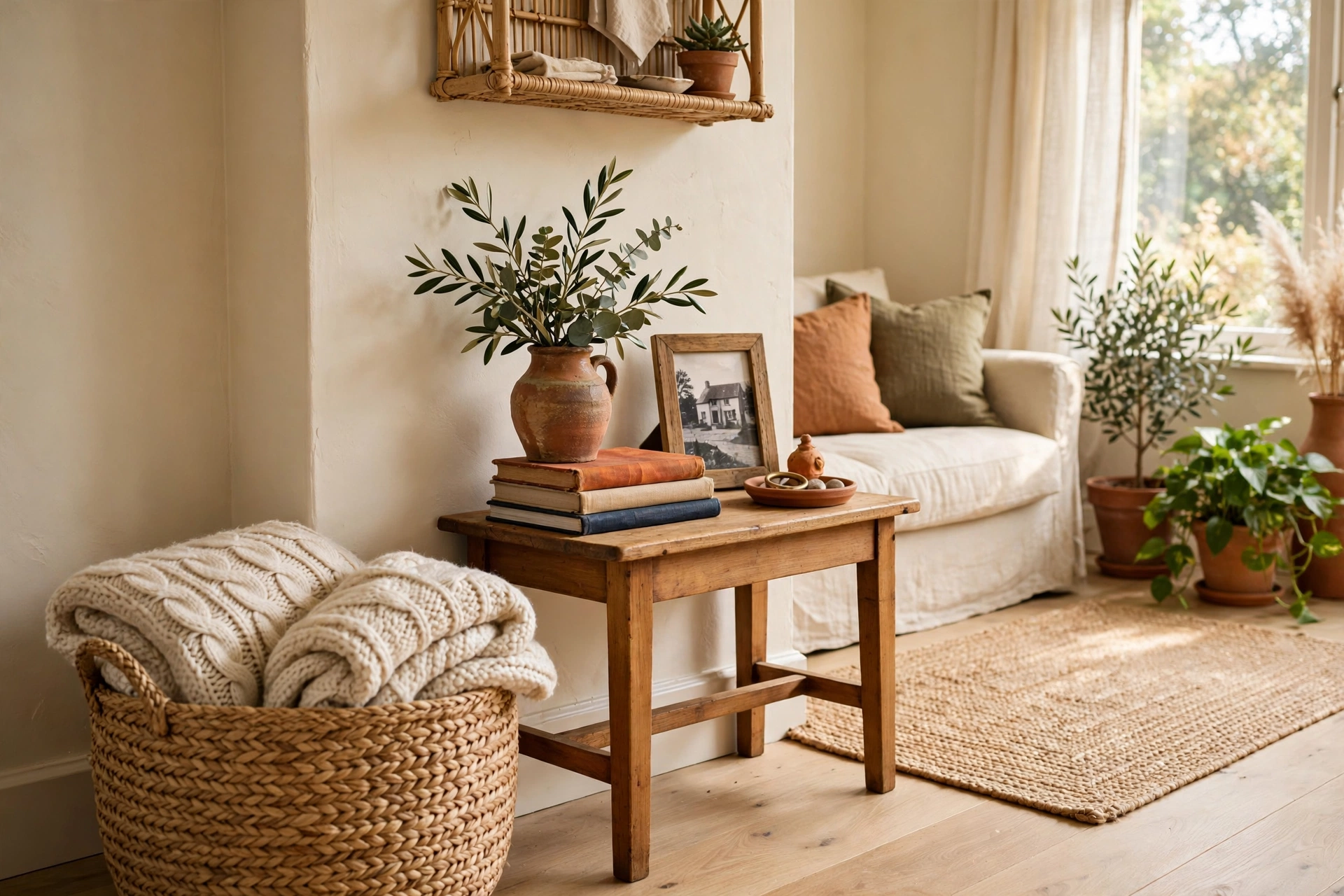
3. Shop your own house. That vase in the guest room, the stack of art books in the office, the throw folded in a closet: redistribute them. Rooms get stale because objects stop being seen. Moving a piece to a new room makes it new again — at exactly $0, the best price in this article.
Fabric: The $25 Transformation
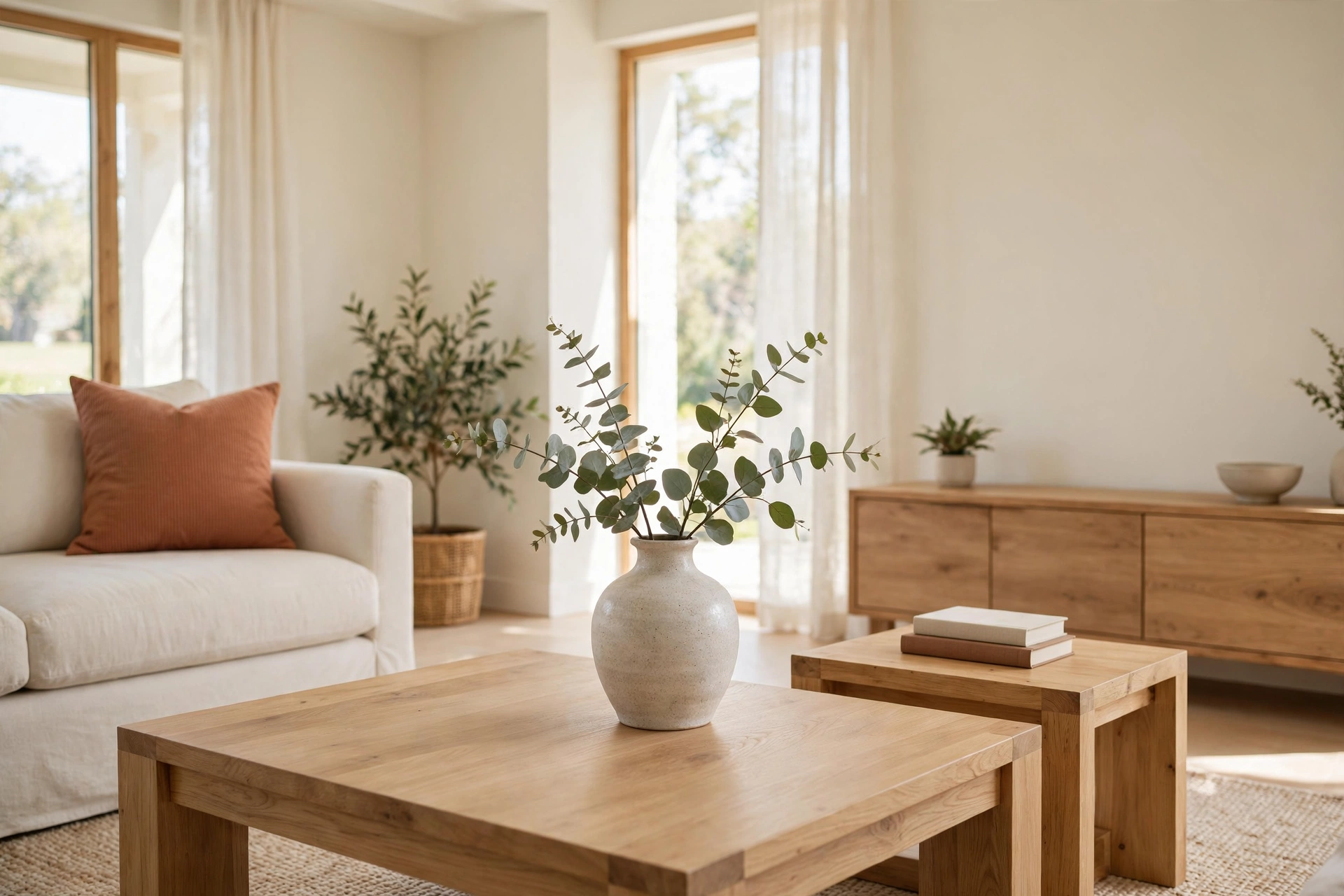
4. Pillow covers, not new pillows. A full set of four to five covers in one coordinated palette — say, cream, terracotta, and one pattern — costs about $25 and changes the largest object in the room (your sofa) more than any other single purchase. Zip them over the inserts you already own. Rule: odd numbers (3 or 5), mixed textures (linen + knit + one smooth), sizes layered 20″ → 18″ → lumbar.
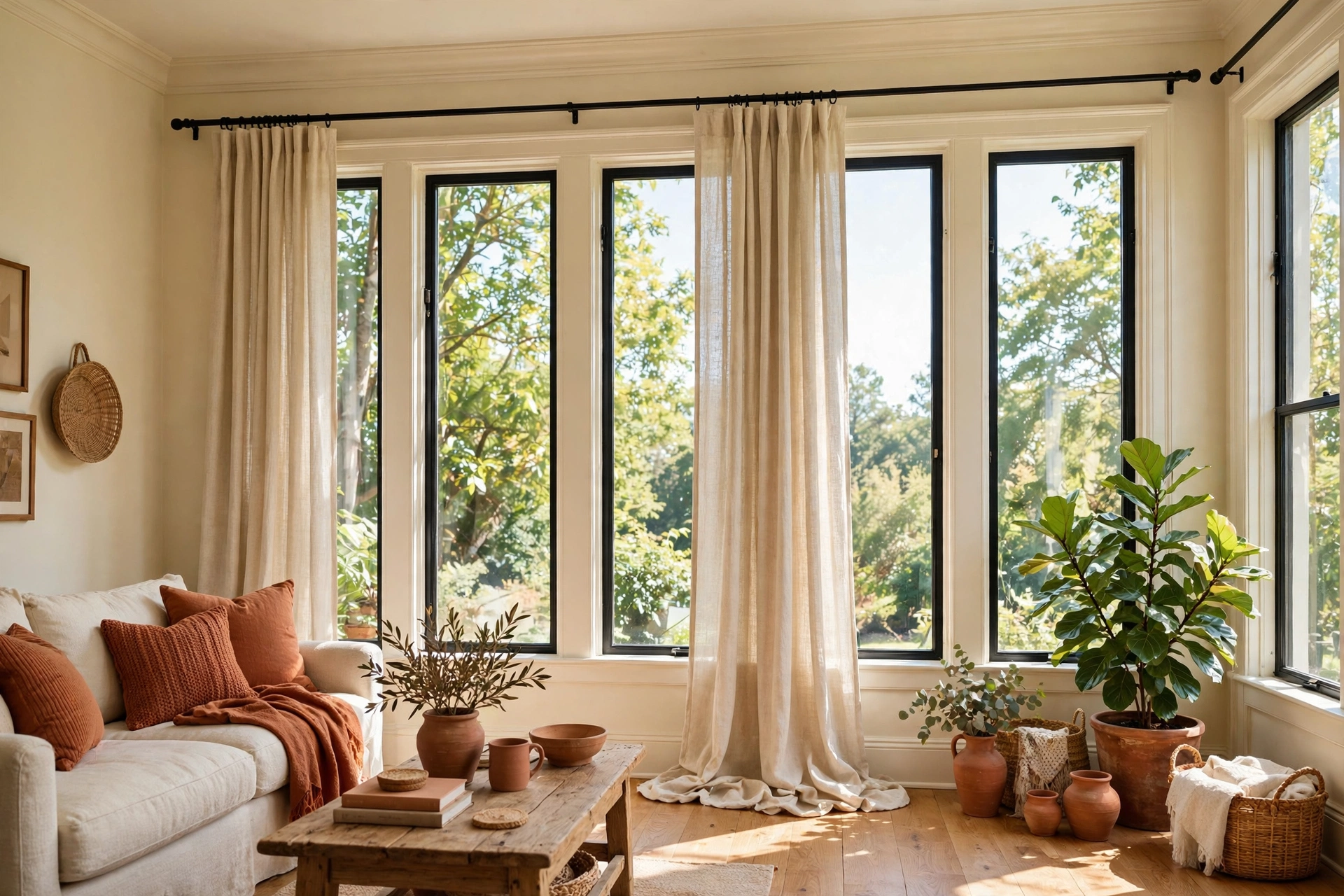
5. Curtains hung high, wide, and long. If your curtains hang from a rod screwed just above the frame and stop at the sill, they’re shrinking your room on both axes. Rehang the rod 4–6 inches (10–15 cm) below the ceiling and 4 inches wider per side, and let $14 worth of longer panels fall to the floor. Windows look 50% bigger; the ceiling gains a foot it never had.
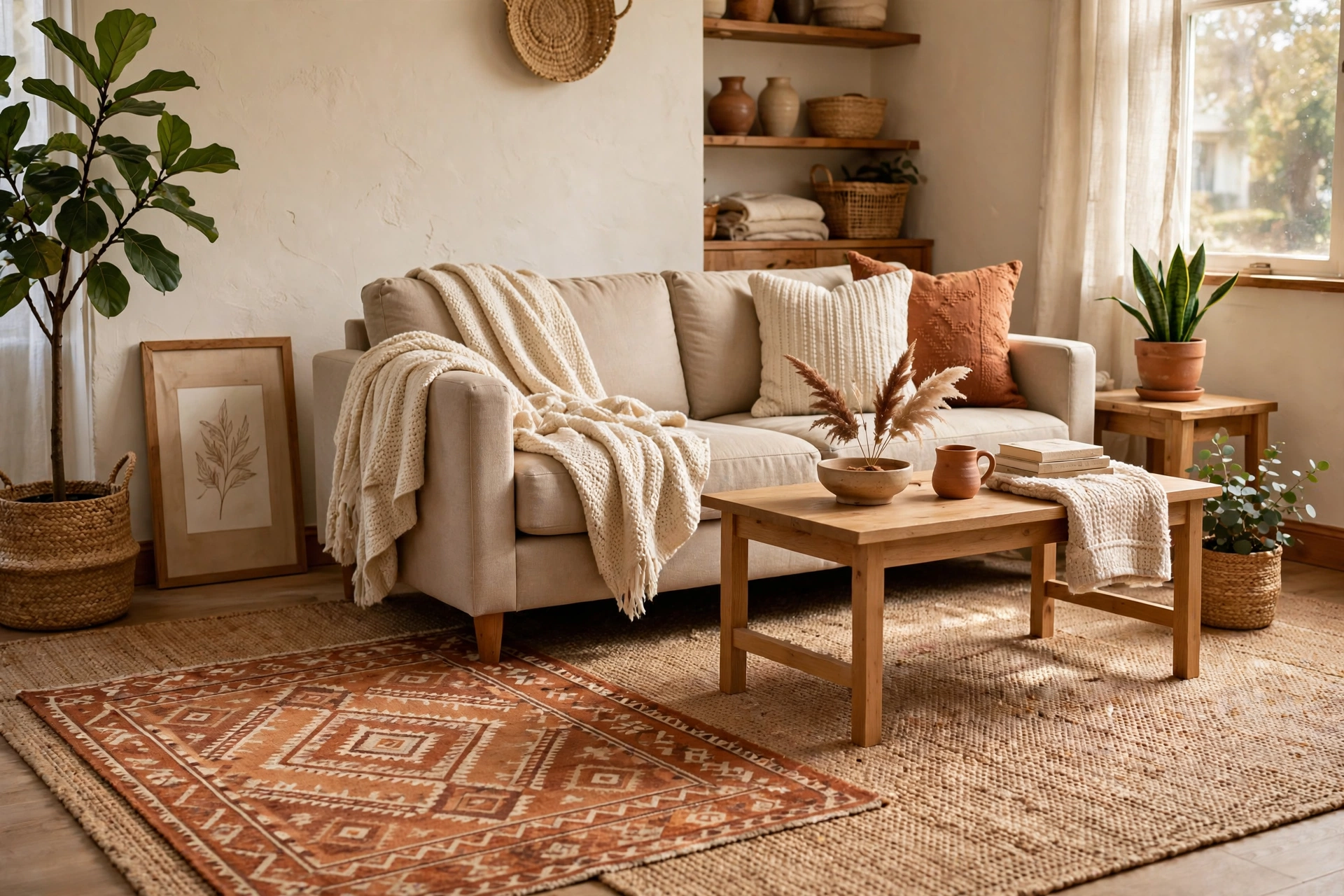
6. One big rug (layered if budget says so). A too-small rug makes everything on it look stranded. If a true 8×10 is out of reach right now, buy the largest flatweave you can (jute and cotton dhurries are the budget champions) and layer a smaller patterned rug on top at an angle. Layering reads as intentional designer styling and forgives the size compromise completely.
Walls That Look Intentional
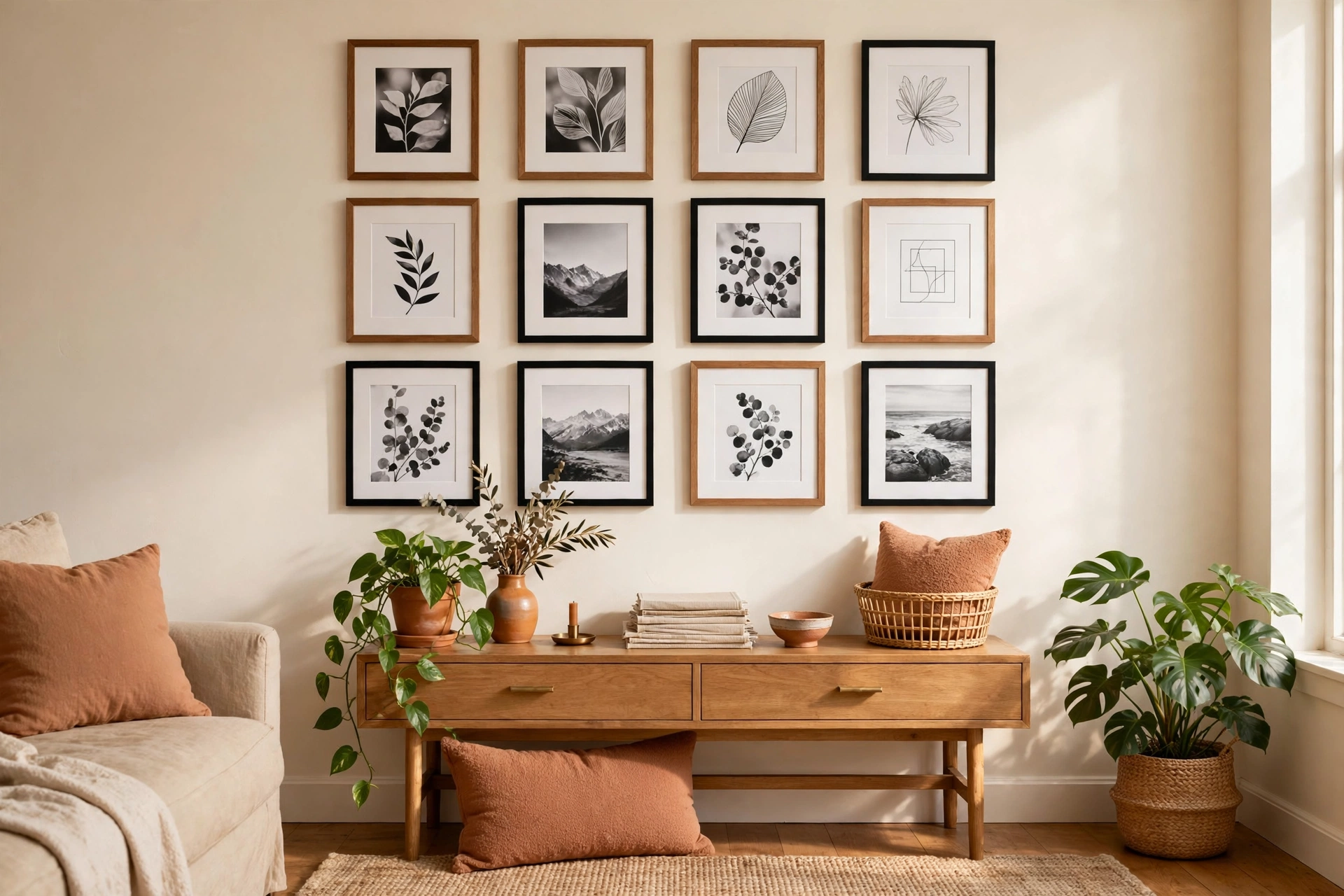
7. A gallery wall with a tight grid. Random frames at random heights look like an accident. The fix costs $0–10: rehang what you own in a strict grid or a single horizontal line, frames 2 inches (5 cm) apart, centers at 57 inches (145 cm) from the floor — museum height. No frames? $1 poster prints in dollar-store frames, hung with discipline, genuinely work.
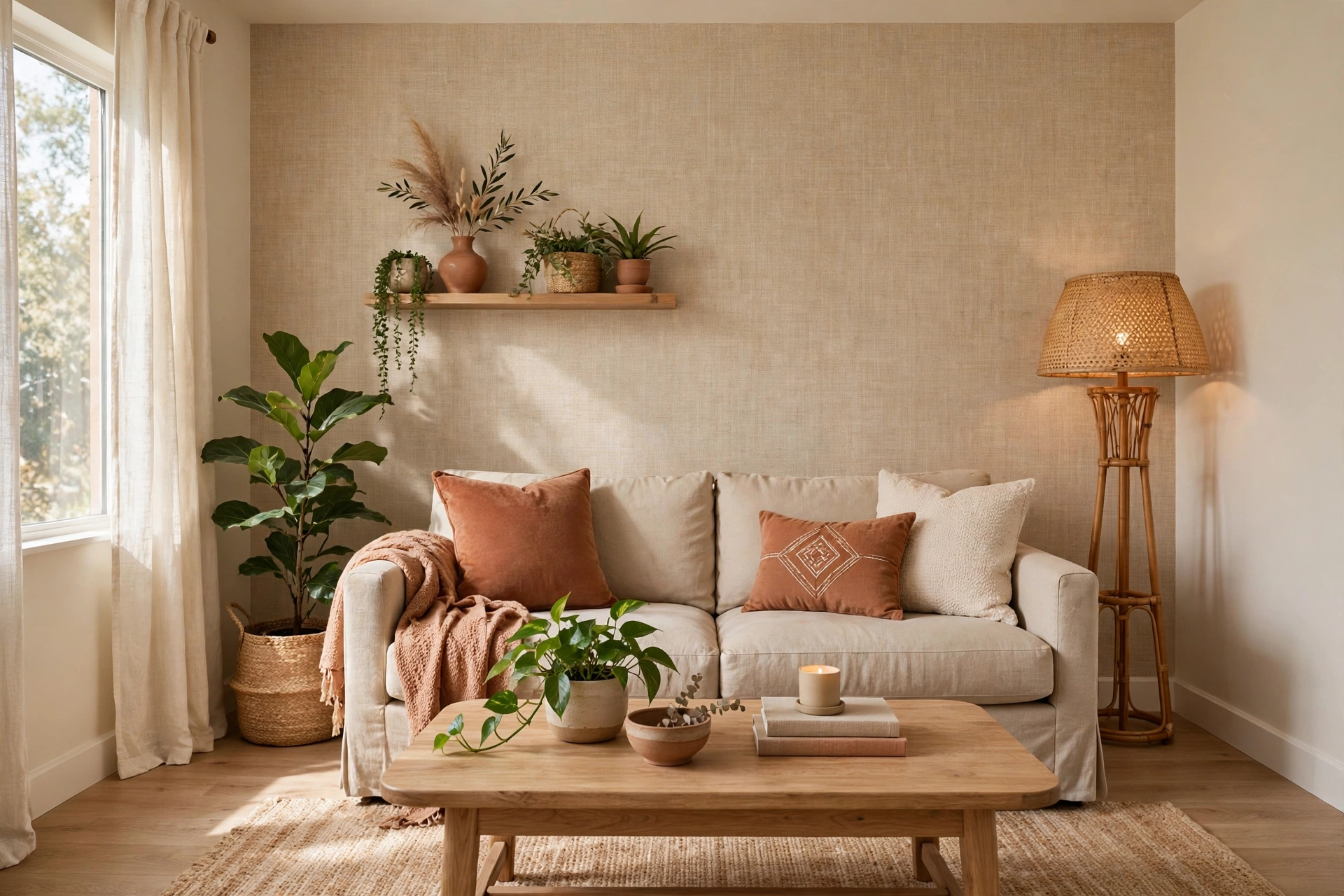
8. One peel-and-stick accent wall. Modern grasscloth-look peel-and-stick wallpaper runs about $30–35 a roll, and one roll usually covers the wall behind a sofa or a TV console in an average room. It’s renter-safe, removable, and the texture does the “expensive” work that paint can’t. If wallpaper scares you, idea #9 is your wall.
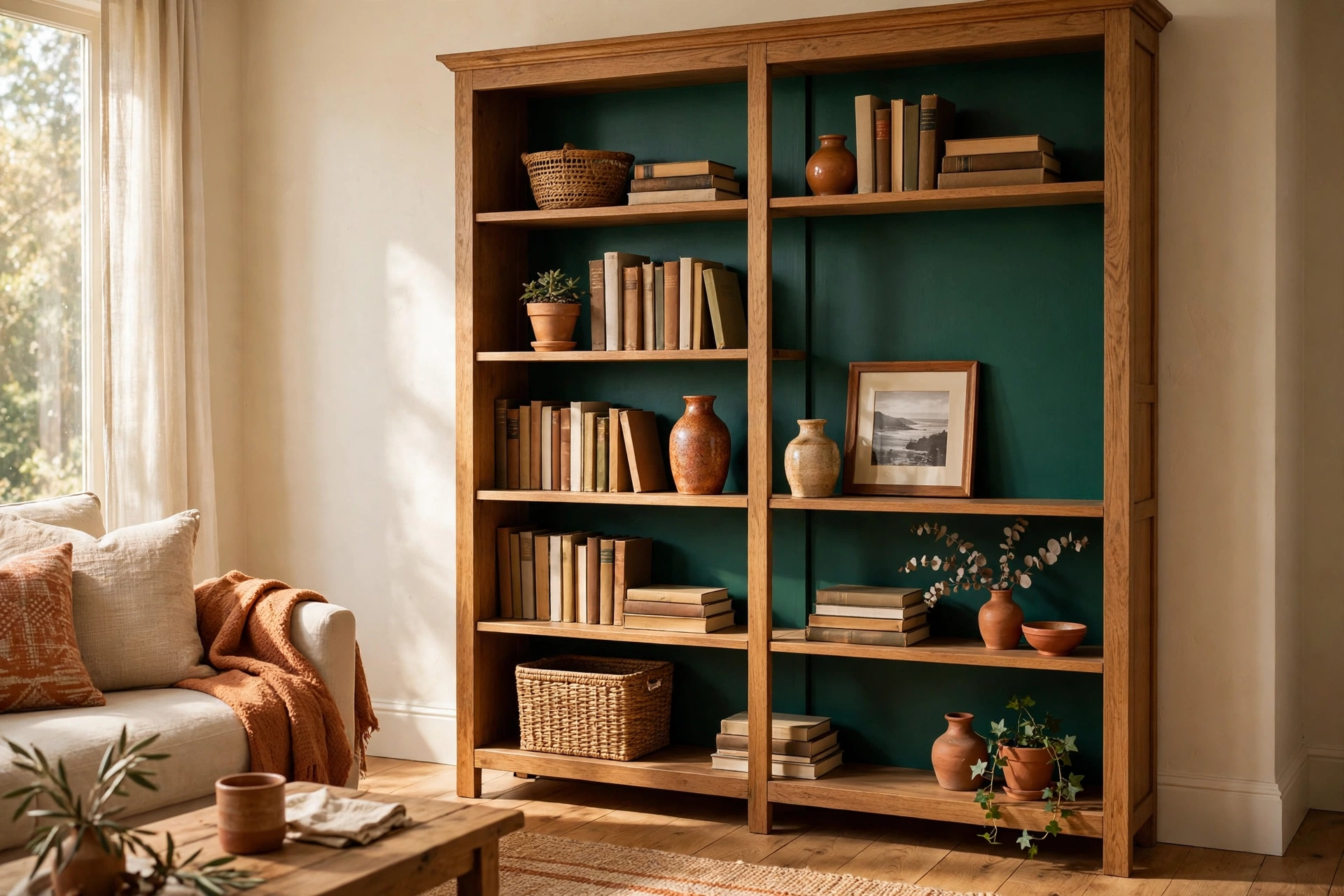
9. Paint the back of the bookcase. One $8 sample pot of deep green, navy, or charcoal, painted only on the inside back panel of a bookshelf or cabinet. Against light shelves and objects, that depth reads like custom built-ins. An afternoon, a foam brush, and the single most complimented change in most budget makeovers.
Light: Where Cheap Rooms Confess
10. Three light sources, never one. The single overhead light is why budget rooms look like interrogation scenes. You need three points of warm light (2700K): one table lamp, one floor lamp or wall light, one low glow (candle or small lamp). Thrift stores are full of $5 lamps; a matching pair of new shades ($12) makes them look bought-together.
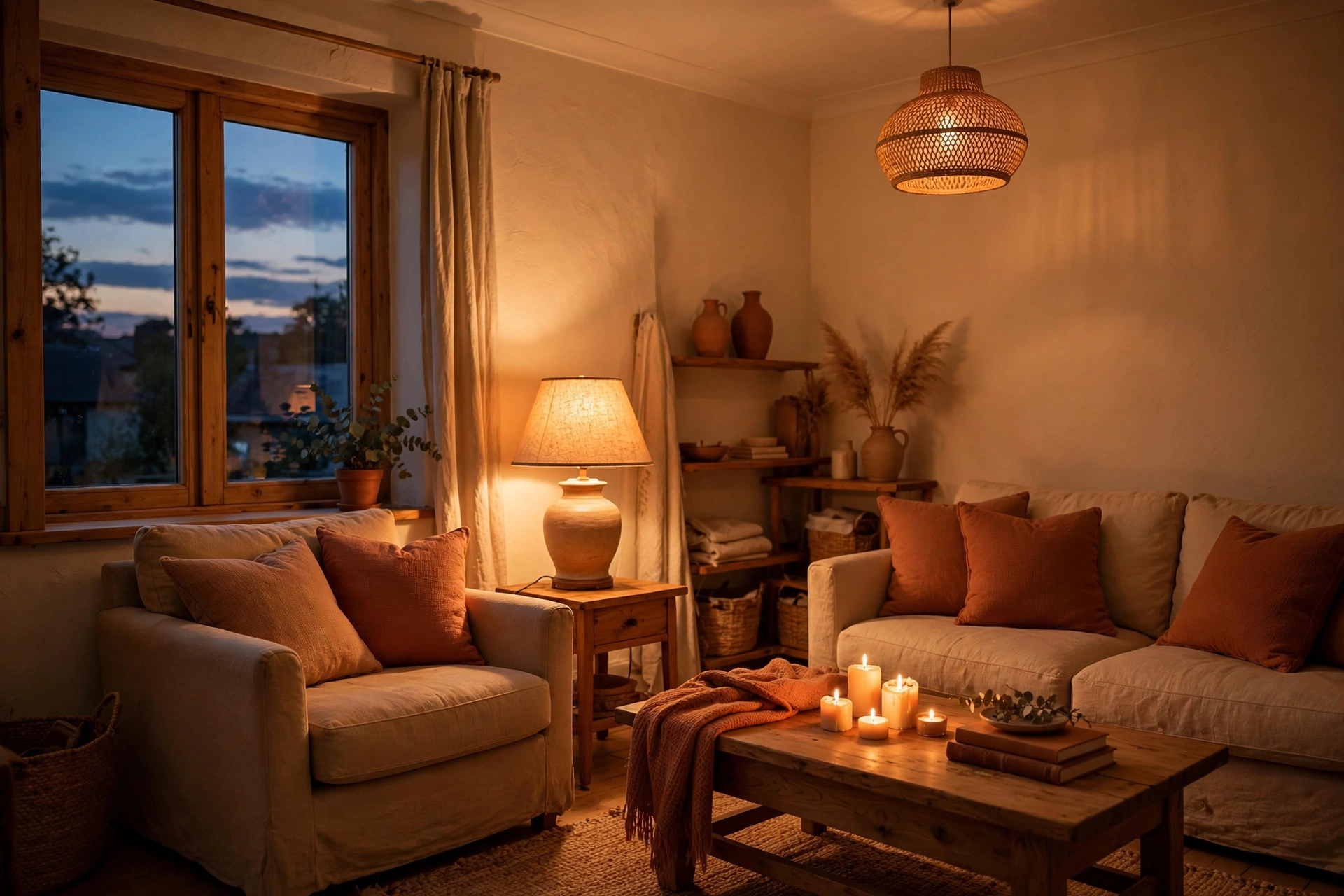
11. An LED strip behind the TV console. About $9 for a warm-white strip with adhesive backing. That soft halo behind the TV or along a shelf is the exact glow in every high-end living room photo — it adds depth, kills screen glare contrast, and makes movie night feel like a cinema. USB-powered ones plug straight into the TV.
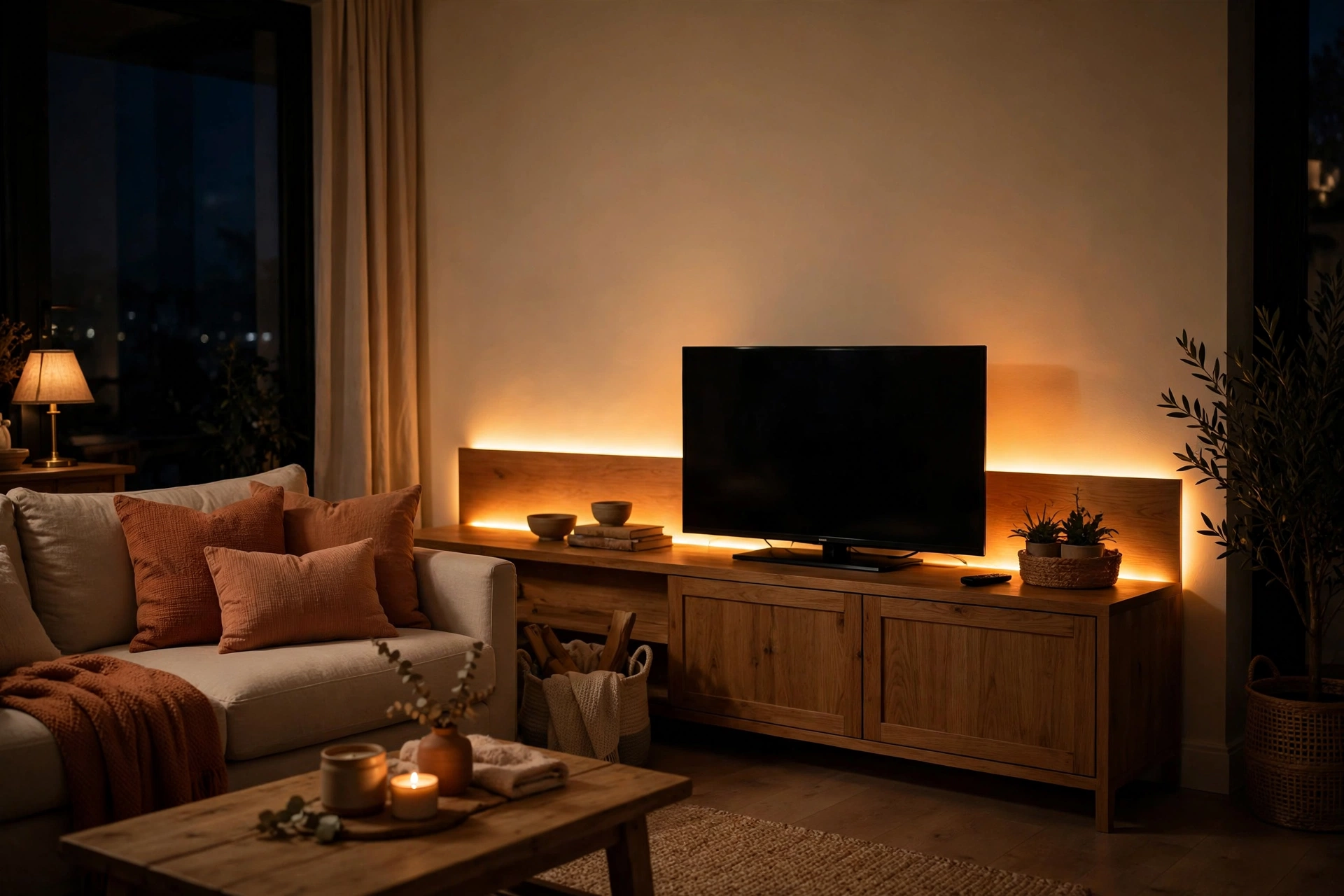
12. Style the coffee table in threes. One tray ($6 at a thrift store or dollar store), holding three things at three heights: something tall (branches or a vase), something horizontal (a stack of two books), something sculptural (a candle, a bowl, a small plant). This is the stylist’s entire formula, and it works on any table you already own.
The Finishing $20
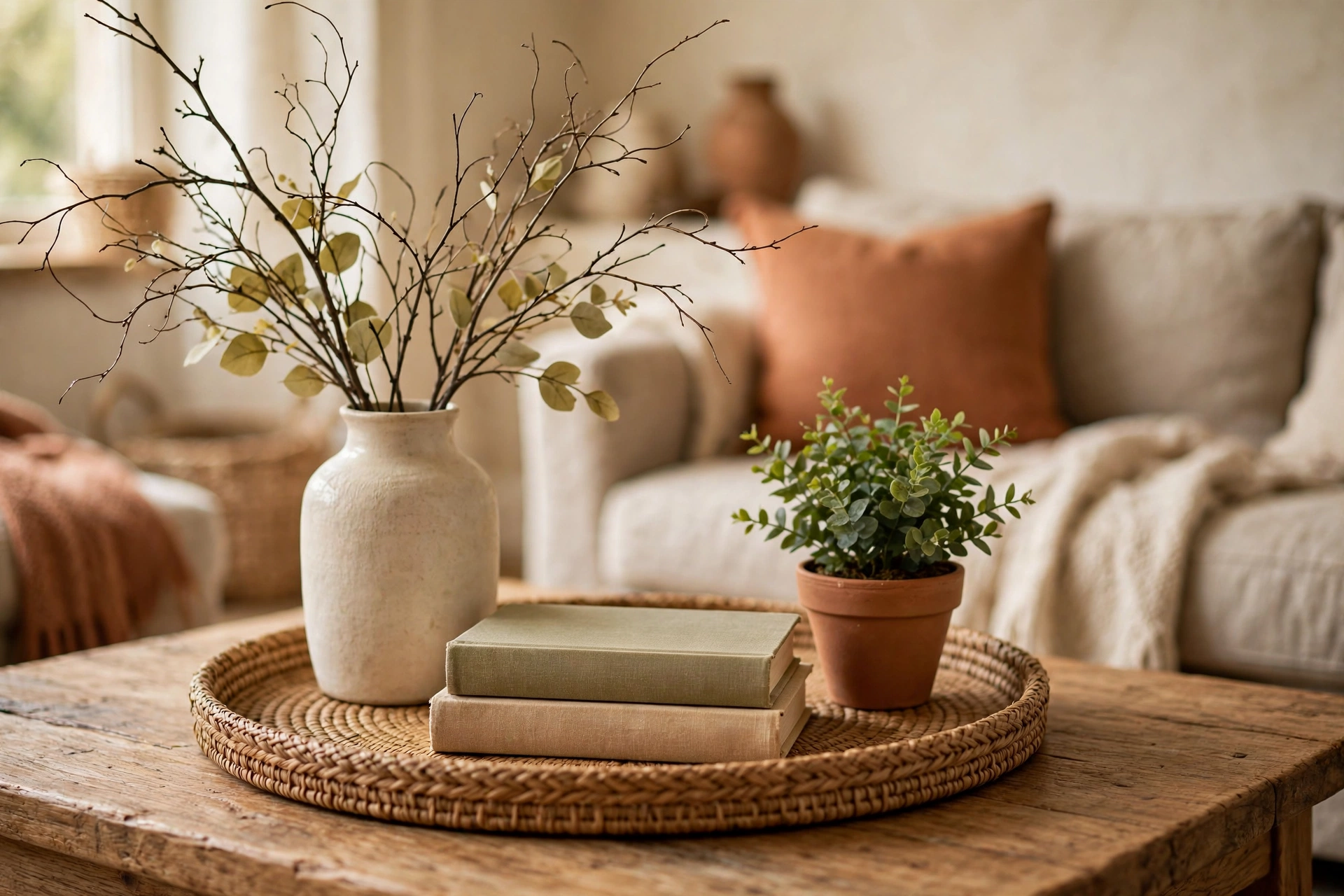
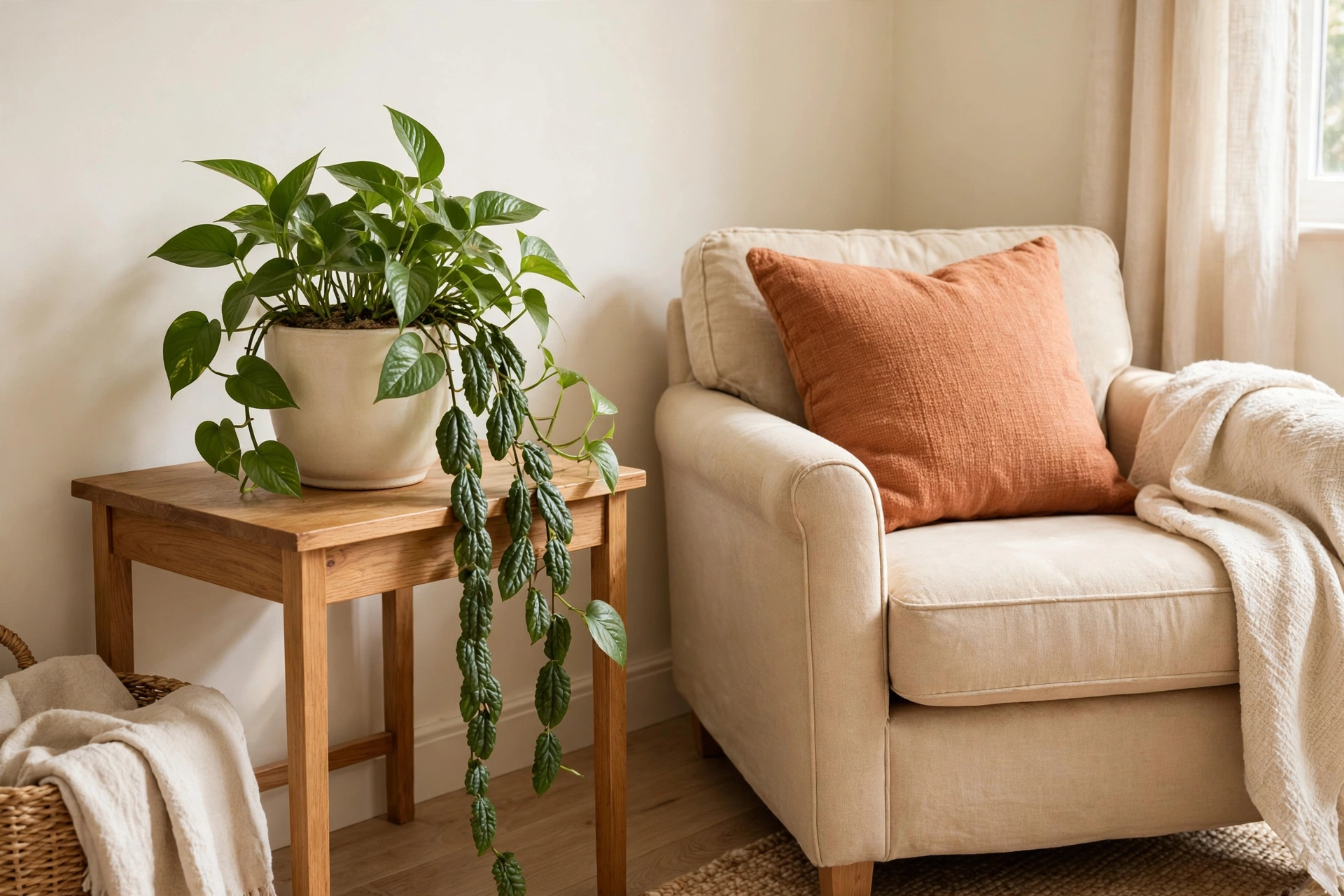
13. One real plant with presence. A $12–15 pothos, snake plant, or ZZ plant in a simple pot adds the one thing no decor object can fake: something alive. Place it in the room’s deadest corner. Plants photograph beautifully and make every other object near them look more chosen.
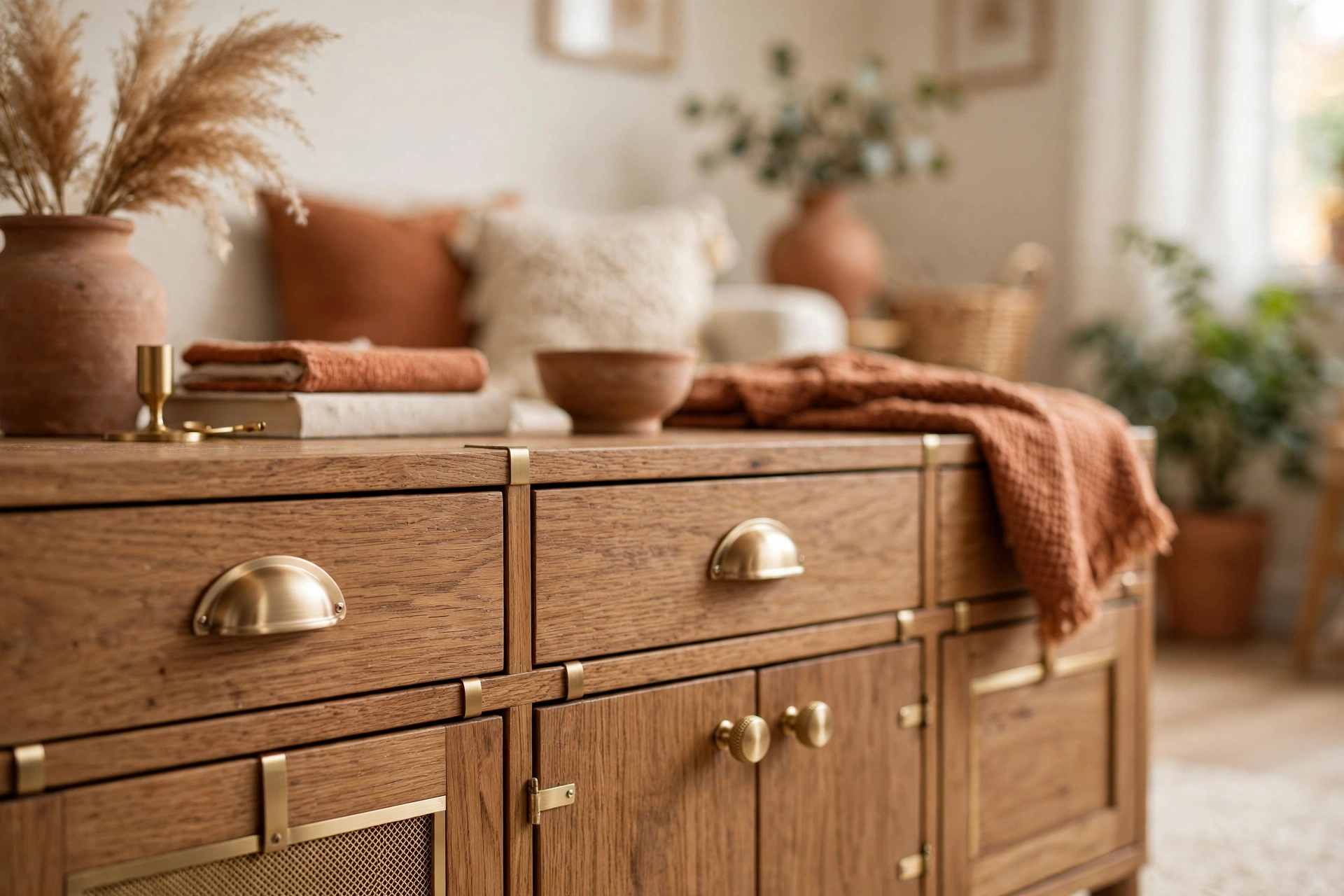
14. Swap the hardware. Cabinet and console knobs are jewelry for furniture. Six brushed-brass or matte-black knobs at $2–3 each transform a tired TV stand or sideboard in fifteen minutes with a screwdriver. It’s the change guests touch without knowing why the piece feels new.
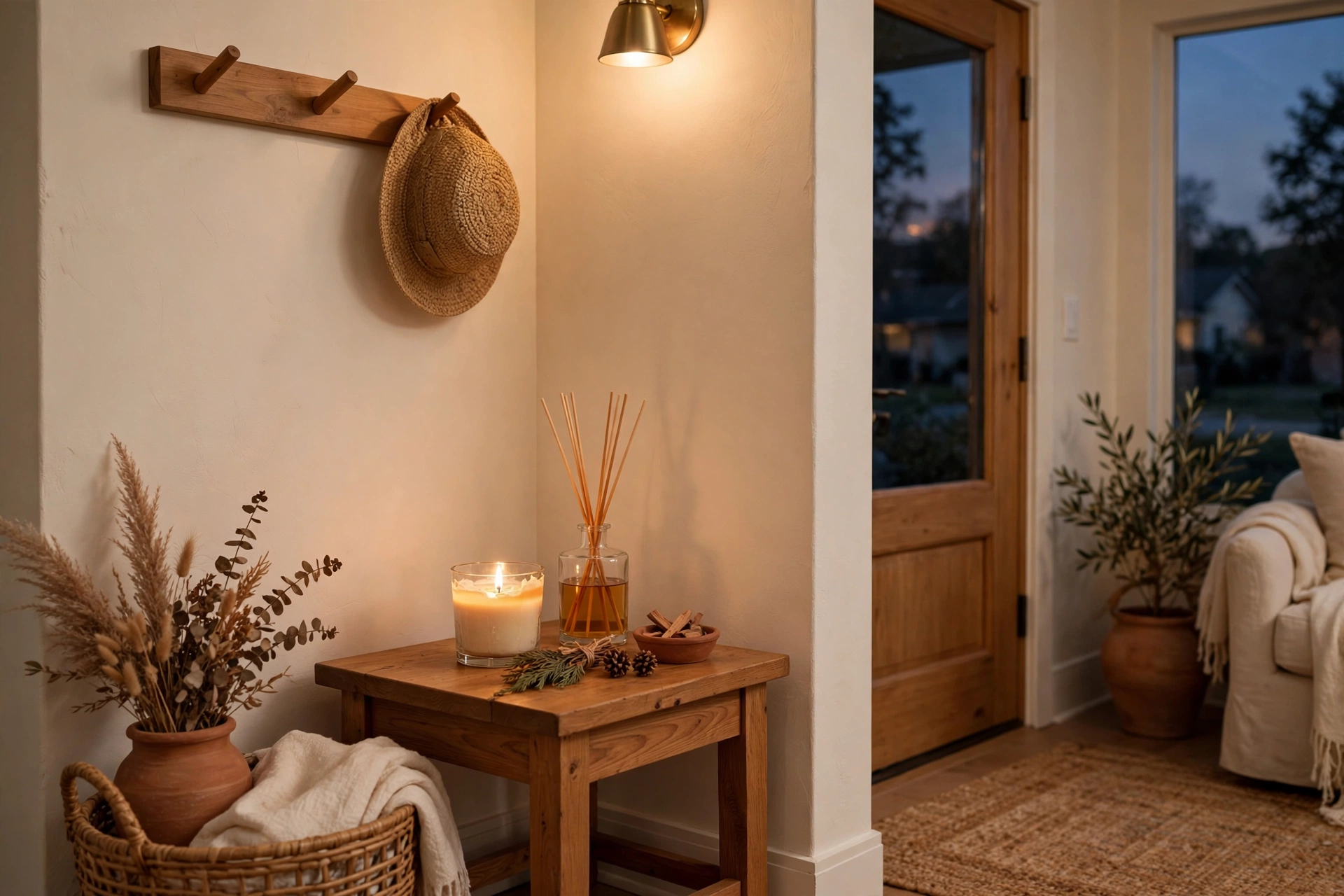
15. A signature scent at the door. The first three seconds in a room are smell, not sight. One good candle or reed diffuser ($8–12) placed at the entry — cedar, fig, or anything woody — makes the whole room feel considered before eyes even adjust. Designers stage smell the way they stage light; now you do too.
The Whole Plan, Itemized
| Item | This article’s price |
|---|---|
| Furniture rearrangement + the great edit + shop your house | $0 |
| 4–5 pillow covers, coordinated set | $25 |
| Longer curtain panels (pair) | $14 |
| Layered rug look (flatweave base or top layer) | $22 |
| Gallery wall (frames/prints as needed) | $6 |
| Peel-and-stick accent wall (1 roll) | $32 |
| Bookcase-back paint (sample pot) | $8 |
| Two thrifted lamps + one pair of shades | $17 |
| LED strip, warm white | $9 |
| Coffee table tray | $6 |
| One real plant + simple pot | $14 |
| 6 new knobs | $15 |
| Candle or reed diffuser | $10 |
| Total | $95 |
The $95 total (add it up — we did). You’ll notice the rows add up to more than $95 if you buy literally everything — because you’re not meant to. Ideas 1–3 are free, and most homes already own two or three of the paid items (a plant, a tray, decent lamps). Pick the seven or eight your room actually needs; that’s the real $95 plan, and the table is honest about each line.
Three Mistakes That Keep Budget Rooms Looking Cheap
Matching everything. A full “set” (sofa + loveseat + matching tables + matching lamps) is the fastest route to showroom-cheap. Designed rooms mix: two woods, two metals max, varied textures, one palette.
Buying decor before fixing layout and light. A $40 vase under interrogation lighting in a pushed-against-the-wall room still looks like a budget room. Sequence matters: layout ($0) → light → fabric → objects.
One tiny thing in a big empty spot. A single small frame floating on a huge wall, or one candle on a long console, reads as “ran out of budget.” Group small things into one composed cluster (idea #12’s rule of threes) or go bigger with fewer pieces.
Doing a small bedroom too? The layout-and-light logic is identical — the same rules run our guide to 21 small bedroom ideas that make tiny rooms feel bigger, most of them free or nearly.
Budget Living Room FAQs
What is the cheapest way to make a living room look expensive?
Fix the layout (free), hang curtains high and to the floor, and use three warm light sources instead of one overhead light. Those three changes outperform any single decor purchase.
How much should a budget living room makeover cost?
A meaningful refresh is realistic at $75–150: pillow covers, longer curtains, one layered rug move, thrifted lamps, and a styled coffee table cover most rooms. Full furniture replacement is a different budget entirely.
What colors make a living room look bigger and brighter?
Warm whites and light neutrals on walls, with one deeper accent (a painted bookcase back, a dark throw) for depth. Keep the palette tight — three colors repeated beats eight colors introduced.
Decorating the whole place? Our cozy fall decor ideas and Neo Deco interiors guide are reader favorites.