
I first saw afrobohemian home decor in real life at a friend’s rental — not a showroom, a lived-in apartment with sun-faded rugs and a kettle that whistled. What hit me wasn’t any single thing. It was the feeling: warm air, clay pots full of green, a blanket on the couch that looked like it had a story. Nothing matched, and yet everything belonged.
That’s Afrohemian in one breath — the African-meets-bohemian style that Pinterest’s 2026 trend report says is about to be everywhere. Searches for “afrobohemian home decor” are up roughly 220%, with “motif berbere” (+210%) and “adire fabric” (+130%) climbing right behind it. But unlike some trends, this one doesn’t ask you to buy a whole new room. It asks you to buy meaning — handmade pieces, natural materials, patterns with roots — and then it lets your existing furniture just… relax into it.
Here’s what the style really is, the nine pieces that define it, and how to bring it home at real-world prices.
What Afrobohemian Home Decor Actually Is
The name is a blend — African + bohemian. The African half brings craftsmanship with deep roots: mud-cloth (bogolan) from Mali, adire indigo dyeing from Nigeria, hand-woven baskets, carved wood, terracotta made by actual hands. The bohemian half brings the rule-breaking: layering, mixing eras, plants everywhere, comfort over correctness.
The formula:
- Handmade over mass-made. If it looks like a machine stamped it out, it doesn’t belong here. Slight wobbles in a pot, uneven weave in a basket — those are features, not flaws.
- Earthy, sun-warmed color. Cream, ochre, rust, terracotta, clay, deep indigo. The palette of soil and sky, not of showrooms.
- Natural fibers only. Rattan, cane, jute, seagrass, cotton, linen, wool. Plastic should be hard to find in an Afrohemian room.
- Pattern with roots. Mud-cloth symbols, berbere motifs, adire swirls — patterns that come from somewhere real. Which is also why you learn what you’re hanging. More on that below.
- Layers of softness. Throws on chairs, rugs under rugs, cushions piled without apology. This style never looks cold.
The easiest way to think about it: if Neo Deco is Saturday night, Afrohemian is Sunday morning — barefoot, sun through the window, nowhere to be. (If you’re curious about its trend-sibling, our Neo Deco interiors guide is the more polished 2026 look.)
The 9 Pieces That Make a Room Afrohemian
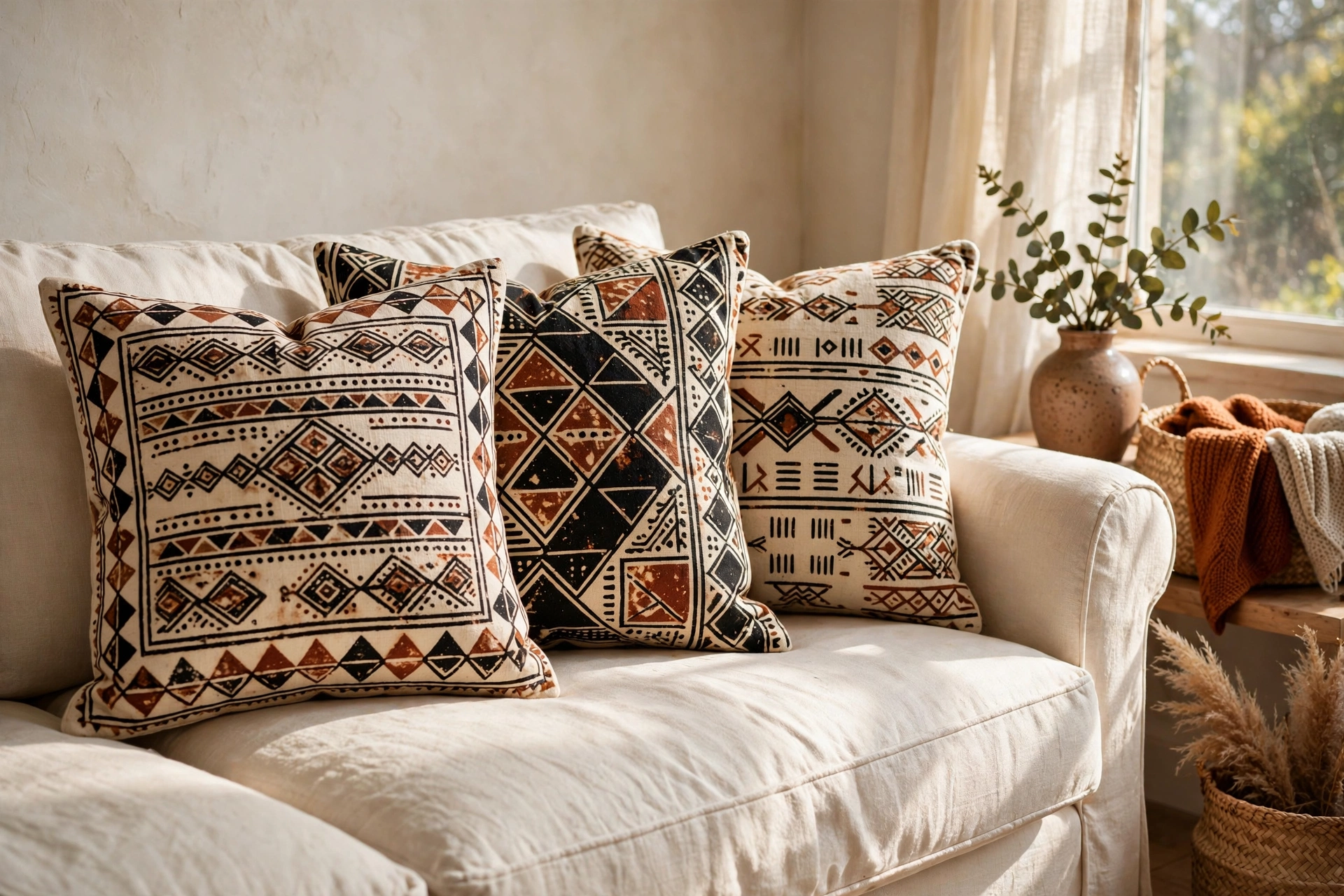
1. Mud-cloth pillows. Bogolan — traditionally hand-dyed cotton from Mali in cream, rust, and black geometric symbols — is the single most recognizable Afrohemian textile. A pair of mud-cloth cushion covers on your existing sofa changes the whole sentence of the room. Real hand-dyed pieces cost more and age beautifully; good printed covers run under $20 a pair and still look the part.
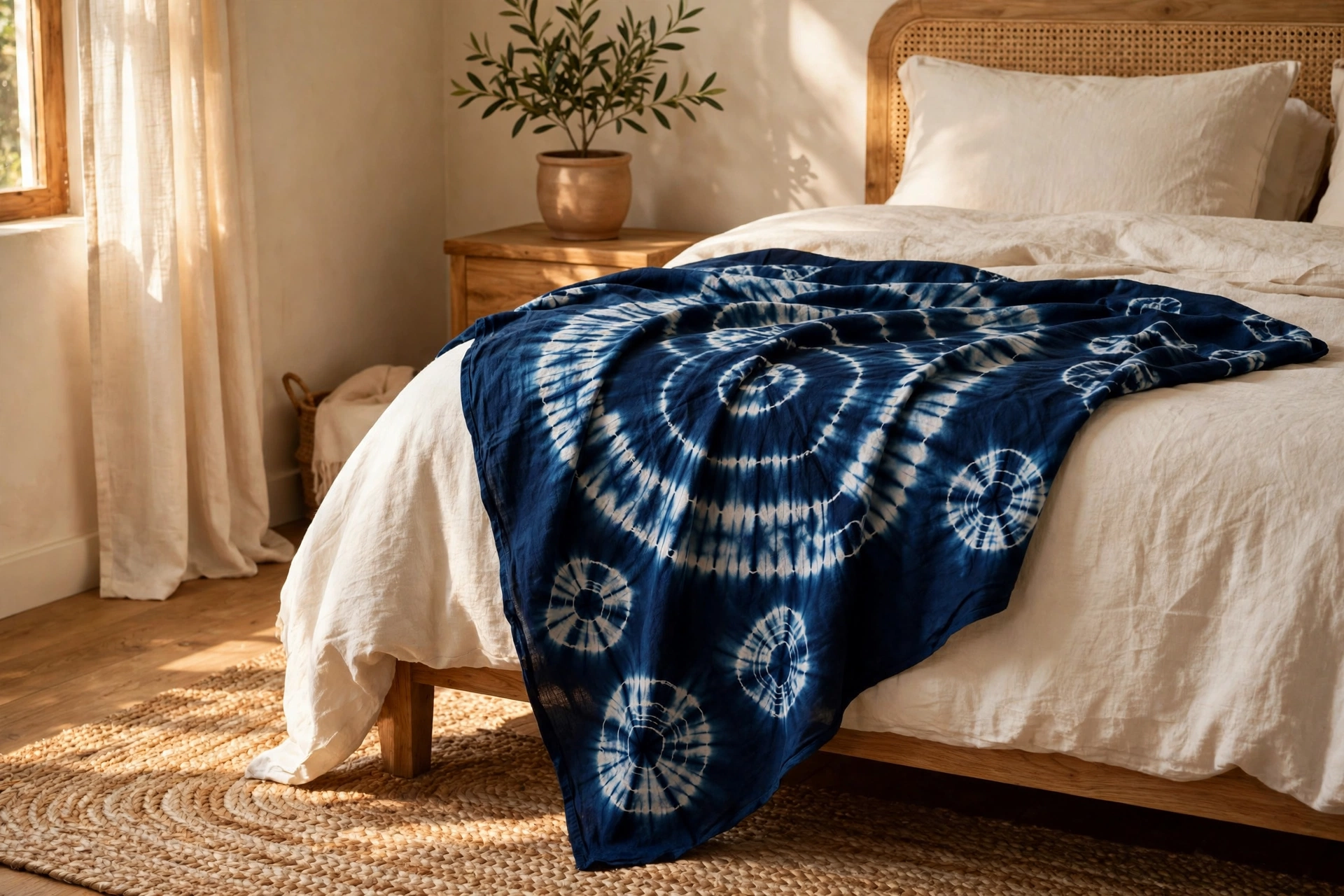
2. An adire throw. Adire is indigo-dyed fabric from Nigeria, made with resist-dye techniques that leave white swirl and dot patterns on deep blue. Searches are up 130% for a reason — that indigo does something electric next to warm cream and wood. Drape a real one over the bed or couch; even an adire-pattern duvet cover gives you the look for the price of bedding you’d buy anyway.
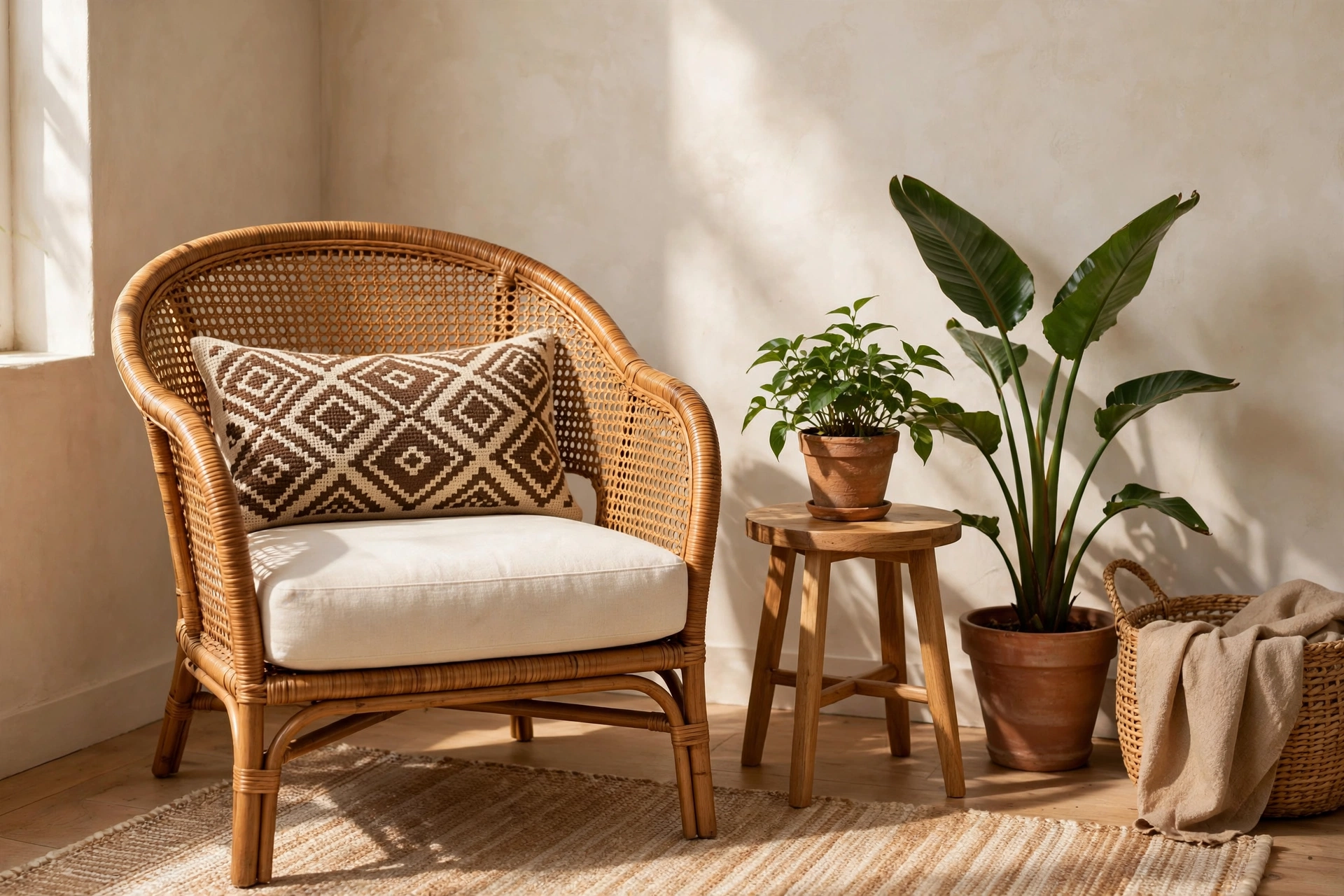
3. A rattan accent chair. The rattan accent chair (+50% in searches) is this trend’s anchor piece. Peacock, fan-back, or simple curved-cane — one statement chair in a sunny corner, maybe with a mud-cloth lumbar pillow, and the style reads instantly. Rattan chairs are thrift-store regulars because the 70s made millions of them.
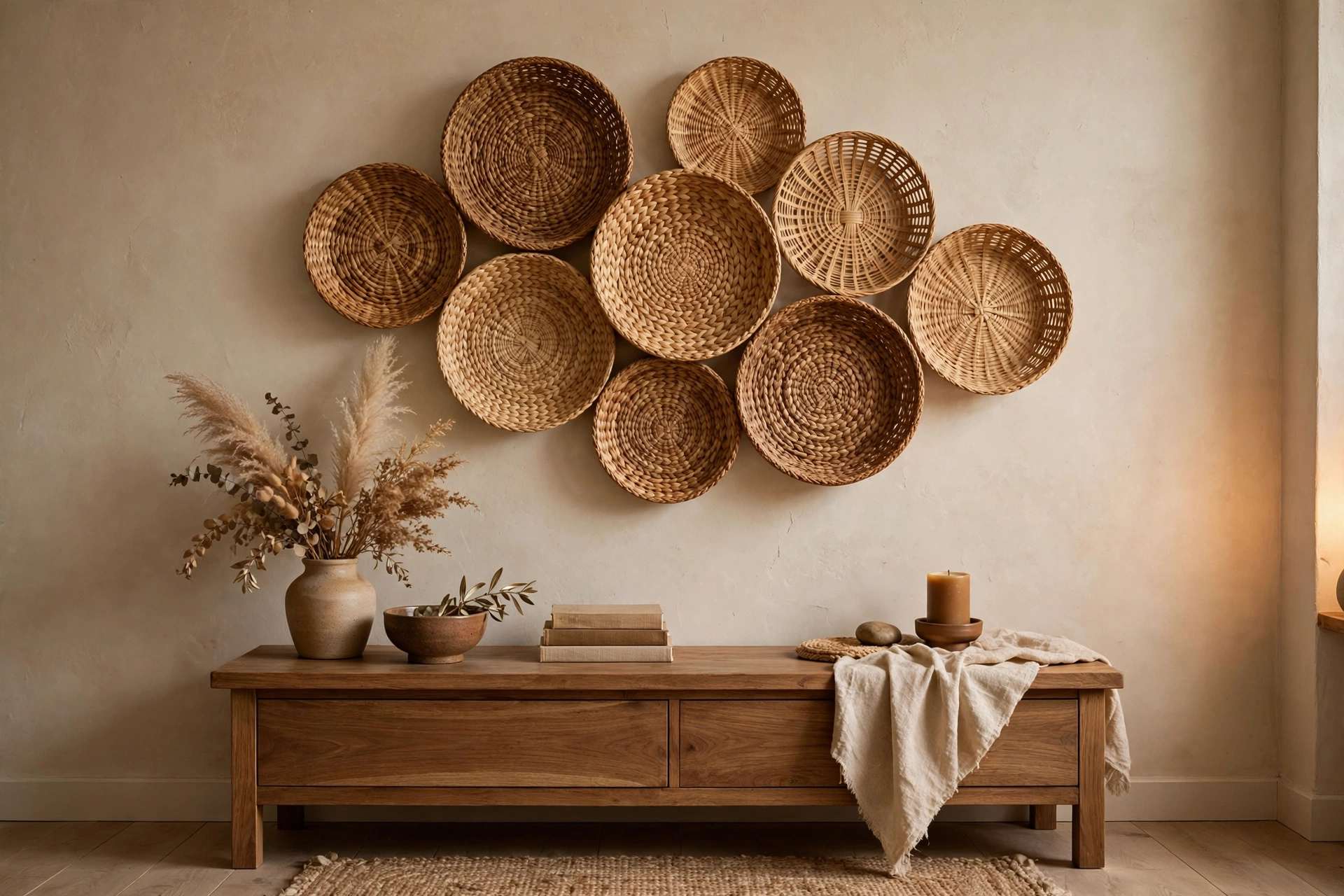
4. A woven basket wall. Flat woven baskets hung in a cluster above a console or sofa are pure Afrohemian wall art — texture, warmth, zero frames. Start with three baskets in graduated sizes, odd numbers always look better, and hang them slightly imperfectly on purpose. Sets of wall baskets are cheap online, and thrift stores are full of lone ones waiting to be grouped.
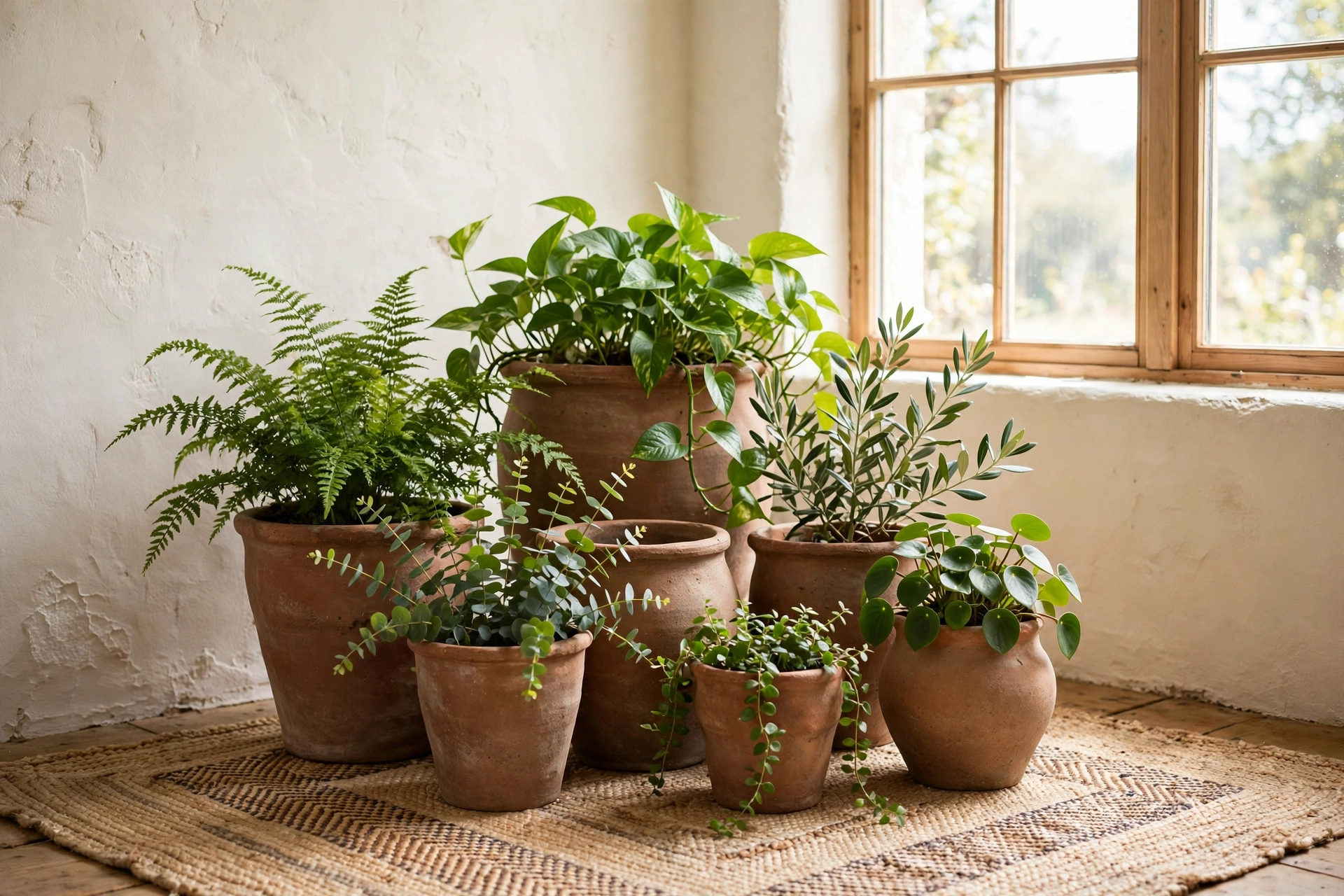
5. Terracotta pots with real plants. Handmade terracotta — not the glossy orange stuff, the matte sun-baked kind — grounds the style. Group three to five pots of different heights with forgiving plants (pothos, snake plant, a fiddle-leaf if you’re brave). The plants do half the decorating work, and the pots are $5–12 each at garden centers.
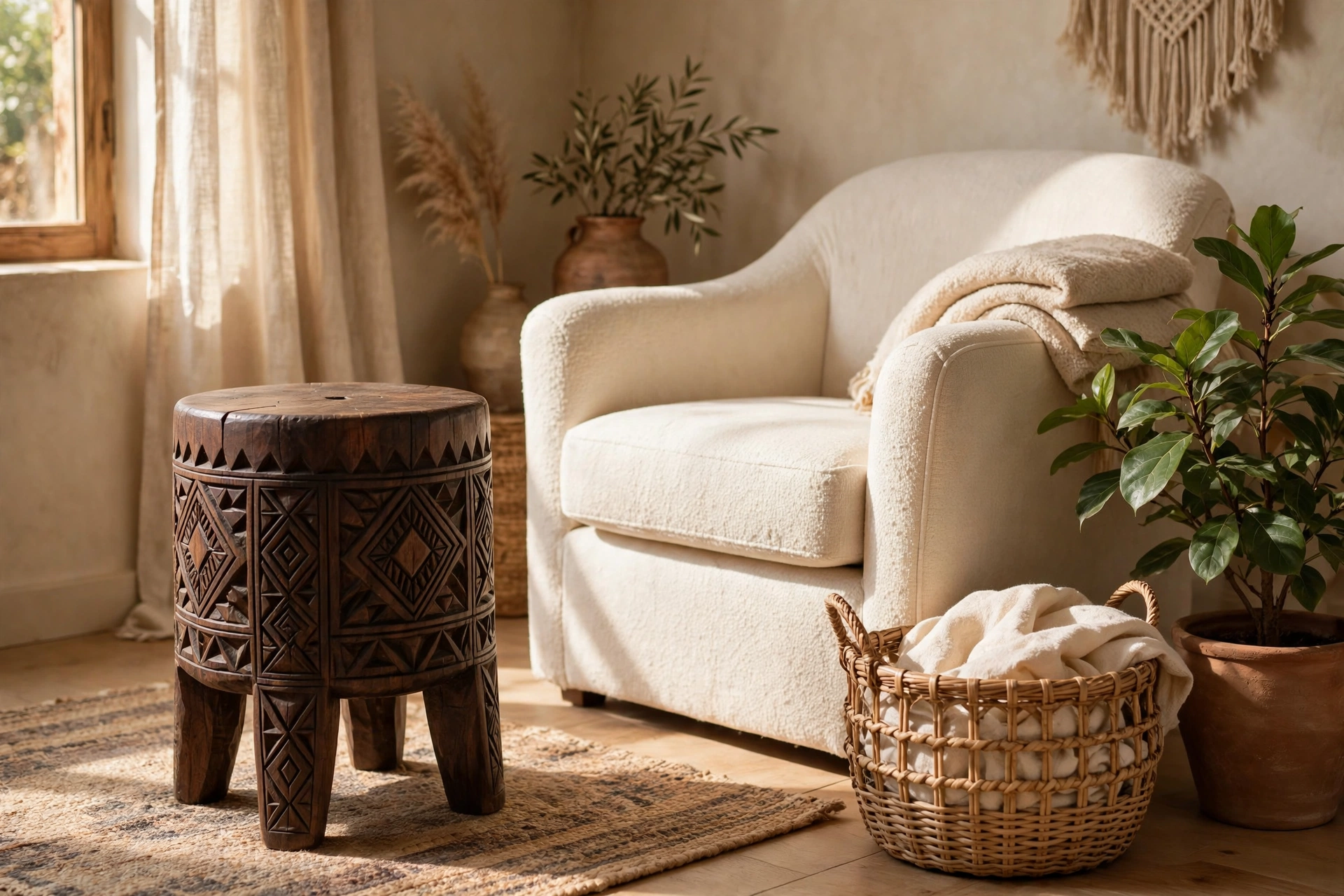
6. A carved wooden stool or side table. One dark, hand-carved piece — an African-style stool, a small side table with geometric relief — gives the room its soul. It doesn’t have to be antique; it has to look like someone’s hands shaped it. Place it beside the sofa as a side table or use it as a plant stand. One is enough; this piece works by contrast.
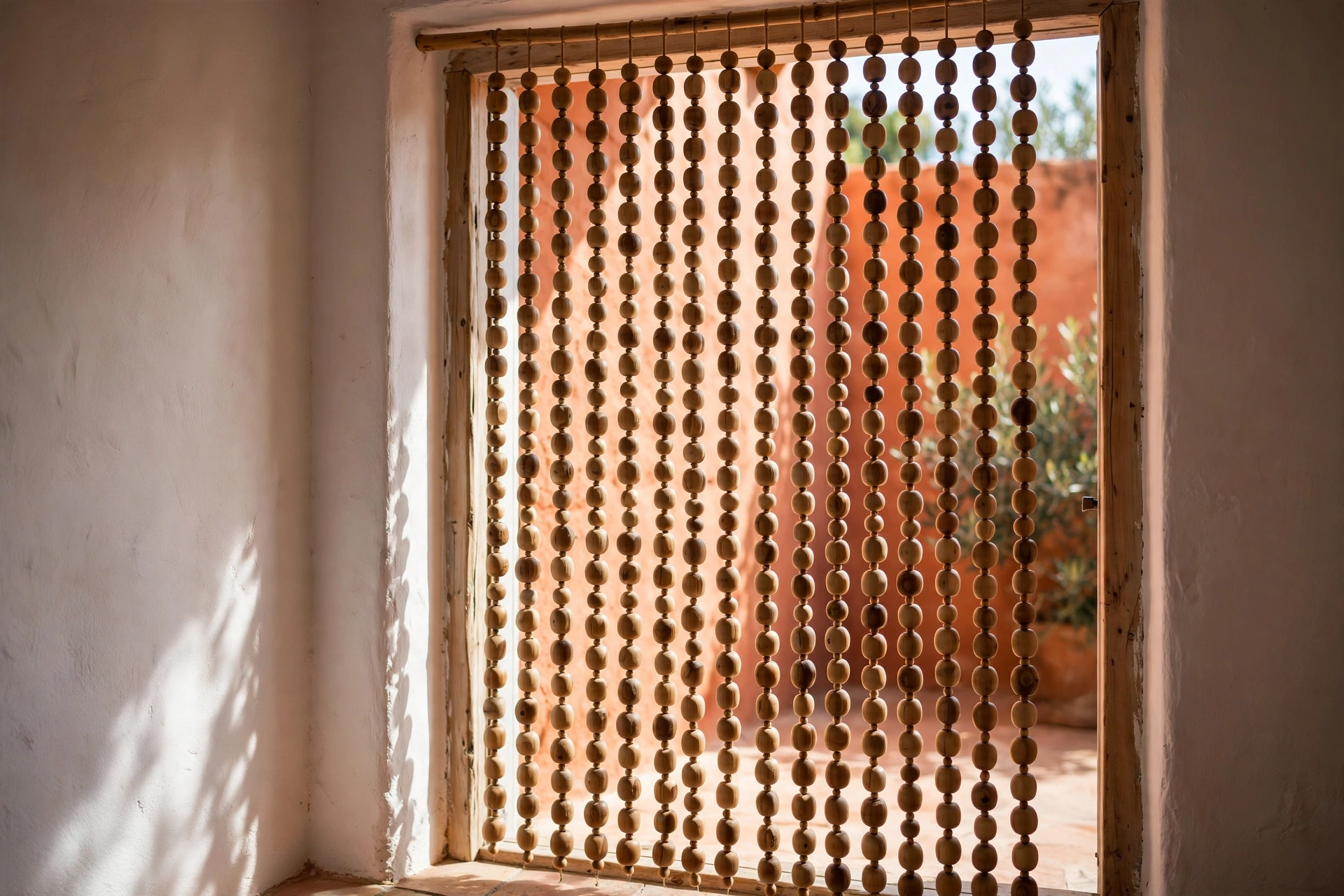
7. Bamboo beaded curtains. Those beaded curtains from the 70s are back (+60% in searches), and honestly they never should have left. Hang one in a doorway or across a wide opening — the beads catch light and sound, and the room instantly feels more handmade. Measure your doorway first; they’re sold in standard sizes and trim easily.
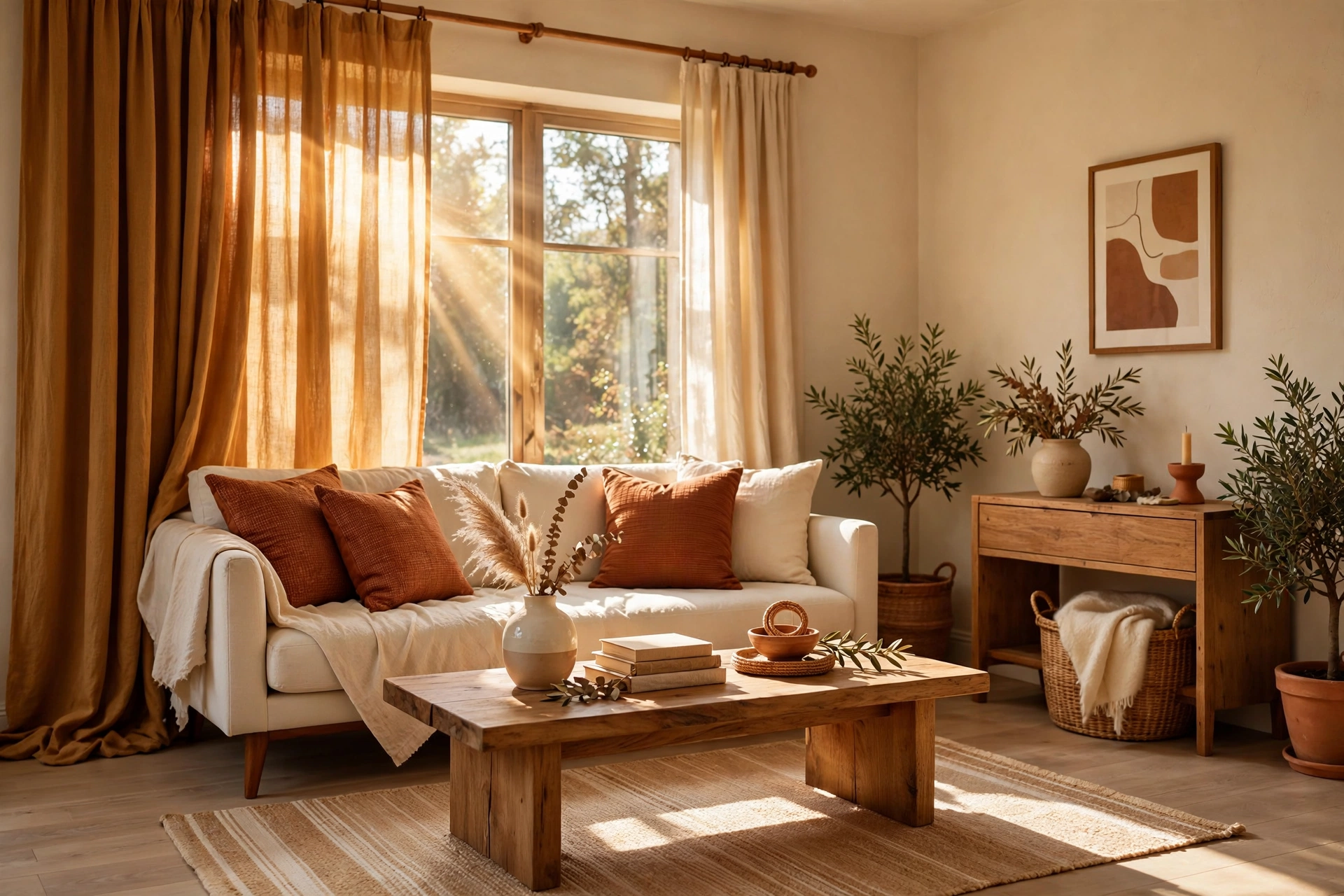
8. The ochre-rust-cream palette. You don’t need new furniture if you change the colors. Swap in ochre or rust curtains, a cream throw, rust cushion covers — the palette is the style’s shortcut. Paint is the boldest move: one ochre accent wall behind the sofa costs one can of paint and makes every neutral thing you own look intentional.
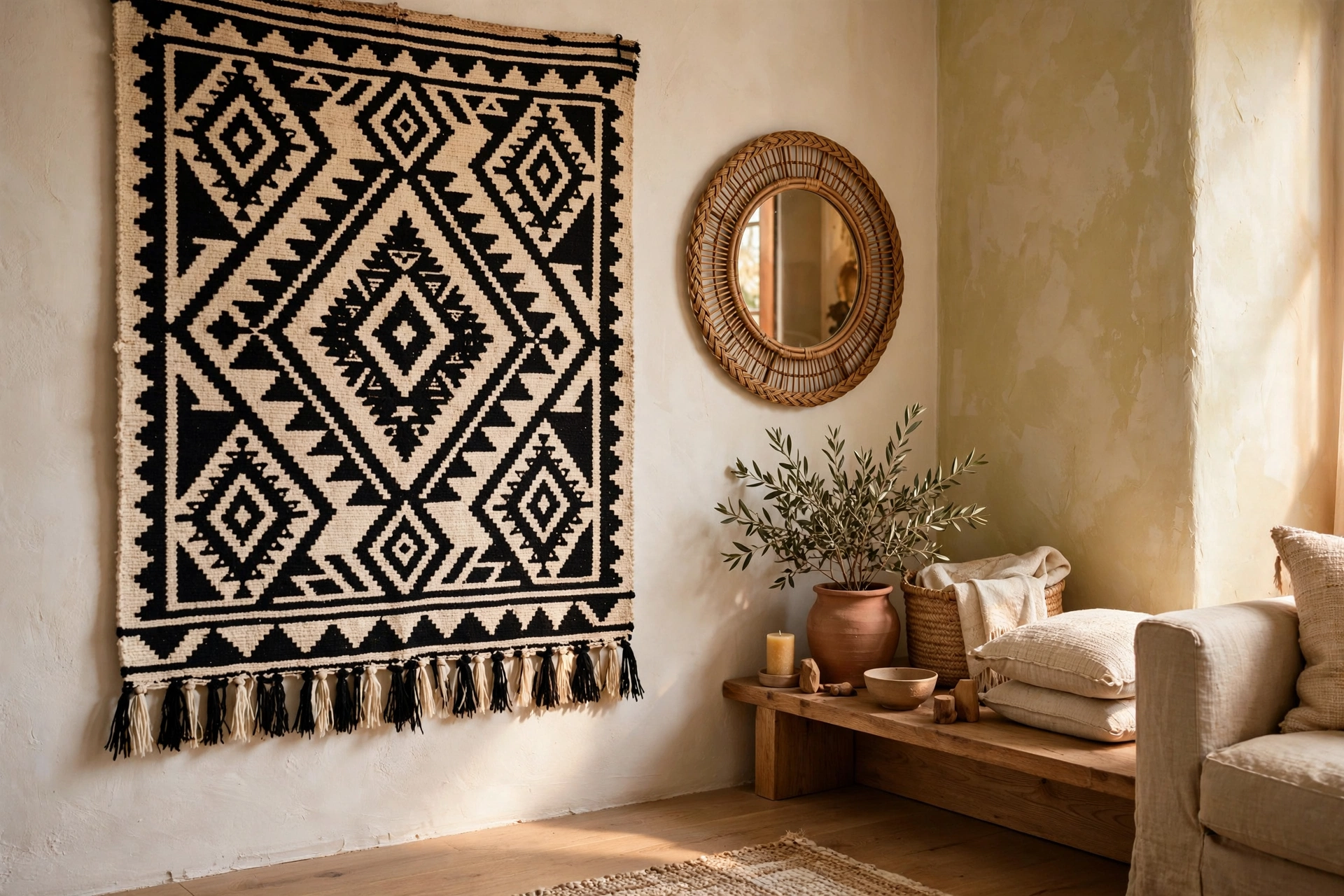
9. Patterned art with real roots. Berbere (Amazigh) motifs, Ethiopian-inspired prints, mud-cloth patterns framed large — one bold textile or print as your room’s artwork. This is where the style asks something of you: learn the name of the pattern you’re hanging. A two-minute read about berbere symbolism turns decoration into appreciation, and your guests will ask about it. They always do.
Room by Room: Where to Start
Living room (start here). Rattan chair in the sunniest corner, two mud-cloth pillows on the sofa, a basket cluster over the console, terracotta pots by the window. Four moves, full effect — and three of them fit the prices in our budget living room makeover guide.
Bedroom. Adire bedding or a throw, a woven basket as a laundry hamper (pretty storage is the whole point), one carved piece as a nightstand. Keep the palette cream-dominant so the indigo and rust have room to breathe.
Entryway. A basket on the console for keys, a beaded curtain if the entry opens straight into the living room, one terracotta pot with something trailing. First impressions are this style’s home turf — it says “come in, stay a while” immediately.
Dining nook. Rattan or cane chairs around the table if you’re replacing seating, a mud-cloth runner down the table, terracotta centerpiece with dried grasses. Small dining corners take it especially well — the style loves a gathered, abundant feeling.
Afrobohemian Home Decor on a Budget: The Honest Rules
- Textiles first, furniture last. Pillow covers, throws, and a rug change a room for under $60. A new chair costs ten times that. Start where the money goes furthest.
- Buy the real thing when it’s small. A genuine hand-dyed mud-cloth pillow or a small adire throw costs little more than a print, and it supports the artisans whose culture made the style. Save the budget versions for the big pieces.
- Thrift before you buy new. Rattan chairs, woven baskets, terracotta pots, carved wood — all of these are thrift-store staples. The patina that makes them beautiful is exactly what secondhand gives you for free.
- One statement per room. The rattan chair OR the beaded curtain OR the bold berbere wall hanging. Afrohemian is layered, not crowded — every piece needs air around it.
- Plants are decor. A $12 snake plant in a $6 terracotta pot looks more expensive than a $40 knick-knack. Greenery is this style’s cheapest luxury.
What to Avoid
- The safari trap. This is not a theme park. Animal prints, “tribal” everything, and generic “African-inspired” mass-market sets flatten a rich design tradition into costume. Stick to real textiles and real craft.
- Pattern overload. Mud-cloth AND adire AND berbere AND kilim in one room is visual noise. Pick one pattern family as your lead and let the others whisper — solids in the palette count as the rest.
- Ignoring where it comes from. The one real rule of this style: know your pieces. If you’re hanging mud-cloth, know it’s bogolan from Mali. If you love adire, know it’s Yoruba indigo work. Respect isn’t a buzzkill — it’s what separates a beautiful room from an appropriated one.
Frequently Asked Questions
What is afrobohemian home decor?
Afrohemian decor is a 2026 interior trend blending African craftsmanship — mud-cloth textiles, adire indigo dyeing, woven baskets, carved wood, terracotta — with bohemian layering and natural materials. It favors earthy palettes (cream, ochre, rust, indigo), handmade pieces, and warm, soulful rooms over minimalism.
What colors are used in Afrohemian home decor?
Cream, ochre, rust, terracotta, clay, and deep indigo. The palette is sun-warmed and earthy: neutrals do the grounding, rust and ochre add warmth, and indigo (from adire textiles) provides the cool contrast that keeps it from feeling flat.
Is Afrohemian decor expensive?
It doesn’t have to be. The style’s biggest impact comes from textiles — mud-cloth pillow covers, an adire throw, a woven rug — most under $60 total. Rattan chairs and baskets are thrift-store staples. The look rewards patina and handmade character, which secondhand shopping gives you naturally.
Where can I buy Afrohemian decor?
Etsy and fair-trade shops are best for authentic hand-dyed mud-cloth and adire from artisans. For budget pieces, check World Market, Target’s global-inspired lines, and thrift stores — rattan, terracotta, and baskets turn up constantly secondhand.
What’s the difference between Afrohemian and regular boho?
Classic boho mixes global influences loosely — Moroccan, Indian, Southwestern — with no single anchor. Afrohemian is specifically rooted in African craftsmanship and textiles (mud-cloth, adire, berbere motifs, carved wood) layered with bohemian ease. It has a clearer cultural center and a warmer, more grounded palette.
Warm, handmade, and full of soul — Afrohemian is the 2026 trend that makes a house feel like a home. Save your favorite idea and start with one textile; the rest of the room will follow.