Laced Up Decor: 10 Romantic Lace Ideas That Don’t Look Old-Fashioned
The short answer first
Here is the whole secret in one sentence: one lace feature per room, on a calm white base, is what keeps lace romantic instead of old-fashioned.
Laced up decor — lace, doilies, delicate trims, and crochet details coming back into homes — is named among the Pinterest Predicts 2026 trends in secondary design coverage, and stylists writing for homes magazines keep repeating the same warning: use lace as one feature per room, curtains or cushions, not both, or the room tips into clutter and starts to look like your grandmother’s front parlor. That one rule is the spine of this entire guide. Every idea below follows it. Pick one idea per room, let the rest of the room stay calm and white, and lace reads as soft, handmade, and current — never fussy, never a costume.
The palette stays simple throughout: chalky whites, buttercream, faded peach, and pale sage, in cotton, voile, linen, and muslin. That is why lace suits a white home so well. It does not fight the room. It just softens it.
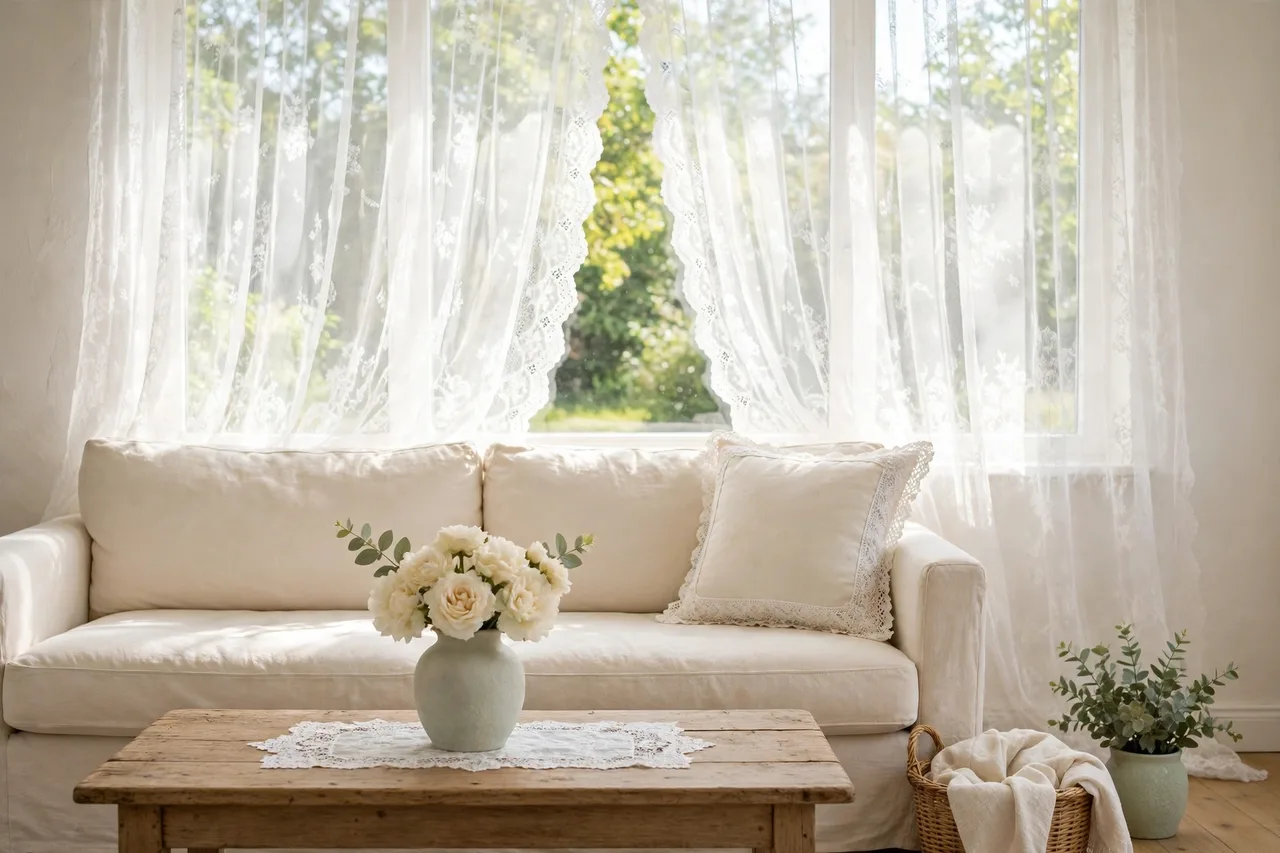
1. Sheer lace curtains in the living room
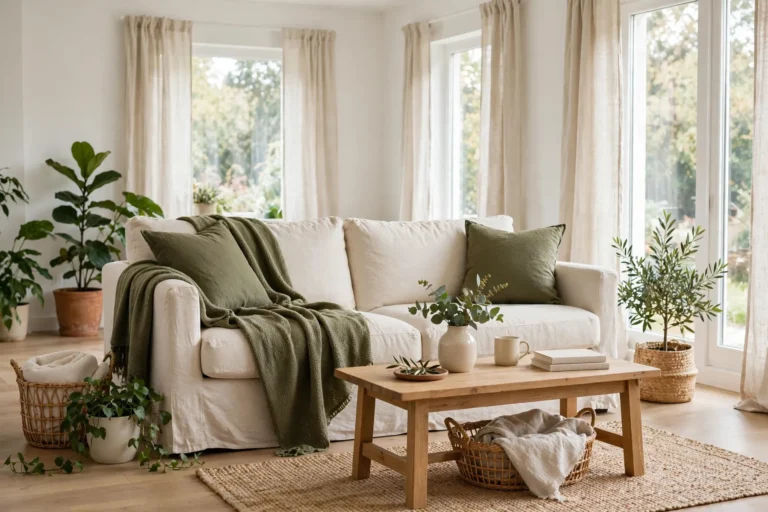
If you only try one idea from this list, make it this one. Sheer lace curtains for the living room are the easiest lace win there is: they give you daytime privacy, they turn harsh sunlight into something soft, and they cost far less than a pair of lined drapes.
Hang them right and they look expensive. Mount the rod 4 to 6 inches (10 to 15 cm) above the window frame and extend it 3 to 4 inches (8 to 10 cm) beyond each side, so the window looks taller and wider than it is. Let the panels fall to just below the sill, or all the way to the floor if you want the romantic look — floor-length lace in a living room feels like a boutique hotel, and it hides a plain window frame completely. A simple white voile lace panel runs about $25 to $40 per window, and you can hang it on a tension rod in a rental with zero holes in the wall.
Keep everything else in the room plain. A cream sofa, a wooden coffee table, one plant. The curtains are the lace feature here, so the cushions stay solid. That restraint is exactly what keeps the room looking modern, and it is the same calm-white-base thinking behind our warm minimalism approach: one soft feature, everything else quiet.
2. Cafe lace curtains in the kitchen
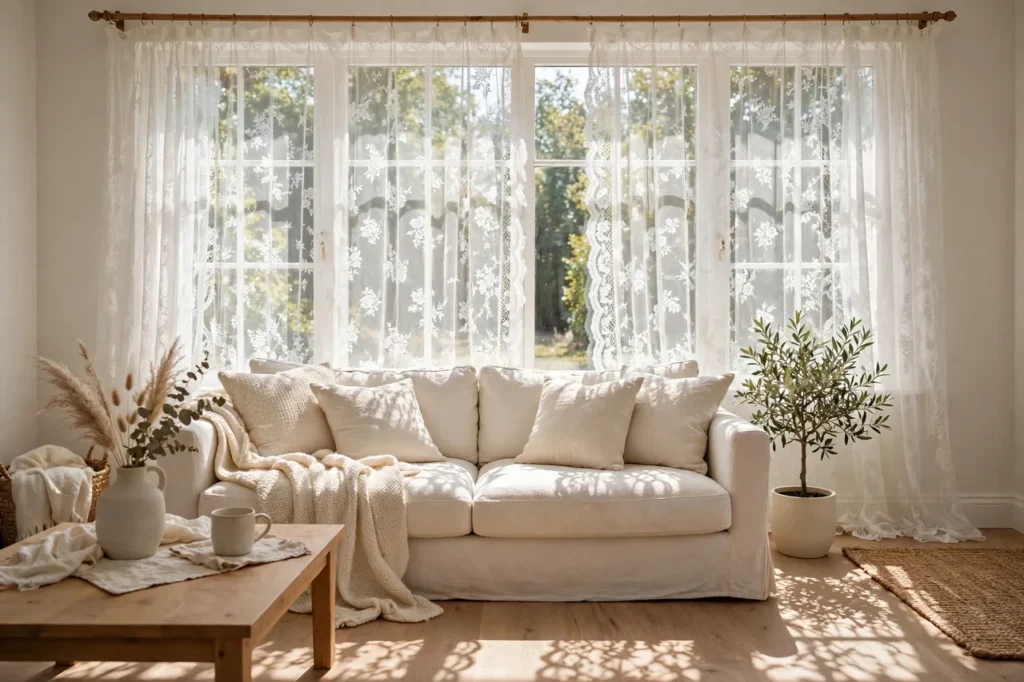
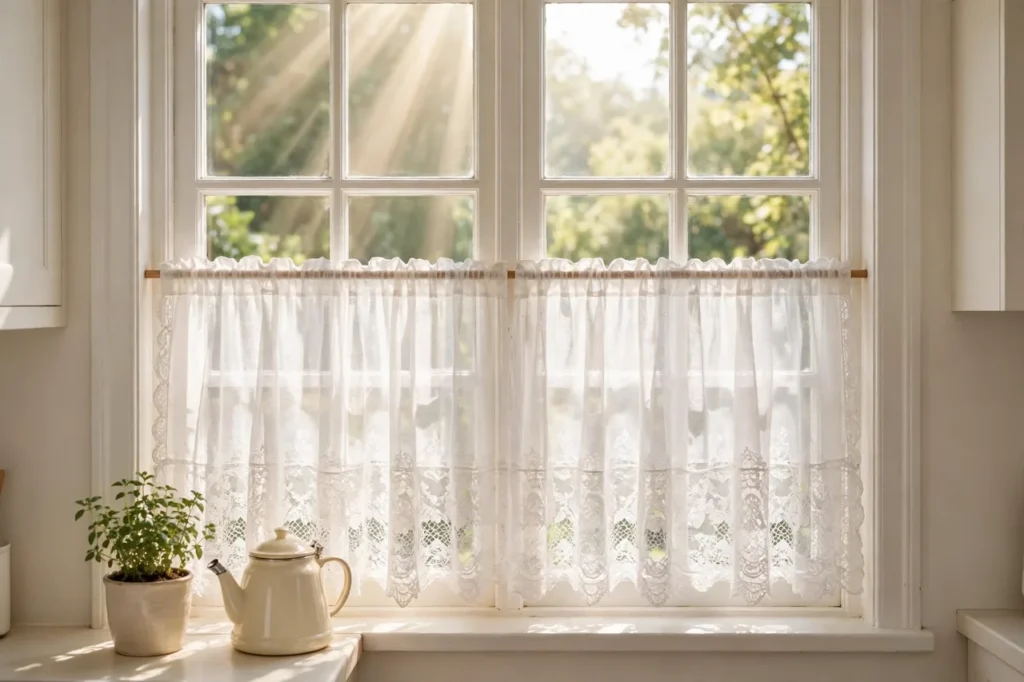
Cafe curtains are lace’s hardest-working idea, and the kitchen is where they make the most sense. A cafe lace curtain covers only the lower half of the window, so nobody walking past can see straight in, but the top half stays open and the morning light pours over it. It is privacy without gloom, which is exactly what a kitchen needs.
The how-to is gloriously simple. A small tension rod sits inside the window frame at the halfway point — no drilling, no brackets, and you can take the whole thing down in ten seconds when it needs a wash. Measure the width, add about 1.5 times that width in fabric so the lace gathers instead of hanging flat, and let the hem fall about 1 inch (2.5 cm) below the rod line. A ready-made cafe lace panel costs about $15 to $25, and a pair of plain white ones looks just as good as anything fancier.
Style the sill, not the curtain. A small herb pot, a cream kettle, nothing else. The lace is doing enough work already, and a crowded sill fights it. If your kitchen window faces a neighbor, this is the single cheapest privacy fix in this whole guide.
3. Lace-trimmed bedding in the bedroom
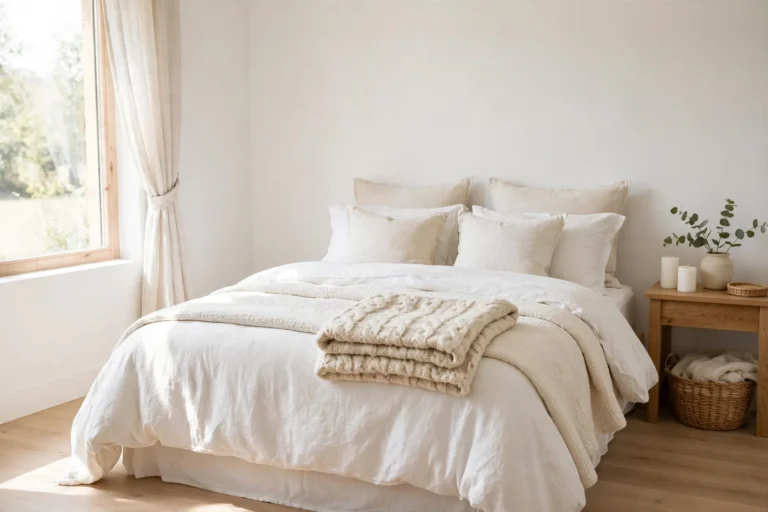
A bedroom is where lace earns its “romantic” reputation, and it is also where it goes wrong fastest. The fix is the same rule: one lace feature, and let it be the bedding.
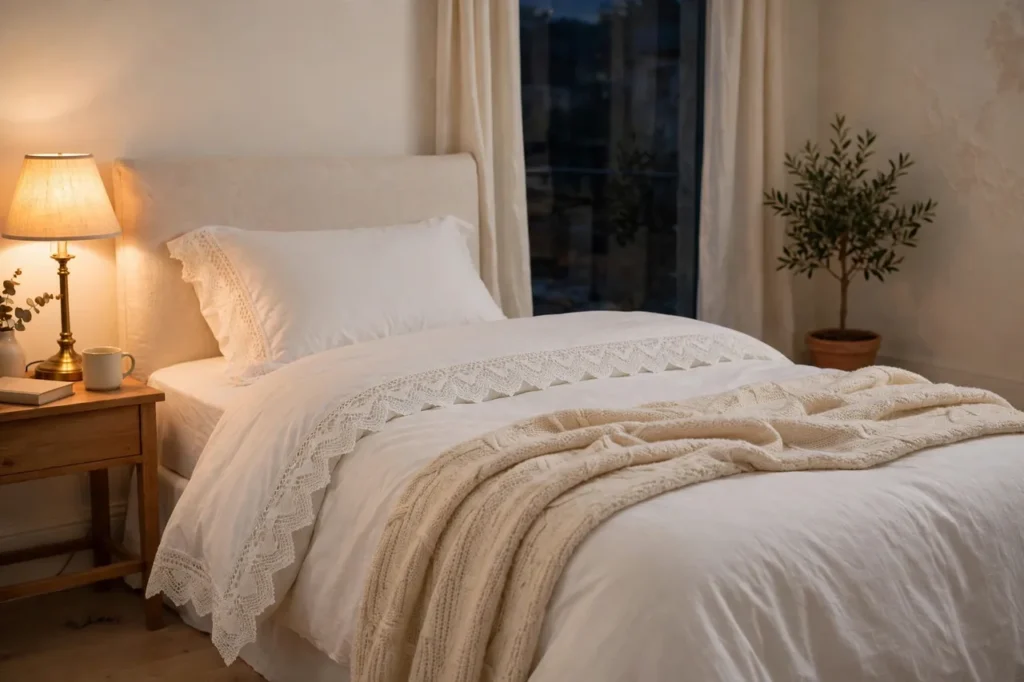
Choose a white duvet cover with a lace-trimmed edge, or a pair of pillowcases with a lace border, but not both plus a lace throw plus lace curtains. One is romantic. Four is a museum. A lace-trimmed duvet set runs about $35 to $50, and pillowcase pairs about $20 to $30, which makes this one of the more generous ideas in the guide — but it changes the whole room in one move, especially in the evening when a warm lamp makes the lace edge glow.
Layer it the simple way: white sheets, the lace-trimmed duvet folded back about 12 inches (30 cm) from the top so the trim shows, one buttercream knit throw across the foot of the bed, and nothing patterned on top. If your bedroom is small, this idea is even better, because lace adds softness without adding bulk or visual weight — the same trick that makes our small bedroom ideas work, just with a prettier texture.
4. A scalloped lampshade for evening light
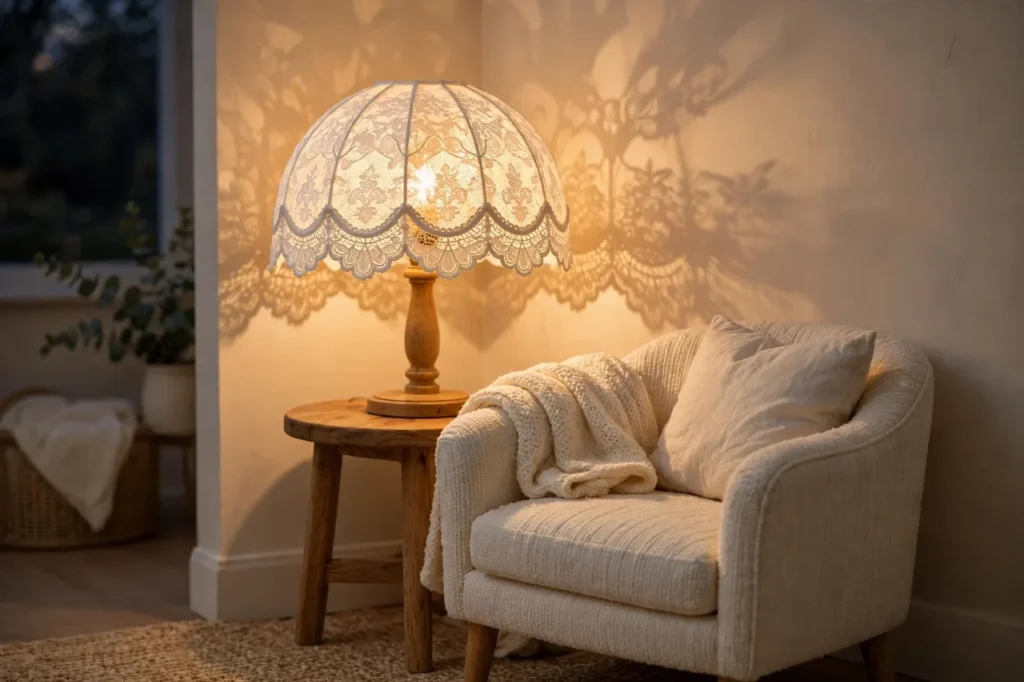
Here is the idea nobody expects, and it is the one guests always comment on. A scalloped lace lampshade does something no plain shade can do: when the lamp is on, the lace pattern throws soft shadows across the wall, so the whole corner glows with texture. In daylight it looks like a pretty white shade. At night it becomes the room’s jewelry.
You do not need to buy a new lamp. A lace shade that fits a standard table lamp runs about $20 to $35, and it drops onto the base you already own in about a minute. Use a warm bulb (2700K) — cool white light kills the effect and makes lace look clinical. Put the lamp in a reading corner with one chair, and stop there. No lace cushions on that chair, no lace throw on its arm. The shade is the feature, and the shadows are the show.
This is also the cheapest way to test whether you even like lace in your home. One shade, one evening, and you will know by bedtime.
5. A lace tablecloth for the dining table
A lace tablecloth is the fastest way to make an ordinary Tuesday dinner feel like an occasion, and it is the idea most people already own without knowing it. Check the linen closet first — plenty of households have one folded away from a wedding or a grandparent’s house, waiting for an excuse.
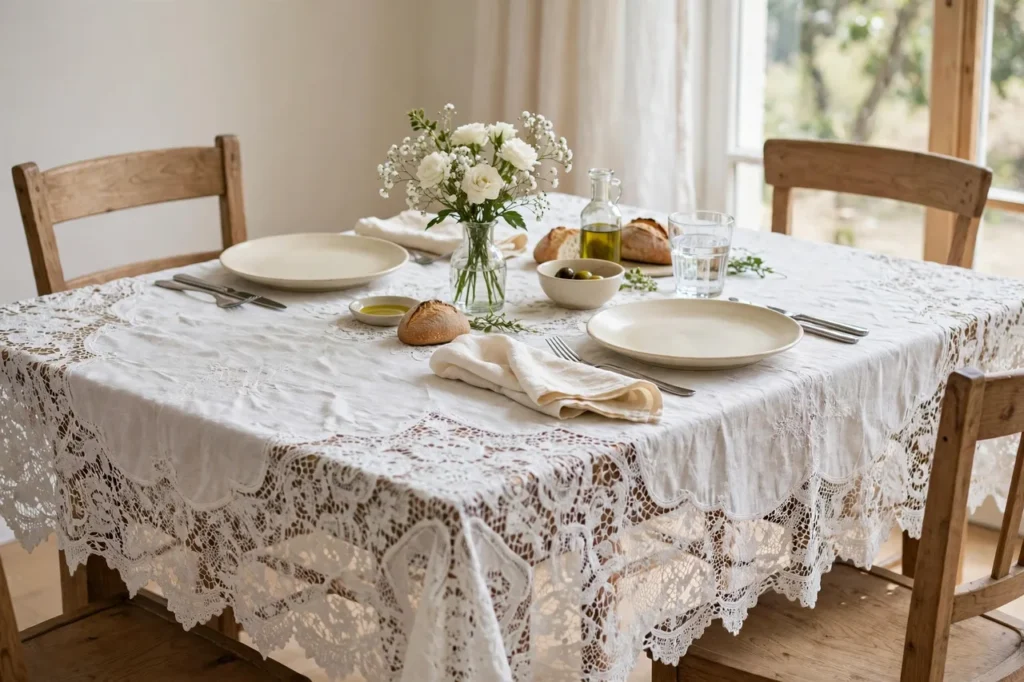
If you are buying, measure properly and the cloth will look intentional instead of borrowed. For a rectangular table, the cloth should hang about 8 to 10 inches (20 to 25 cm) over each edge. Shorter looks stingy, longer gets caught on chairs. A cotton lace tablecloth for a four-to-six-seat table runs about $25 to $40, and white is the only color you need: it goes with every plate you own.
Keep the table setting simple so the lace can be seen. Cream plates, plain glasses, one small vase of white flowers, and no patterned runner on top of the cloth — that would be two lace features fighting each other. One cloth, one vase, done. And here is the practical part people forget: lace tablecloths wash beautifully. Shake off crumbs outside, machine wash cold on gentle, and line dry. The cloth that looks delicate is actually one of the toughest things in the dining room.
6. Embroidered cushions with a lace trim
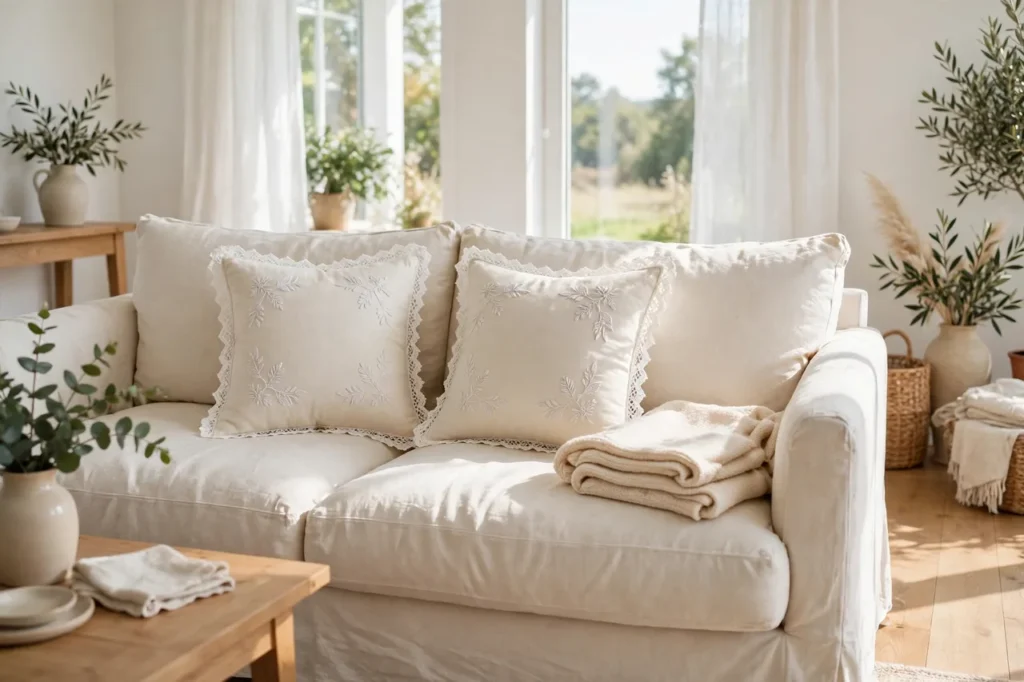
Cushions are lace’s small-commitment idea, which makes them perfect if you are still deciding whether lace is really your thing. Two embroidered cushions with a lace trim on a plain cream sofa change the whole feel of a living room for about $15 to $20 per cushion, and if you hate them in a month, you have lost almost nothing.
The rule here matters more than anywhere else, because cushions multiply so easily. Two lace-trimmed cushions, maximum, and every other cushion on that sofa stays solid and plain. Mix the textures if you like — one embroidered, one plain linen — but keep the colors in the same chalky white family so the sofa reads as calm, not busy. A buttercream throw folded on the arm is fine; a lace throw on top of lace cushions is not.
This is also the best renter-friendly idea in the guide after cafe curtains. No holes, no rods, no commitment. You can take them to your next home in a tote bag.
7. A crochet lace throw on a reading chair
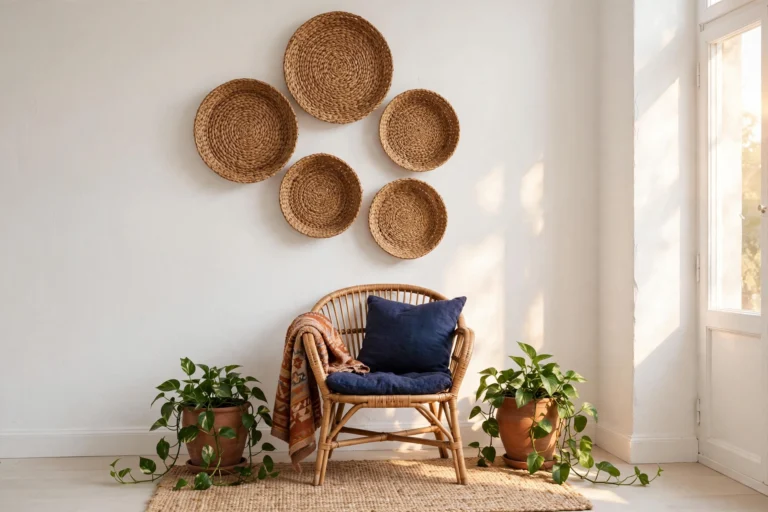
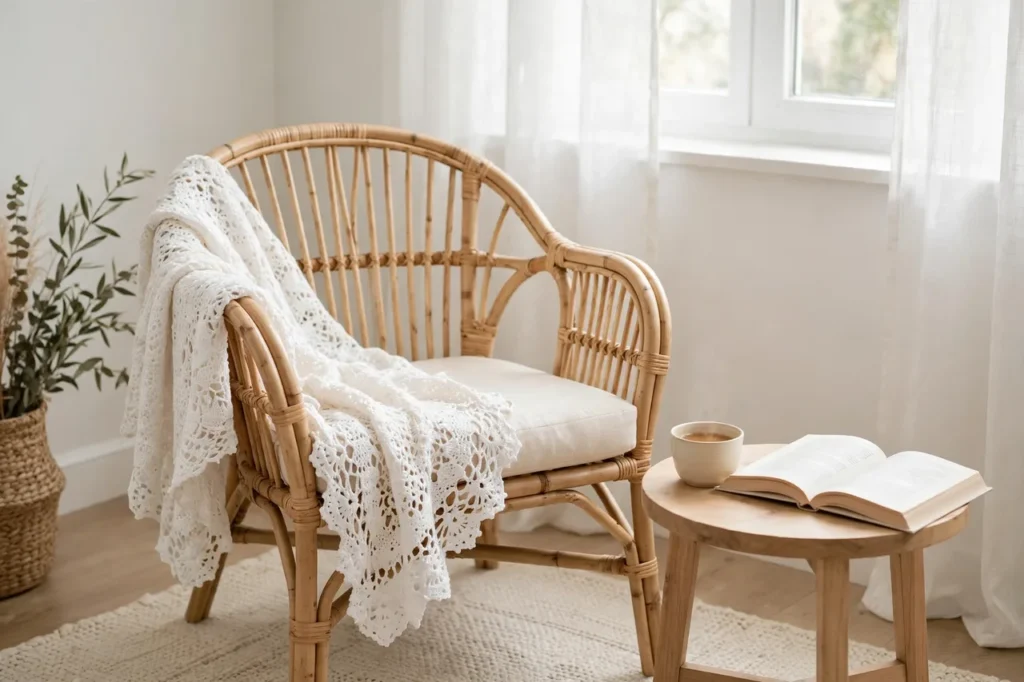
A crochet lace throw is lace at its most handmade, and a reading chair is where it belongs. Draped over one arm of a rattan or wooden chair, it turns an ordinary corner into the spot everyone fights over, especially in winter when the house is cold and the chair is warm.
Buy for drape, not for pattern density. A throw that is too dense reads as a blanket; a throw with an open crochet pattern reads as lace, and it lets the chair show through, which is the whole point. A cotton crochet throw runs about $20 to $30. Fold it loosely rather than arranging it perfectly — lace looks better slightly undone, like someone just put it down after reading, than ironed into a rectangle.
Pair it with one small side table, a cup of tea, and a book. That is the whole vignette. The chair is the only lace in that corner, and the throw is the only pattern. Resist the urge to add a lace cushion to the same chair. You know the rule by now.
8. A framed lace doily as modern wall art
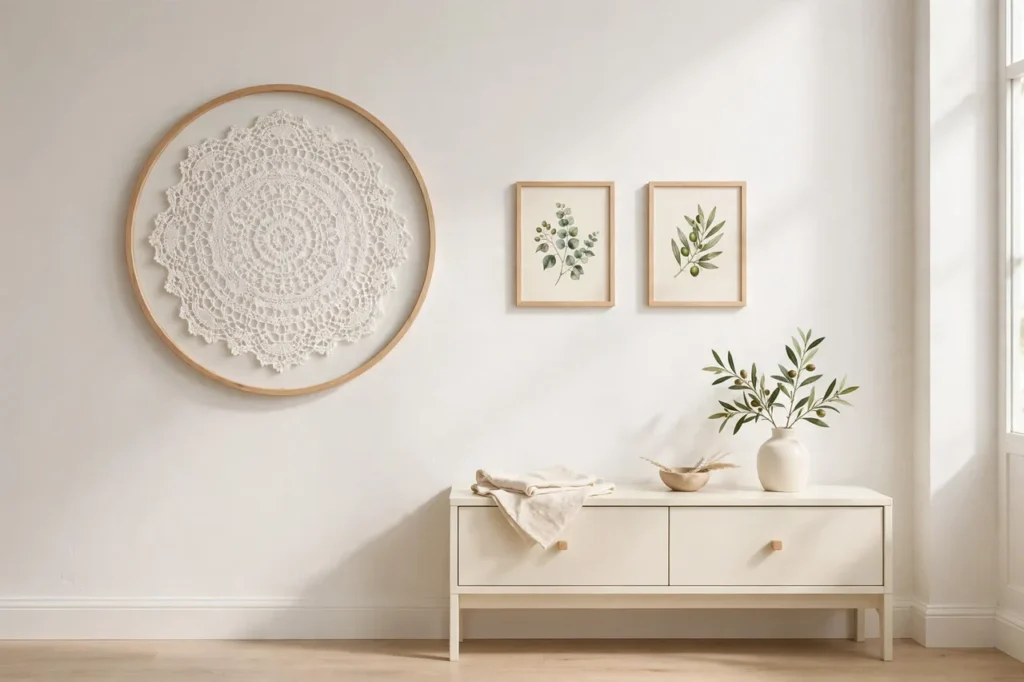
This is the idea that finally kills the “lace is old-fashioned” argument, because it treats lace the way a gallery treats a print. Take one beautiful vintage doily — the round, intricate kind — stretch it flat, and frame it in a thin light-wood frame with a plain white or cream backing. Hung on a white wall next to two small botanical prints, it reads as modern textile art, not as something rescued from a drawer.
The frame is what does the modernizing. A thin, pale frame and a lot of white space around the doily say “deliberate choice.” A heavy gold frame and a crowded wall say “antique shop.” Keep the arrangement to three frames at most, and let the doily be the largest one. The whole project costs about $10 to $15 if you already own the doily — a simple frame and a backing board are all you need — and it takes about twenty minutes.
If you do not own a doily, thrift shops sell them for a dollar or two, which brings us neatly to the next idea.
9. Thrifted vintage lace on a budget
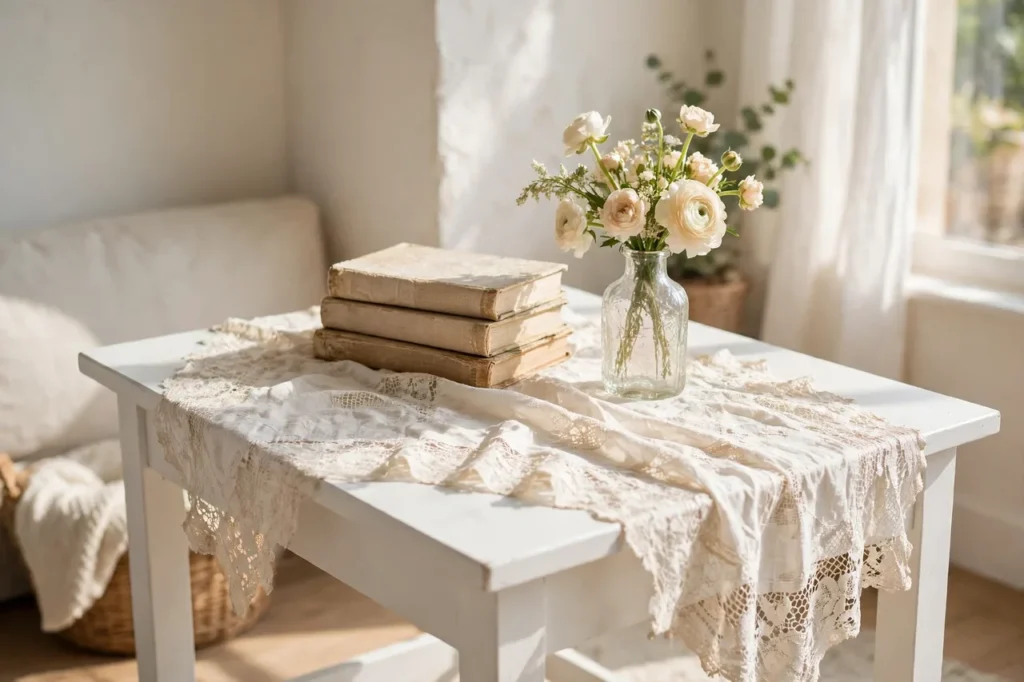
Lace is the rare trend where the cheapest version is also the most authentic one. Thrift shops, charity shops, and flea markets are full of real vintage lace — runners, doilies, curtain panels, tablecloths — sold for a few dollars because their previous owners no longer have a use for them. A vintage lace runner for about $5 to $10 can look better than a new one three times the price, because old cotton lace has a softness new lace takes years to develop.
Shop with a plan, not a basket. Before you go, decide which room needs the lace and what size it needs, and measure that spot. A runner that is too short for your side table will sit in a drawer, and a tablecloth for a table you do not own is not a bargain at any price. Check for stains in daylight before you buy — tea-colored age spots are charming, food stains are not — and wash everything cold and gentle before it goes near your furniture.
This is also the kindest way to furnish a guest room, where you want the room to feel thoughtful without spending much. A thrifted lace runner on the bedside table, a small vase, and clean white bedding make a guest feel genuinely welcomed, which is the same idea behind our guest bedroom ideas — small touches, not big spending.
10. A lace curtain for bathroom privacy
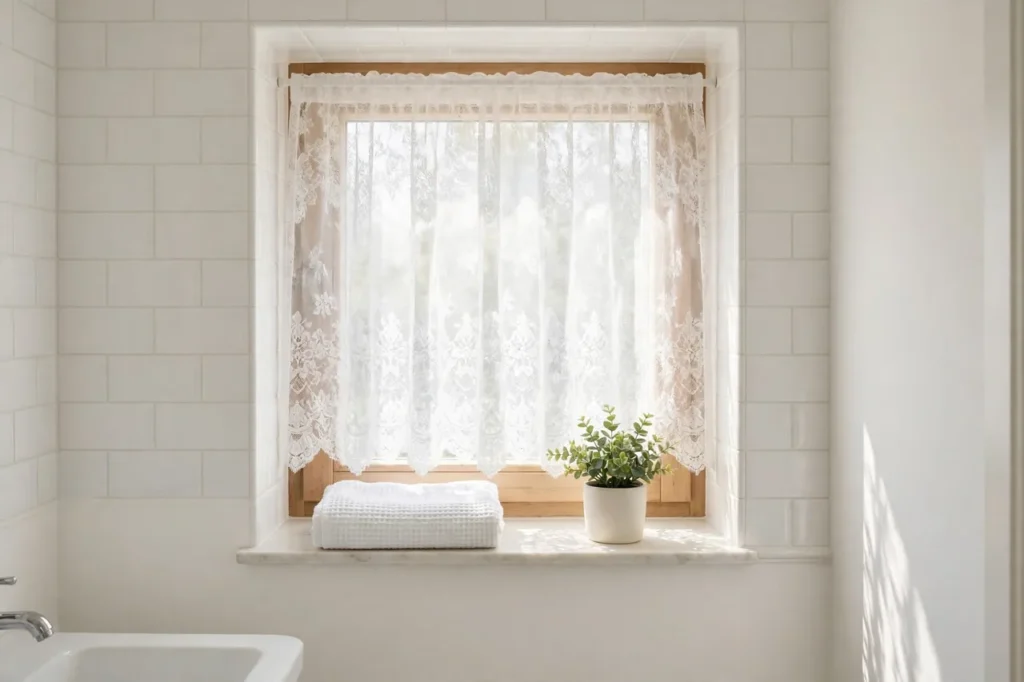
The bathroom is the room people forget when they think about lace, and it is the room where lace works hardest. A small window in a bathroom needs privacy more than any other window in the house, but a solid blind makes the room dark, and a dark bathroom feels smaller than it is. A sheer lace curtain solves both problems at once: nobody can see in, and daylight still comes through.
Use a tension rod inside the window frame so there is nothing to drill into tile, and choose a simple cotton lace that can handle humidity — polyester lace actually holds up better in a steamy bathroom than pure cotton, which is the one place in this guide where the synthetic option wins. A small bathroom lace panel costs about $12 to $20. Keep the sill clear except for a folded white towel and maybe one small plant, and let the lace be the only decoration the window needs.
One warning, and it is a kind one: wash this curtain more often than the others, about once a month, because bathroom humidity dulls white fabric faster than any other room. A quick cold wash keeps it bright, and a bright curtain keeps the whole bathroom feeling clean.
What it all costs
Every price below comes from the ideas above — nothing new has been added here.
| Budget tier | What it covers | Rough total |
|---|---|---|
| Under $15 | Thrifted lace runner ($5–$10), framed doily project ($10–$15) | $5–$15 |
| Under $30 | Cafe lace curtains ($15–$25), lace-trimmed pillowcases ($20–$30), scalloped lampshade ($20–$35), embroidered cushions ($15–$20 each), crochet throw ($20–$30), bathroom lace panel ($12–$20) | $12–$30 |
| Under $50 | Sheer living room lace panels ($25–$40), lace tablecloth ($25–$40), lace-trimmed duvet set ($35–$50) | $25–$50 |
Start with the cheapest test first. One cafe curtain or one thrifted runner will tell you whether lace belongs in your home, and if it does, the rest of the list will still be here.
The one rule, one more time
If you remember nothing else from this guide, remember this: one lace feature per room, on a calm white base. That is the difference between a home that feels romantic and a home that feels like a museum gift shop. Lace is back because it is soft, handmade, and human in a world of flat, mass-produced rooms — and the best way to honor that is to give it space to breathe.
Now pick your room, pick your one feature, and start with the window. You will know by tonight whether lace is your thing. It probably is.
How do I decorate with lace without looking old-fashioned?
Use one lace feature per room on a calm white base — curtains or cushions, not both. Keep everything else plain and modern, and the lace reads as romantic and current instead of fussy.
What is laced up decor?
Laced up decor is the 2026 trend of bringing lace, doilies, delicate trims, and crochet details back into the home — sheer lace curtains, scalloped lampshades, embroidered cushions, and lace tablecloths, named among the Pinterest Predicts 2026 trends in secondary design coverage.
How do I wash lace curtains and tablecloths?
Shake off dust outside, then machine wash cold on a gentle cycle and line dry. Avoid hot water and harsh bleach, which yellow white lace. Bathroom lace curtains need washing about once a month because humidity dulls them faster.
Is lace decor renter-friendly?
Yes — cafe curtains hang on tension rods with no drilling, cushions and throws need no installation at all, and a tension rod in a bathroom window leaves no marks. Every idea in this guide except a wall frame can be taken with you when you move.
How much does lace decor cost?
Very little to start. Thrifted lace runners run about $5 to $10, cafe curtains about $15 to $25, and a scalloped lampshade about $20 to $35. The most generous idea, a lace-trimmed duvet set, is about $35 to $50.
Does lace work in a small room?
Yes, and it works especially well there, because lace adds softness without adding bulk or visual weight. Sheer lace curtains make a small room feel brighter rather than smaller, and one lace feature keeps the room calm instead of crowded.
Last updated: October 2026