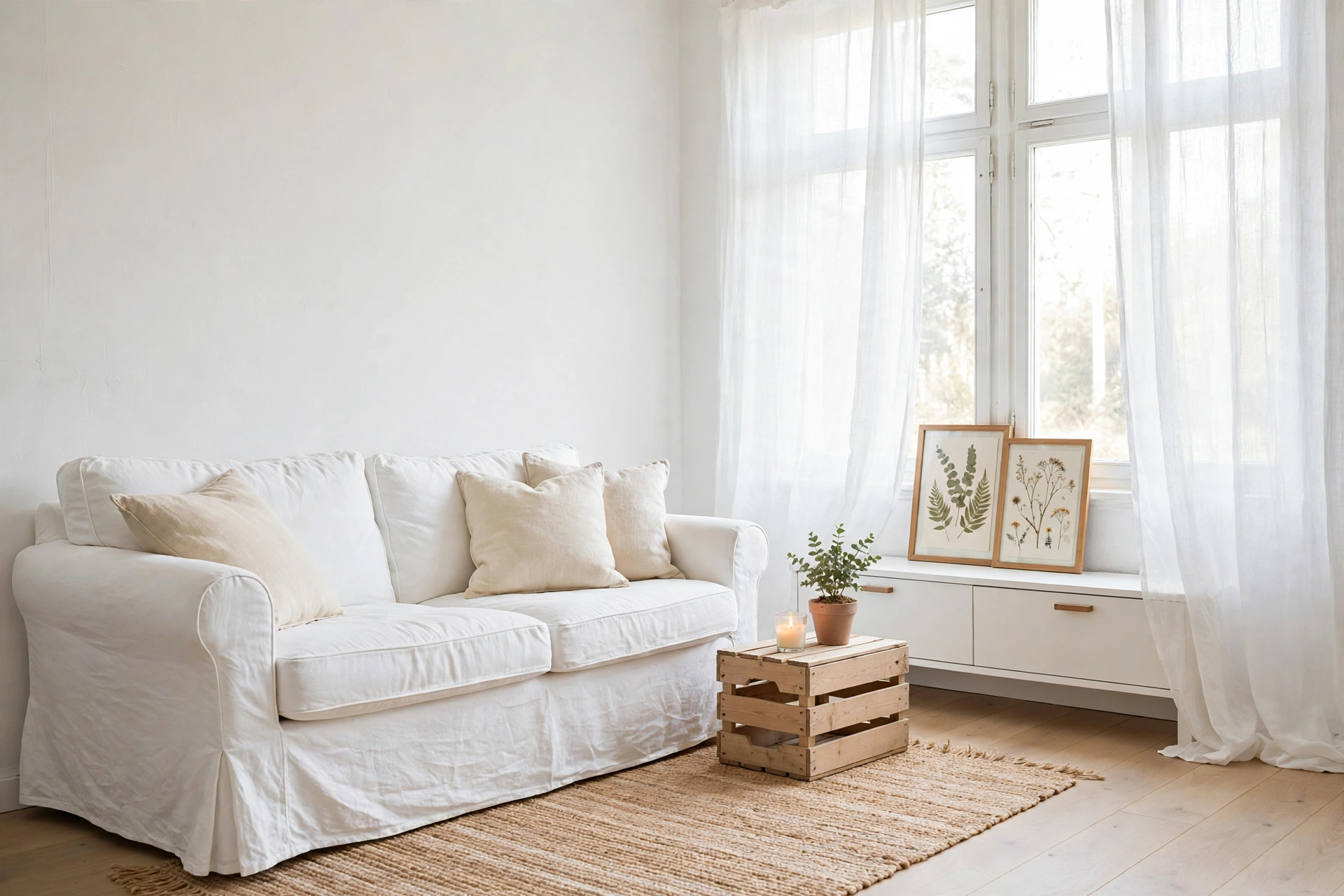
Here is the secret nobody selling cushions wants you to know: expensive-looking homes are rarely the ones with the most money spent on them. They are the ones where somebody edited, grouped, lit the room properly, and stopped buying random things — and all of that is free.
Twenty home decor ideas on a budget, arranged the way you will actually spend — or not spend: a free reset first, then small money under $25, then the under-$50 room-changers, then one bigger move when you are ready. Most budget home decor ideas lists scatter tips with no prices and no order; this one gives you honest ranges, the rules behind each move, and a sane total at the end. It is the same calm system we use everywhere at HomelyNook — the one behind our kitchen decor ideas — a white, light base, warm texture, greenery, and one quiet accent color. Let’s start where every good budget starts: at zero.
The 5 Rules That Make Budget Decor Look Expensive
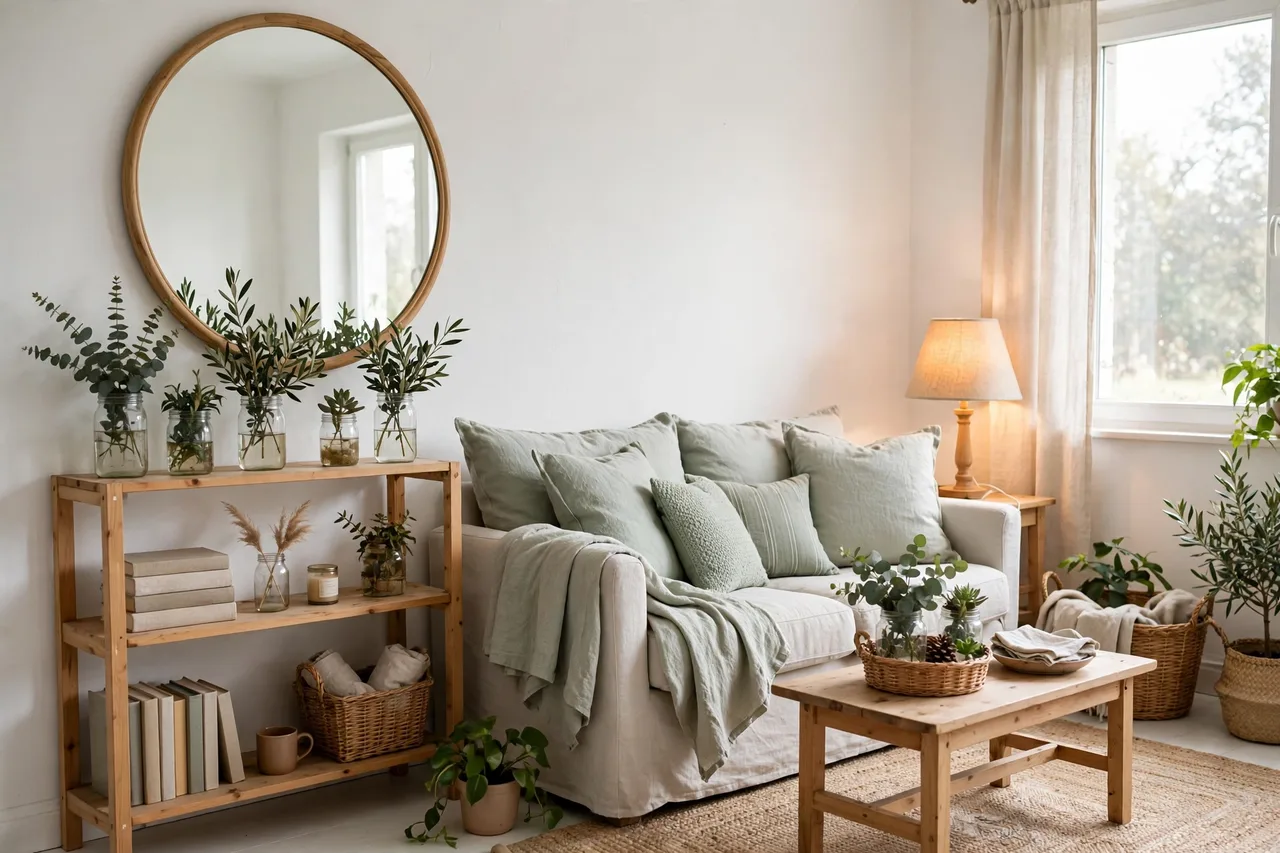
Before the ideas, the system — because decorating on a budget only works when every small purchase obeys the same few rules. These are the five that make a $10 find look like a $100 one.
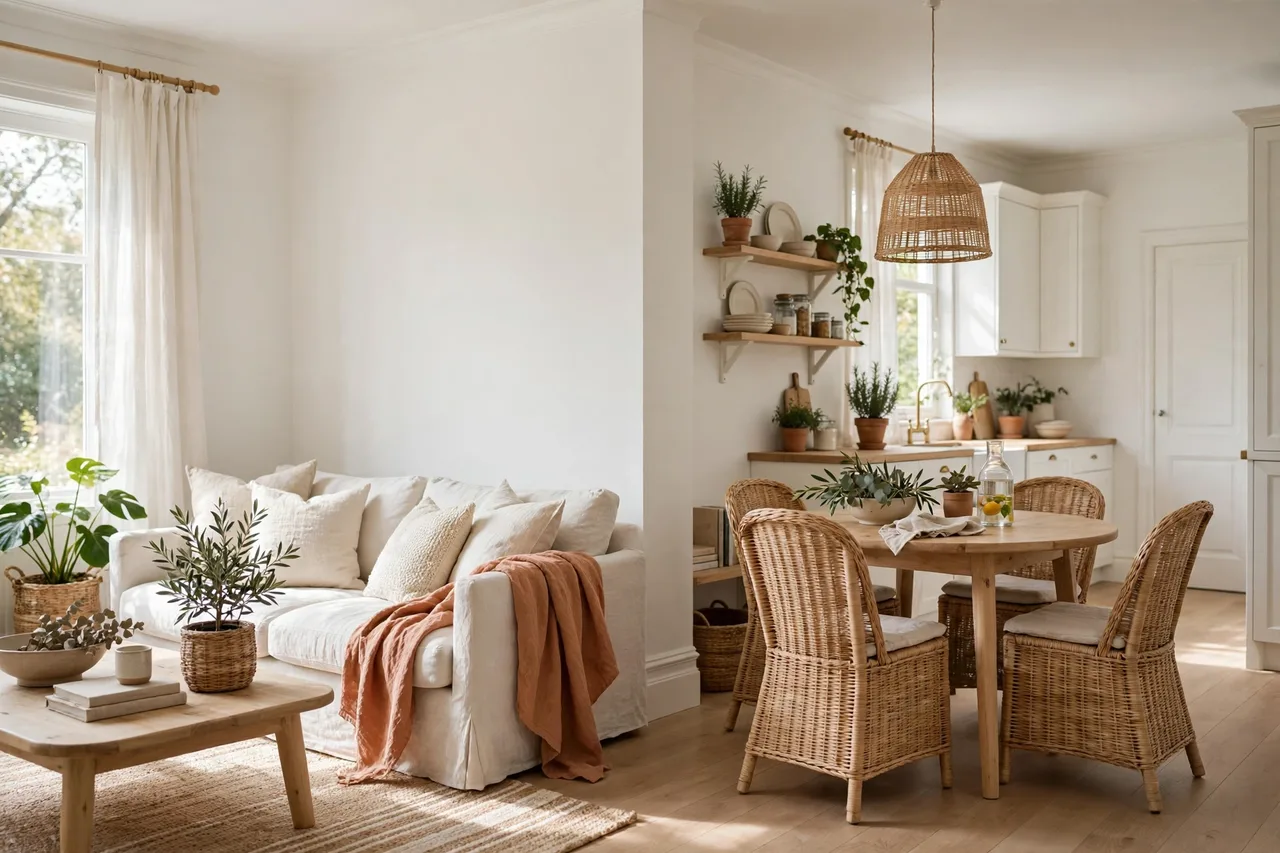
Rule 1: Two colors, and texture over color. Pick a calm base (white, warm white, pale wood) plus ONE accent, then buy texture instead of more color — linen, wicker, wood grain, a nubby throw. A room of many colors looks like a sale rail; a room of two colors and five textures looks designed.
Rule 2: Cluster in 3s and 5s. Expensive rooms group things in small odd-numbered families, with breathing space between them. One candle looks lost; three look like a decision.
Rule 3: Double up anything thin. Budget curtains, garlands and throws are made slim: two panels per side, two strands twisted together — doubling is the cheapest luxury there is.
Rule 4: One finish unifies everything. Mismatched thrifted finds become a “set” when they share one finish — the same warm brass, the same matte black, one color of spray paint. It is how a house gathered over years looks collected instead of accumulated.
Rule 5: Warm-white light, and ruthless editing. Only warm bulbs (around 2700K), and when a surface feels full, take one thing away. Restraint is the most expensive-looking thing in any home, and it costs nothing at all.
Start Free: The $0 Whole-Home Reset
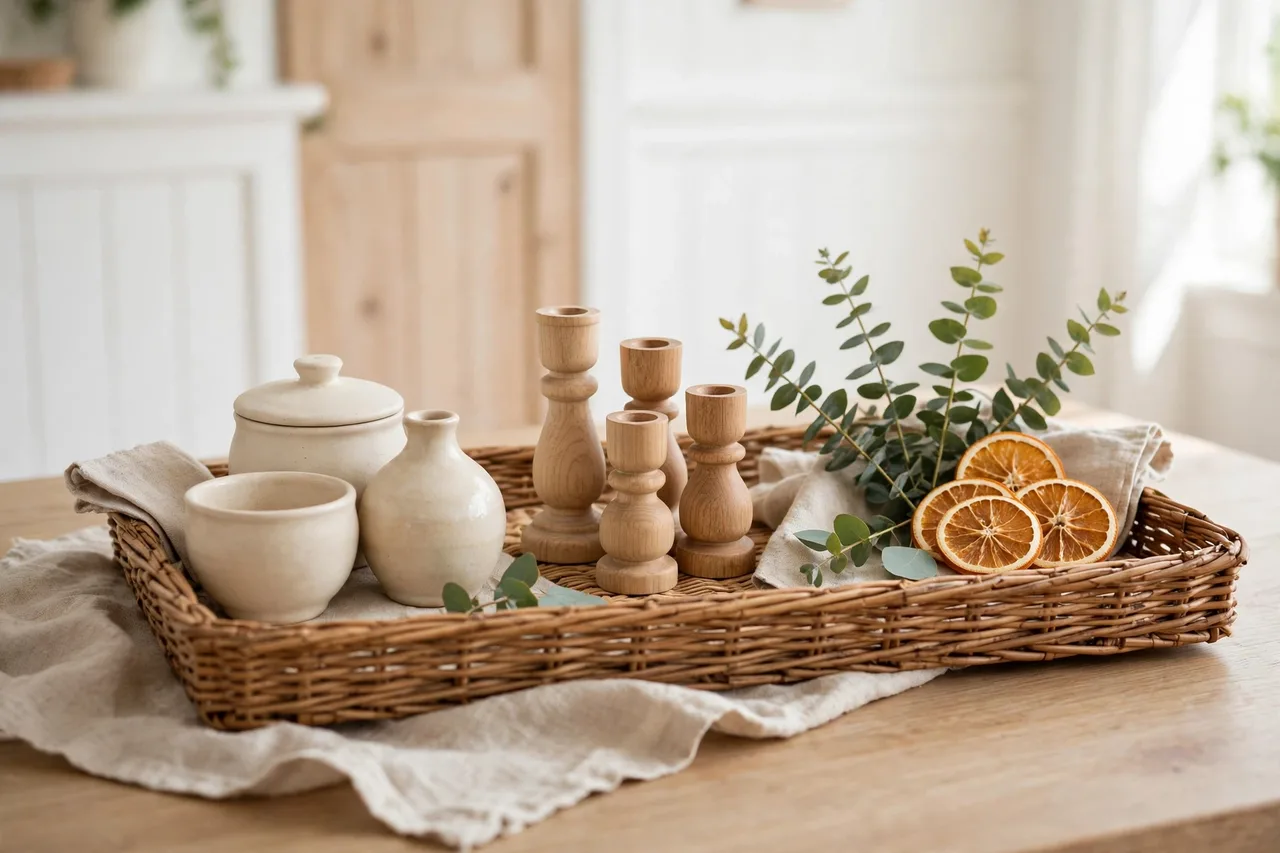
Do this whole section before spending a cent. For most homes it does half the visible work of the entire guide — which is exactly what decorating on a tight budget should mean.
1. Shop Your Home First
Your next favorite piece is probably already in your house, in the wrong room. Walk every room and the closets with fresh eyes: the plant sulking in the spare room, the good throw folded away since spring. Move pieces to where they will be seen and used — the side table crowding the hallway might be the perfect lamp table for the sofa. Give everything one honest week in its new spot before judging it.
2. Rearrange for Flow
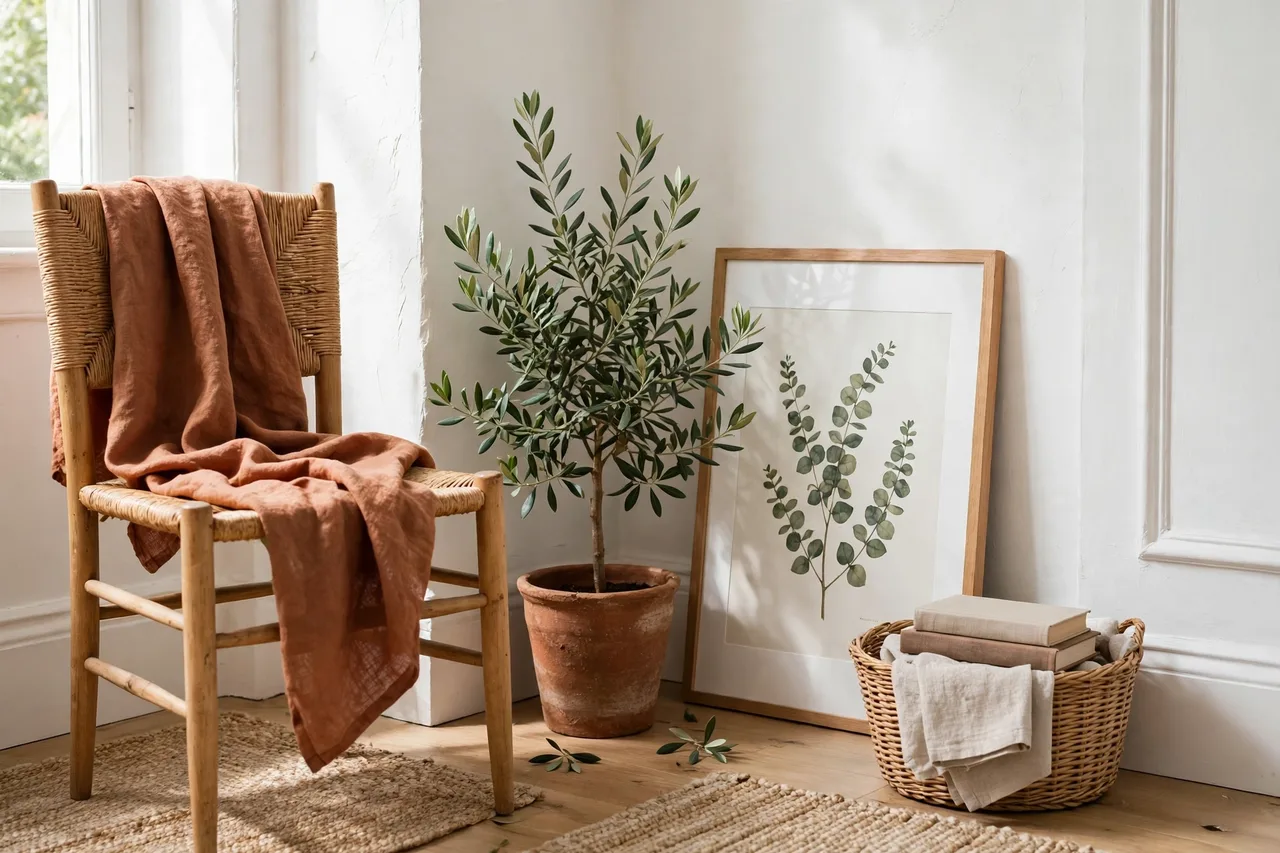
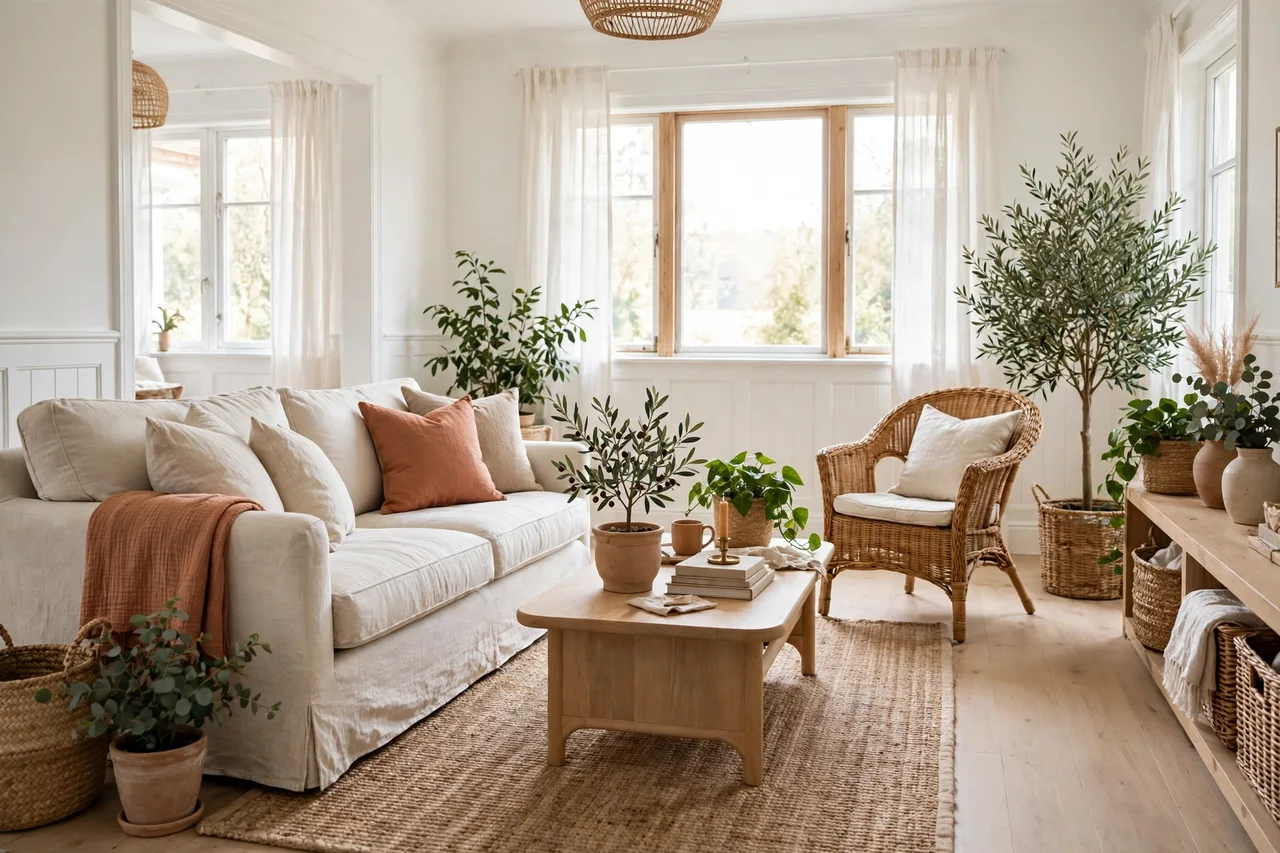
Furniture pushed against every wall is the number one reason rooms feel like waiting rooms. Pull the sofa a few inches (about 10 cm) off the wall, angle one chair toward the conversation instead of the TV, and make sure you can walk through the room without a sideways shuffle. Rooms feel expensive when there is air around the furniture — breathing room reads as luxury. Cost: $0 and one mildly argumentative afternoon.
3. The Ruthless Edit
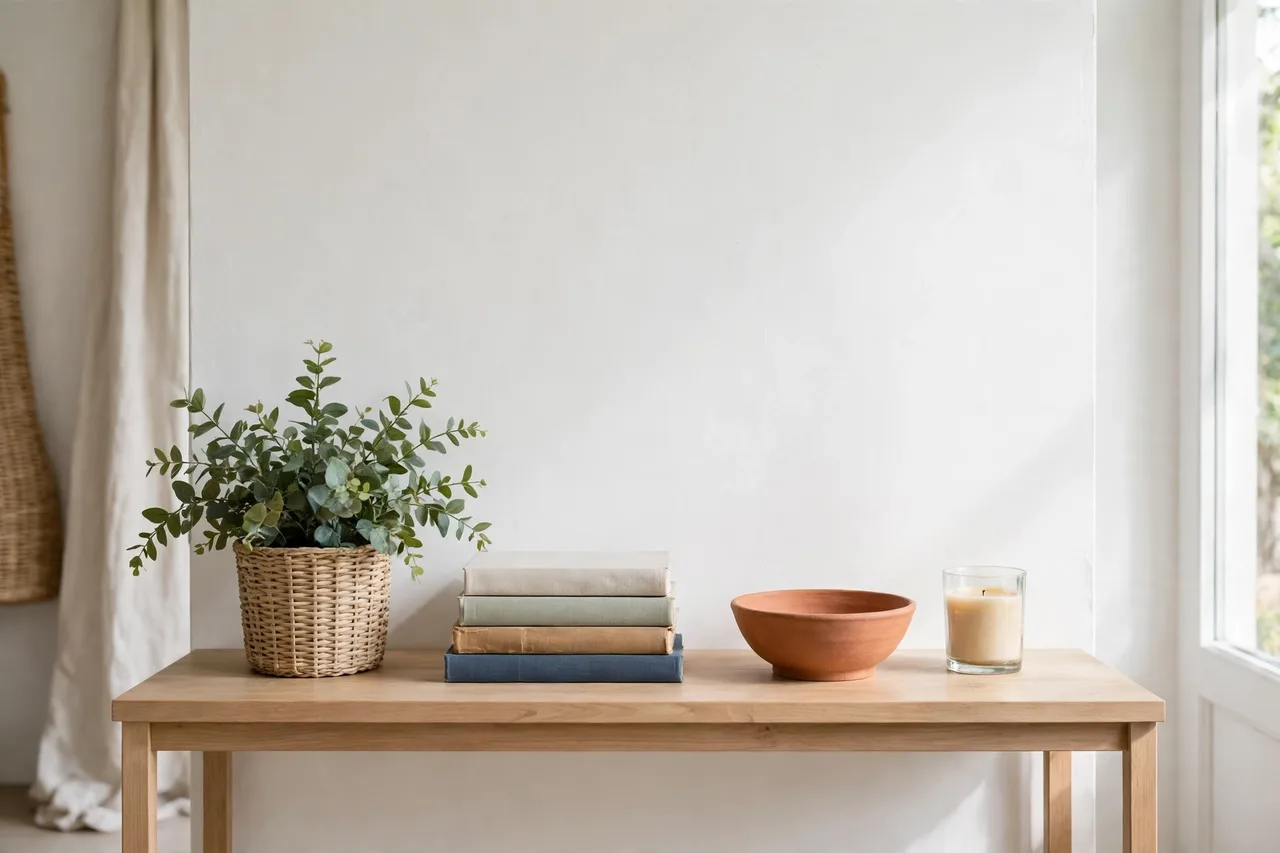
Editing is the decorator nobody hires and everybody needs. Go surface by surface — shelves, tables, the entry console — and leave only three to five objects on each, with real empty space between the groups. Everything else goes into one box: if nobody misses a thing in two weeks, the box gets donated unopened. It feels harsh for exactly one day; then the whole house looks calmer and, strangely, more expensive. Clutter is the loudest cheap tell there is; silence is free.
4. Restyle the Shelves With What You Own
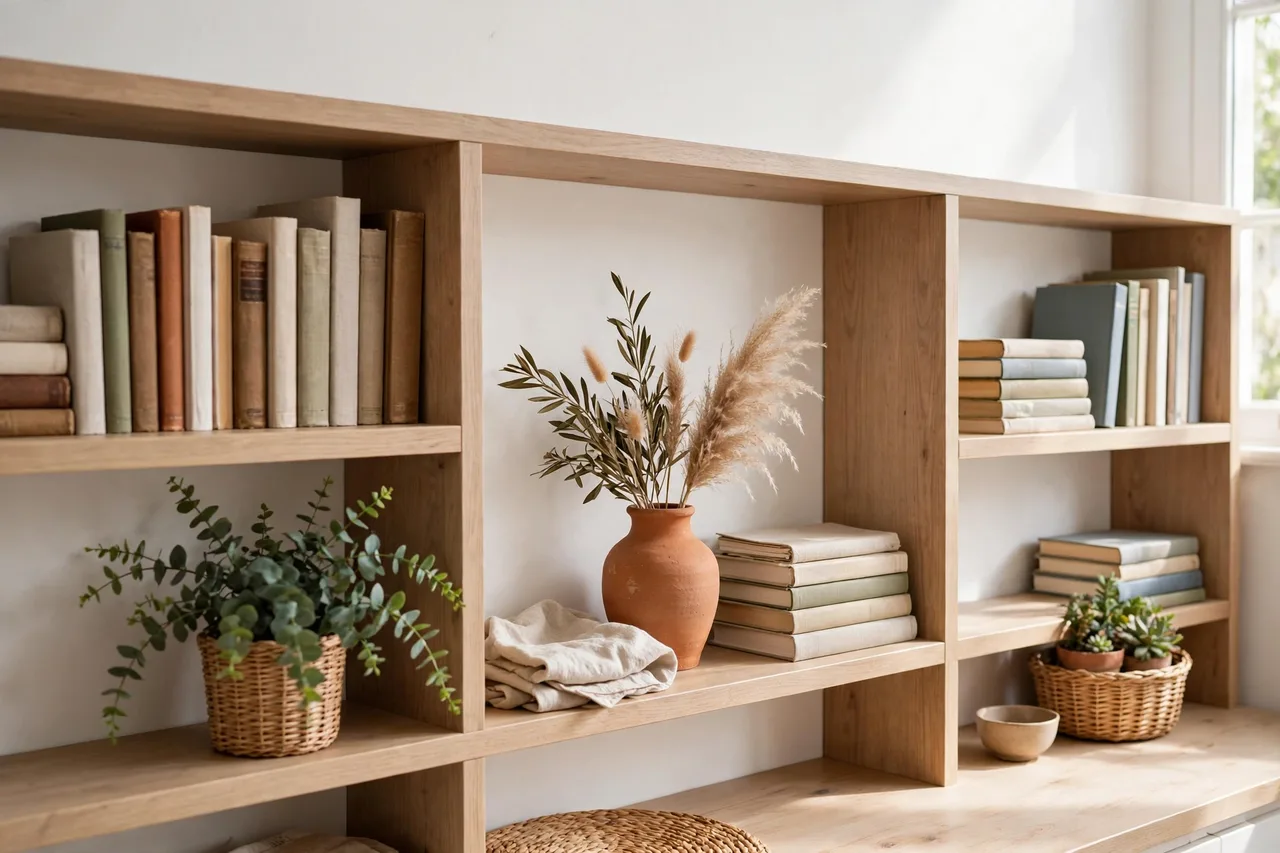
You do not need new shelf decor; you need new shelf arrangement. Take everything off one bookcase and put it back with rules: books grouped by size or color family, one stack lying flat with a small object on top, a basket gathering the small loose things, and pockets of honest emptiness. Leave about a third of each shelf empty — that emptiness is what the eye reads as “styled.” Cost: $0, best done with music on and opinions ready.
5. Move Light, Not Furniture
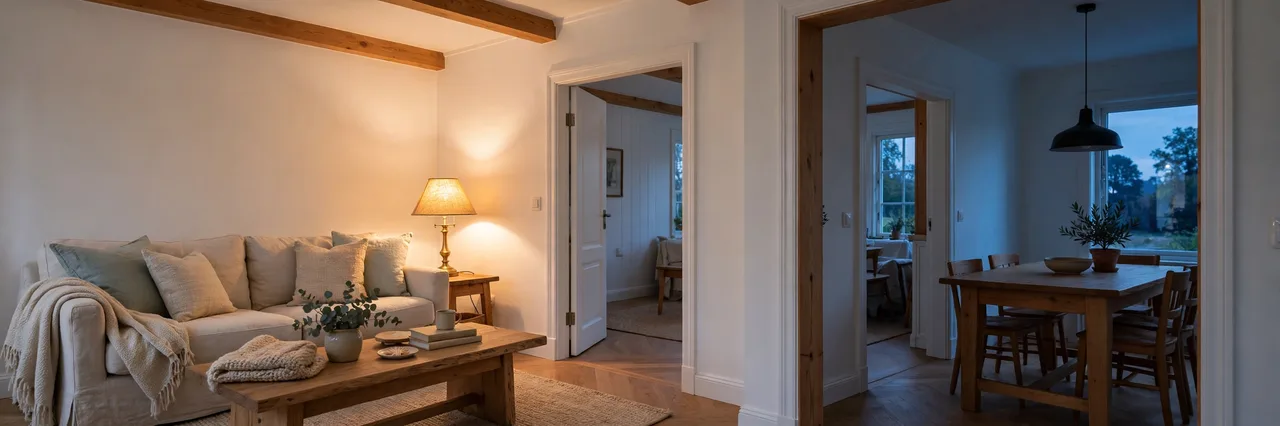
Before you move a single chair, move the lamps. Most homes keep their warmest lamp in a room nobody sits in at night, and a cold bare bulb where everyone actually lives. Swap them. Put the warm lamp where your evenings happen — beside the sofa, on the reading chair’s table — and let the spare rooms take the plainer light. Cost: $0, and it changes the room you will notice most, tonight.
Under $25: Small Money, Whole Rooms
This is where budget-friendly home decor ideas earn their name: small, well-chosen spends, each fixing a whole room instead of a corner of it.
6. Warm Bulbs + One Thrifted Lamp
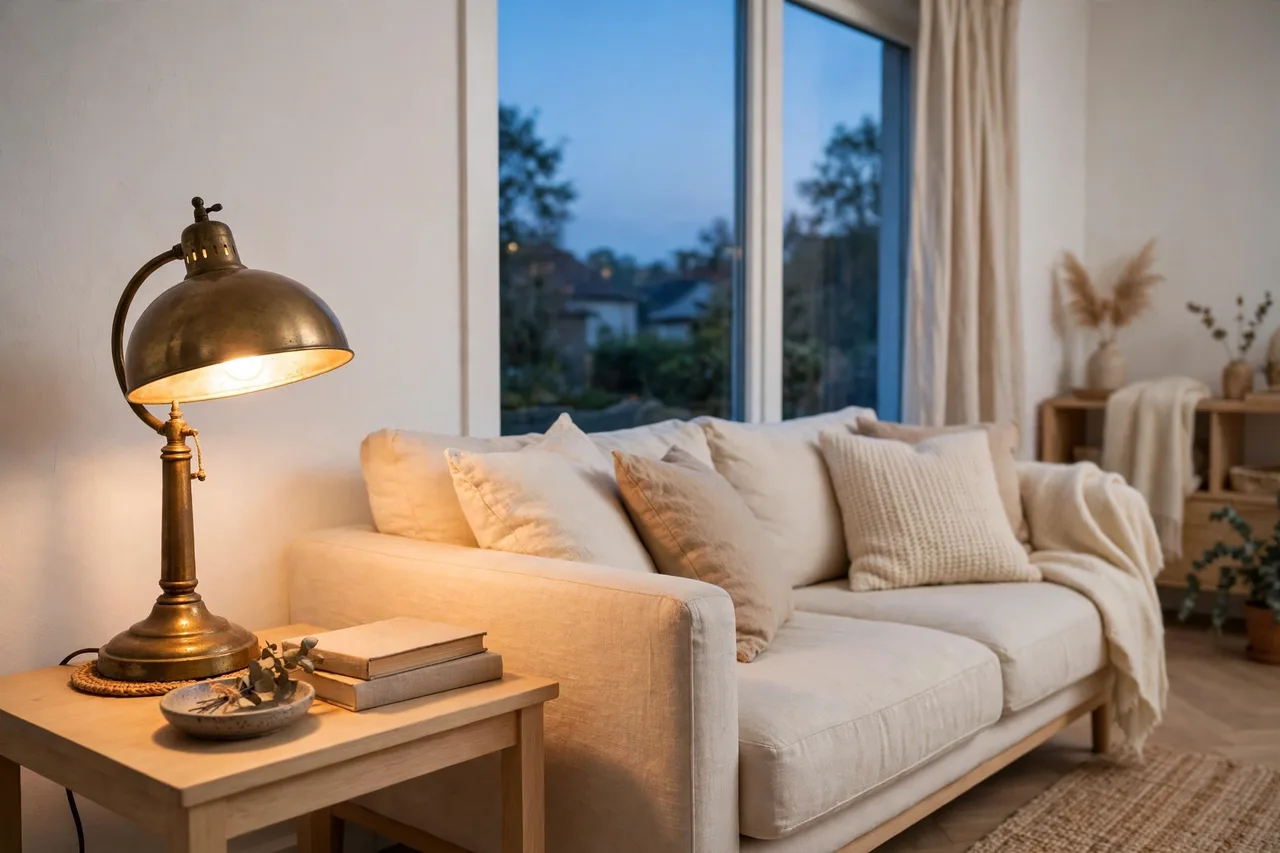
Light is the cheapest transformation in this entire guide, so it comes first. Replace the cold blue-white bulbs in your main rooms with warm ones around 2700K (a multi-pack runs about $10–$18), and spend the rest on one good thrifted lamp for the room you live in after dark. One honesty note: never buy bulbs too cheap — the bargain-bin ones flicker and turn everything slightly green, which no styling survives. Good warm light makes every other idea in this guide look twice as good.
7. Pillow Covers in ONE Palette
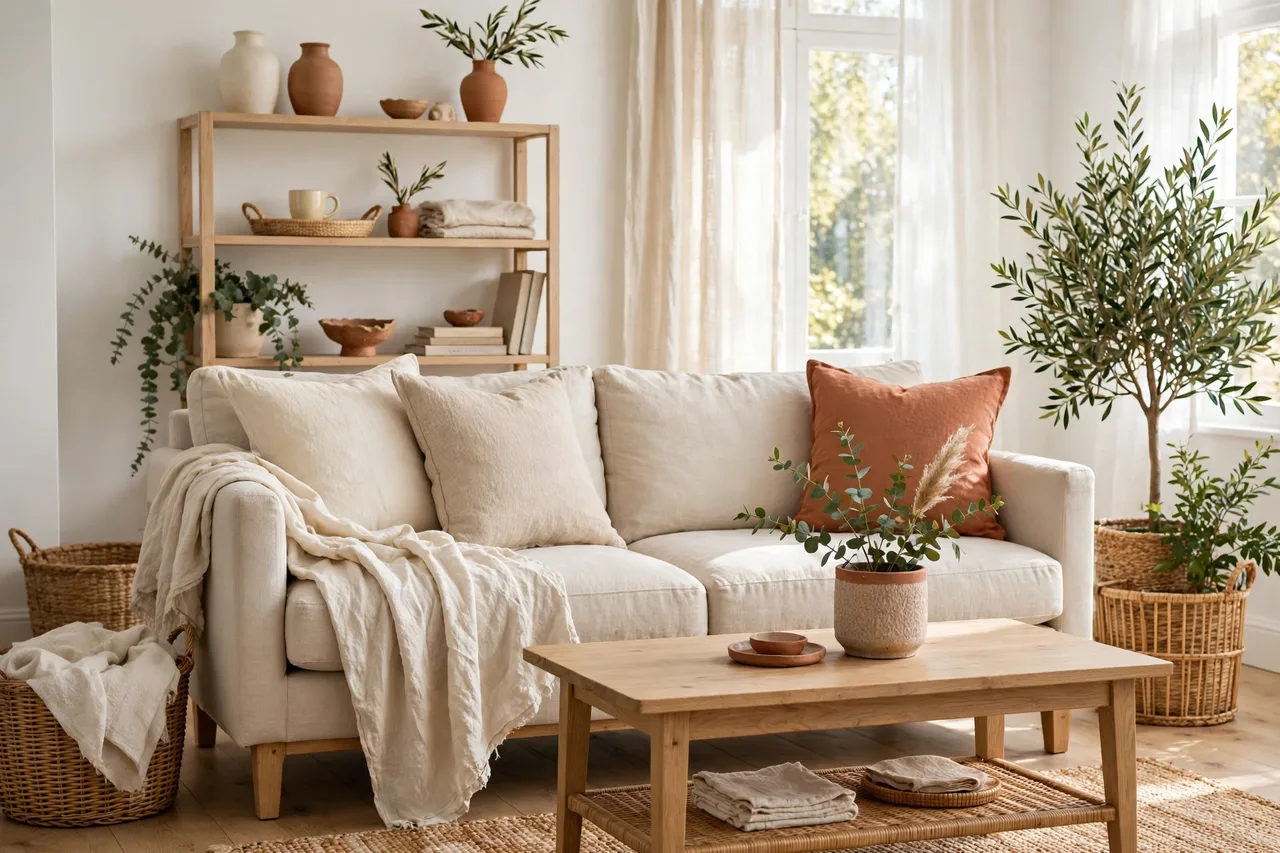
New covers, not new pillows — this is the budget move hiding in plain sight. A set of covers in your two palette colors (about $15–$25 for four) instantly unifies a sofa where every cushion tells a different story. Zip the old covers off, keep the inserts, and the sofa suddenly looks chosen, not inherited from five different decades. Texture counts double: one woven, one smooth, one with a quiet stripe. Come the next season, covers fold flat into a drawer — try that with four new pillows.
8. One Big Thrifted Mirror or Oversized Frame
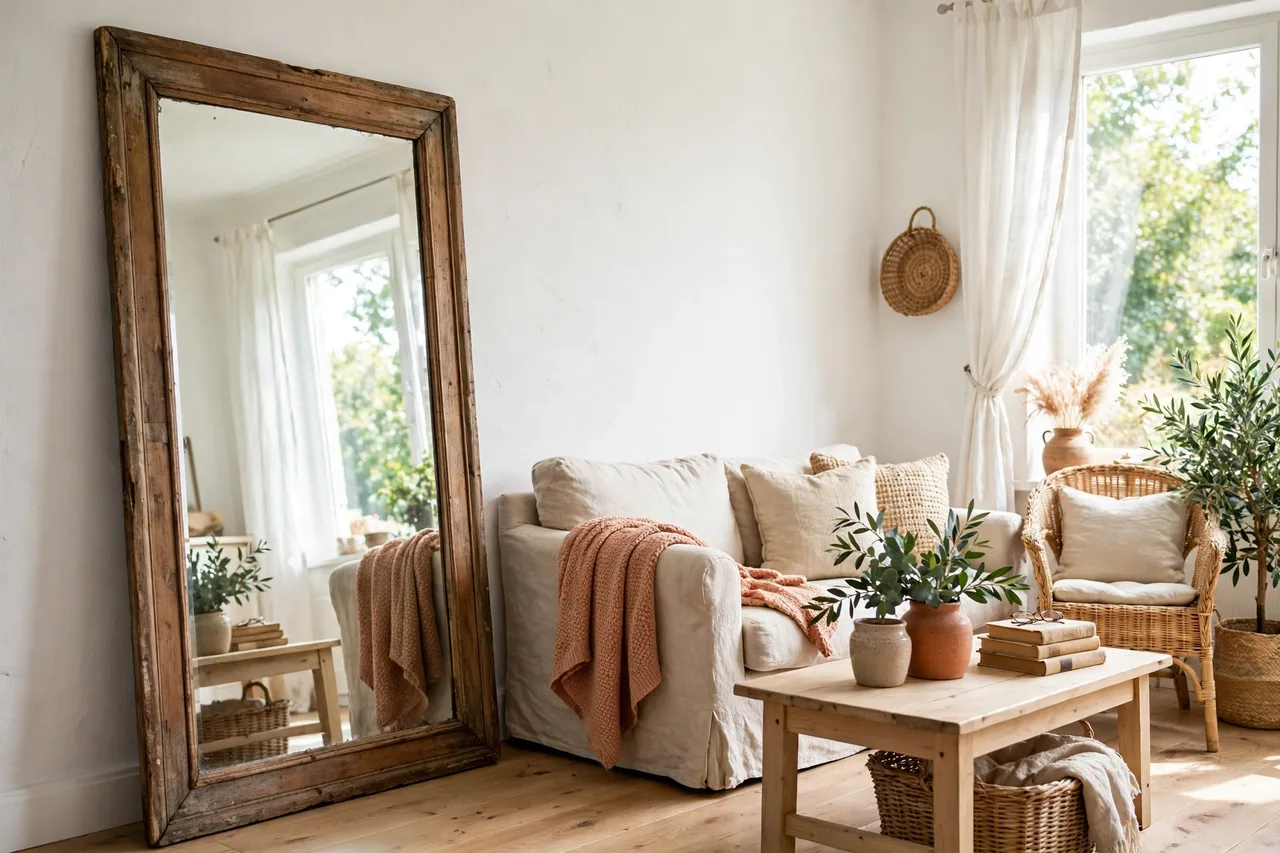
Scale is what separates “thrifted” from “collected,” and one big piece beats five small ones. A generously sized mirror — at least 24 in (60 cm) across — bounces light around the room and doubles every plant and lamp you own. Thrift stores are full of heavy, well-made mirrors and oversized frames for $10–$25, priced low because they are awkward to move. A coat of paint in your one shared finish (Rule 4) makes a dated frame look deliberate. Hang it where it reflects a window or a lamp, not the laundry basket.
9. Greenery You Grow Yourself
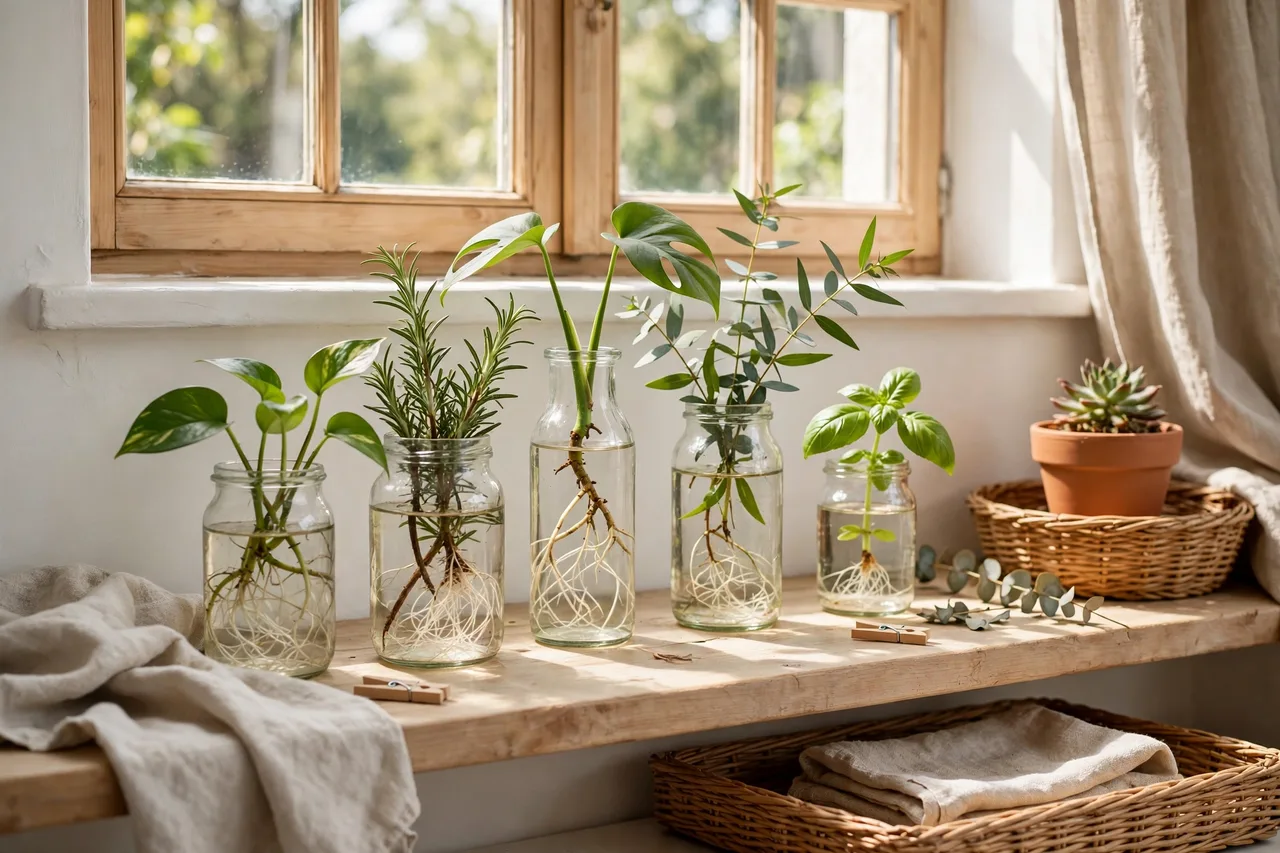
The most affordable home decor ideas are alive. A healthy plant in a pretty pot can cost real money — a cutting from a friend’s plant, rooted in a jar of water on the windowsill, costs nothing but patience. Pothos, spider plants and herbs all propagate happily; a few months of cuttings gives you one plant per room, which is exactly the greenery level that makes white rooms feel warm instead of bare. Pot them into thrifted pots unified by your palette (all white, all terracotta — Rule 1).
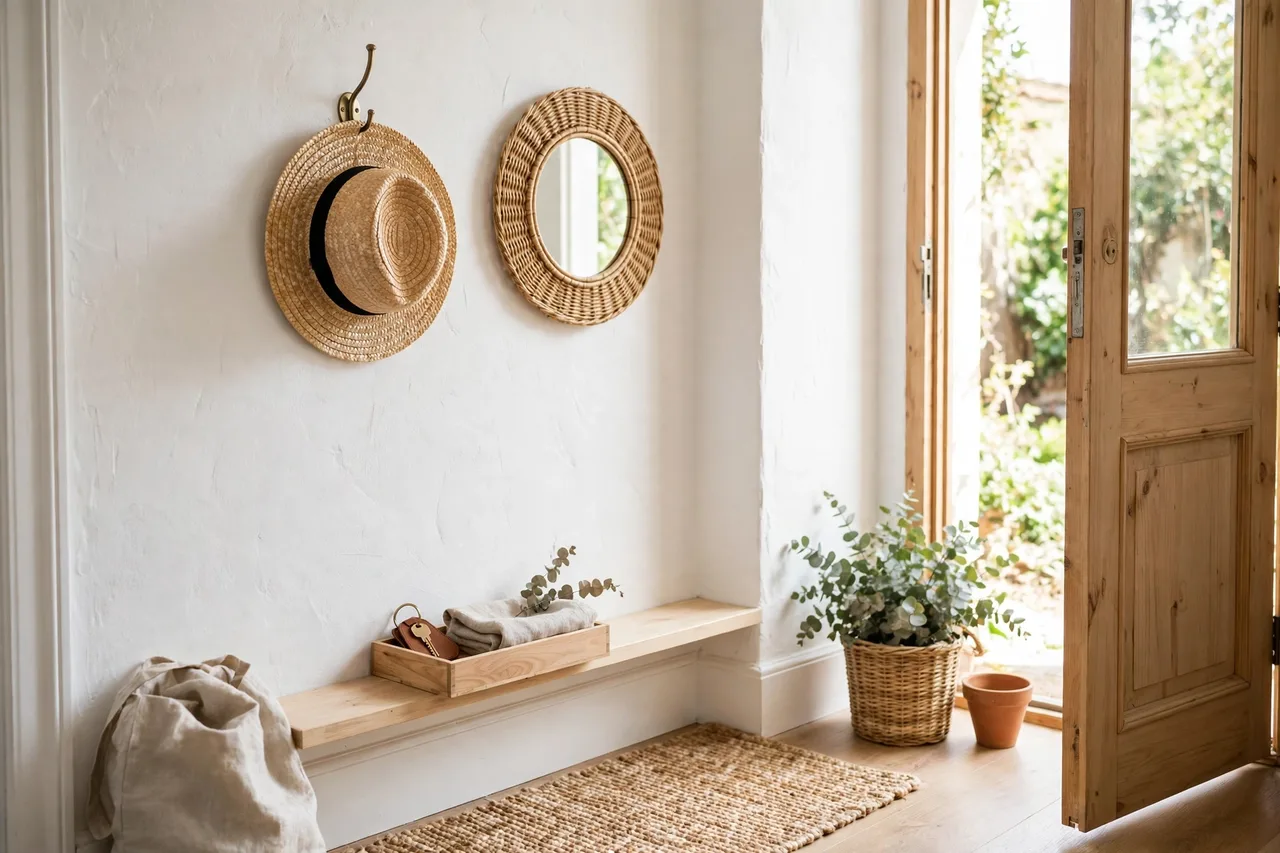
10. The Entryway Moment
Your home’s first ten seconds happen at the door — style them on purpose. One slim tray for keys and mail, one or two hooks for bags and hats, and one small mirror or framed print above: that is the whole entryway moment, about $15–$25 all in. It stops the daily avalanche of bags-on-the-floor before it starts, and the first thing guests see becomes a calm scene instead of a pile. Small space? One tray and one hook still count — the moment is the intention, not the square footage.
11. Textiles That Work Twice
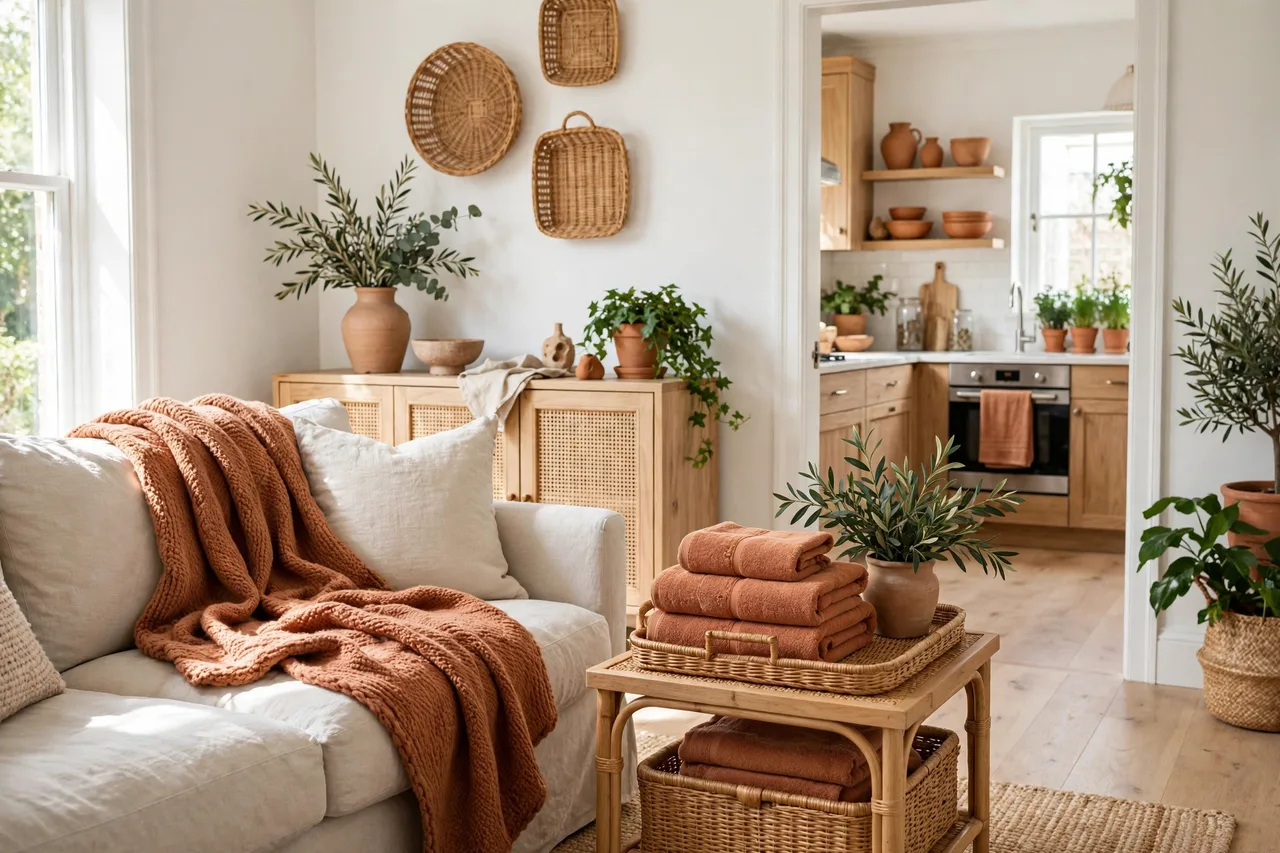
When money is tight, every purchase should hold two jobs. A good cotton throw ($15–$25) warms the sofa by day, becomes the picnic and garden blanket on weekends, and folds over a chair to hide the cushion you hate. A matching family of towels does the same quiet work in bathroom and kitchen — swap the faded mix for one set in your accent color and both rooms suddenly coordinate with the living room. Buy textiles as families, and let each piece carry the accent into several rooms at once: that repetition is what reads as a designed home.
Under $50: The Room-Changers
These are the moves people photograph. Each one costs less than a family takeaway or two, and each one changes how a whole room feels. These are the cheap home decor ideas that look expensive — and the heart of how to decorate a home on a budget once the free work is done.
12. Curtains Hung High and Wide
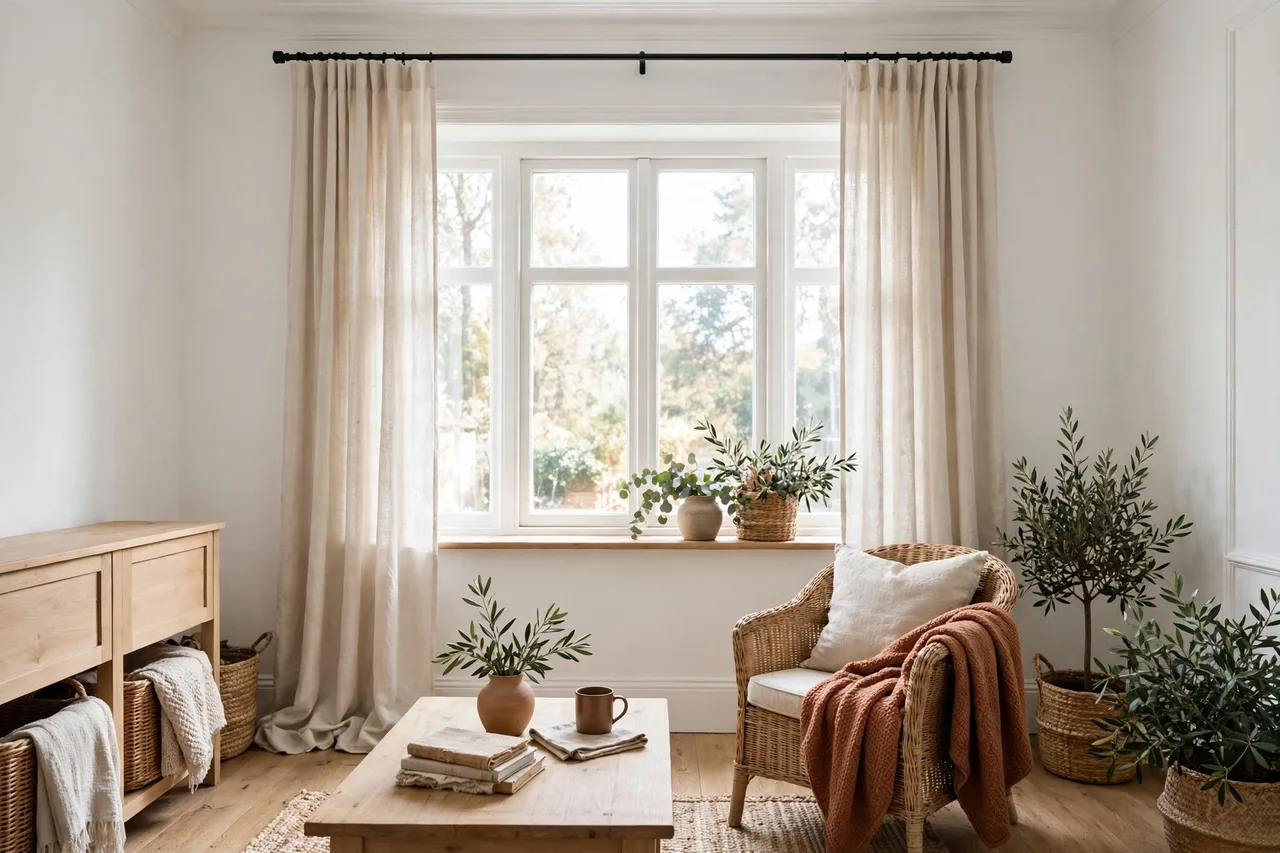
Short, skimpy curtains are the most common cheap tell — and the easiest fix. Hang the rod close to the ceiling and wider than the window, about 4–6 in (10–15 cm) above the frame, so the curtains fall in long lines and the window looks twice its size. Double up per Rule 3: two panels per side if you can, in a plain linen-look fabric (a pair runs about $25–$45). This is the highest-impact under-$50 spend in the house. Measure twice, hang once, accept compliments all year.
13. Paint ONE Thing
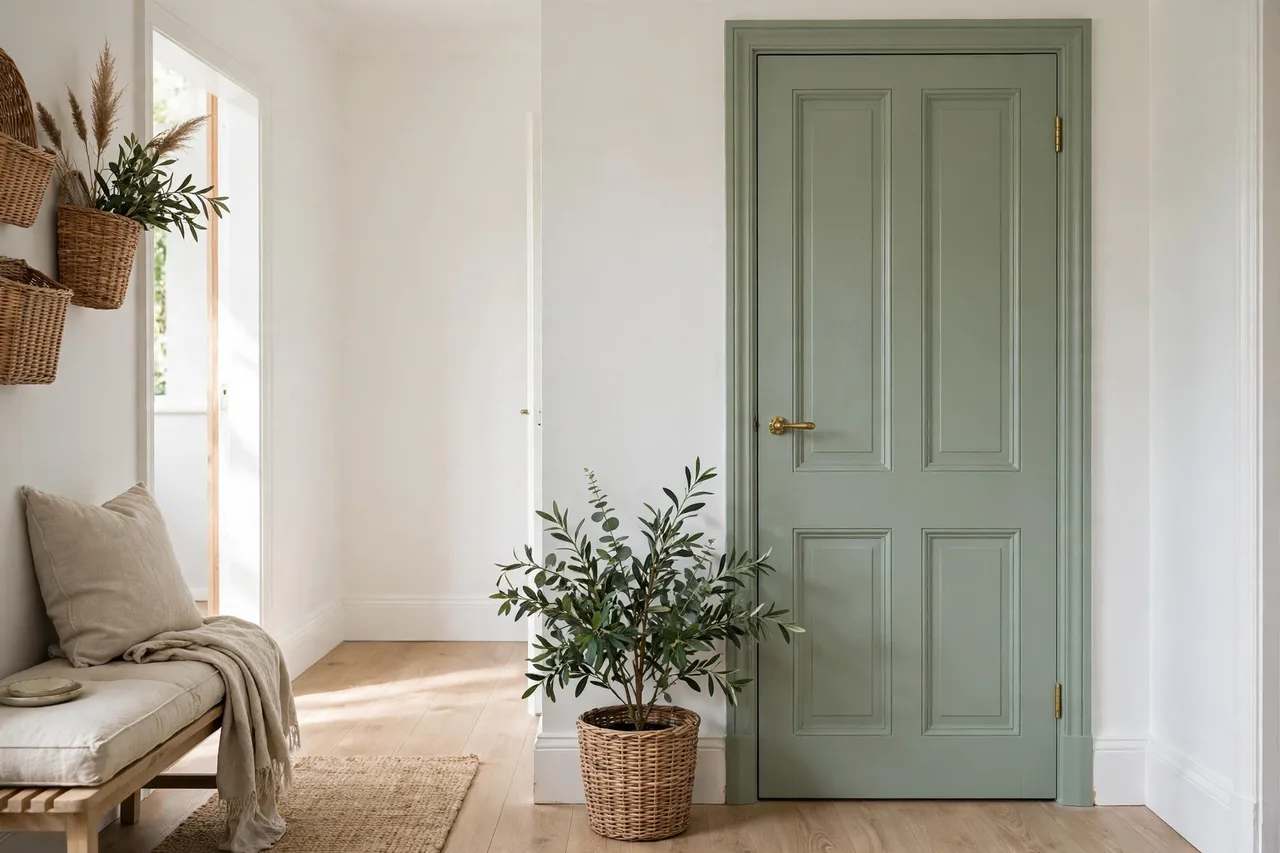
One painted thing, done properly, lifts a whole room — a whole painted room, done hastily, lifts nothing. Choose a single target: the front door inside, a thrifted dresser, the fireplace surround, one tired sideboard. A tester pot or small tin runs about $15–$35 with a decent brush. Sand, clean, paint in thin coats, and let it dry fully between them — patience is the whole difference between “painted furniture” and a beautiful finish. Stay inside your palette: warm white, your accent at half strength, or one confident deep note in a calm room.
14. Hardware in One Finish
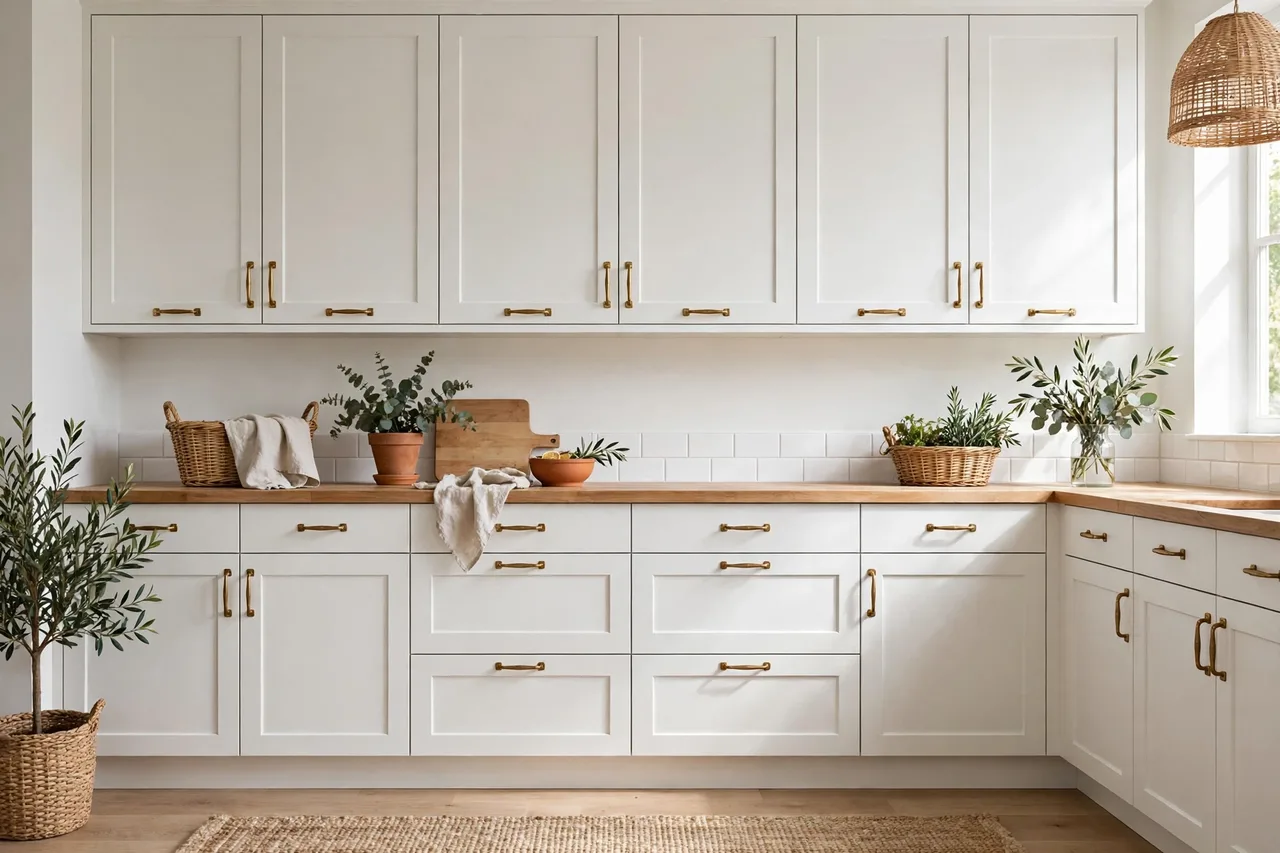
Mismatched knobs and handles are visual noise you stopped seeing years ago — your guests have not. Unify them: one finish (warm brass, matte black, brushed nickel) across the kitchen cabinets and the bathroom vanity, about $20–$50 depending on how many pulls you count. Measure the screw spacing on pulls before ordering — 3¾ in (96 mm) is the most common. It is an hour with a screwdriver, and afterwards every door in two rooms agrees with each other. Renters: this one is fully reversible; keep the old hardware in a labeled bag and swap back when you leave.
15. The Living Room, Properly
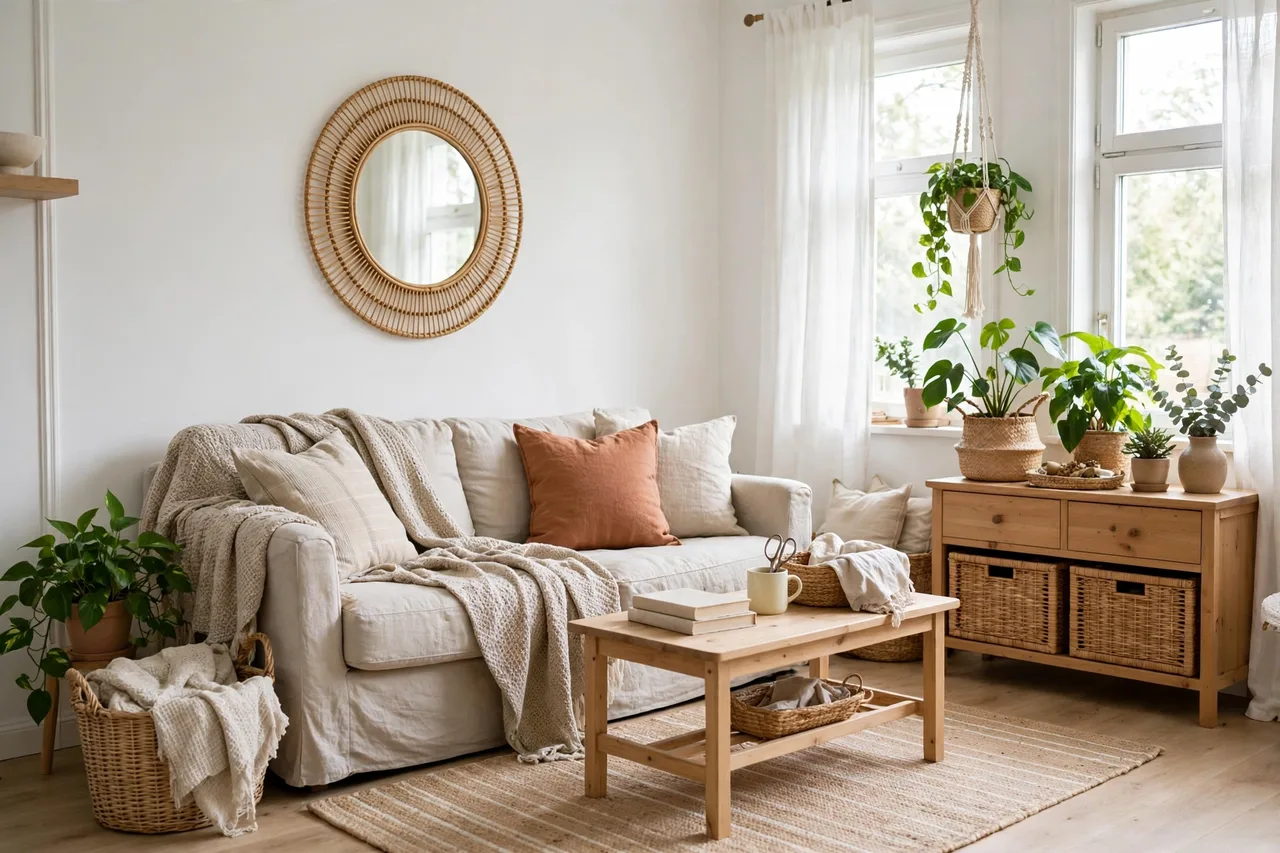
The living room deserves a plan, not the leftovers of everyone else’s plan. This is the room worth one focused stack under $100: one change with real presence — a washable rug that is big enough, a slipcover that calms a tired sofa, or a gallery wall of unified thrifted frames — instead of six small things scattered hopefully. Our full budget living room makeovers guide walks through fifteen complete makeovers under $100, each a stack you can copy piece by piece.
16. A Bedroom That Feels Like a Hotel
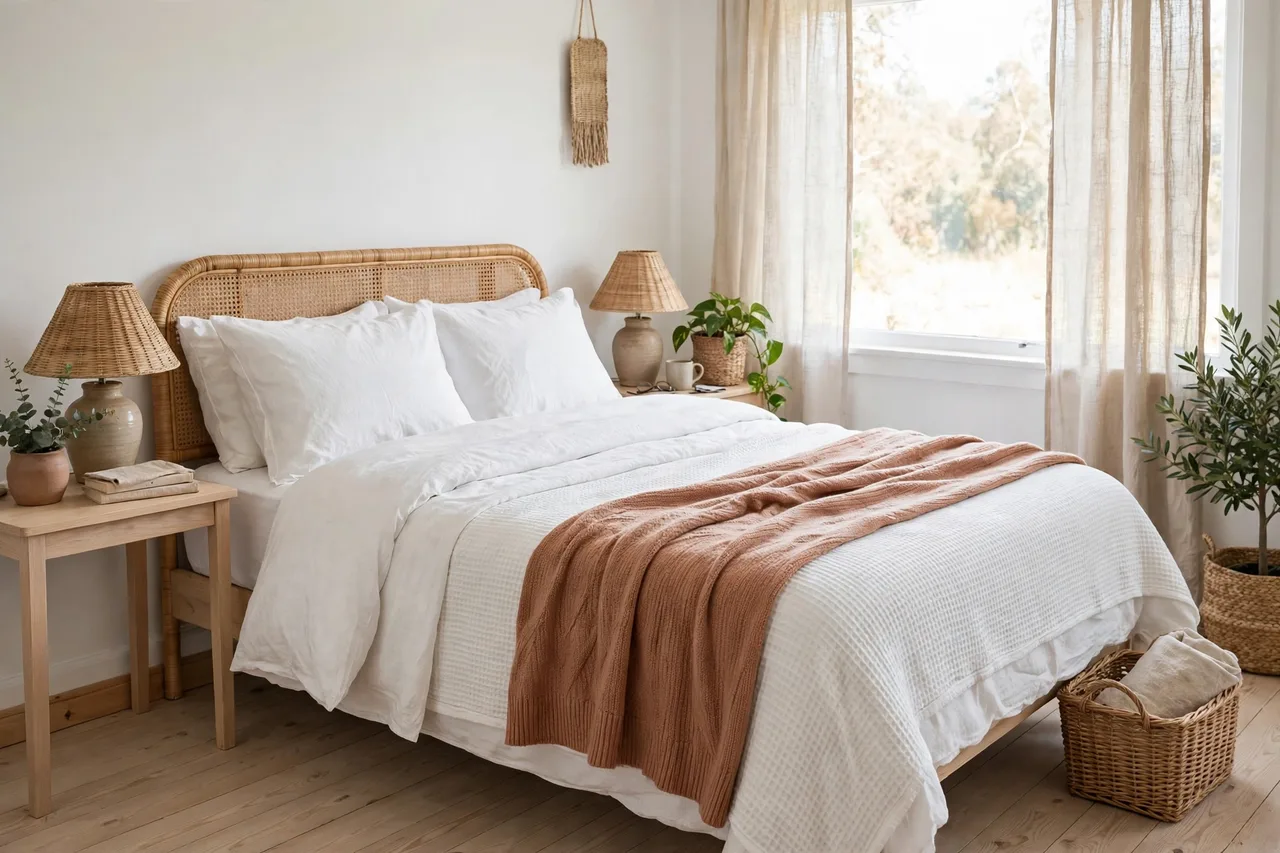
Hotels feel expensive for one boring reason: the bed is simple, white and layered. Crisp white bedding is the whole trick — and the one place never to buy too cheap, because thin, shiny bedding undoes the effect. Spend the tier on decent white cotton, then add ONE warm texture layer: a woven throw, a couple of linen-look cushions, something with a handmade feel. Our boho bedroom ideas on a budget guide builds the full warm, layered version of this bed.
One Bigger Move: $50–$200
One tier up, the thinking changes: stop buying objects and buy one improvement. One bigger move per season, chosen well, will do more than a year of small shopping trips.
17. Choose a Micro Renovation, Not a Shopping Trip
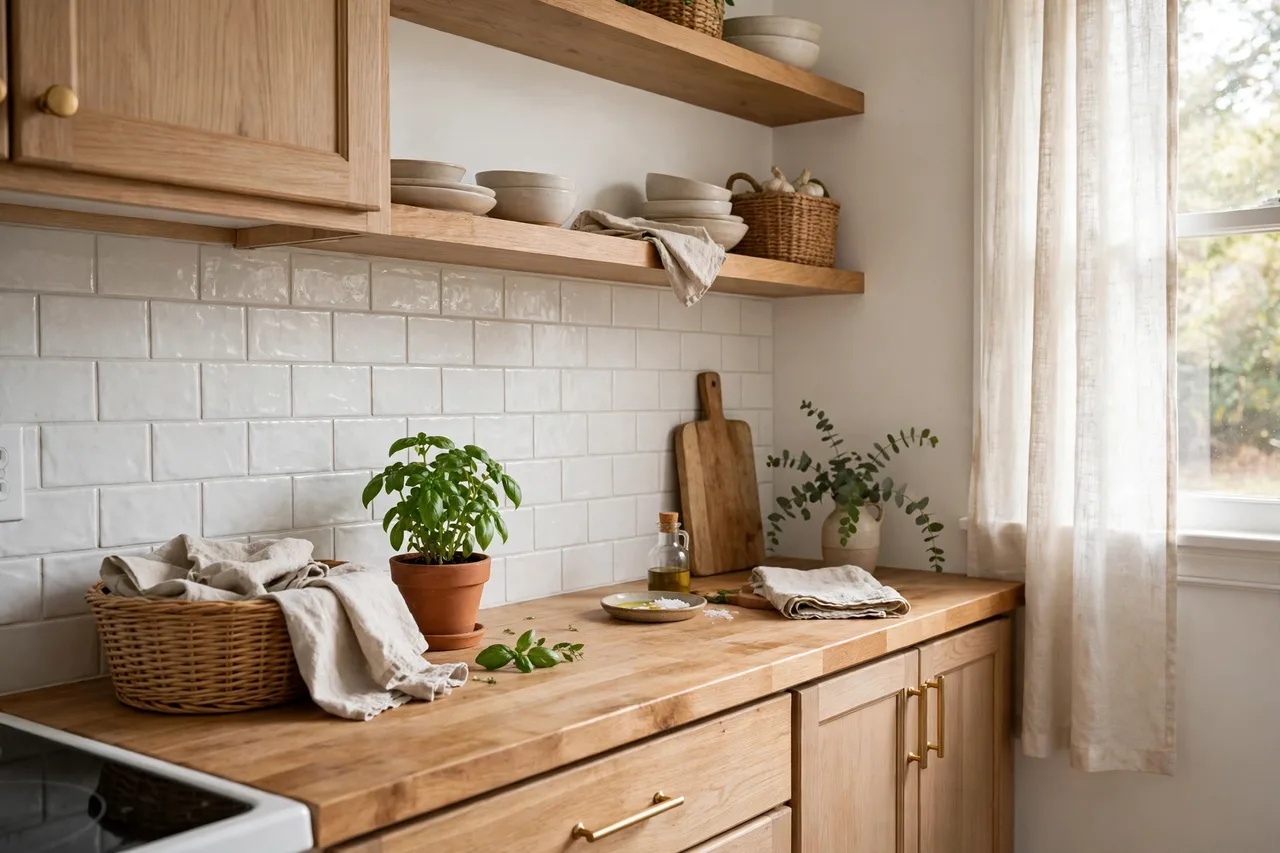
When you have $50–$200, the smart money changes how a room works, not what sits in it. Peel-and-stick that transforms a tired surface, plug-in sconces that fix a dark corner forever, a proper curtain rail where a bent rod sagged — small upgrades that make every cheaper idea in this guide work harder. Our micro renovations under $200 guide lays out all twelve projects with honest difficulty ratings.
18. The Secondhand Anchor Piece
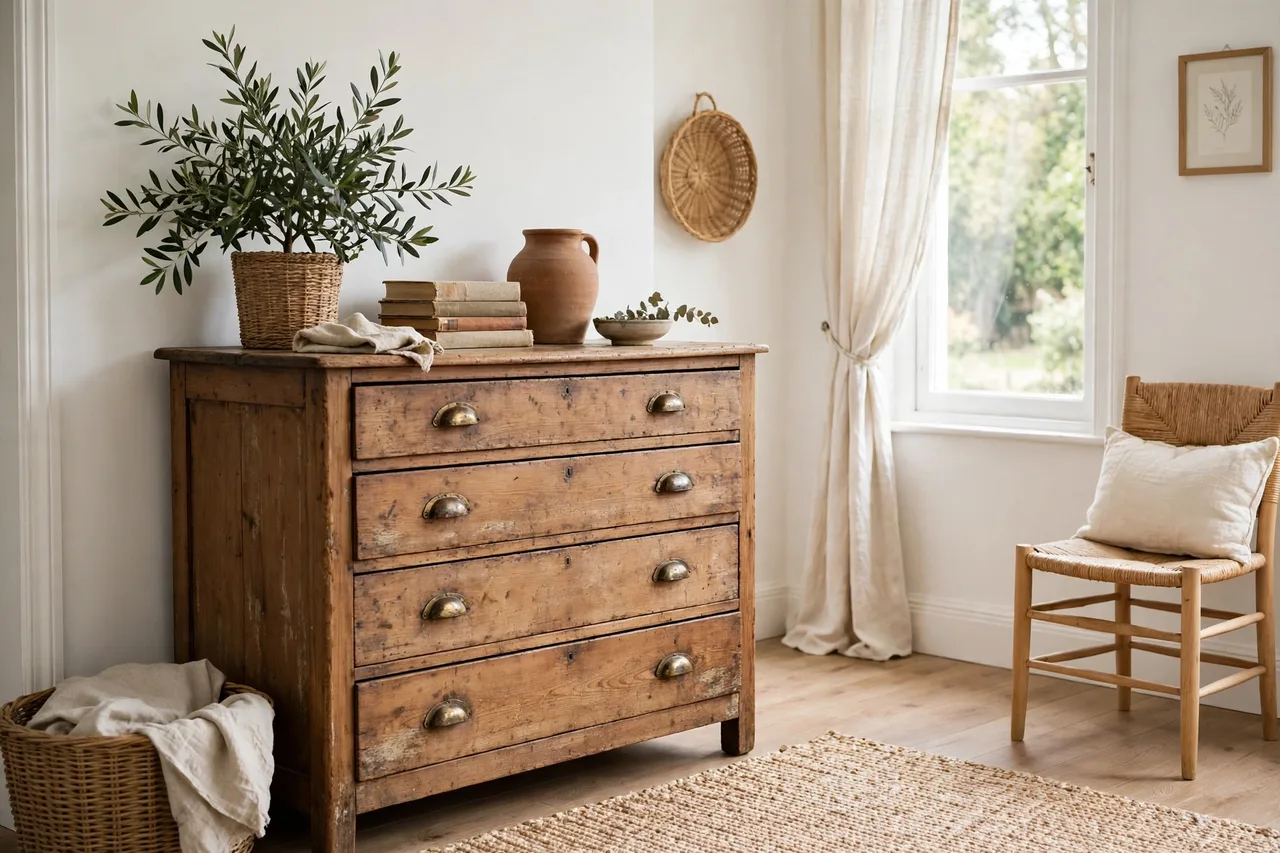
One real piece per home quietly raises every room it touches. A solid-wood sideboard, a proper vintage armchair, a heavy old mirror — pieces made before furniture became disposable carry a weight and finish new budget pieces cannot copy. Hunt for solid wood (lift it; real wood is heavy), proper joints, and shapes you already love in your saved photos. Avoid anything upholstered you cannot wash or re-cover, thin glass that chips if you look at it sternly, and wobbly flat-pack pretending to be vintage. Expect $50–$150 for a genuine anchor — and expect it to outlast everything else here.
19. The Seasonal Layer, the Honest Way
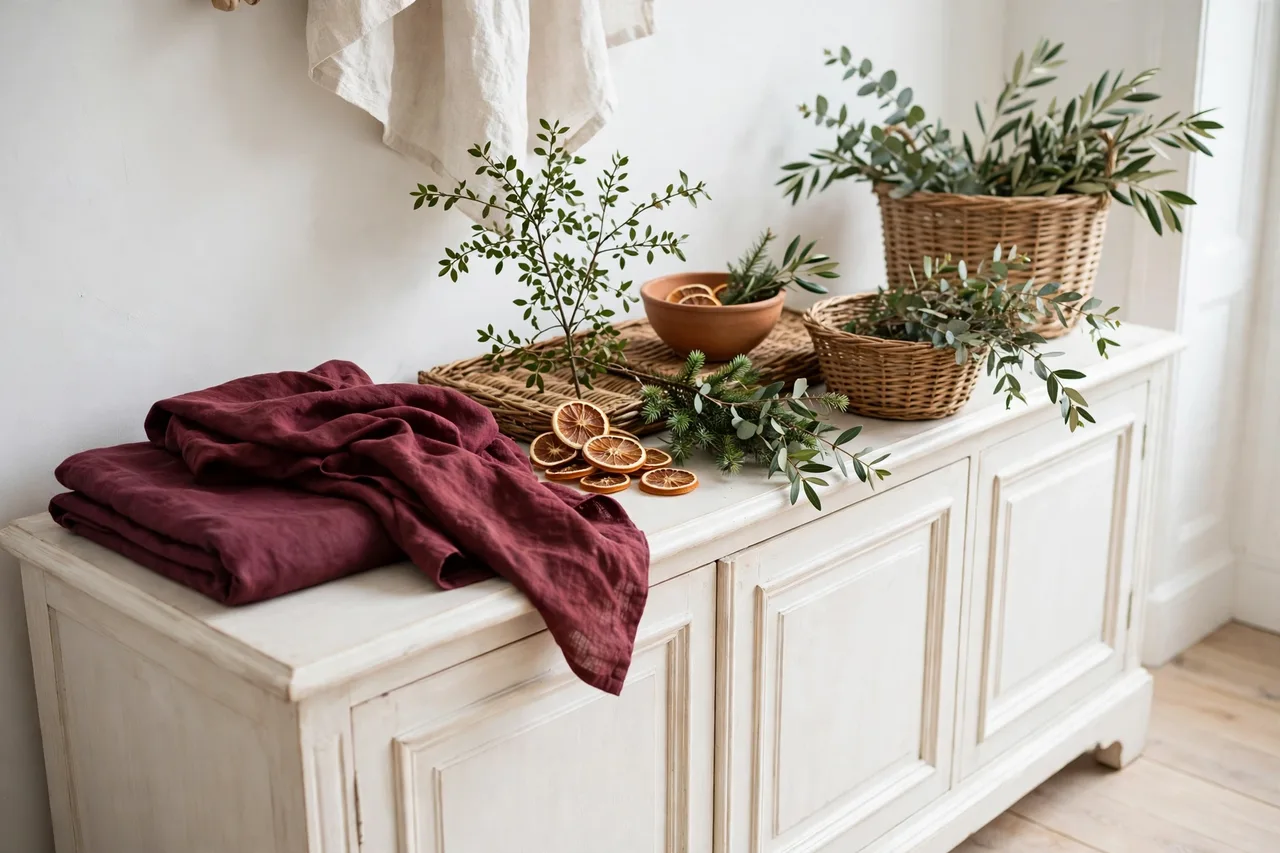
Every season, add one small, deliberate layer — not a whole new house in a shopping bag. A spring bowl of citrus, fall pumpkins and a rust-colored throw, winter greenery and warm light: one vignette and one textile swap per season keeps the home feeling current. Our dollar tree christmas decor ideas guide takes it furthest, decorating a whole home for the holidays with a real basket that totals under $50. Seasonal decorating this way is a habit, not a haul.
20. The Whole-Home Plan: One Room a Month
Here is how it all fits together without ever feeling expensive: one room a month. Month one is free everywhere — the reset (ideas 1–5) — plus warm bulbs, about $25. Then one room a month through the two cheaper tiers: entryway in month two (~$40), living room in month three (~$75), bedroom in month four (~$50), kitchen and bathroom hardware and textiles across months five and six (~$75). One bigger move lands once a season (~$100–$200). Followed loosely, the whole home transforms in about a year for roughly $450–$650 total — less than one “statement” sofa, spent so gradually you barely feel it. That is budget decorating ideas done properly — low budget home decor ideas as a route, not a splurge.
The Whole-Home Route at a Glance
Short on time? Here is the whole guide on the back of an envelope. Free first: shop your home, rearrange, edit, restyle, move the light — $0, and it does half the work. Under $25: warm bulbs and a thrifted lamp, pillow covers, one big mirror, homegrown greenery, the entryway moment, working textiles — roughly $100–$125 if you did every single one. Under $50: curtains hung properly, one painted thing, unified hardware, one focused room stack each for the living room and bedroom — the room-changers. One bigger move per season: a micro renovation or one secondhand anchor, $50–$200 at a time. Spread over a year, most homes land somewhere around $450–$650 all in.
FAQ
How do I make my home look expensive on a budget?
Follow the order in this guide: edit first, light second, buy last. The honest answer to how to make your home look expensive on a budget is that expensive is mostly subtraction — fewer, better-grouped things; warm layered light instead of one harsh ceiling bulb; one palette repeated calmly. Then spend small, in sequence: bulbs, textiles, one big mirror, proper curtains. The 5 Rules at the top of this page are the whole recipe.
What are some cheap ways to decorate my home?
The cheapest ways are the free section of this guide: shop your own rooms, rearrange for flow, edit every surface down to a few grouped objects, and move the warm lamps where you live. After that, the best budget home decor ideas are pillow covers in one palette, homegrown plants in thrifted pots, one big secondhand mirror, and curtains hung high and wide. Notice the pattern: none of them are small decorative objects — where budgets go to feel busy instead of better.
Where can I find affordable home decor items?
Thrift and charity shops first — mirrors, lamps, solid wood, frames and baskets are better and cheaper there than new. Then marketplace listings for heavy things people price low just to move them. Dollar stores earn their place for glass jars, candles and seasonal basics; supermarket home aisles are quietly excellent for plain white bedding and simple towels. And the most affordable source of all remains the other rooms of your own house — idea #1 is free.
How can I decorate my home with things I already have?
Start with the audit in idea #1: gather everything decorative into one room, then re-place it on purpose — group in 3s and 5s, put the best pieces where the light and the people are, and box the rest for two weeks before deciding. A tray turns five loose objects into one styled moment; the good throw deserves the sofa, not the closet. Most homes already own a beautiful home. It is just distributed badly.
What makes a home look cheap?
The same five tells, in almost every home: clutter on every surface with nothing grouped or edited; one cold, harsh ceiling light doing all the work; curtains hung short and narrow so windows look apologetic; a rug too small for the furniture, floating like a bath mat; and visible cords and chargers snaking across it all. The hopeful news is that every single tell is fixed by the free and under-$25 tiers of this guide — which is rather the point of it.
Expensive Is a Feeling, Not a Price Tag
Picture it: surfaces breathing, shelves calm, warm light where the evenings happen, one color tying the rooms together like a story. None of that required a windfall. It required an order — free first, small second, one bigger move when you are ready — and the patience to let a home come together a room a month.
So start this week with the free tier. Move one lamp tonight. Edit one shelf tomorrow. The expensive-looking home you keep saving photos of is not a different home with a different budget. It is this one, decorated on purpose.
Pin these budget ideas for your next free Saturday, and share the cozy. 🏡