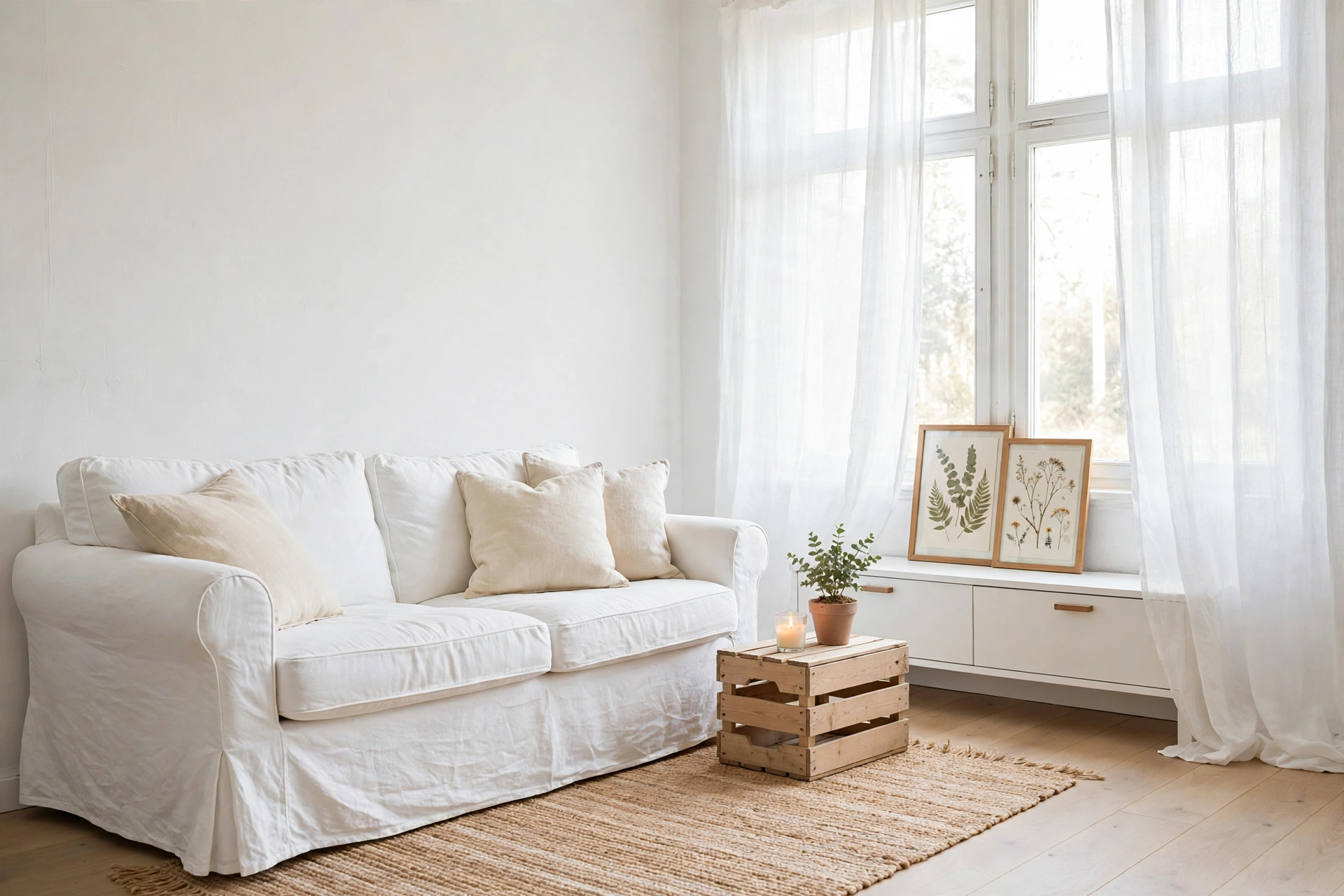
There is a moment everyone who tried minimalism knows. You clear the surfaces, you paint everything white, you step back — and the room feels like a very tidy waiting room. The calm is there. The comfort is not.
Warm minimalism is the fix, and it changes almost nothing about the order. You keep the clear surfaces, the breathing space, the few well-chosen pieces. You just swap out the cold: warm whites instead of stark ones, wood and linen instead of gloss, light that turns amber at dusk instead of light that feels like an office. Designers are calling this shift from cold to warm minimalism the central story of 2026. Honestly? It is how we have always decorated at HomelyNook.
The difference is easy to spot once you see it. Cold minimalism is stark white, bare and shiny — beautiful in photos, chilly to live in. Scandinavian style is a close cousin, but paler and cooler: brighter whites, pale wood, blue-gray notes, crisp light. Warm minimalism runs deeper and earthier — creamier whites, warmer woods, texture you can feel, and one earthy accent repeated quietly. If you have ever wondered how to warm up a minimalist home without filling it back up, this is the whole route: warm base, natural materials, layered warm light.
The Warm Base
Warmth is decided before a single cushion is bought. Get the base — walls, palette, accent — right, and every room after it is easy.
1. Swap Stark White for Warm White
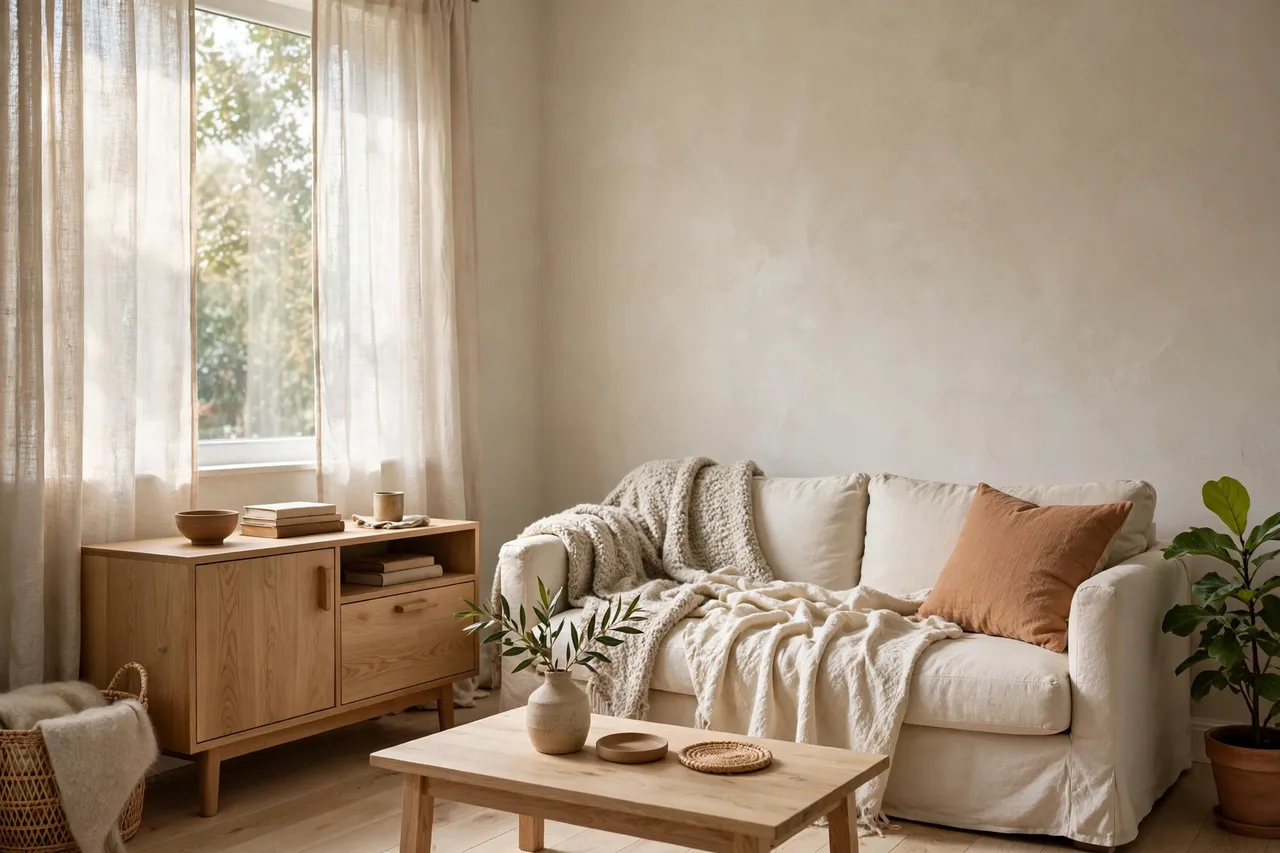
The fastest warm-up is one color decision: stop using blue-white. Stark white has a cool, slightly blue undertone, and it makes even a sunny room feel hard. Warm whites — cream, ivory, soft greige — reflect the same light back softer and kinder. Greige (gray + beige) is the bridge color of warm minimalist decor: it keeps gray’s calm and loses its chill. Start with the biggest surfaces you own, because they set the room’s temperature: walls if you can paint, and if you cannot, the sofa, the bedding and the curtains in warm white instead of icy white. Everything smaller can follow later, one piece at a time.
2. Layer Tones, Not Colors
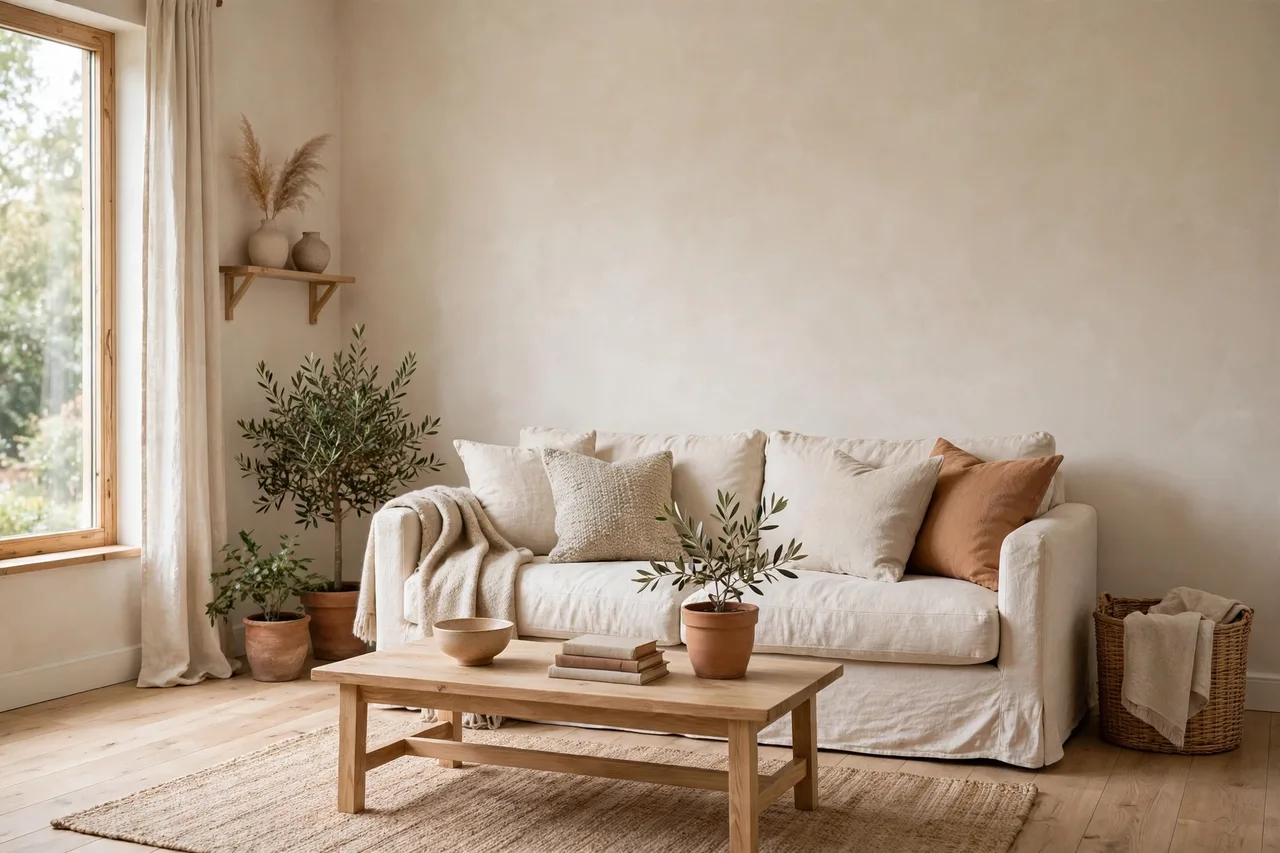
Warm minimalism is tonal decorating: one color family, several depths. Instead of adding new colors when a room feels flat, go lighter and darker inside the same family — soft oatmeal cushions on a cream sofa, a camel throw, one deeper tan or warm brown note in a cushion or a stool. Two lighter tones plus one deep tone, gathered around the room’s main piece, is the whole recipe. This is why a warm neutral palette looks rich with almost no “color” in it at all: the depth comes from light-to-dark, not from a rainbow. When in doubt, hold the new piece next to the sofa. Same family? It can stay.
3. Repeat ONE Earthy Accent
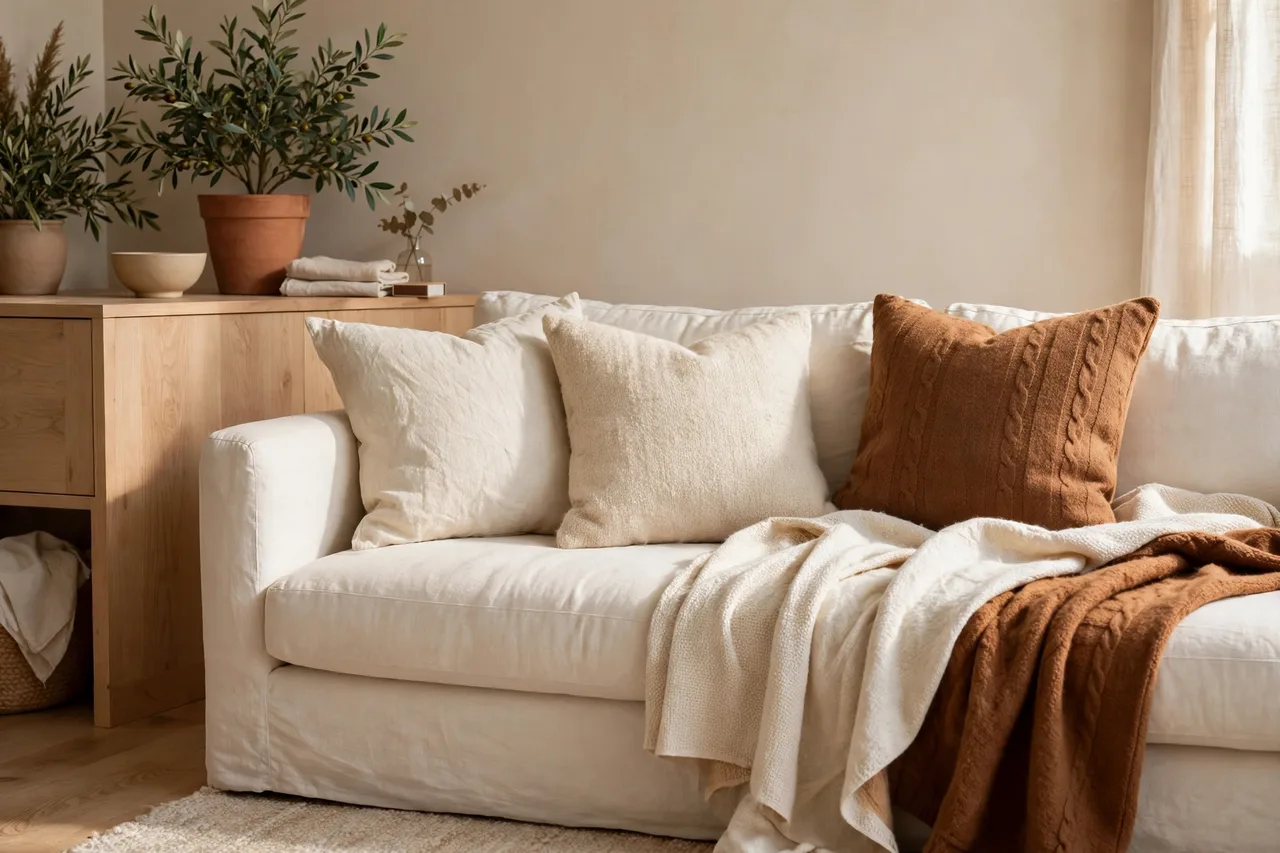
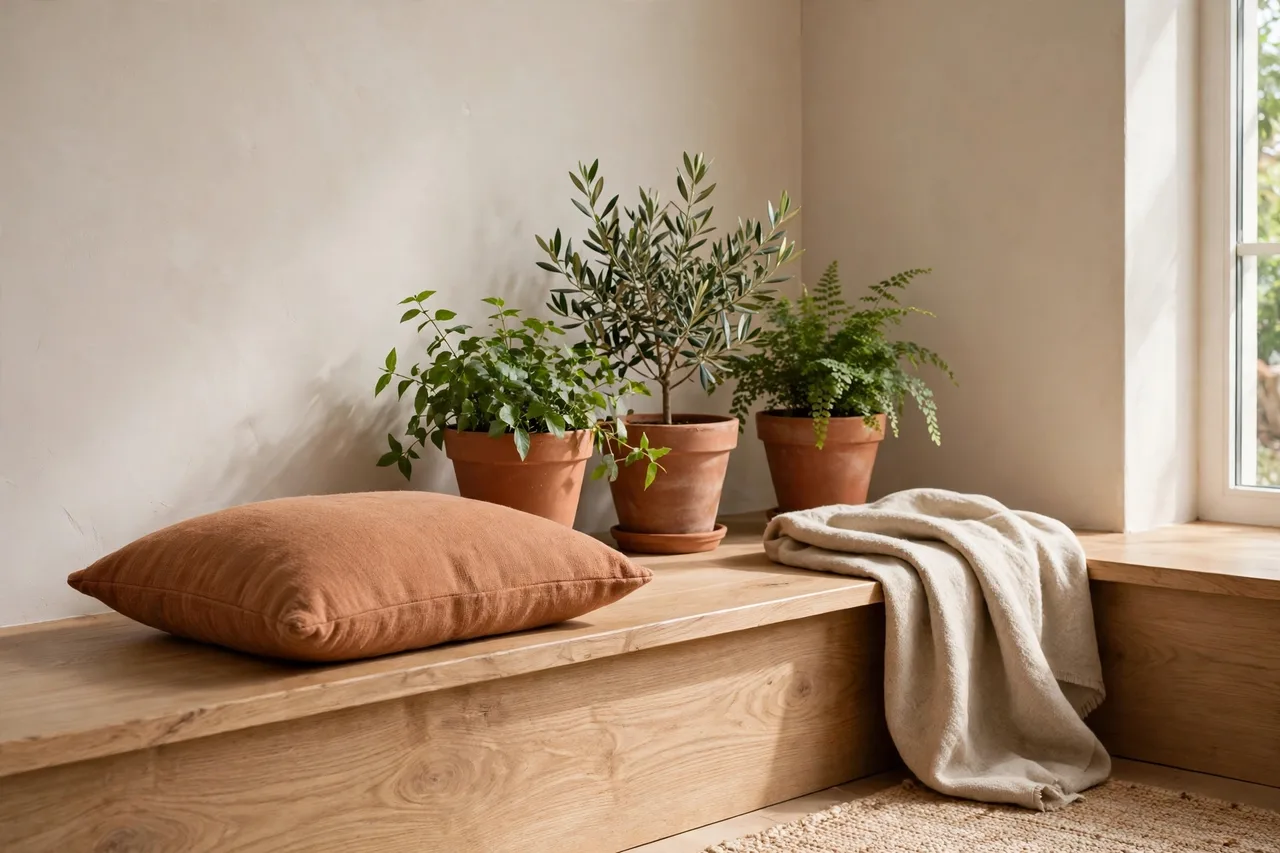
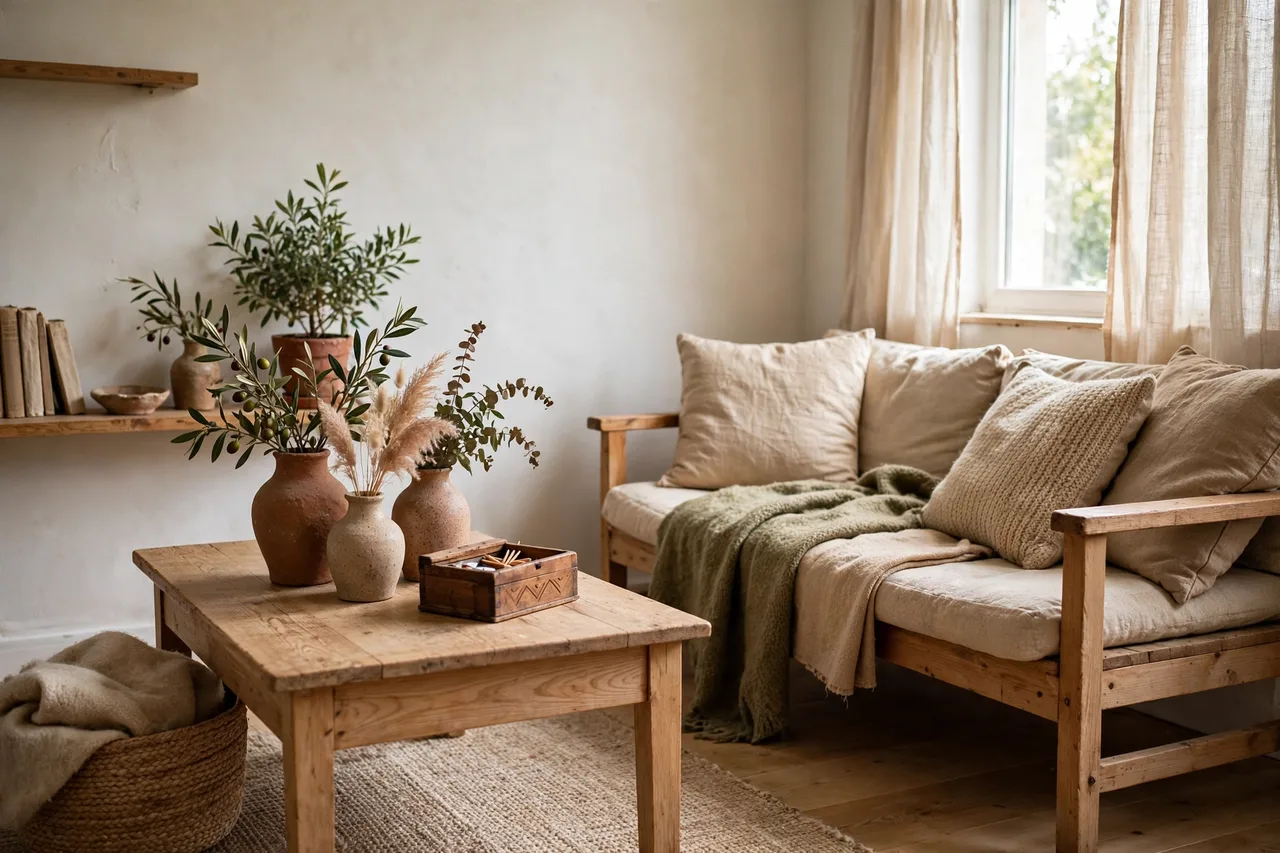
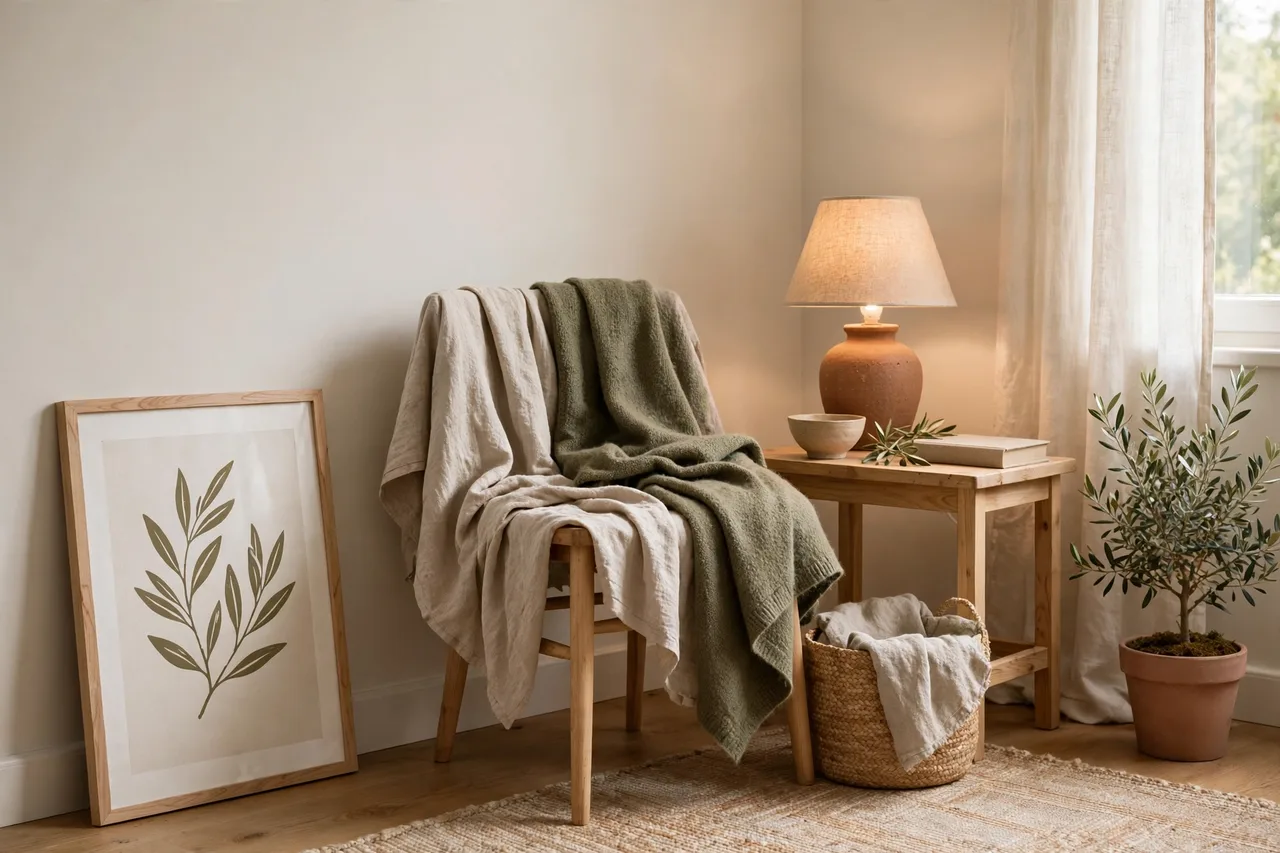
One earthy accent, repeated quietly, is the heartbeat of the whole look. Terracotta, clay, olive or warm ochre — pick one, and repeat it about three times in a room at low volume: a cushion, a plant pot, the spine of a book or a small piece of art. Three quiet repeats and the eye reads “collected and calm.” Two different accents competing and the calm thins out; five repeats and it becomes a theme party. If you want the accent to do more of the talking, our earthy living room ideas guide builds a whole room around these same colors, always on a bright, airy base.
4. Limewash or Plaster-Look Walls
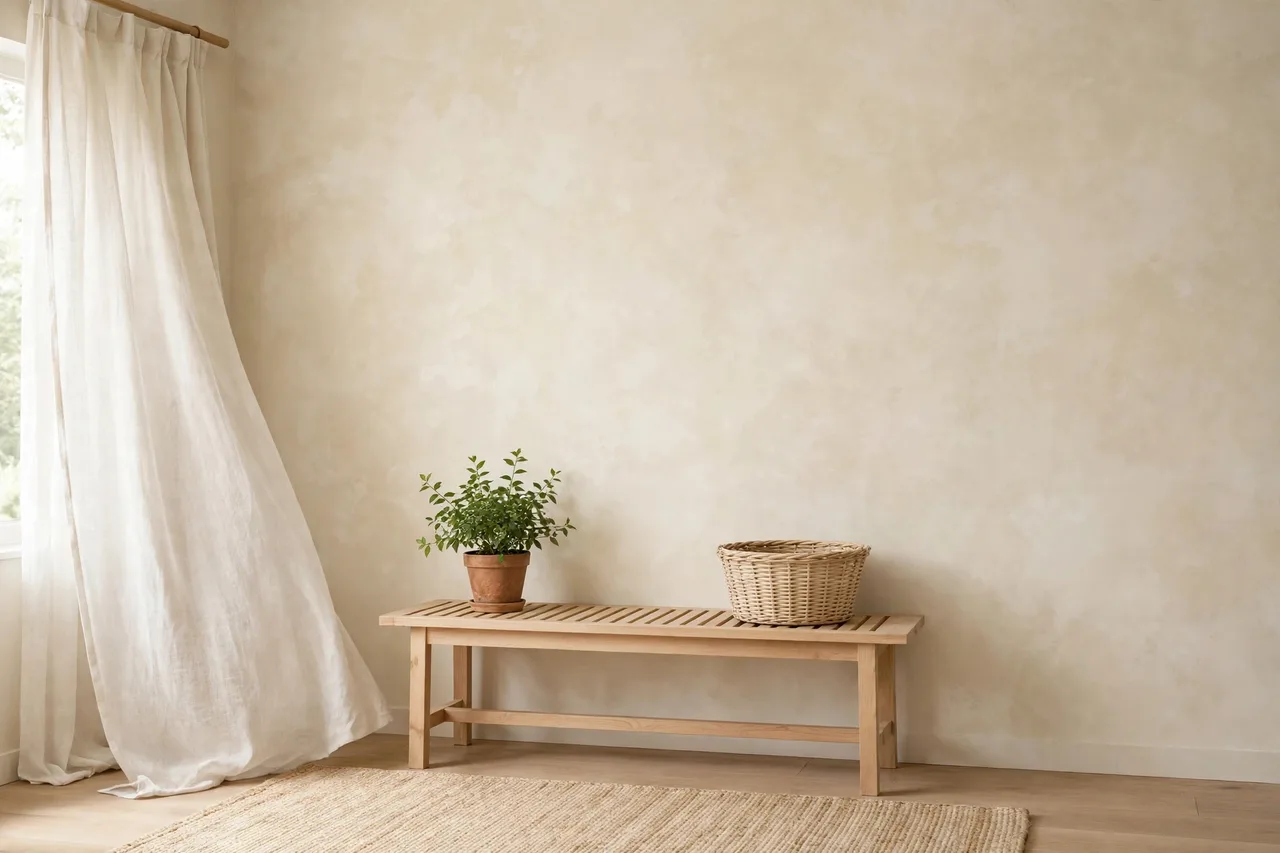
Flat paint is cold; a cloudy wall is warm. Limewash and plaster-look finishes have a soft, uneven movement in them, so the wall catches light the way old plaster does — gently, never flat. It is the biggest atmosphere upgrade in warm minimalist decor, and it belongs on one wall rather than four: behind the sofa or the bed is plenty. Painting it yourself is a weekend job with big criss-cross brushstrokes. Renters have honest routes too: a warm washable paint where your lease allows it, or limewash-look peel-and-stick panels that come off clean. Keep the color pale — the movement does the work, not the shade.
Texture & Materials: Where the Warmth Lives
If the base sets the temperature, texture is what you actually feel. This layer lets warm minimalism stay uncluttered and still feel like a hug.
5. Real Wood With Visible Grain
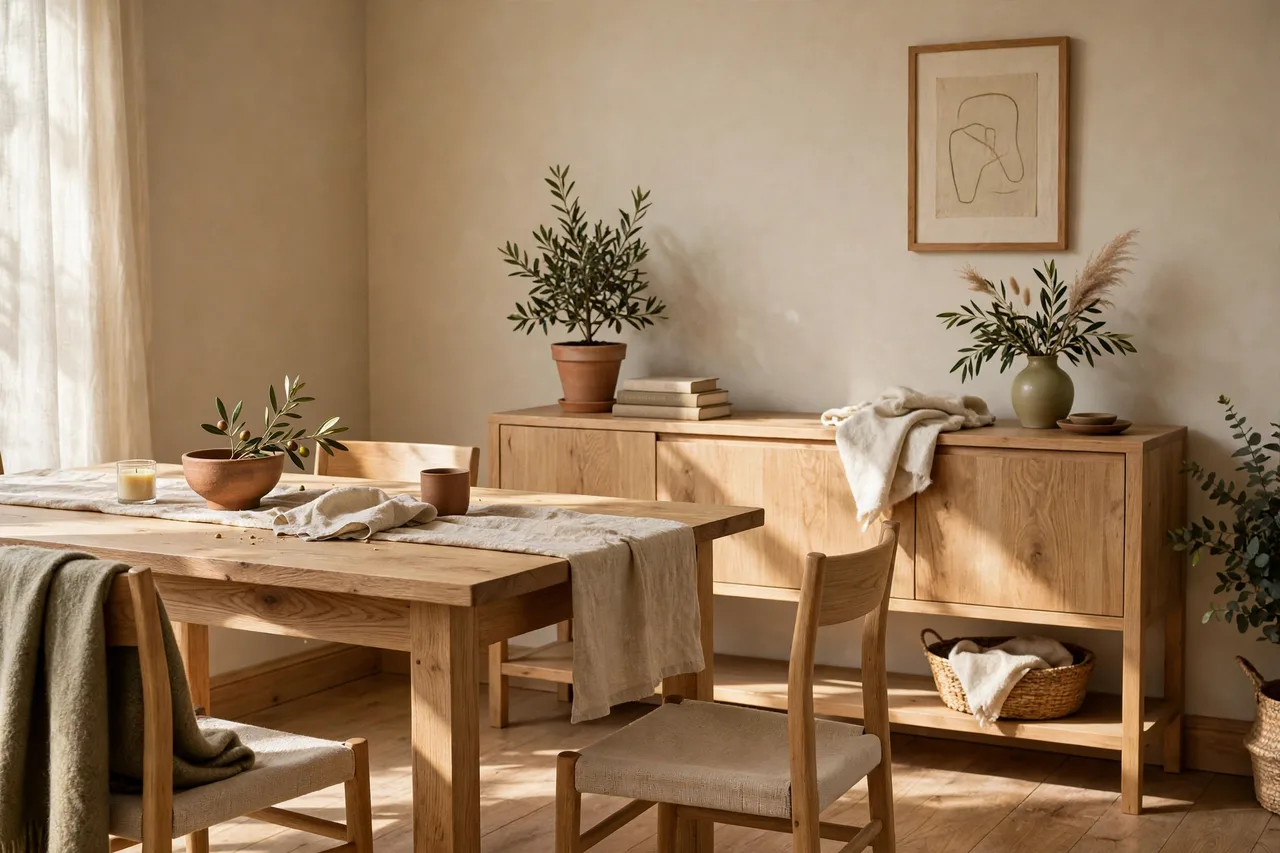
Wood is the warmth you can see. Grain, knots, a matte honest finish — real wood brings a room’s temperature up more reliably than any color. Choose one warm wood and repeat it twice per room (coffee table and tray, nightstand and frame), so the room feels tied together. Oak and warm walnut tones sit beautifully inside a warm neutral palette. Skip the high-gloss and the painted-over mystery finishes; they read cold. Good news for the budget: thrifted wood counts double, because aged wood is warmer than anything fresh from a box.
6. Layer Textiles, Not Things
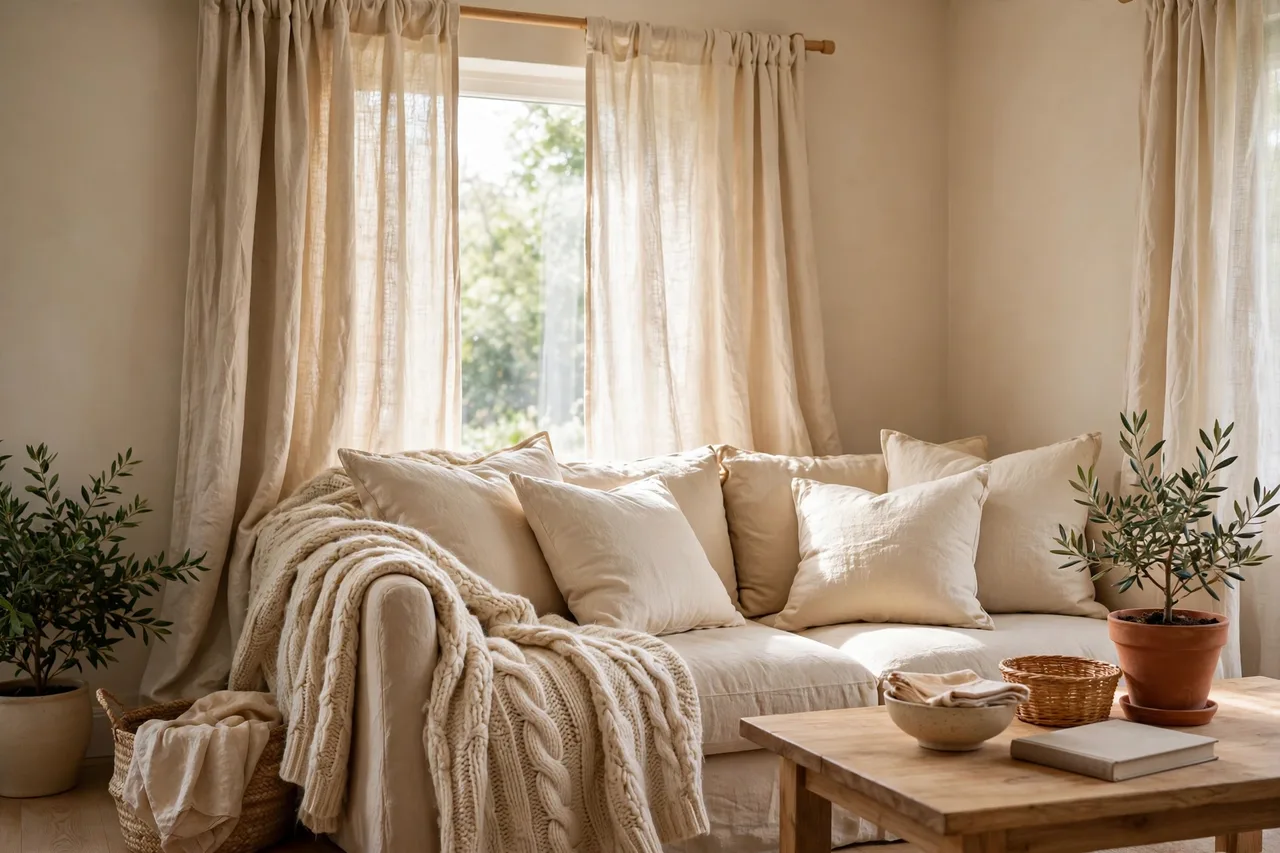
In warm minimalism, texture does the decorating so objects don’t have to. Linen curtains, a wool throw folded over the sofa arm, cotton cushions in two different weaves — layers your hand can feel replace the shelf of small things you used to dust. Work by zone: one seating spot gets the throw and two cushions in mixed textures (one smooth, one nubby), and the rest of the room can stay nearly bare. This is cozy minimalism at its simplest — warmth you can touch instead of clutter you can count. Choose natural fibers where you can; synthetics tend to shine, and shine reads cold.
7. Handmade and Imperfect Pieces
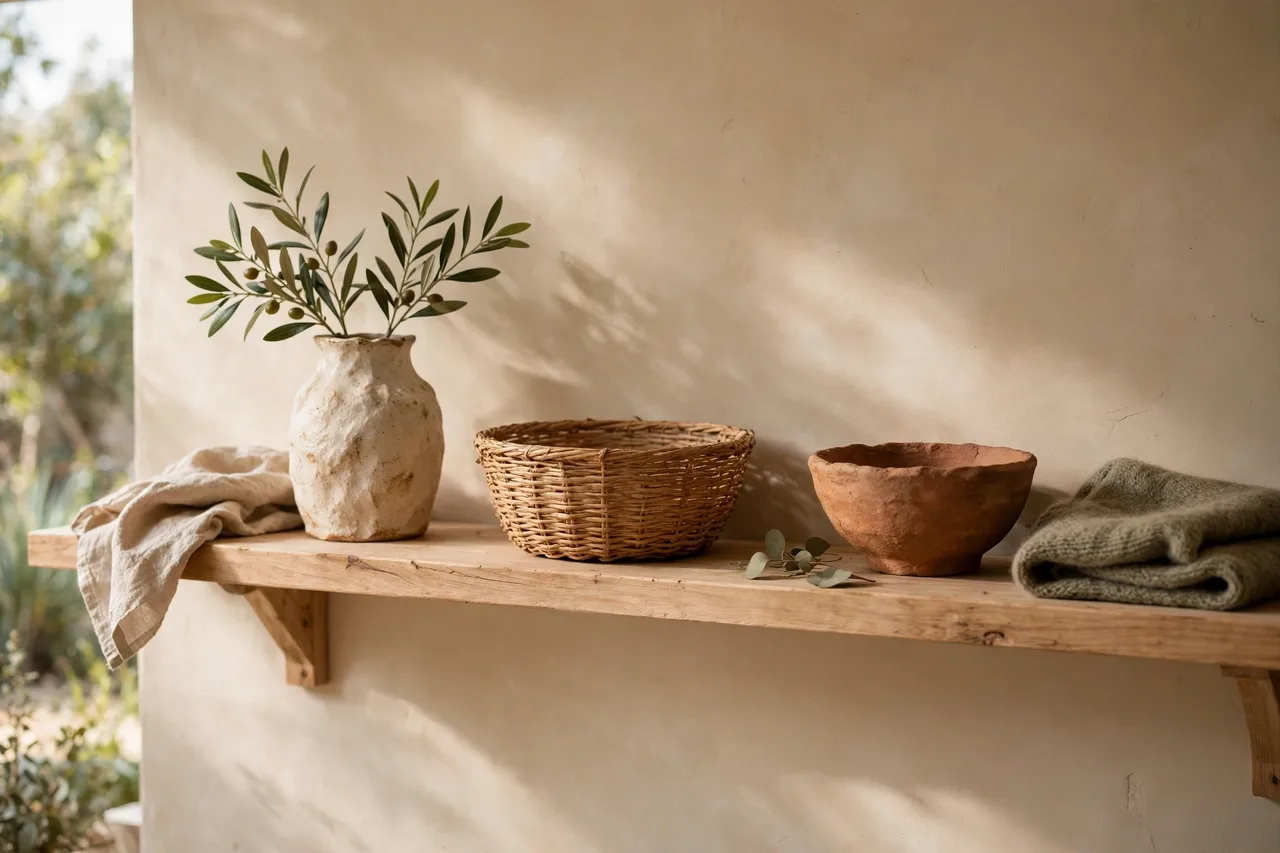
A slightly wonky handmade bowl warms a room more than a perfect factory one. Hand-thrown ceramics with a thumbprint in the glaze, a woven basket that is not quite symmetrical, a carved wooden stool — small irregularities read as human, and human reads as warm. This is natural materials decor with a heartbeat. One handmade piece per room is a good rhythm; it becomes the thing guests pick up and ask about. Our afrohemian home decor guide goes further down this road — handmade pieces and global craft as the soul of a room — if the idea takes hold of you.
8. Soften Lines With Curves
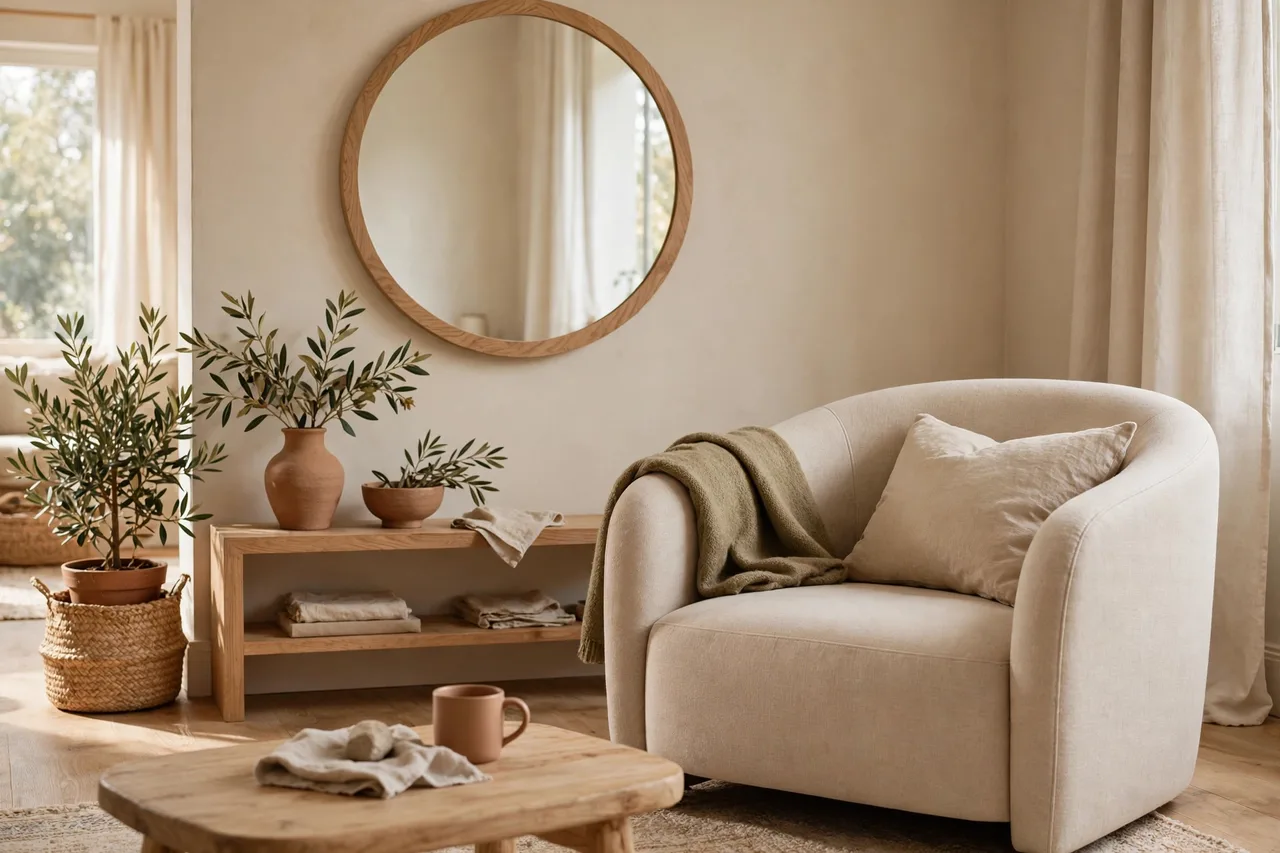
Half of minimalism’s coldness is geometry — so round one thing per room. Rooms are grids: straight doors, square windows, flat shelves. One curve breaks the grid kindly: a round mirror (about 24 in / 60 cm is a friendly size), an arched lamp, a curved chair back, a bowl-shaped pendant light. Start where you look most — the mirror above the console, the chair in the reading corner. One curve is an accent; a room full of them is a theme. Let it be the piece your eye lands on, and keep everything else simple around it.
Warm Minimalism, Room by Room
The same few rules, walked through the house. Notice how little changes from room to room — that sameness is exactly what makes a home feel calm.
9. The Living Room: One Anchor, Then Air
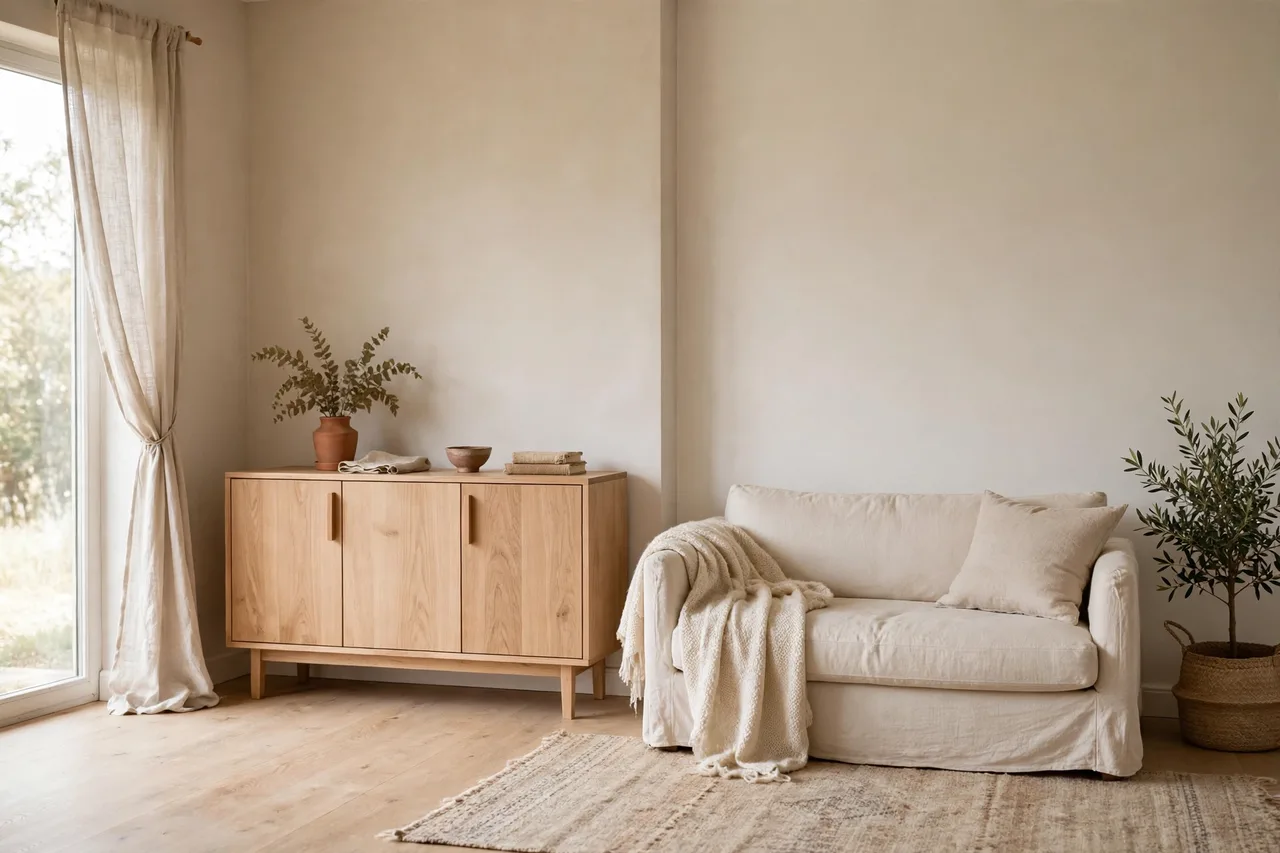
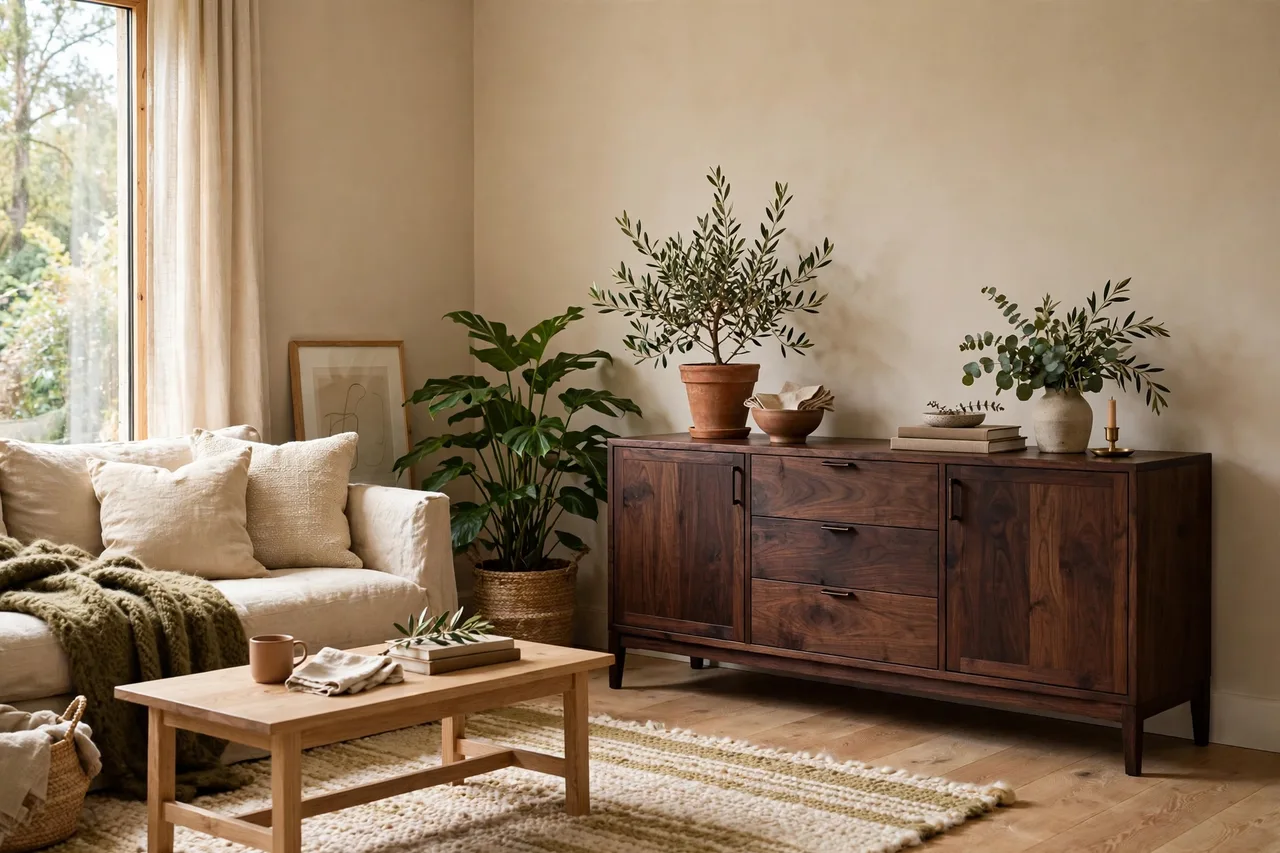
Give the warm minimalist living room one anchor piece — then let everything else be air. The anchor is the largest, warmest thing: a sofa in a warm cream fabric, or a real-wood coffee table with real presence. Around it, hold the line: five to seven personal objects on display in the whole room is a good ceiling, and a rug big enough for the sofa’s front legs to rest on (roughly 8×10 ft / 240×300 cm in most rooms) grounds it all. Empty space is not a gap waiting to be filled. In this look, air is an ingredient — the thing that makes the few pieces you kept feel chosen.
10. The Bedroom Cocoon
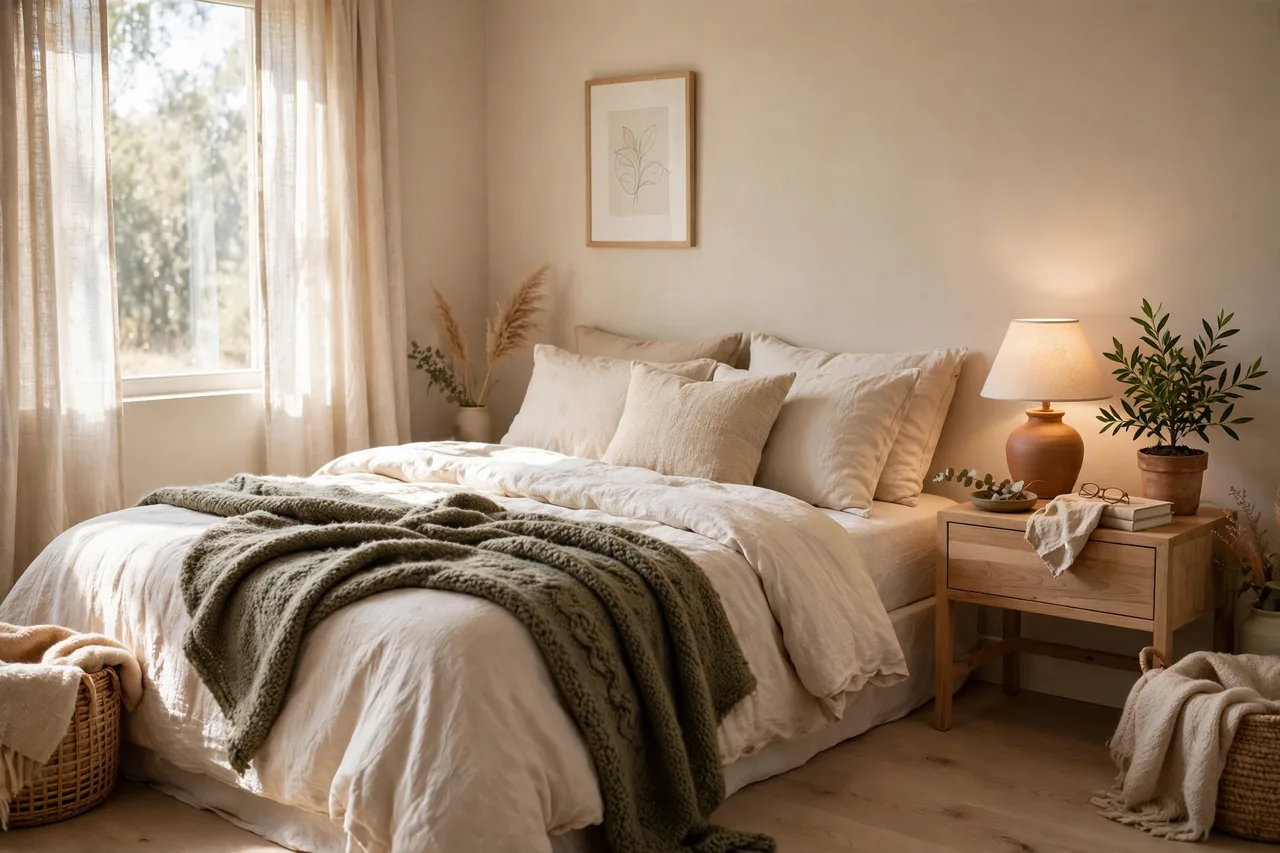
The bedroom is where cozy minimalism proves itself. Breathable bedding in warm whites and cream — washed cotton or linen — layered with one folded throw at the foot of the bed. Surfaces nearly bare: a book, a glass of water, one small plant on the nightstand, and nothing else competing for your last waking look. Light low and warm (more on that in the evening layer below). For the full cold-months version of this room — candlelight, rituals and all — our hygge bedroom ideas guide is the natural next read.
11. Warm Up the Kitchen
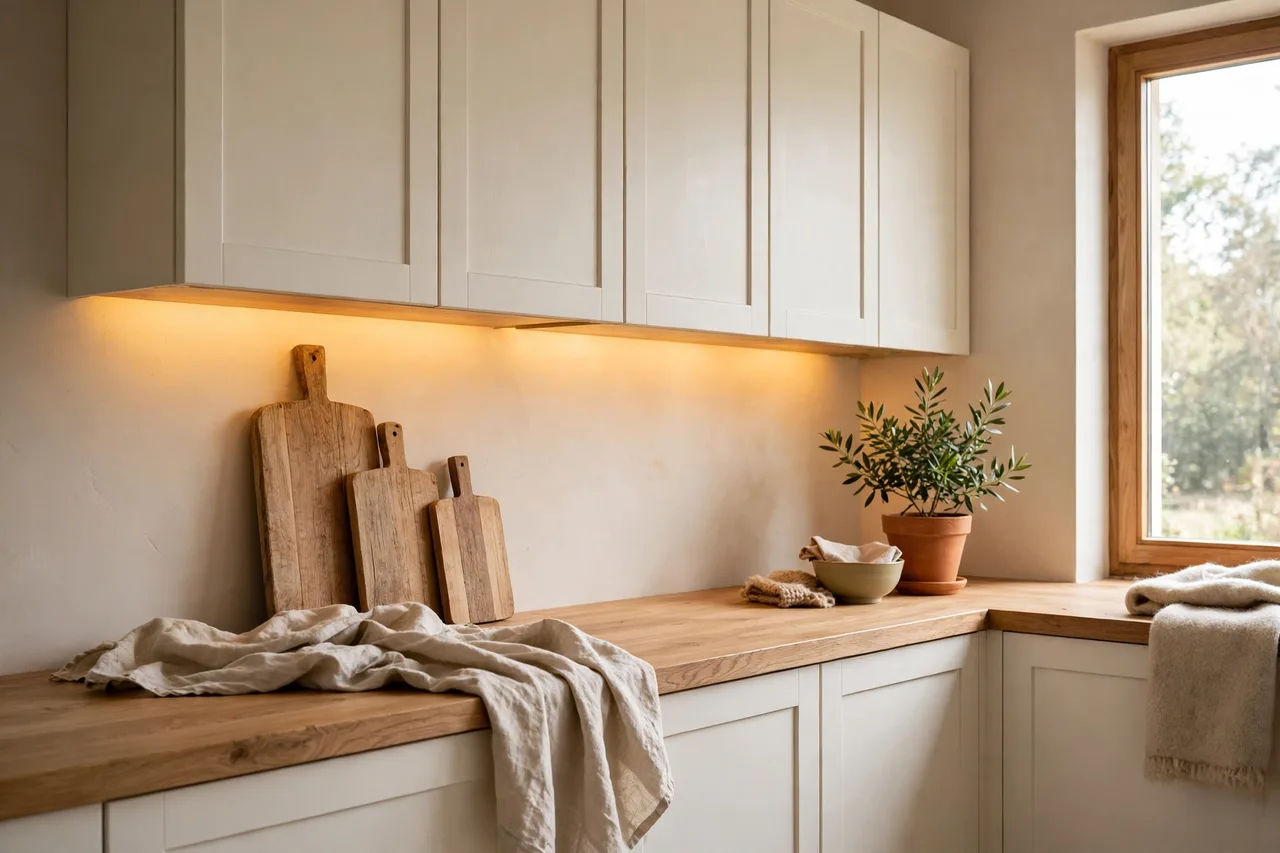
Kitchens run cold by default — tile, glass, steel — so warm them on purpose. Wooden boards that live out on the counter because you use them daily (not as props), ceramics you love on one open shelf, a linen towel in your accent color on the oven rail, and warm bulbs under the cabinets instead of a strip of cold white. The room is mostly hard surfaces, which means every soft, warm thing you add counts double. Our kitchen rule holds here too: one calm vignette on the counter, and let the rest breathe.
12. The Bathroom: Spa-Calm in Warm Neutrals
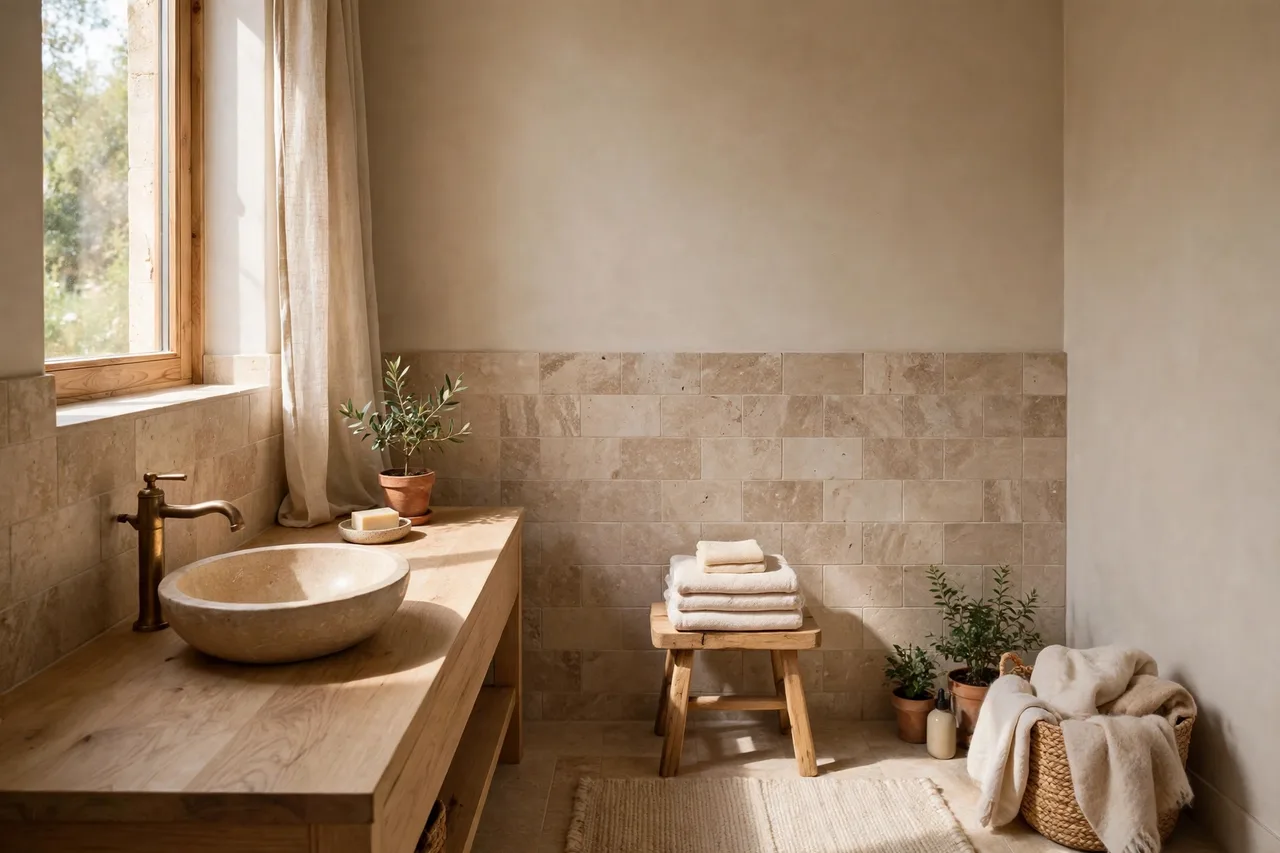
Small room, same rules — the bathroom becomes the spa version of warm minimalism. Warm white towels in one family (all cream, or all soft stone), a small wood stool or tray beside the tub, something green and alive — eucalyptus in a vase or a trailing plant on a shelf — and ceramic or stone-look holders instead of plastic bottles. Keep one deeper note in the room, like the dark wood of the stool, so the pale palette does not go flat. Ten calm minutes in the morning start differently in a room like this.
13. The Entryway: A Warm Welcome in Three Pieces
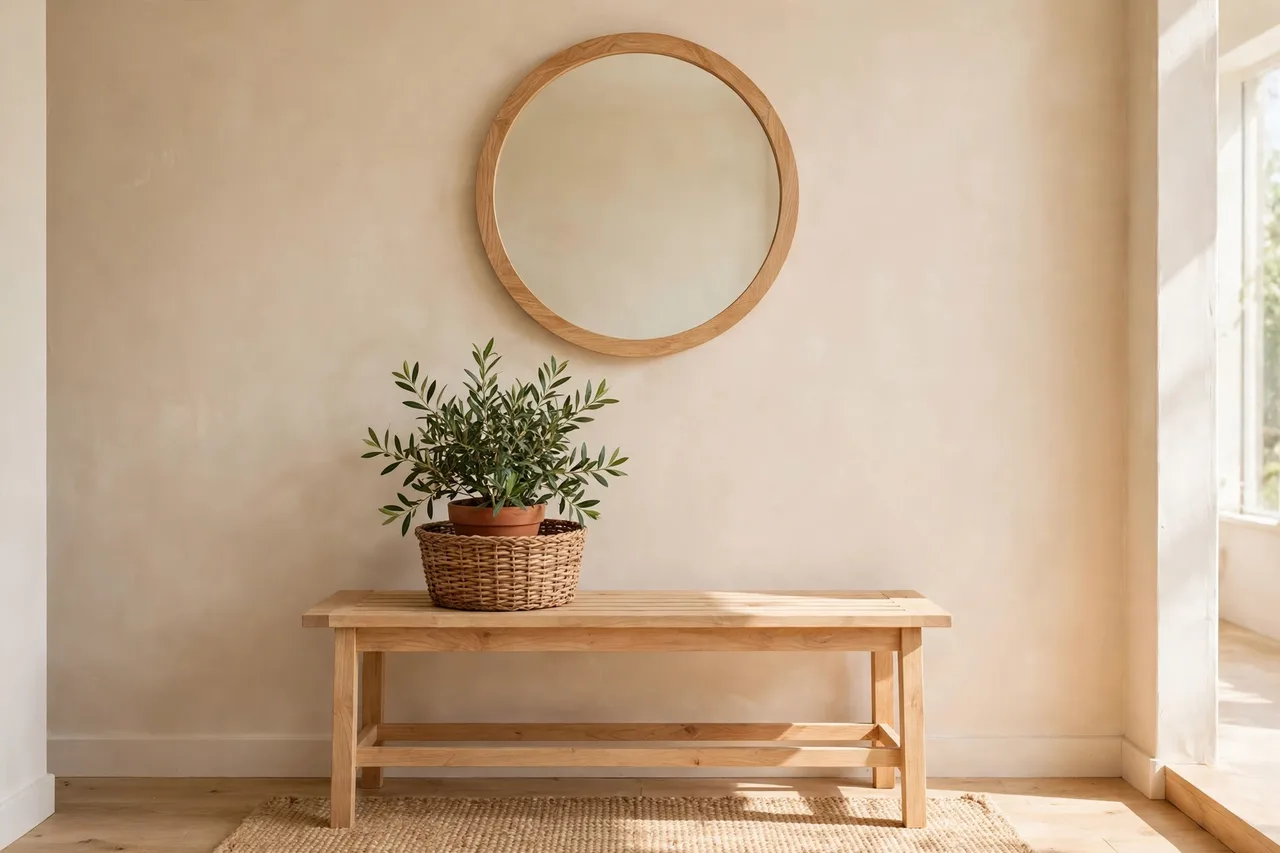
Three pieces make a whole entryway: something to land on, something woven, something personal. A slim console or bench for keys and bags, a woven basket underneath for shoes and scarves, and one piece that is yours — a framed print you love, the round mirror from idea 8, a small bowl with a story. The entry sets the temperature for the whole home; walk in to warmth and order, and every room after it feels calmer. Keep the floor as clear as you can — a welcoming entry is mostly empty, on purpose.
The Evening Layer
Daylight flatters this look. Evening is where it is won or lost — a warm minimalist home should glow warmer as the day ends, never colder.
14. Three Layers of Light, All Warm
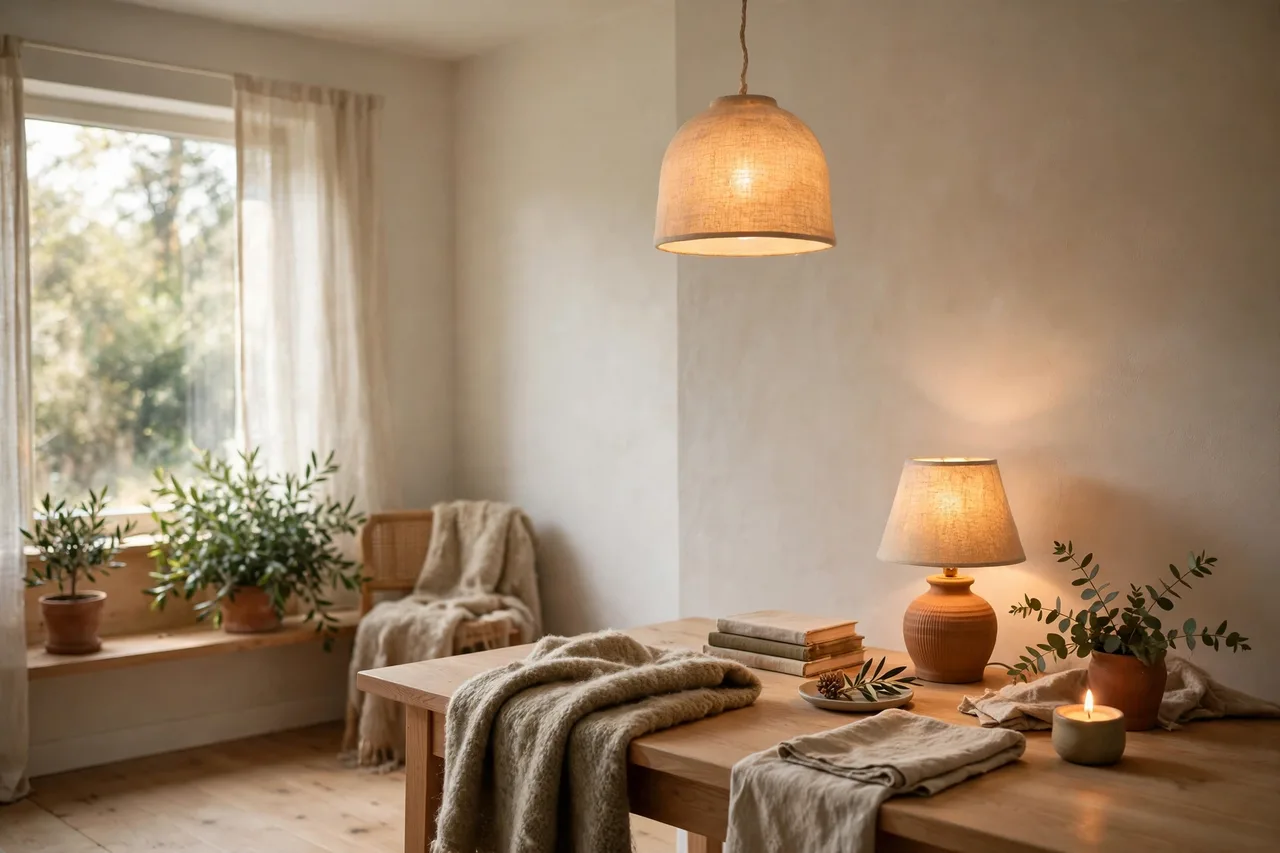
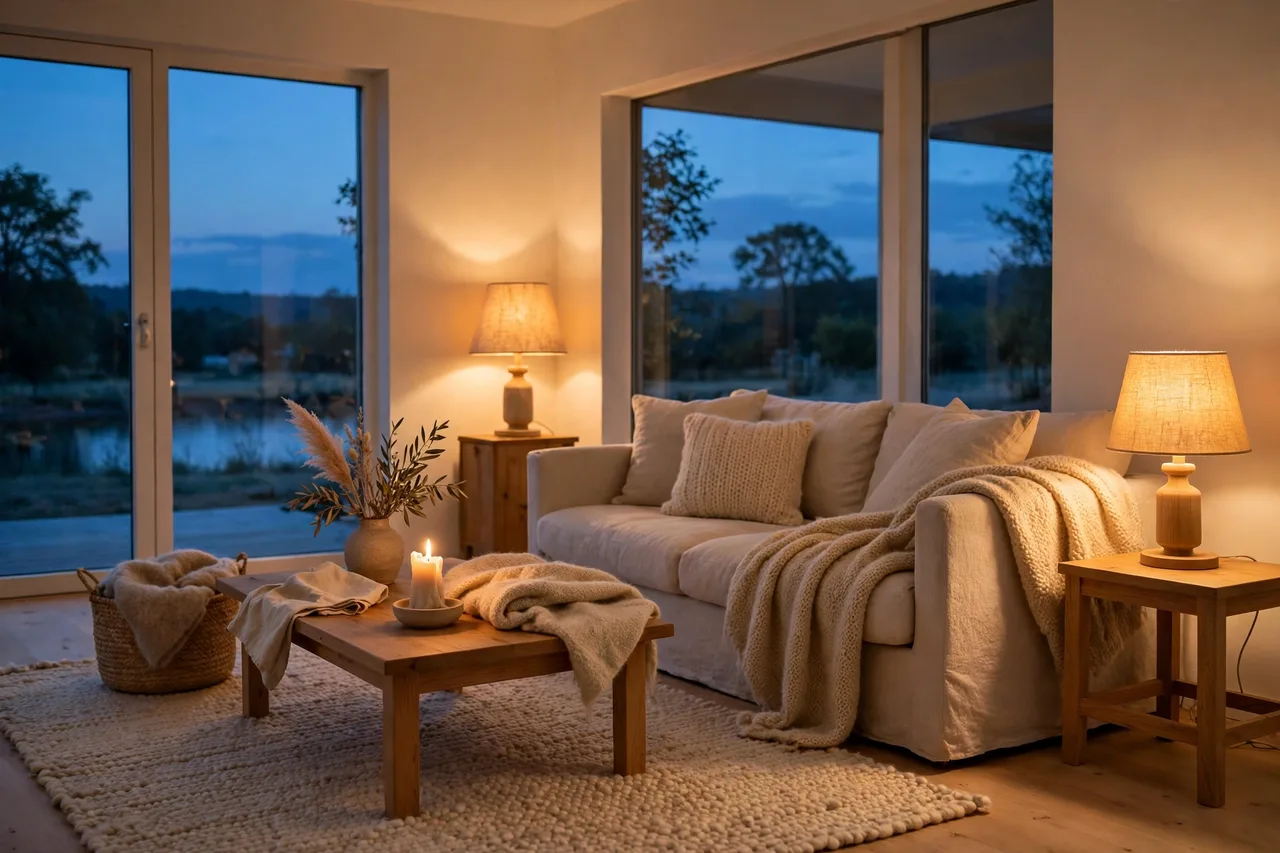
One ceiling light is why calm rooms feel like offices after dark. Warm minimalism layers three kinds instead: ambient light (soft, general, nothing harsh), task light where you read and cook, and accent light — a low lamp or two that exists mostly to glow. The non-negotiable part is the temperature: every bulb warm, between 2200K and 2700K. One cold blue-white bulb will undo an entire warm neutral palette in a second, so check the box before you buy. Dimmers or smart bulbs, set warm and low, make it effortless.
15. The Evening Ritual
At dusk, switch the room over. It takes two minutes, and it is a ritual, not a chore. Overhead lights off. Lamps on. One candle lit on a tray where you will actually see it. The room visibly exhales — edges soften, the wood looks richer, the textiles look deeper — and so do the people in it. This is the honest answer to “minimalist home but cozy”: the coziness was never in having more things, it is in how the room is lit when you finally sit down in it. Make it a habit and the evening becomes the best-looking part of your day.
Budget, Renters & What to Skip
The good news about warm minimalism on a budget: the look is mostly subtraction and warmth, and subtraction is free. Here is the sensible order to do it in.
16. The Budget Way In
Start free: edit, rearrange, and take the cold things out. The glossy, the blue-white, the too-many — removing them is the transformation, and it costs nothing. Then spend in this order: warm bulbs first (the cheapest change with the biggest effect), cushion covers in your warm palette instead of new cushions, thrifted ceramics and real wood, and one textile upgrade a month — a proper wool-blend throw, linen-look curtains. Notice what is not on the list: new furniture. If your big pieces are the right shapes, the palette and the light will warm them. Buy slowly, in the family, and the room collects itself.
17. The Renter Way In
Everything in this look can be un-done in one afternoon. Textiles carry the palette — warm curtains, throws, bedding and cushion covers do the work paint would do, and they all come with you when you move. Limewash-look peel-and-stick panels stand in for paint. Art leans instead of hanging on nails. Table and floor lamps replace any rewiring, and warm bulbs reverse in five minutes on moving day. Your deposit stays safe, your landlord gets the same apartment back, and not one degree of warmth is left behind.
What to Skip: The Parts of This Trend That Will Date Fast
Honesty corner — not every corner of this trend deserves your money. These are the versions that will look dated soonest, and the simple fix for each.
The all-beige “latte room.” Beige sofa, beige rug, beige curtains, beige everything — with no contrast anywhere, it reads flat and a little sad within a year. Warmth needs one deep note to lean against: dark wood, a deep olive cushion, a soft black frame. Keep the contrast and the calm survives.
Bouclé everything, plus pampas. The matching set — bouclé sofa, bouclé chair, bouclé pouf, tall pampas grass in the corner — is already the copy-paste postcard of this trend. One nubby texture in a room is lovely. Five is a costume.
Cold white bulbs. A single 4000K bulb turns the warmest palette back into a dentist’s office. This is the cheapest mistake to make and the easiest to fix — check the Kelvin number on every box, forever.
Matching furniture sets. Sofa, chairs, tables and shelves all bought as one matching set reads “catalogue,” not “collected.” Warm minimalism mixes wood tones inside the warm family and lets pieces arrive over time.
Chrome and gloss overload. Shiny cool metal and high-gloss lacquer are cold minimalism’s materials. A small touch is fine — a lamp base, a frame — but a room paved in shine feels like a showroom, no matter how cream the sofa is.
FAQ
What is warm minimalism in interior design?
Warm minimalism keeps minimalism’s calm — clear surfaces, breathing space, few and well-chosen pieces — and warms it up. Warm whites and greige replace stark white, natural materials and texture replace gloss, and light is layered and golden instead of cold and flat. The result is a home that is simple and soft at the same time.
What colors are used in warm minimalism?
The working palette is warm neutrals: warm white, cream, ivory, greige and oatmeal, with natural wood tones (oak, warm walnut) doing much of the work. One earthy accent — terracotta, clay, olive or warm ochre — repeats quietly through the room, and one deep note (dark wood, espresso, soft black) appears in small doses so the pale colors never look flat.
How is warm minimalism different from Scandinavian design?
Think of them as cousins raised in different light. Scandinavian style is paler and cooler — brighter whites, pale ash wood, blue-gray notes, crisp daylight. Warm minimalism runs deeper and earthier: creamier whites, warmer woods, more texture, and amber evening light. That, in one line, is warm minimalism vs Scandinavian — same love of calm, different temperature.
Can a minimalist home still feel cozy?
Yes — and coziness was never about quantity. It lives in texture you can touch, warm light at sitting height, and a few personal, handmade things among the calm. If a minimalist room feels cold, the fix is almost never “add more stuff.” It is warmer color, warmer light and warmer materials, in that order.
What are the best budget-friendly ways to try warm minimalism?
Start with the free part: edit out the cold, glossy extras and rearrange what you have. Then warm bulbs (2700K or lower), cushion covers in a warm palette, thrifted real wood and ceramics, and one textile upgrade at a time. The whole of idea 16 is this list in the right order — most homes get the look for the price of a few bulbs and covers.
The Calm Is the Point
Warm minimalism is not really a shopping list. It is a temperature setting for your home: warm base, honest materials, light that glows at the end of the day, and only the things that earn their place. Start with one room, one warm bulb, one deep breath.
Pin these warm minimalism ideas for your next slow Saturday, and share the cozy. 🏡