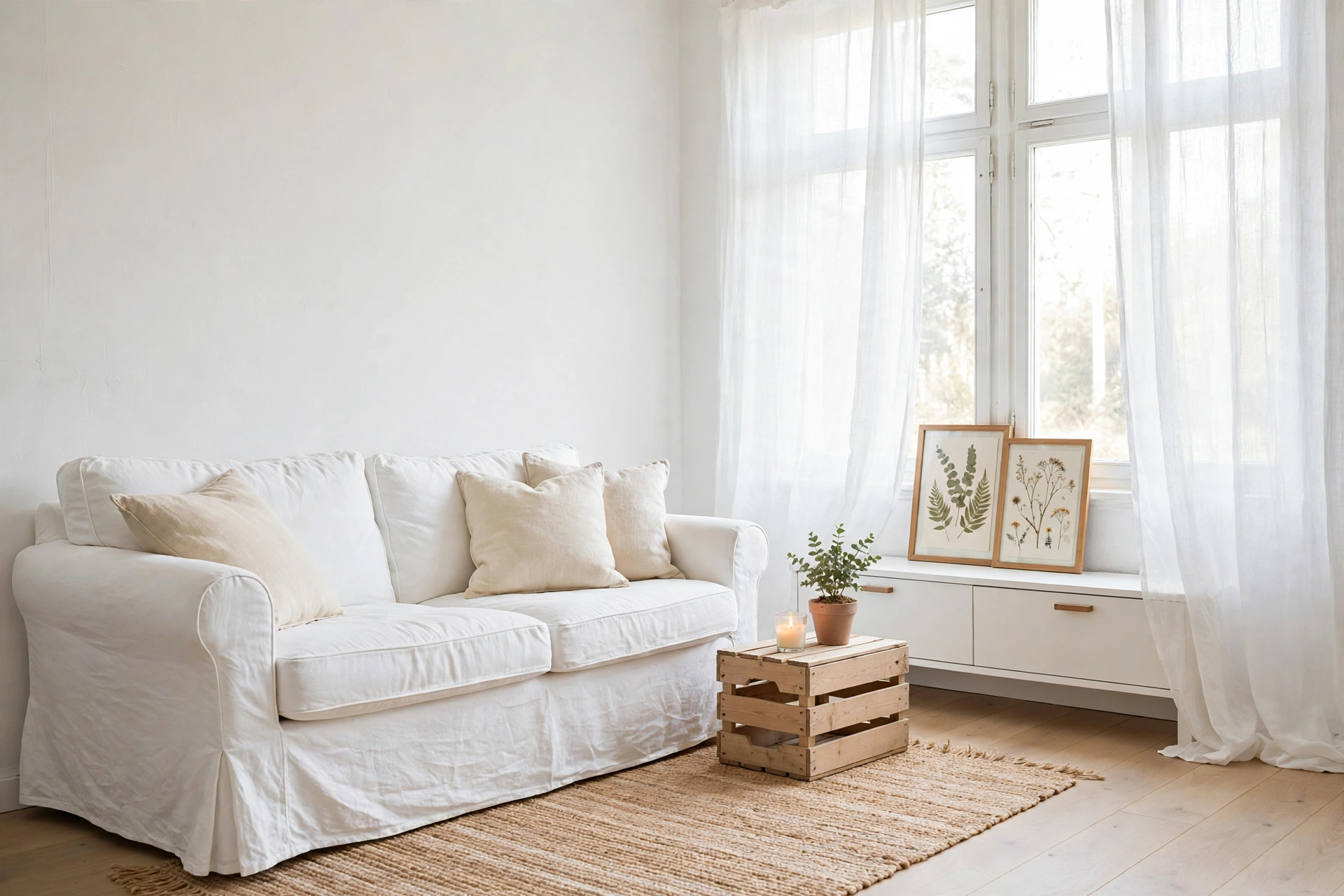
There’s a specific evening in autumn — usually the first one where you reach for a sweater indoors — when your home either rises to meet the season or feels like it’s still dressed for summer. The bright whites and bare surfaces that looked fresh in July suddenly look a little cold.
The good news is that fall is the most forgiving decorating season there is. It runs on texture, warmth, and things you mostly already own: blankets, candles, baskets, branches from the yard. These 25 ideas are organized room by room, they lean heavily on the cheap and the free, and not one of them requires storing a plastic tub of decorations the size of a coffin.
The Entryway: Fall Starts at the Front Door
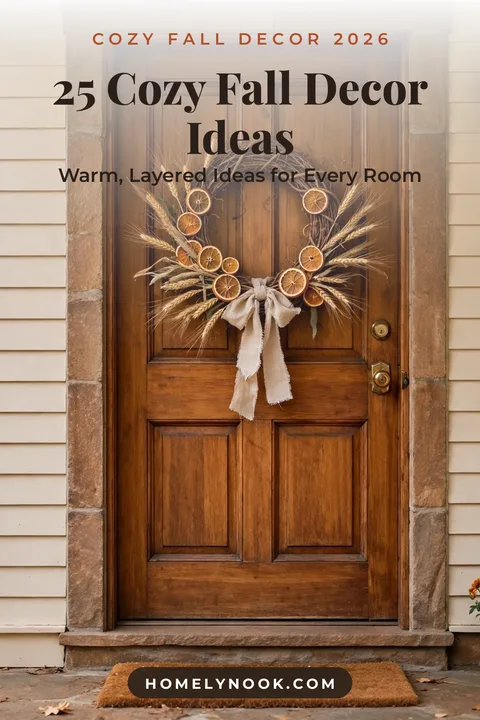
1. A wreath that isn’t trying too hard. Skip the glitter pumpkins. A simple grapevine or eucalyptus wreath with a few dried oranges, wheat stems, or a linen ribbon reads elegant in September and November. Faux versions around $20–30 last for years; a DIY grapevine base is closer to $10.
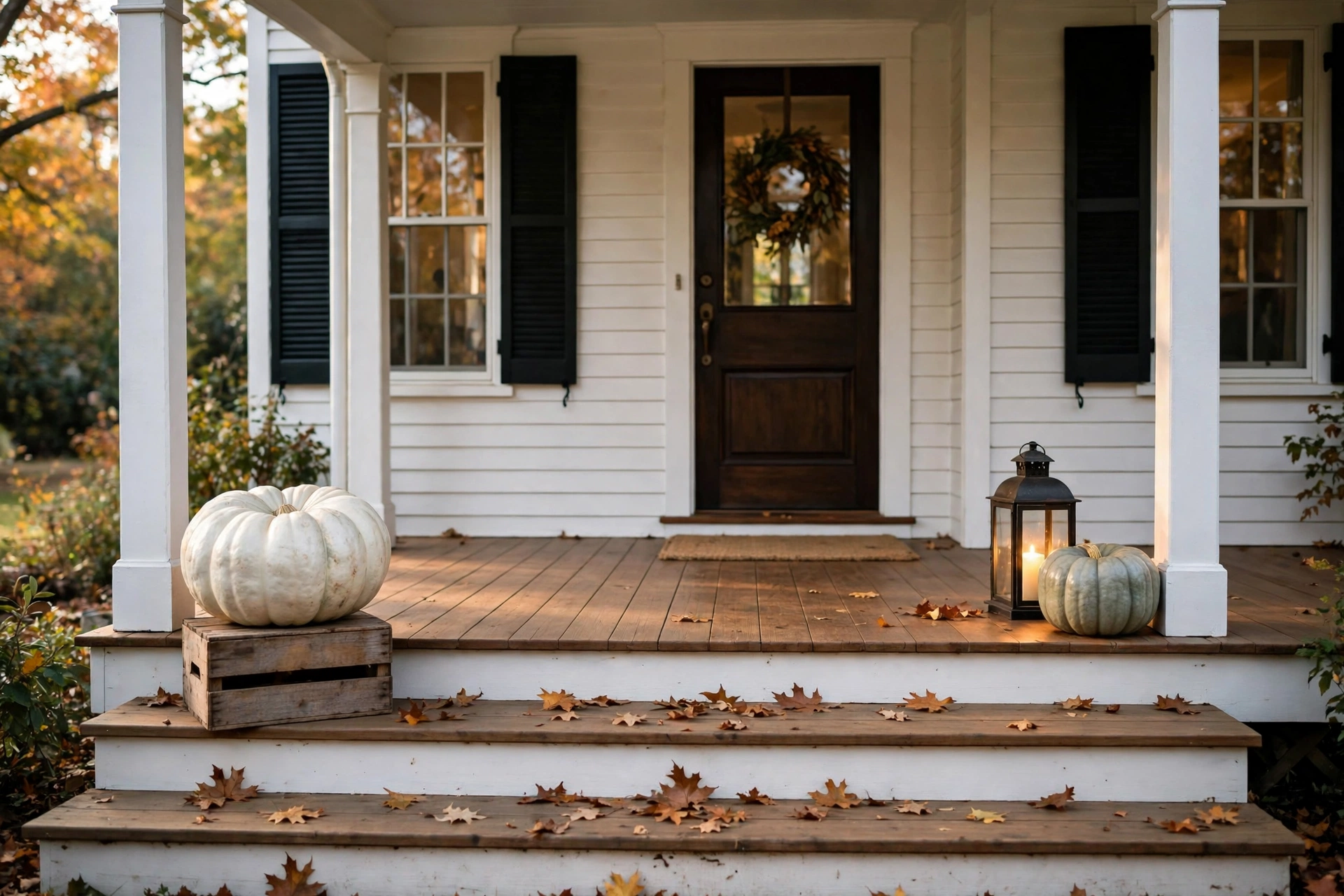
2. The two-pumpkin rule. Porches drown in pumpkins fast. Two groupings — a larger pumpkin stacked on a crate, a smaller one beside a lantern — look composed. Twelve pumpkins in a line look like a farm stand. Heirloom varieties in muted colors (white, sage, dusty blue) photograph beautifully and blend with almost any door color.
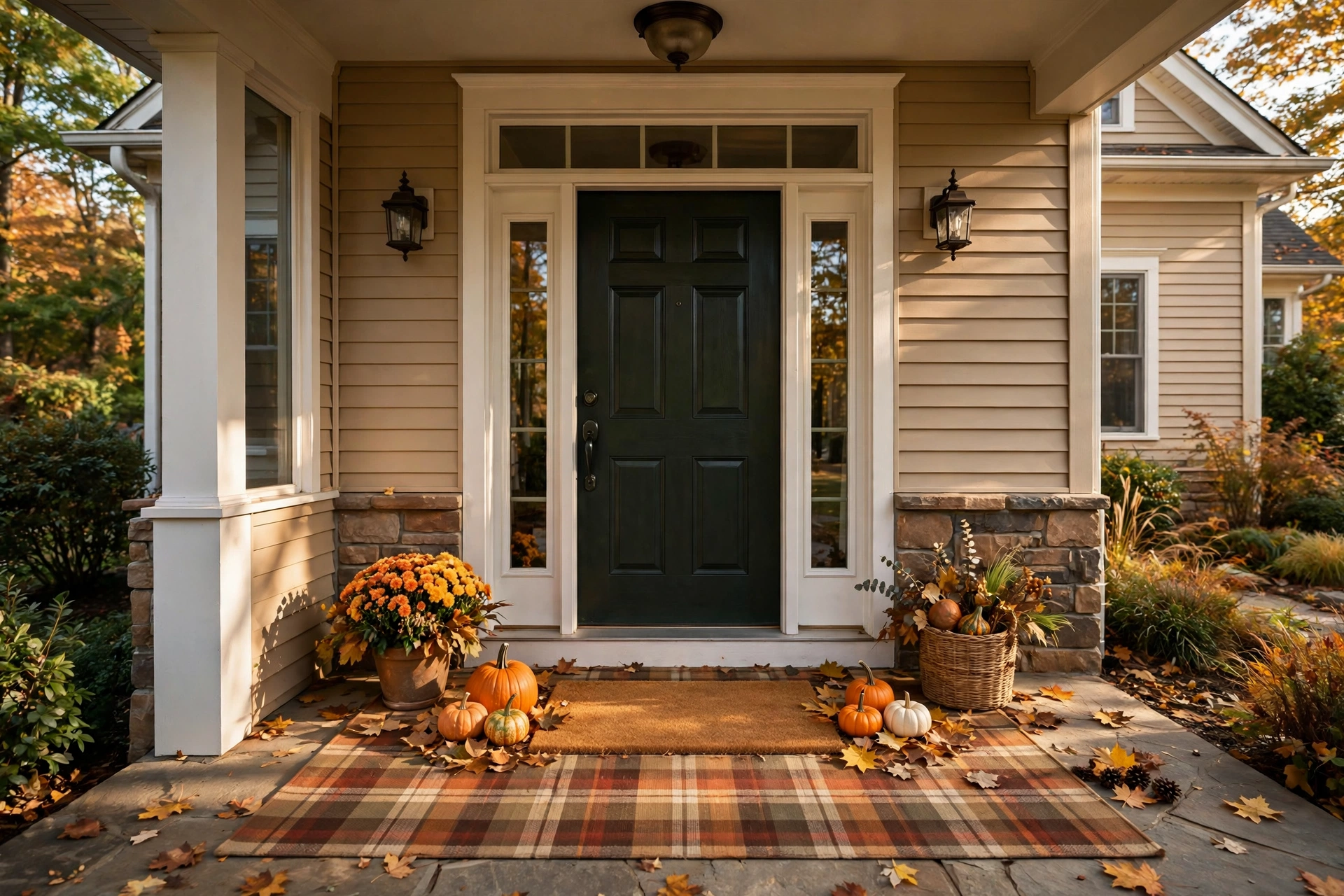
3. A doormat layered on a rug. Layer a plain coir doormat over a larger plaid or striped outdoor rug. It’s a $15 trick that makes a small entry look deliberately styled, and the rug catches the season’s mud before it reaches your floors.
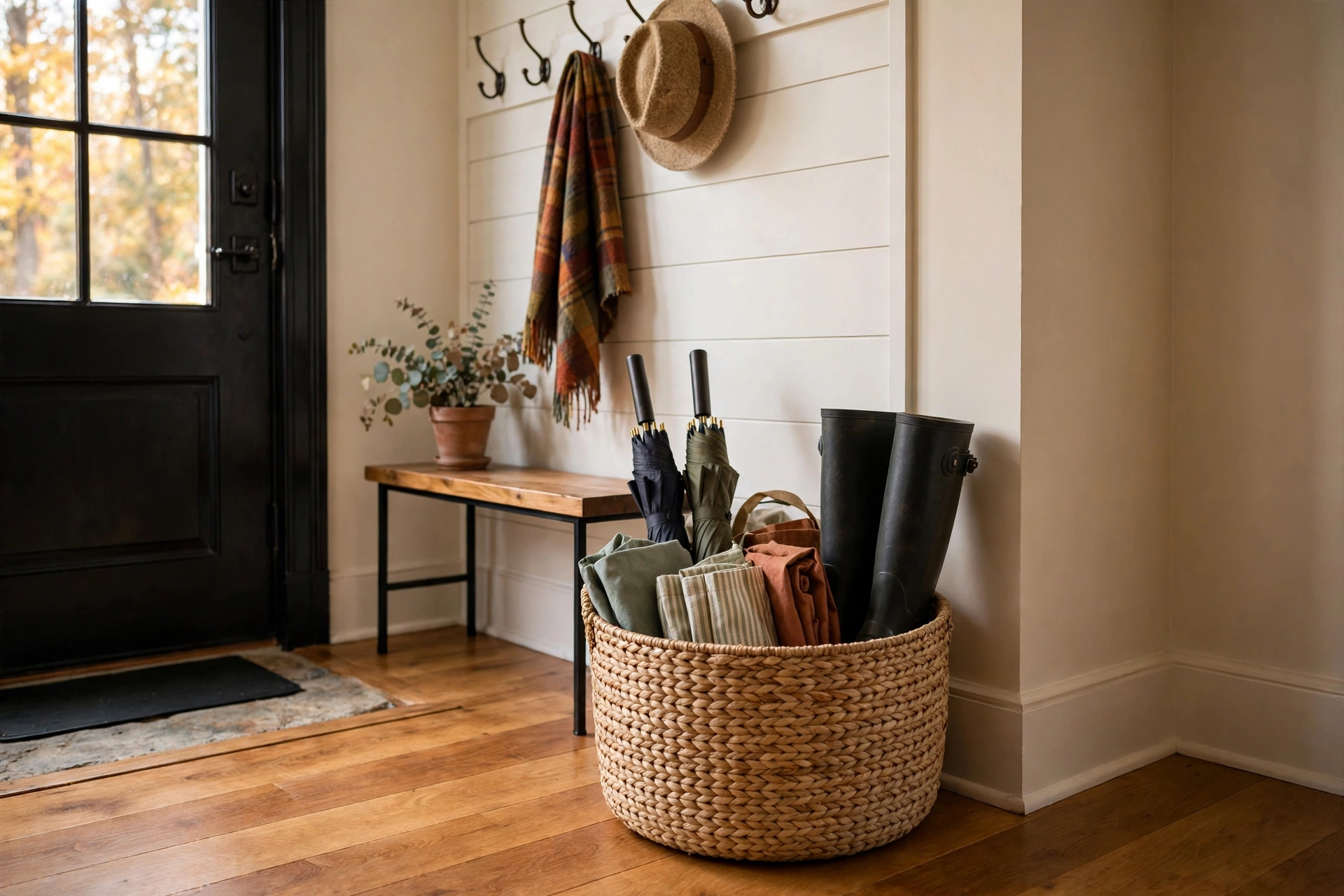
4. A basket by the door for the season’s clutter. Boots, umbrellas, dog leashes, reusable bags — fall adds stuff. One big woven basket contains all of it and adds the texture the entryway was missing anyway.
The Living Room: Texture Is the Whole Trick
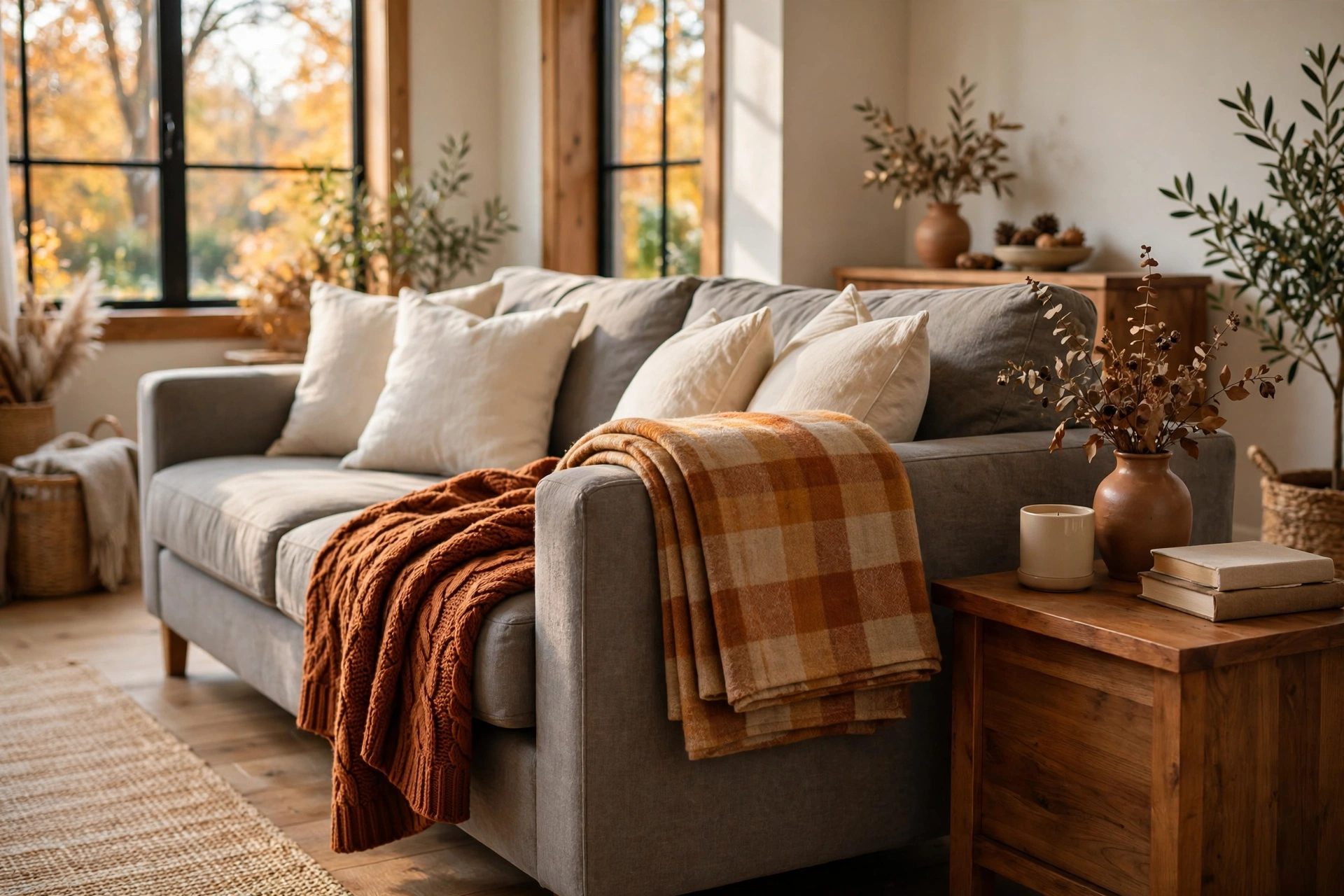
5. Swap in two chunky throws. Retire the light summer blankets. A chunky knit or faux-fur throw in rust, camel, or deep olive, draped over the sofa arm, is the single fastest fall signal there is. Two throws, two textures — one knit, one plaid flannel — and the room’s season has officially changed.
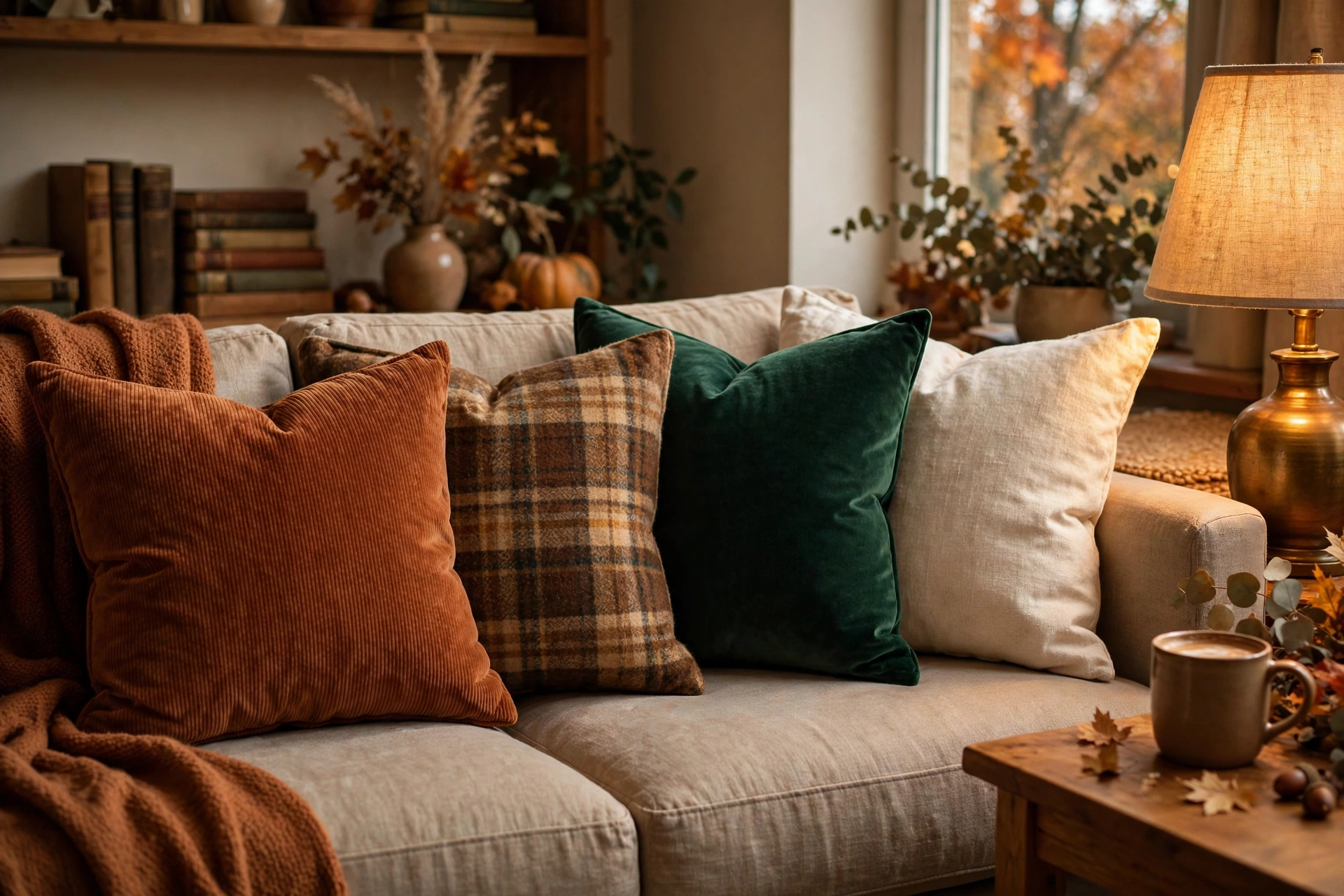
6. Pillow covers in fall fabrics. You know this move from our budget makeover guide: covers, not pillows. For fall, think corduroy, plaid wool-look, and one velvet in a jewel tone. Four covers, roughly $25, five minutes.
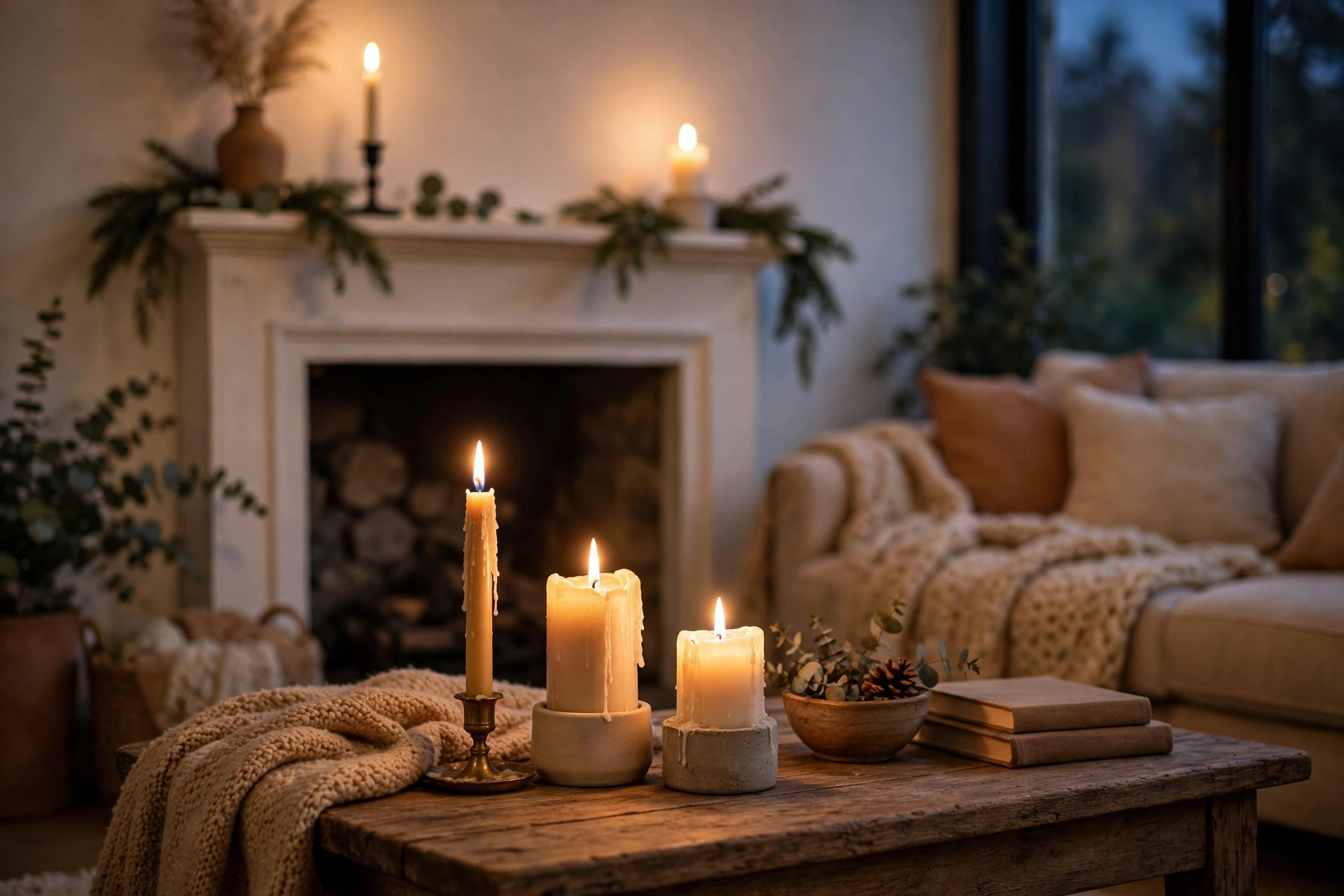
7. Candles in odd numbers, at different heights. Three candles on the coffee table, two on the mantel, one by the reading chair — varied heights (pillar, taper, tea light in amber glass) so the light flickers at different levels. Flameless versions with timers give you the glow at 6 p.m. sharp without the fire risk, and they survive toddlers and cats.
8. A mantel (or shelf) with three layers. Back layer: a mirror or framed print. Middle: something tall — branches in a heavy vase, dried pampas, wheat. Front: the small stuff — mini pumpkins, a stack of old books, a candle. This back-middle-front formula works on any horizontal surface in the house.
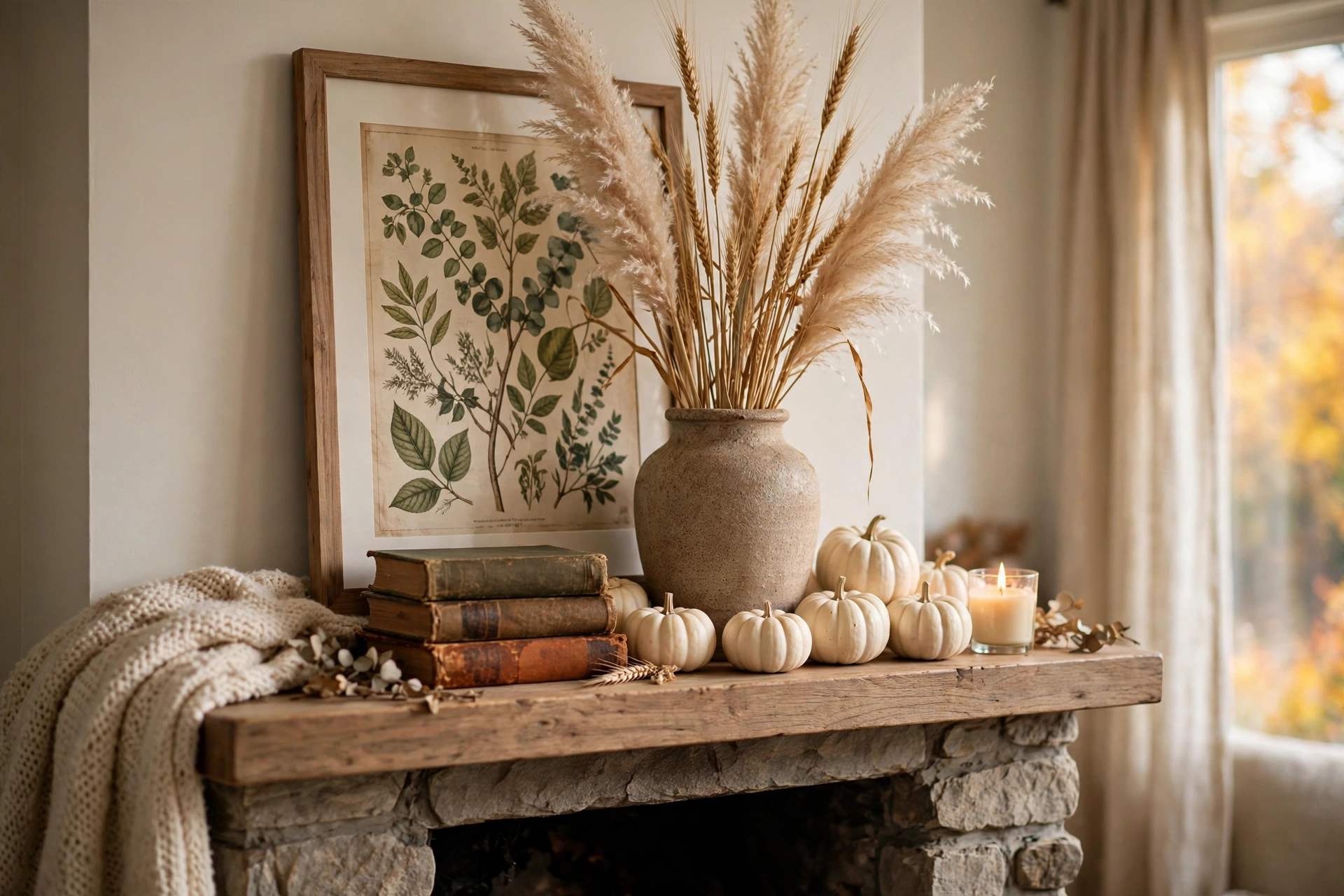
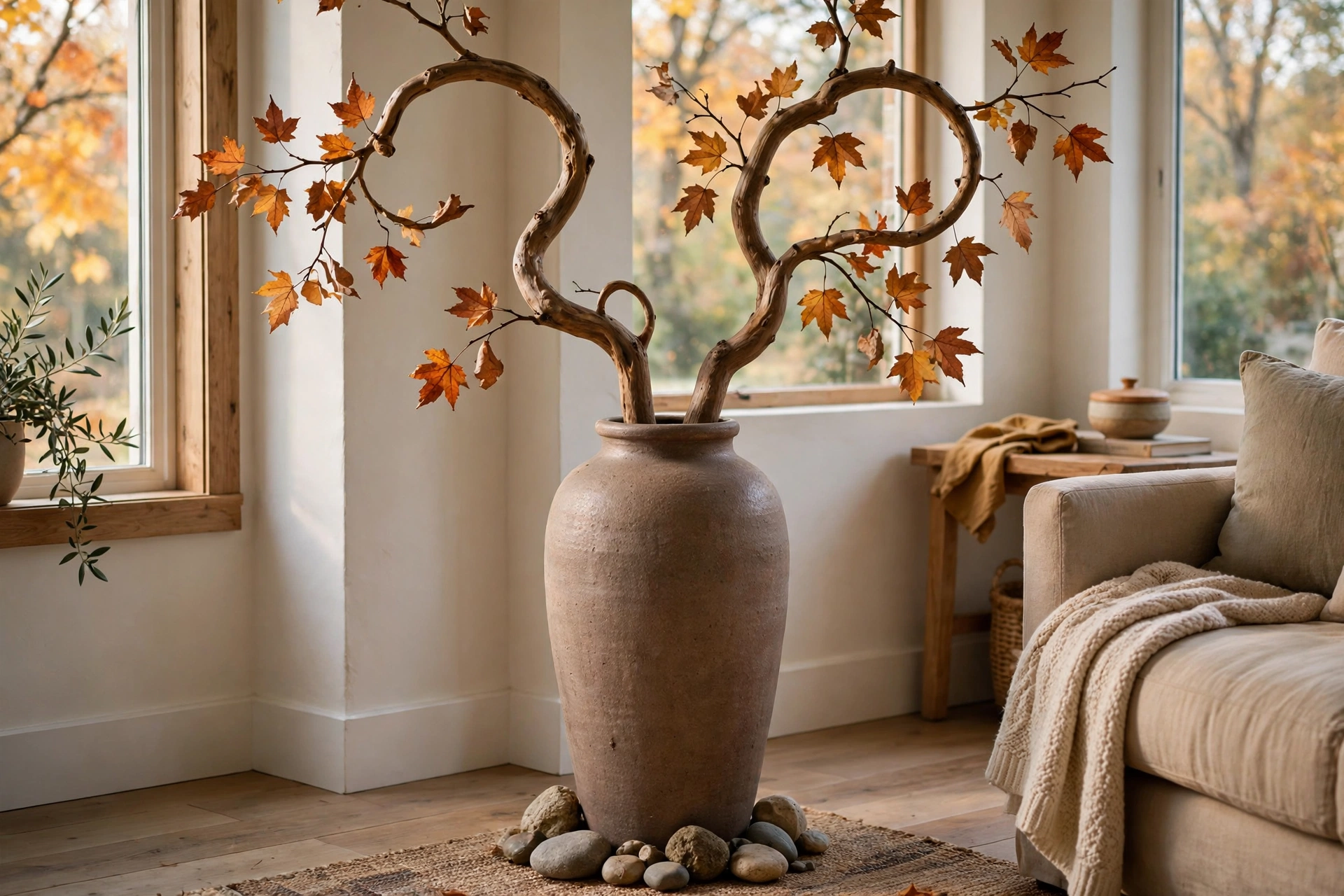
9. Branches from the yard, in the tallest vase you own. Free, sculptural, and genuinely what high-end designers do. Cut two or three branches with interesting shapes (curly willow, oak, anything with a bend), strip the lower leaves, and let them do the work. In a heavy vase they can’t tip; in a light one, add stones.
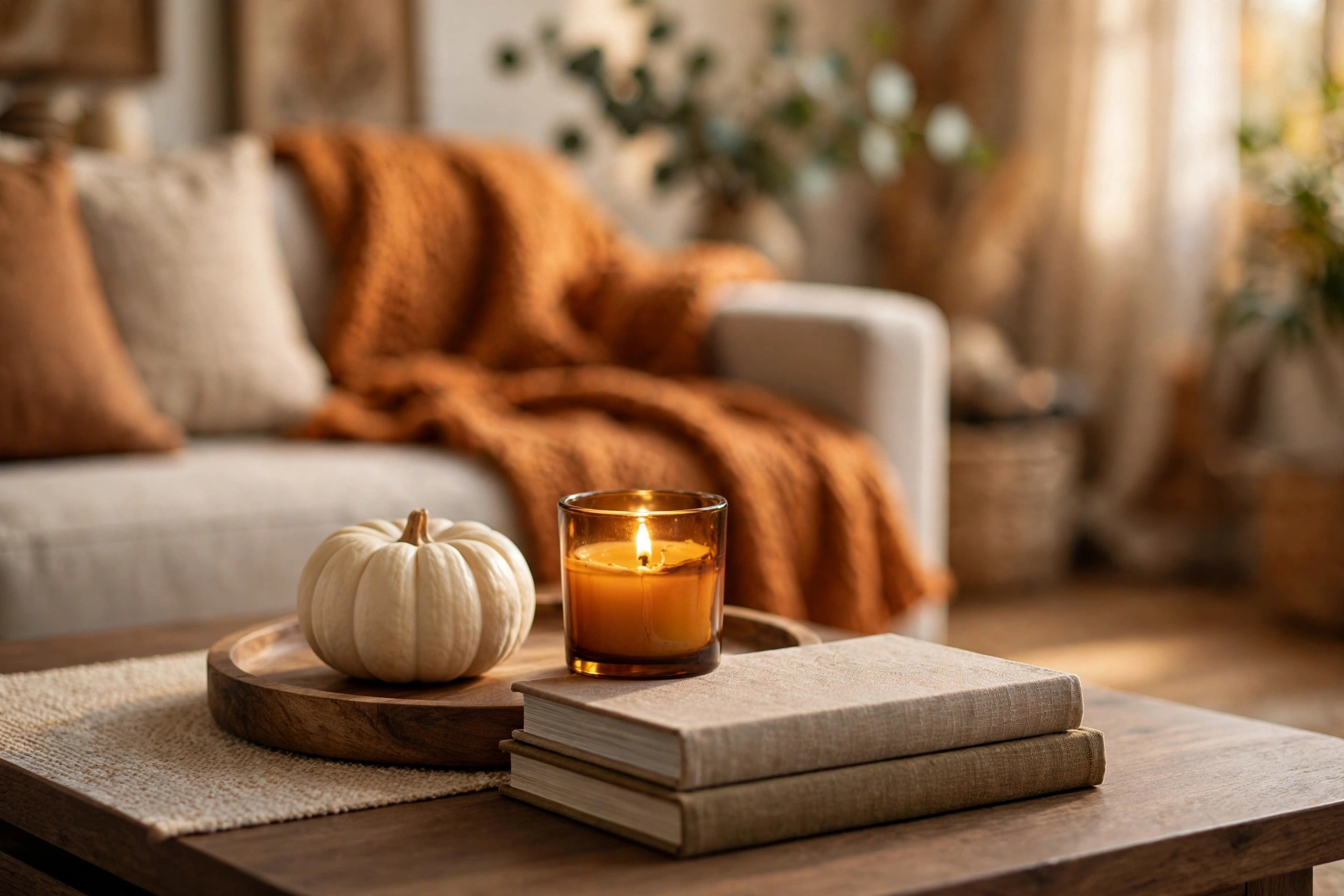
10. A fall centerpiece that isn’t a centerpiece. On the coffee table: a wooden tray or cutting board, one small pumpkin, a candle, a stack of two books, done. Trays make random objects look like a decision. Remove any one item and it still works — that’s the test of a good arrangement.
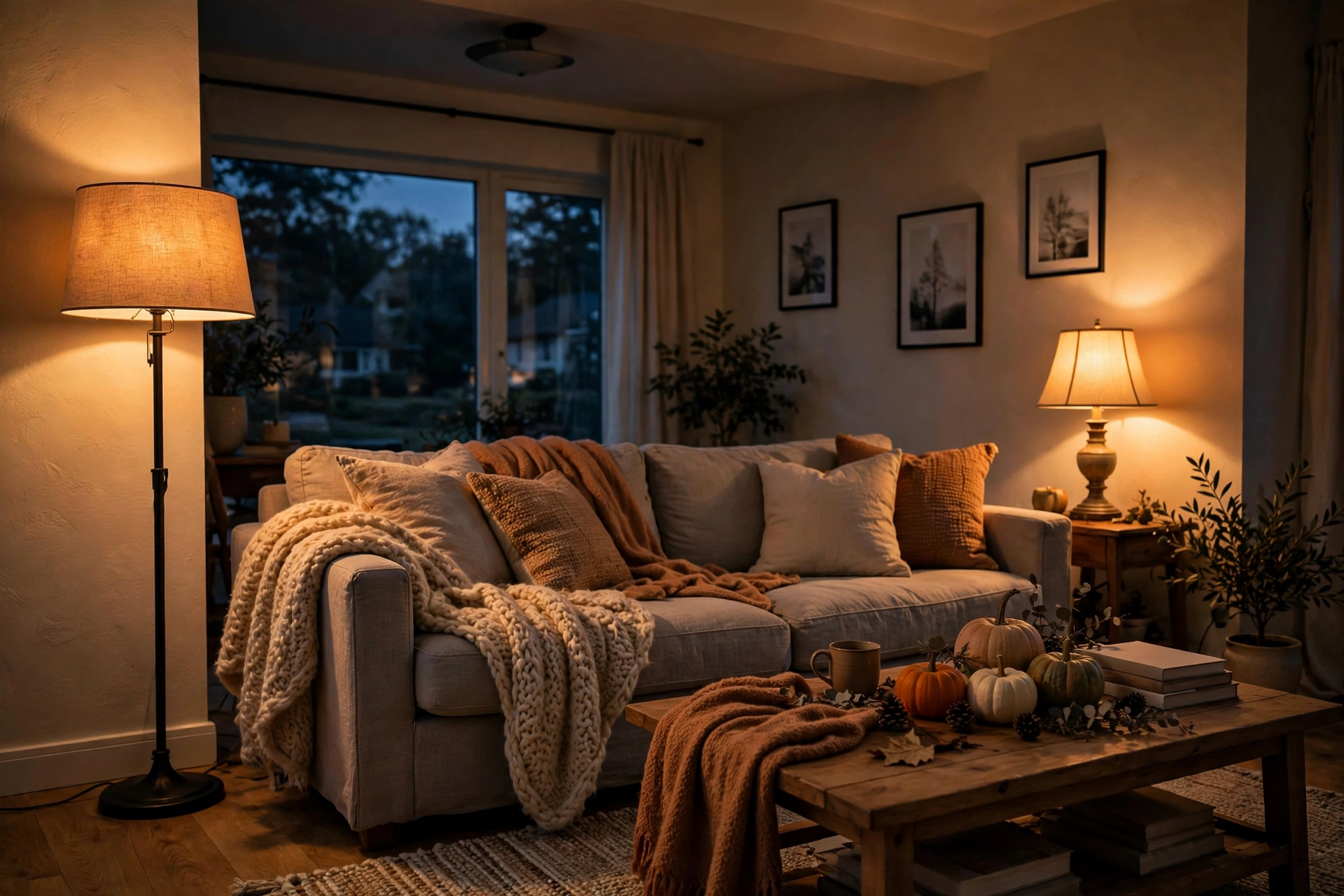
11. Warm up the lighting. Swap the living room’s bulbs to 2700K if they’re not already, and after 6 p.m. live by lamp light, not overheads. Fall cozy is 70% lighting. Overhead fluorescents could undo every other idea on this list.
The Kitchen and Dining Room: Where Fall Actually Happens
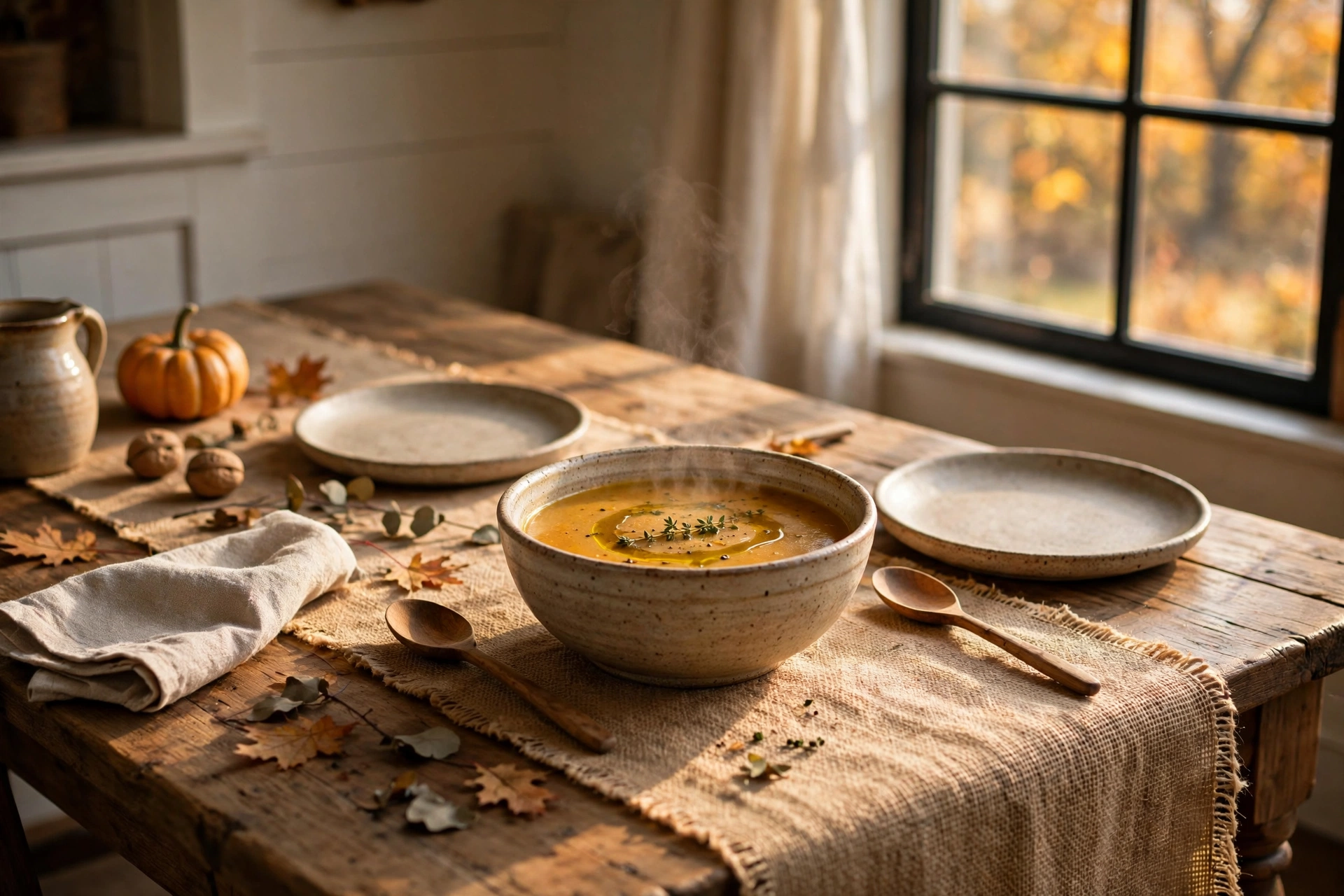
12. A table runner in a natural fiber. Burlap, raw linen, or a woven stripe down the center of the table. Runners make weeknight dinners feel set, and they protect the table from the season’s soup pots. Machine-washable is non-negotiable.
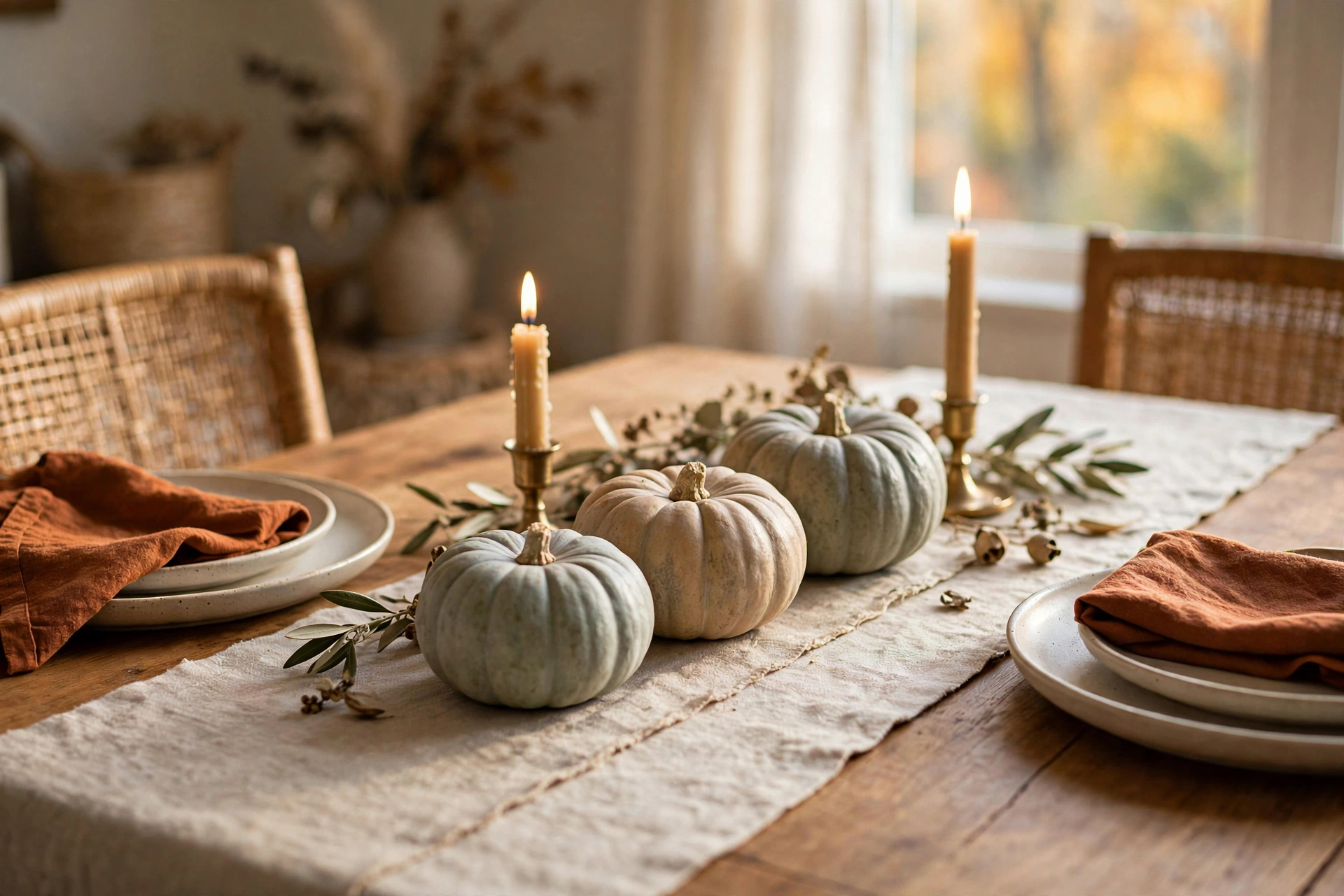
13. The five-minute fall tablescape. Runner, three small pumpkins or gourds down the middle, two taper candles in holders, cloth napkins in a fall color at each seat. Five minutes, works for Tuesday, works for Thanksgiving guests with place cards added.
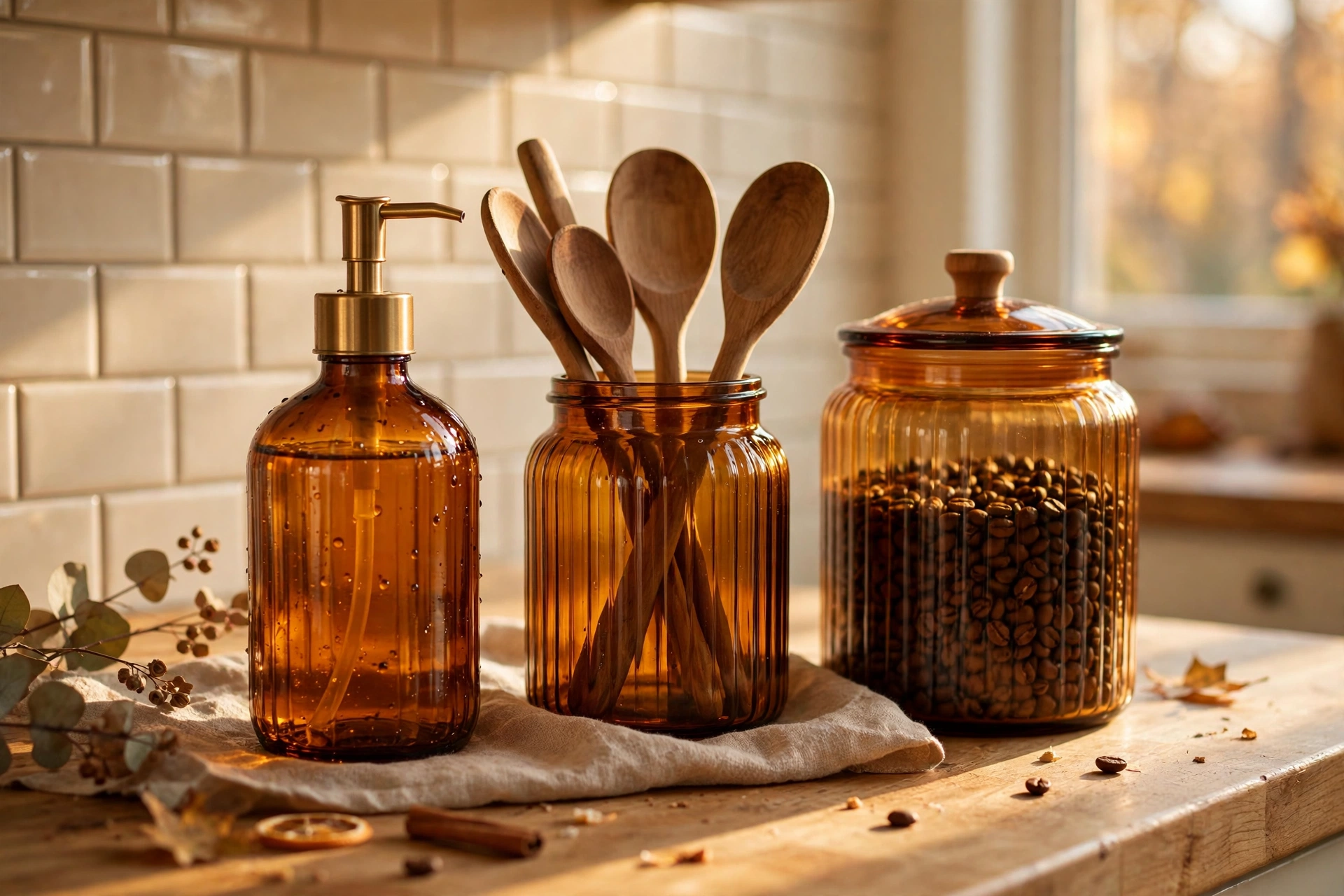
14. Amber glass on the counter. Amber soap dispensers, an amber jar holding wooden spoons, an amber canister for coffee. Warm glass tones are the kitchen’s equivalent of golden-hour light, and a matched set of two or three pieces costs under $20 and reads as a deliberate palette.
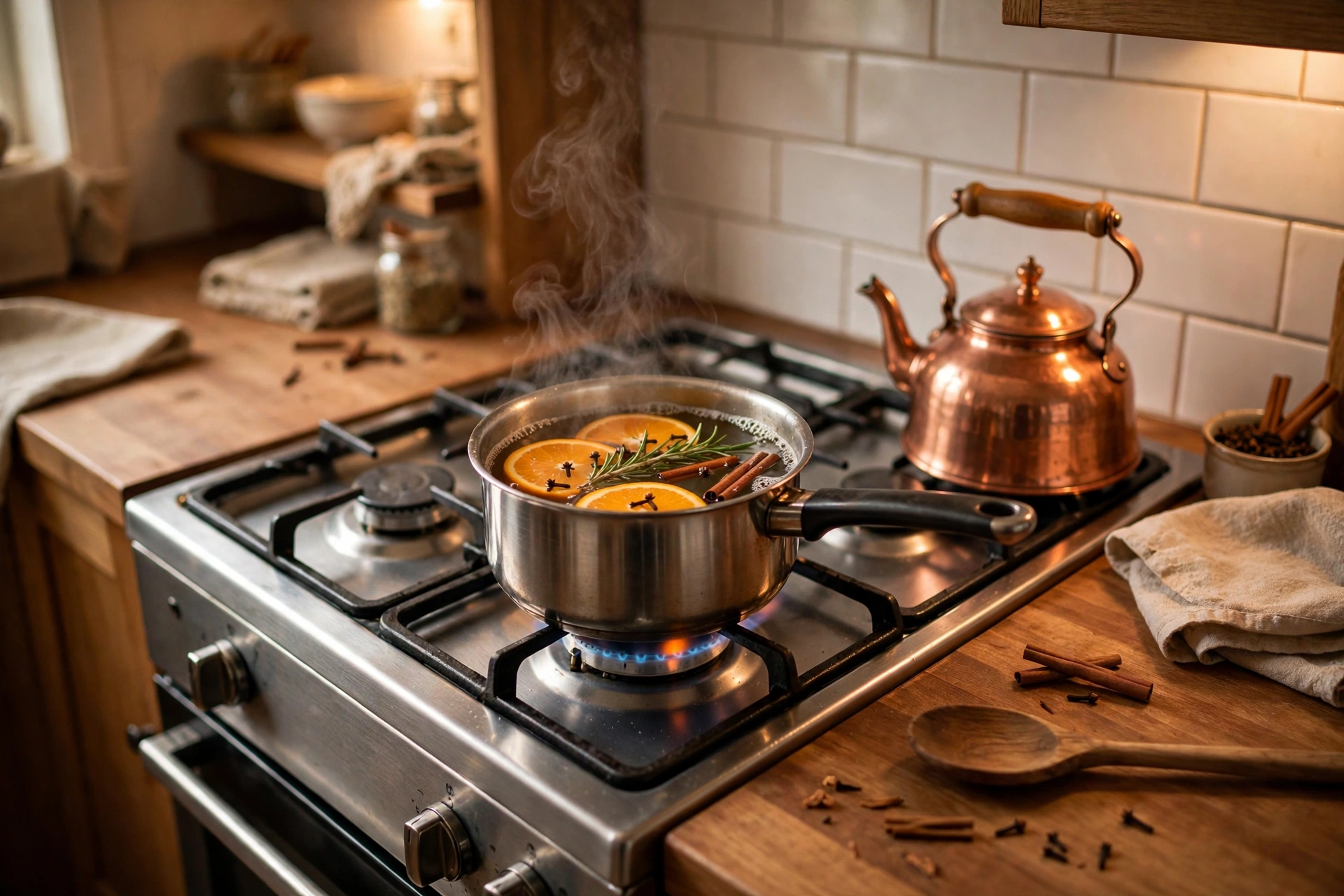
15. A simmer pot instead of a candle. A small pot on the stove — water, orange slices, cinnamon sticks, cloves, a sprig of rosemary — on the lowest simmer. The house smells like fall itself within twenty minutes. Refill the water, reuse for a day or two, compost the rest. Cost: about $2, mostly from the spice drawer.
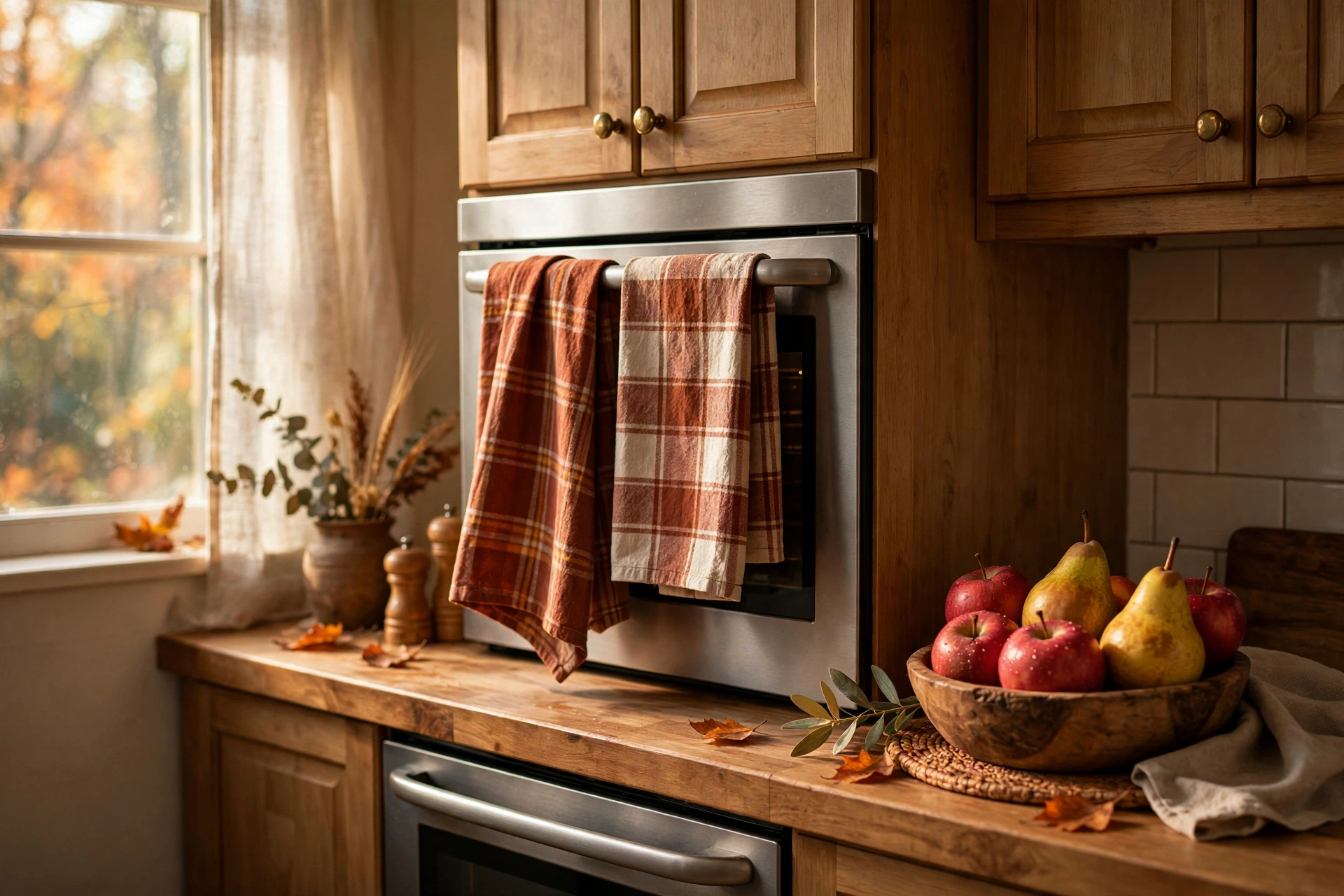
16. Swap the dish towels. Two new towels in rust or plaid, hung where everyone sees them, plus a small bowl of apples or pears on the counter. Kitchens decorate through their textiles and their fruit bowls — that’s genuinely most of it.
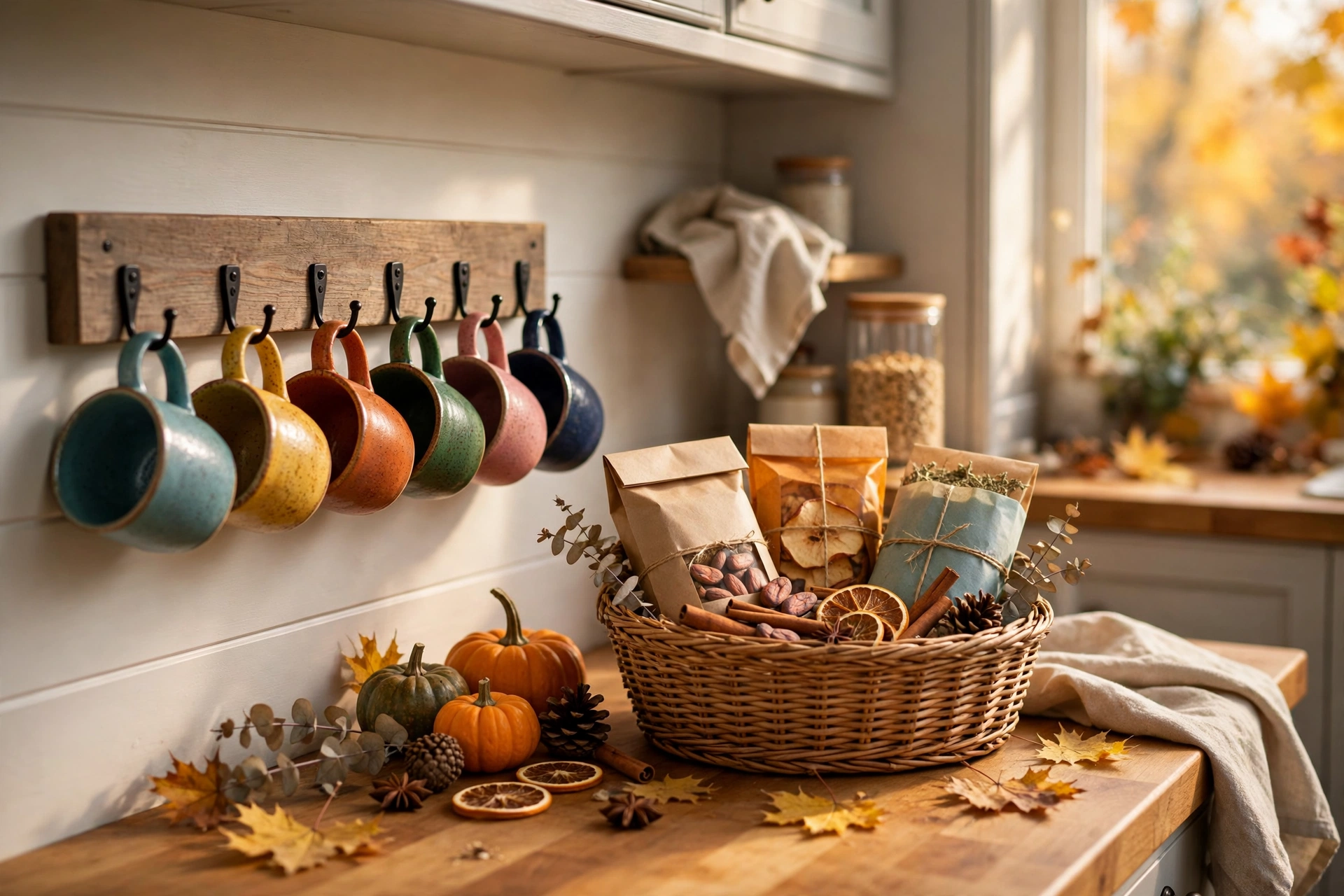
17. Mugs on display. Fall is mug season. A small rail with hooks or a tiered stand showing your best six mugs turns storage into decor, and hot drinks station themselves: cocoa, cider, tea beside them in a basket.
The Bedroom: Cozy Is a Temperature and a Texture
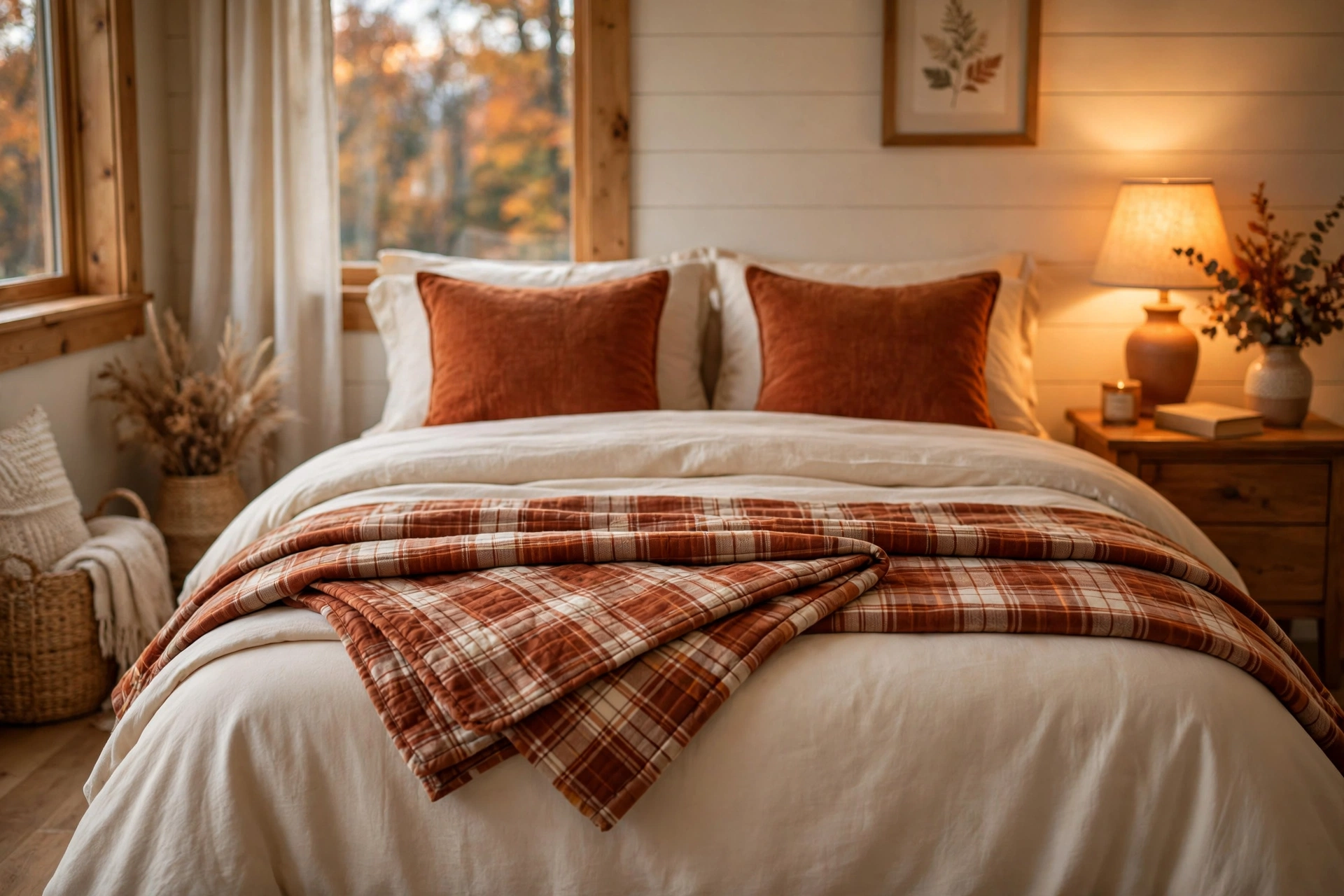
18. Add one layer to the bed. Keep your bedding; add a folded quilt, waffle blanket, or plaid throw across the foot of the bed. That single horizontal band of fall color and texture is what makes bedding look “autumn” in every magazine photo you’ve ever saved.
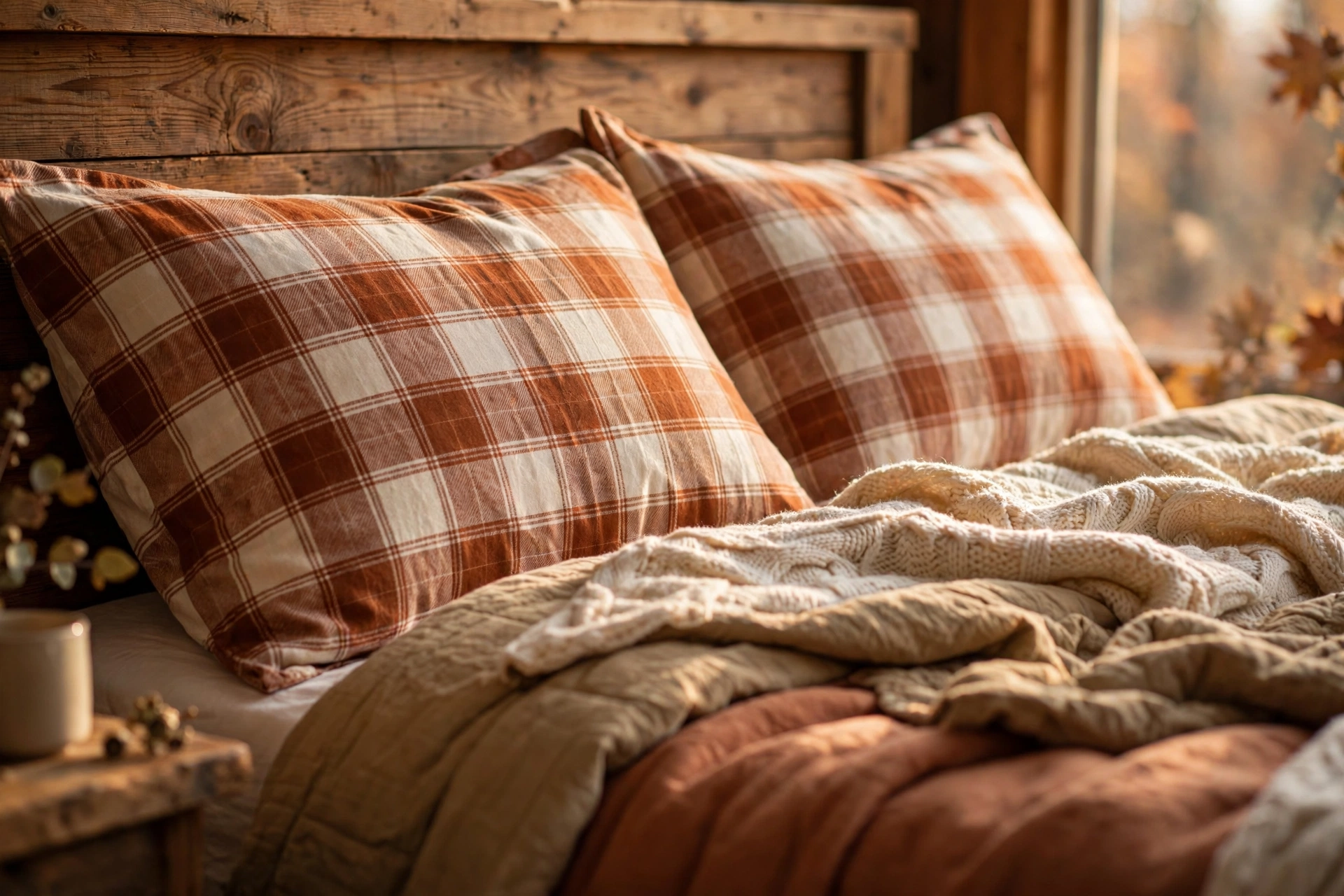
19. Flannel or brushed-cotton pillowcases. Just the pillowcases — the rest of the sheet set can stay. It’s the fabric your face notices, it costs under $15 for a pair, and it makes the bed feel like a cabin in the best way.
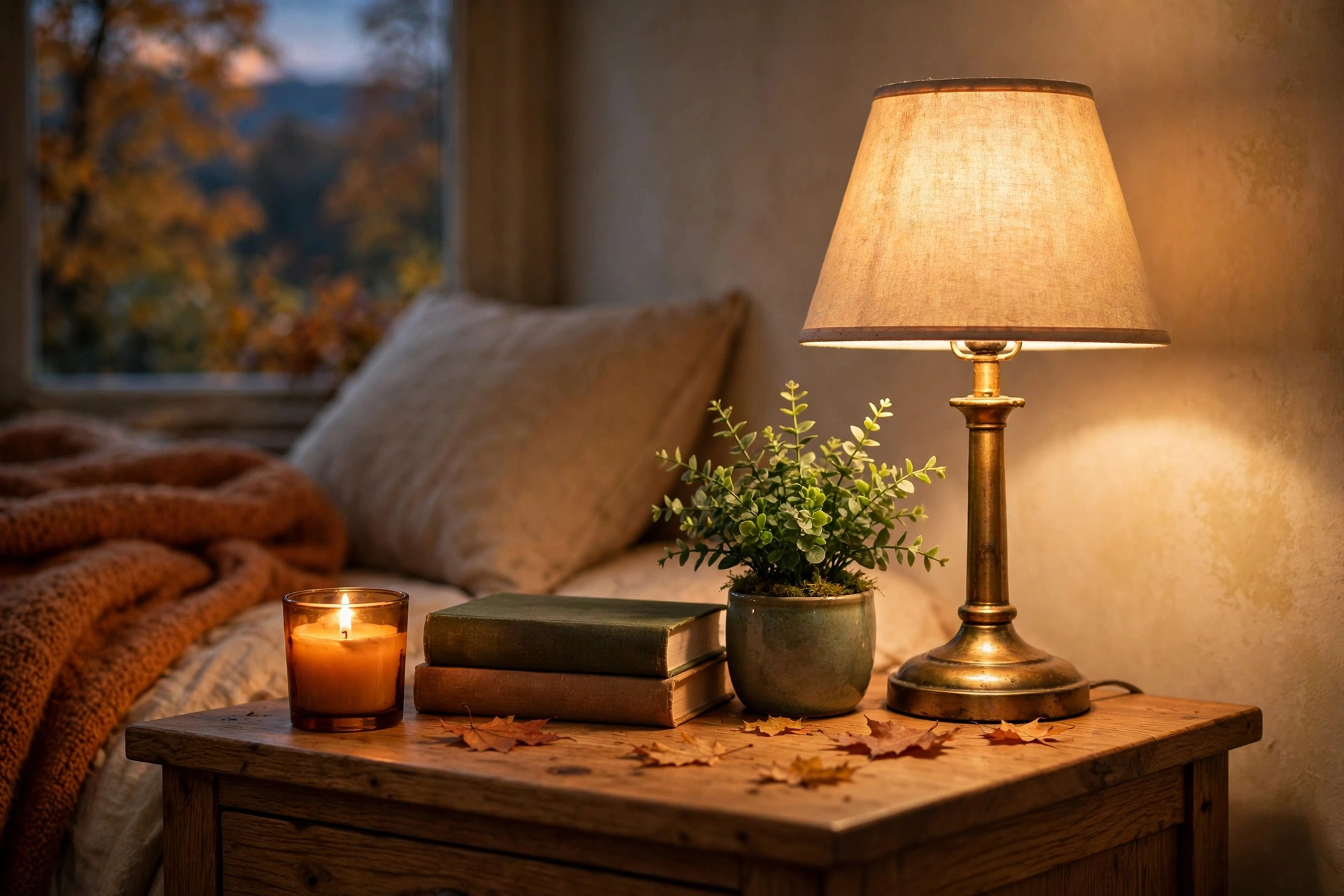
20. A bedside candle and a small stack of books. The nightstand formula: something warm that glows (candle or a small lamp with a warm bulb), something to read, something alive if the light allows. Fall nights start earlier; the nightstand should be ready for them.
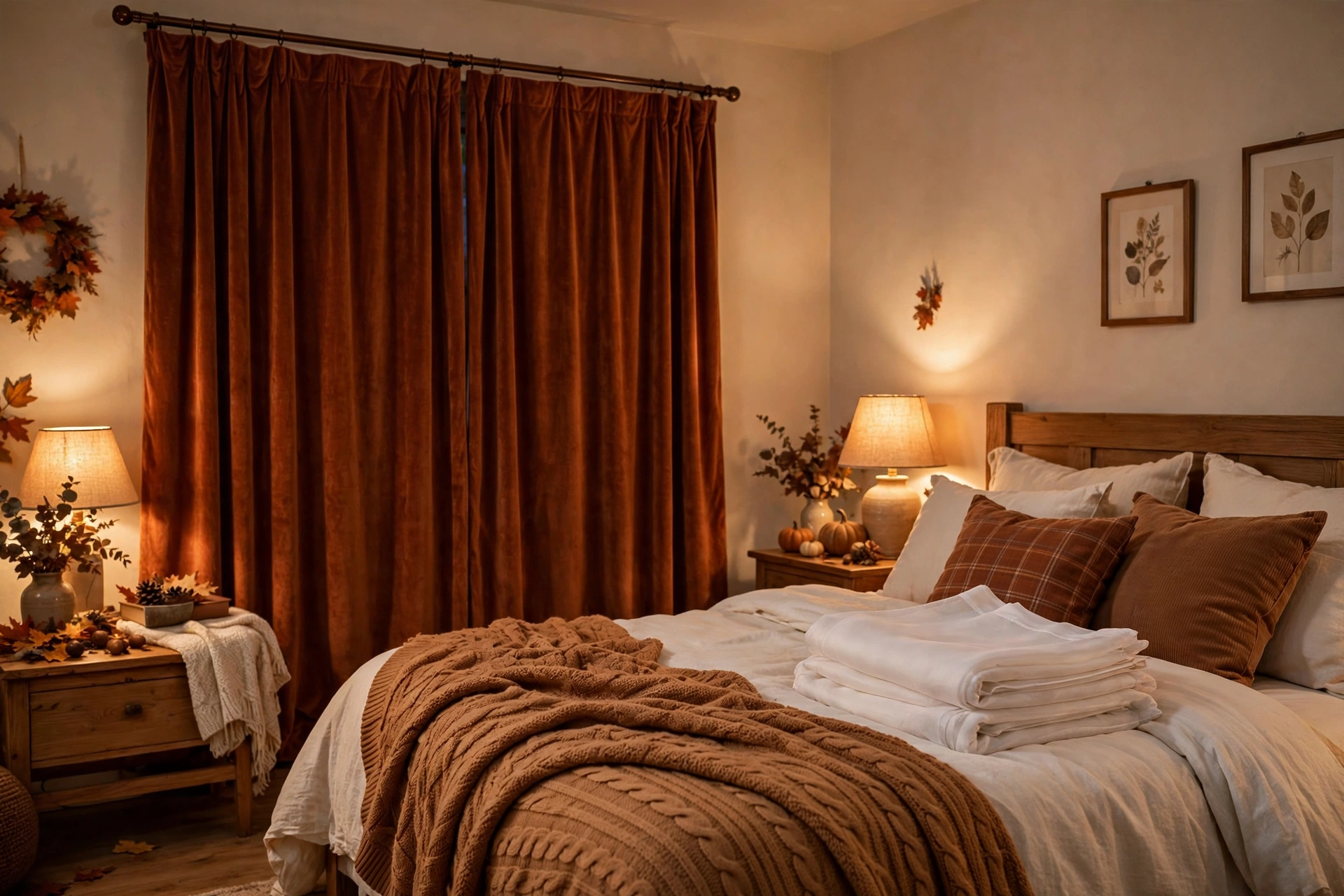
21. Blackout the chill, literally. If your bedroom windows wear sheer summer curtains, swap in heavier drapes for the season. They block drafts, darken the room for those long nights, and their weight adds the visual warmth sheers can’t. Store the sheers; they’ll be back in April.
The Bathroom and Everywhere Else
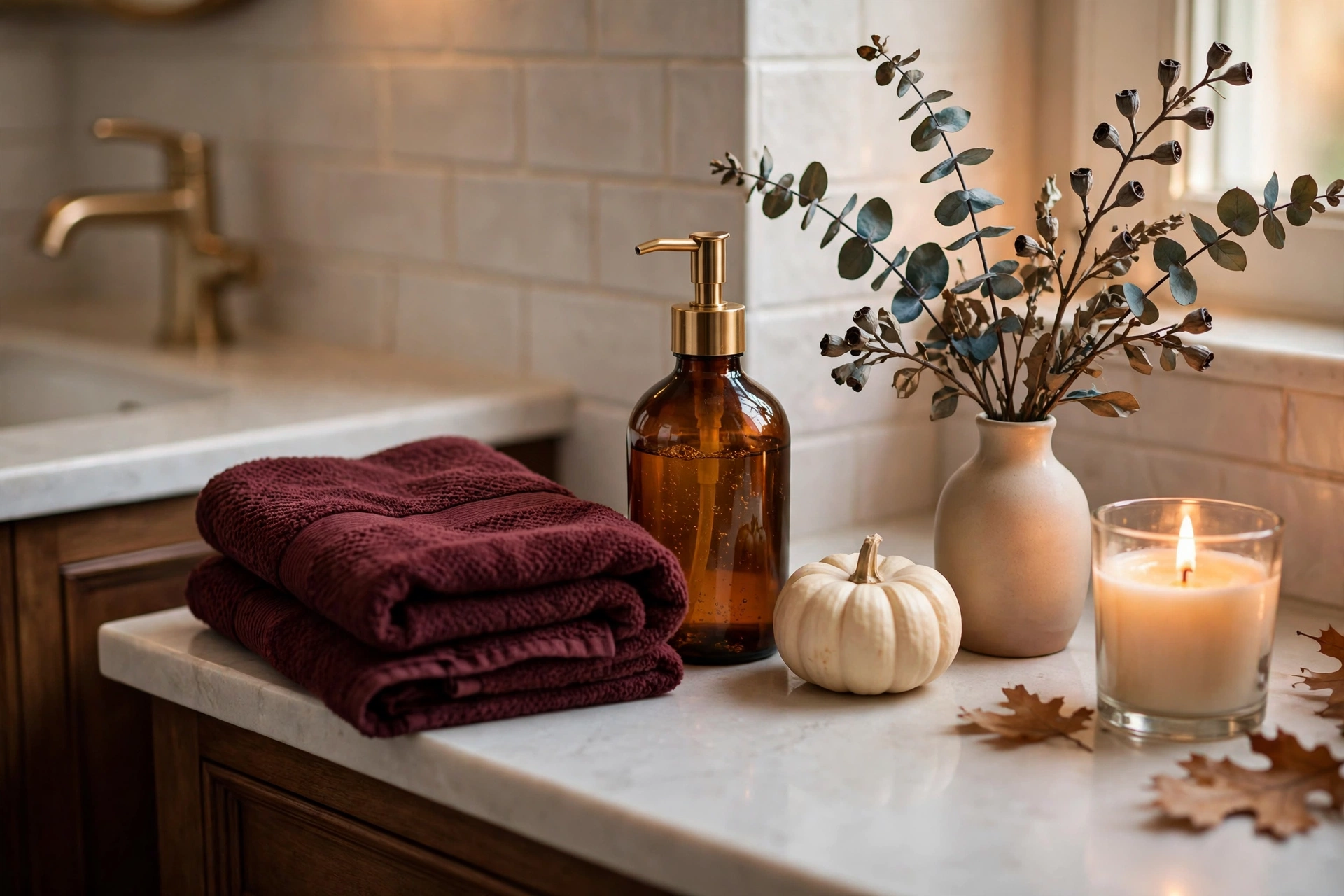
22. The guest-bathroom five-minute fall kit. A hand towel in a deep fall color, a small amber soap dispenser, one mini pumpkin or a tiny vase of dried stems on the counter, and a candle. Guests register a styled bathroom as “this whole house is lovely” — it’s the highest-leverage five minutes on this list.
23. A fall scent strategy (pick one lane). Candle in the living room, simmer pot in the kitchen, diffuser in the hallway — but keep them in the same scent family (woodsy, spiced, or baked). Three competing fragrances is a candle shop; one family is a signature.
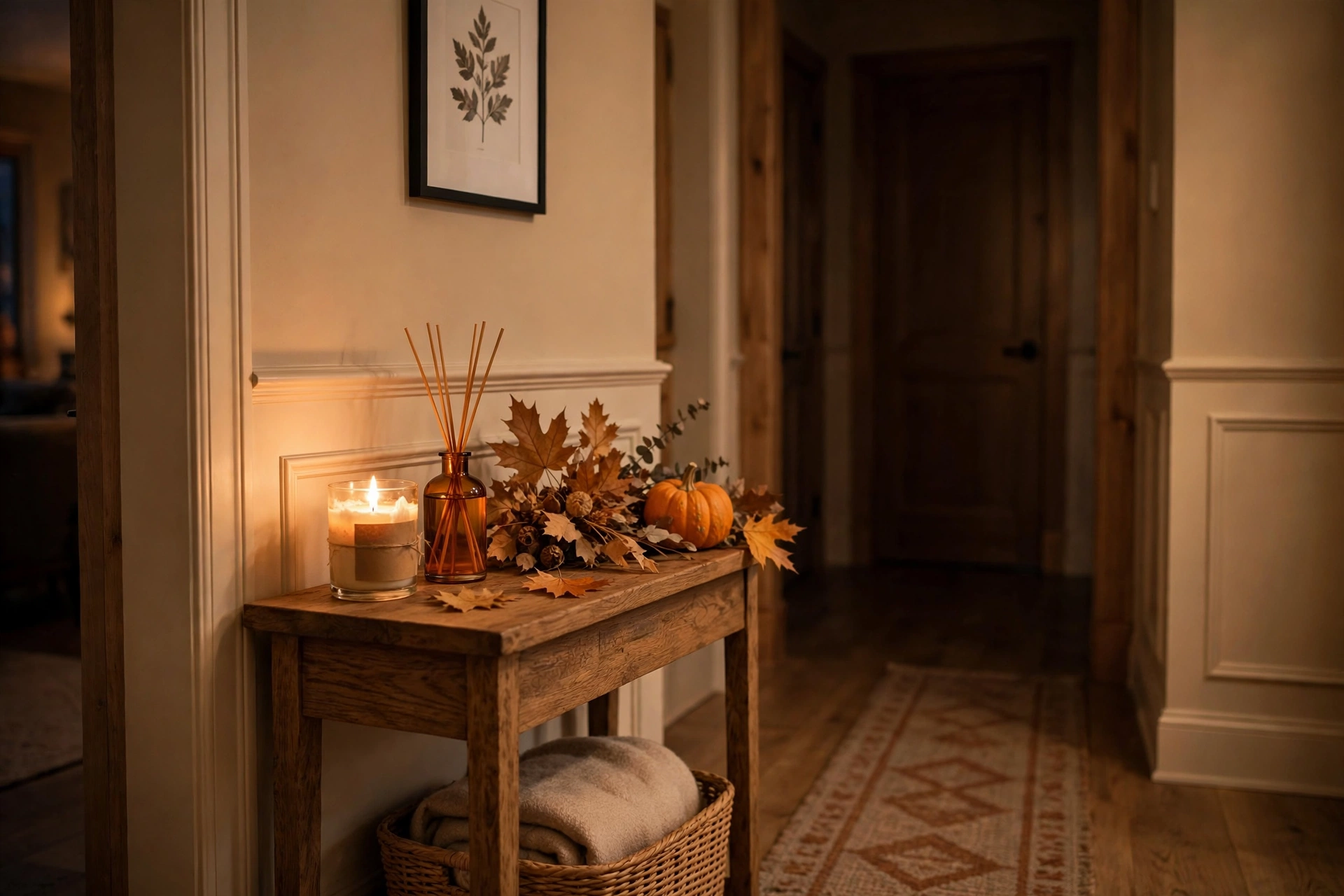
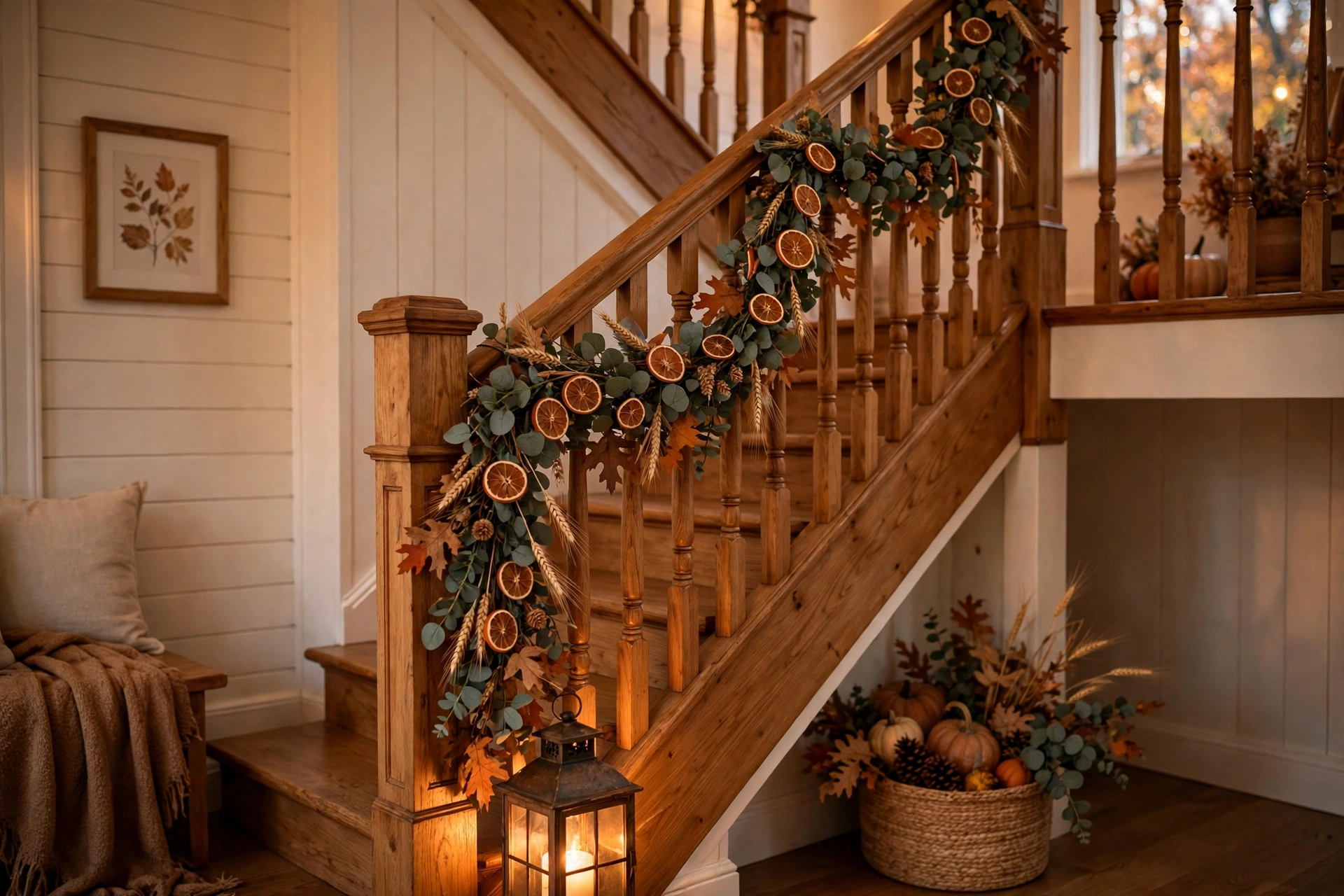
24. The staircase or hallway moment. A garland — faux eucalyptus with a few dried orange slices wired in — along a banister or over a doorway. Transitional spaces usually get zero decor; one garland makes the whole house feel decorated instead of just two rooms.
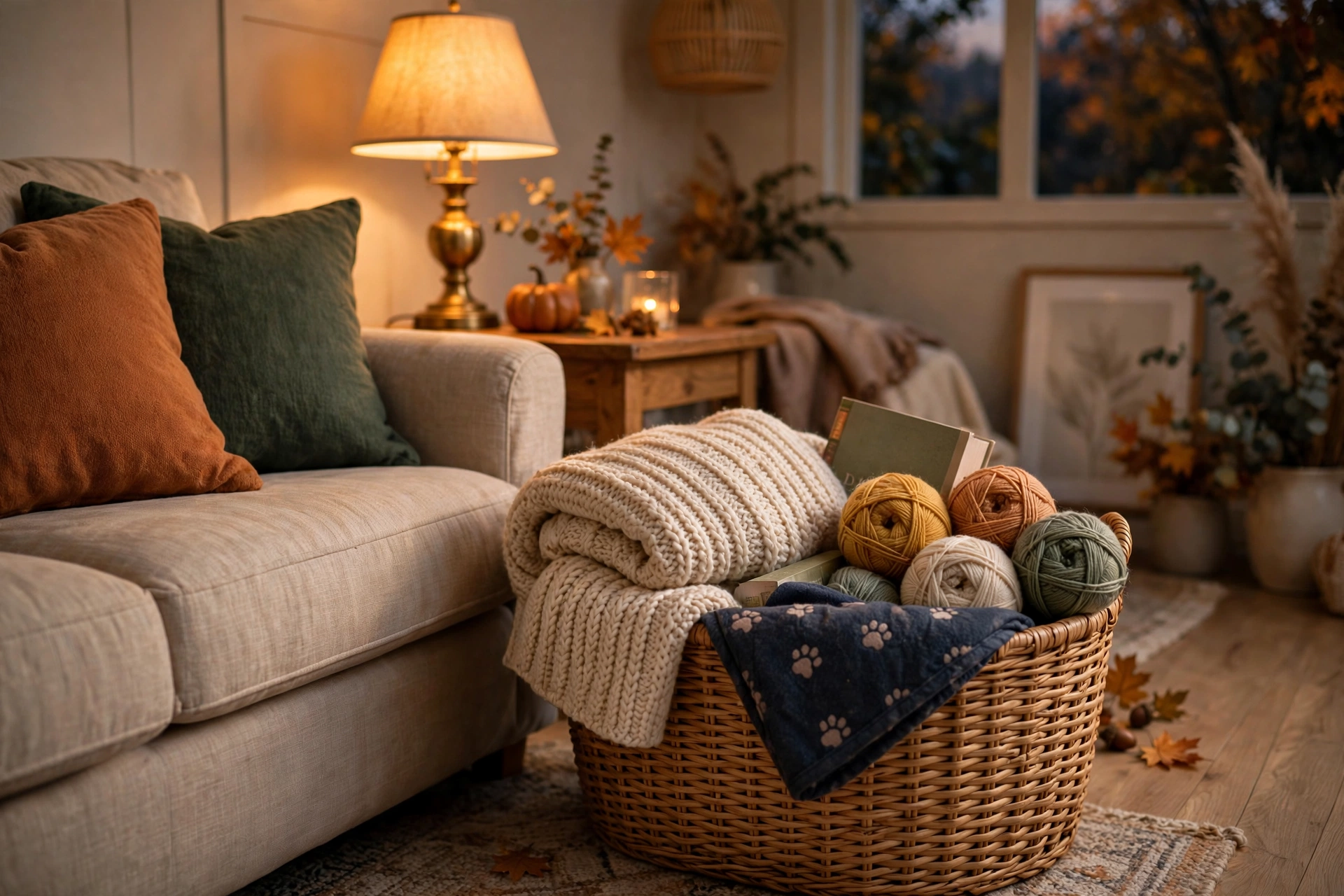
25. A fall basket for the season you’re actually living. By the sofa: the throws not in use, the book, the knitting, the dog’s blanket. Fall is when everyone migrates to the living room in the evening. A basket that holds the migration keeps it cozy instead of cluttered.
How to Do Fall on a Real Budget
- Free first: branches, pinecones, acorns, and leaves (pressed in books for a week, then framed) are legitimate decor materials — designers use them constantly.
- The $30 version: two pillow covers ($15), one chunky throw on sale ($12), candles from the dollar store in amber jars ($3). Living room transformed.
- Buy once, use for years: a good wreath, flameless candles with timers, and fall pillow covers store flat and come back every September.
- Skip: anything with a word on it (“gather,” “grateful,” “hello fall”) dates faster than any other decor category. Texture and color say fall without spelling it.
Frequently Asked Questions
When should I start decorating for fall?
Most people start in early September, and Pinterest searches for fall decor begin climbing in late July. Decorating in two passes works well: texture and color first (throws, candles, branches), pumpkins closer to October.
What colors are in for fall 2026?
Warm, earthy palettes lead again: rust, camel, olive, deep plum, and warm cream, with natural materials — rattan, raw wood, dried grasses — doing as much work as color. Muted heirloom pumpkins in white, sage, and dusty blue keep trending over bright orange.
How do I make my home cozy for fall without buying anything?
Rearrange for candlelight, pull out every blanket you own, cut branches for vases, declutter surfaces, and simmer a pot of citrus and spices. Cozy is mostly editing and lighting, not shopping.
How do I decorate a small apartment for fall?
Scale down, not out: a wreath on the door, one throw and two pillow covers on the sofa, a tray centerpiece, and a simmer pot. Small spaces feel the season faster than big ones — you need less than you think. (More small-space tricks in our small bedroom ideas guide.)
What’s the difference between fall decor and Halloween decor?
Fall decor — texture, pumpkins, warm color — runs September through Thanksgiving. Add the Halloween layer (anything spooky, black, or playful) in October and remove just that layer on November 1st. Your fall base keeps working for another month.
On a budget this season? Our 15 budget living room makeovers under $100 pair perfectly with these ideas — most readers start there, then layer fall on top.