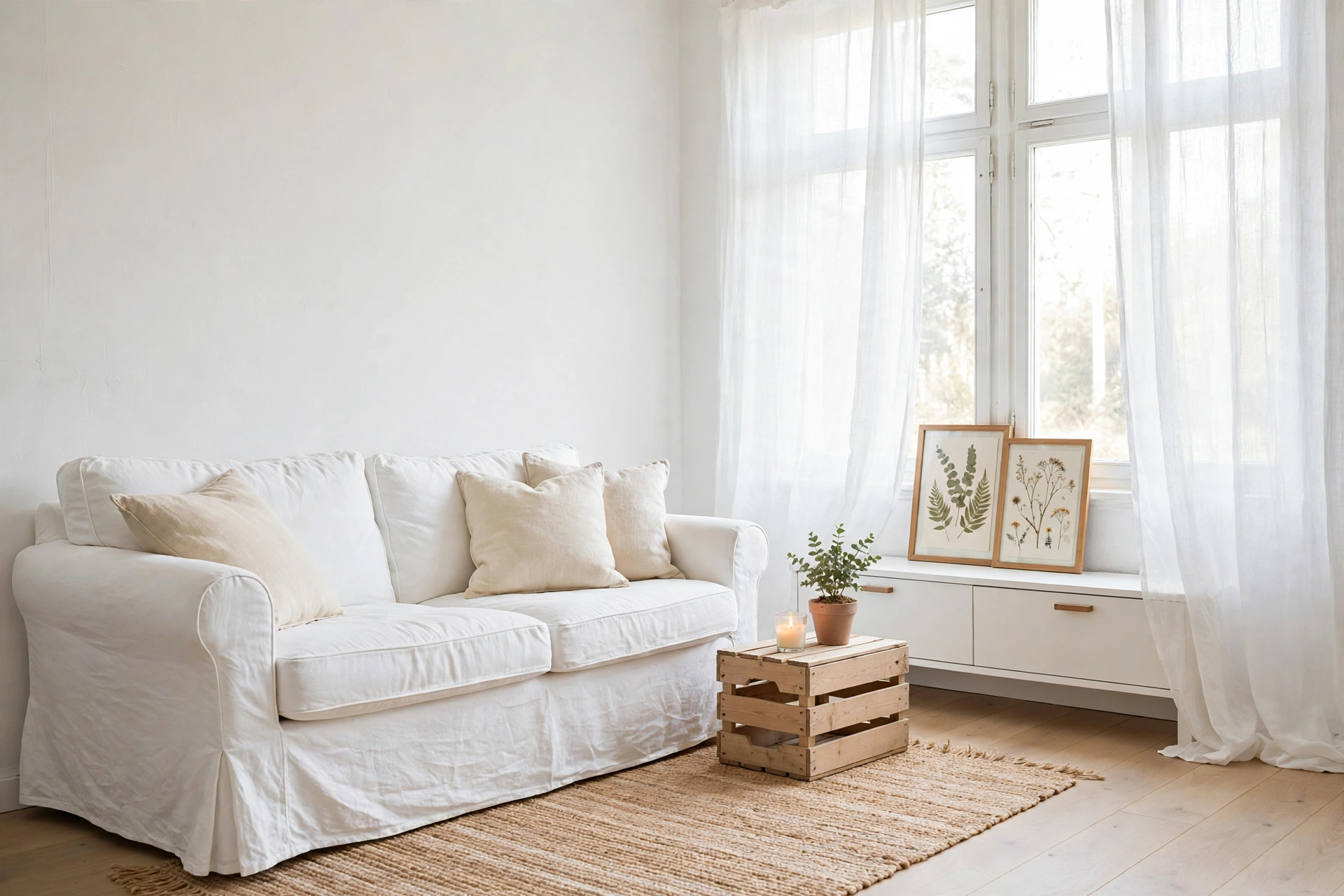
There is a small moment every morning that decides the mood of the whole day: the first coffee. Made half-asleep over a cluttered counter, it is a chore. Made at a calm little station where everything waits in its place, it is a tiny daily pleasure — your own café, about two steps from the kettle.
That is the heart of these coffee bar ideas: one claimed corner, stocked honestly and styled softly, whether you have a long counter, a bare wall, or no kitchen counter to spare at all. (Search for coffee station ideas instead and you will land in the same place — the ritual matters more than the name.) A home coffee bar does not need built-ins or a renovation. It needs a spot, a short list of things you truly use, and a little styling discipline. Renters, this article is especially for you — the best setups here move when you move.
One note before we start: our kitchen counter decor ideas guide gives coffee one tray as part of whole-counter styling. This article is the deep dive — coffee gets the entire page, from countertop coffee bar ideas to carts, cabinets and tray-only minis. Pick your spot, and let us build your coffee bar at home.
Pick Your Spot: 6 Setups for Every Home
Every good coffee station begins with one decision: where it lives. Near a socket and within reach of water is ideal, but the real rule is simpler — put it where your morning already happens. These six setups cover every home, from a long farmhouse counter to a studio with none. If your whole kitchen is tiny, pair this with our small kitchen decor ideas for the room around it.
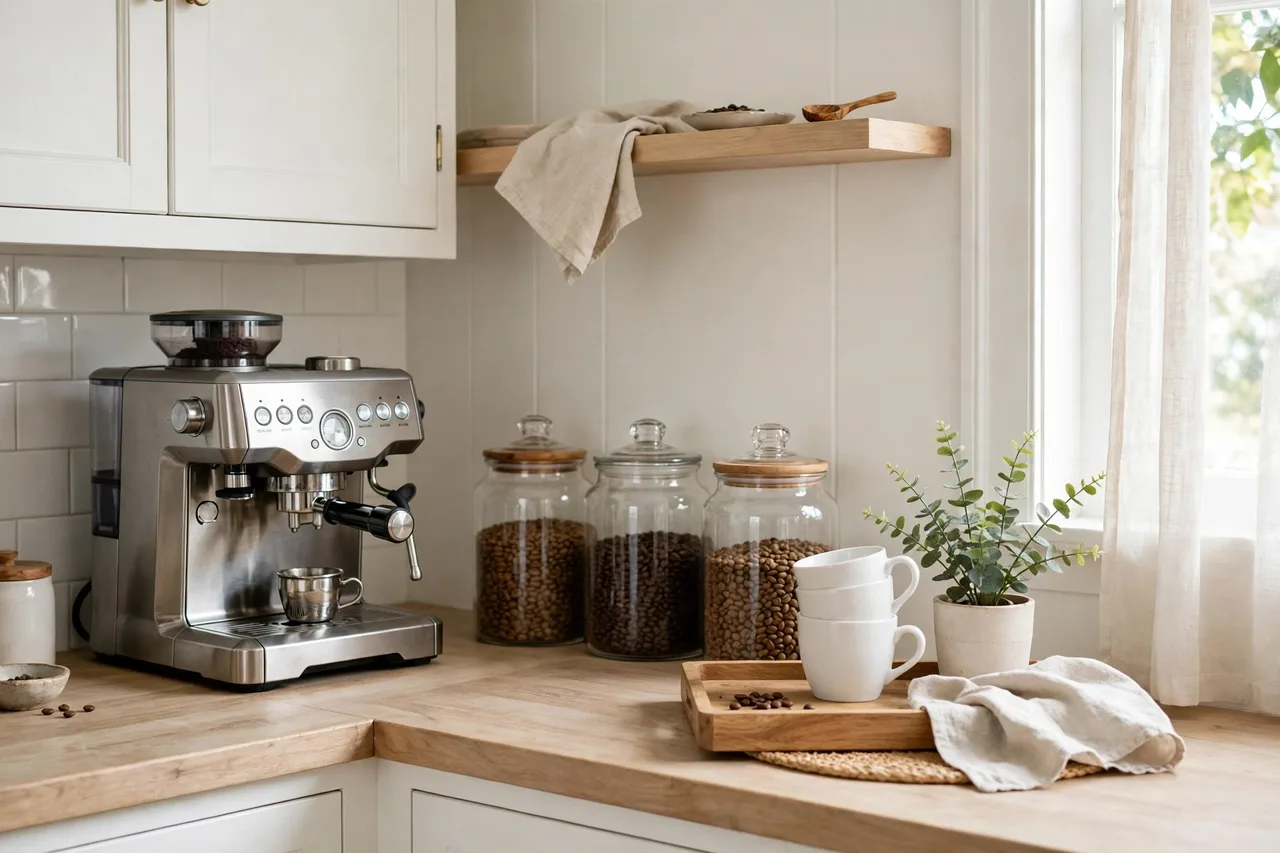
1. The Classic Counter Corner
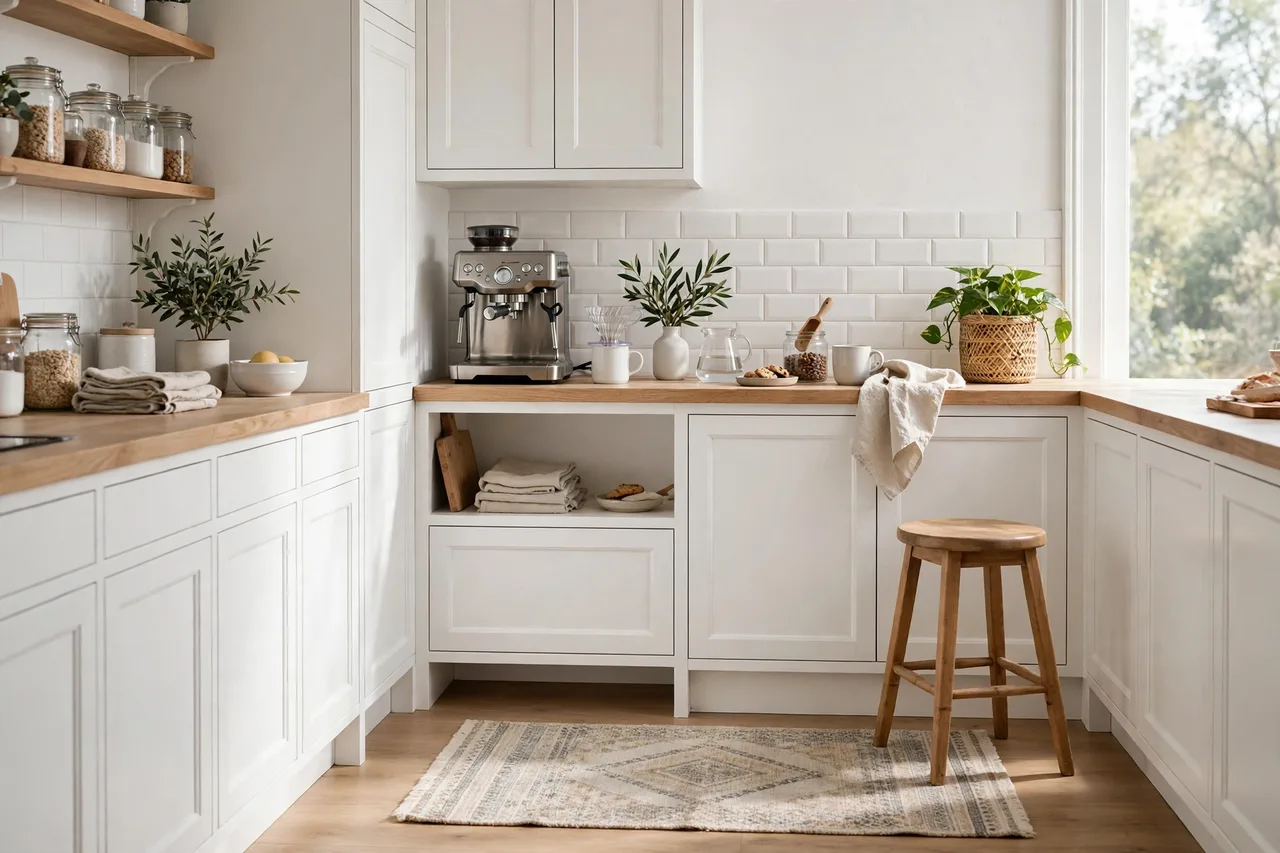
The corner where two counters meet is coffee’s natural home. Claim about 24–30 in (60–75 cm) in an L-shaped corner, set the machine on a tray, and let the tray draw the border: inside it is the coffee bar, outside it is still kitchen. Corners are perfect because they are dead space for cooking but ideal for a ritual that happens standing still. One workflow truth before you settle: leave roughly 6 in (15 cm) of open air above the machine for steam, and enough room to lift or slide out the water tank without a wrestling match. Pull the machine a couple of inches off the wall, too — heat and steam are unkind to paint.
2. The Rolling Cart Coffee Station
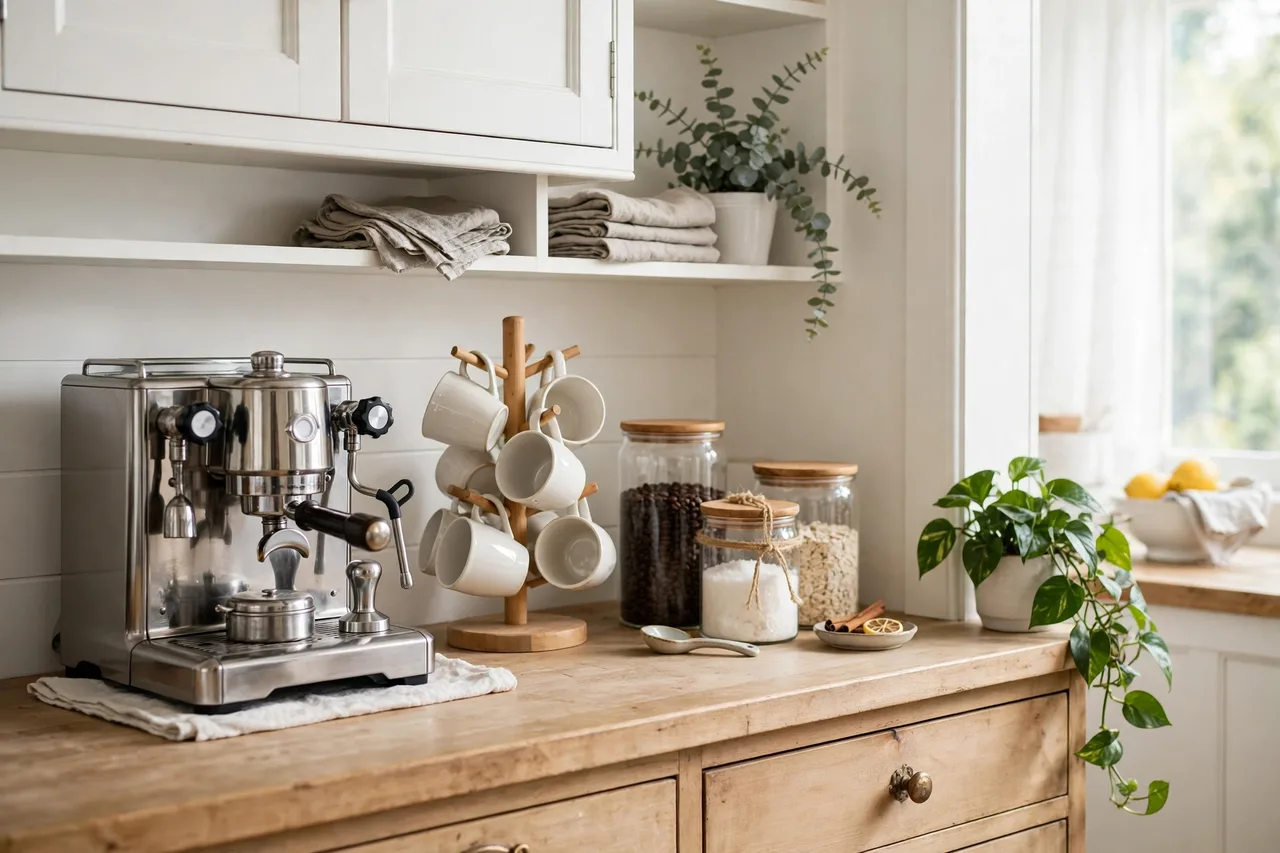
No counter? No problem — the station comes to you. A slim rolling cart, about 24 in (60 cm) wide, is the renter hero of all coffee cart ideas: machine on top, mugs and canisters in the middle, backstock hidden in a basket below. It needs one socket, zero drilling, and it rolls aside when you need the floor or the corner back. When you move house, the whole coffee bar moves with you — deposit fully intact. Choose a cart with at least one locking wheel, and check the top tier’s height fits your machine with that all-important steam headroom under any shelf above.
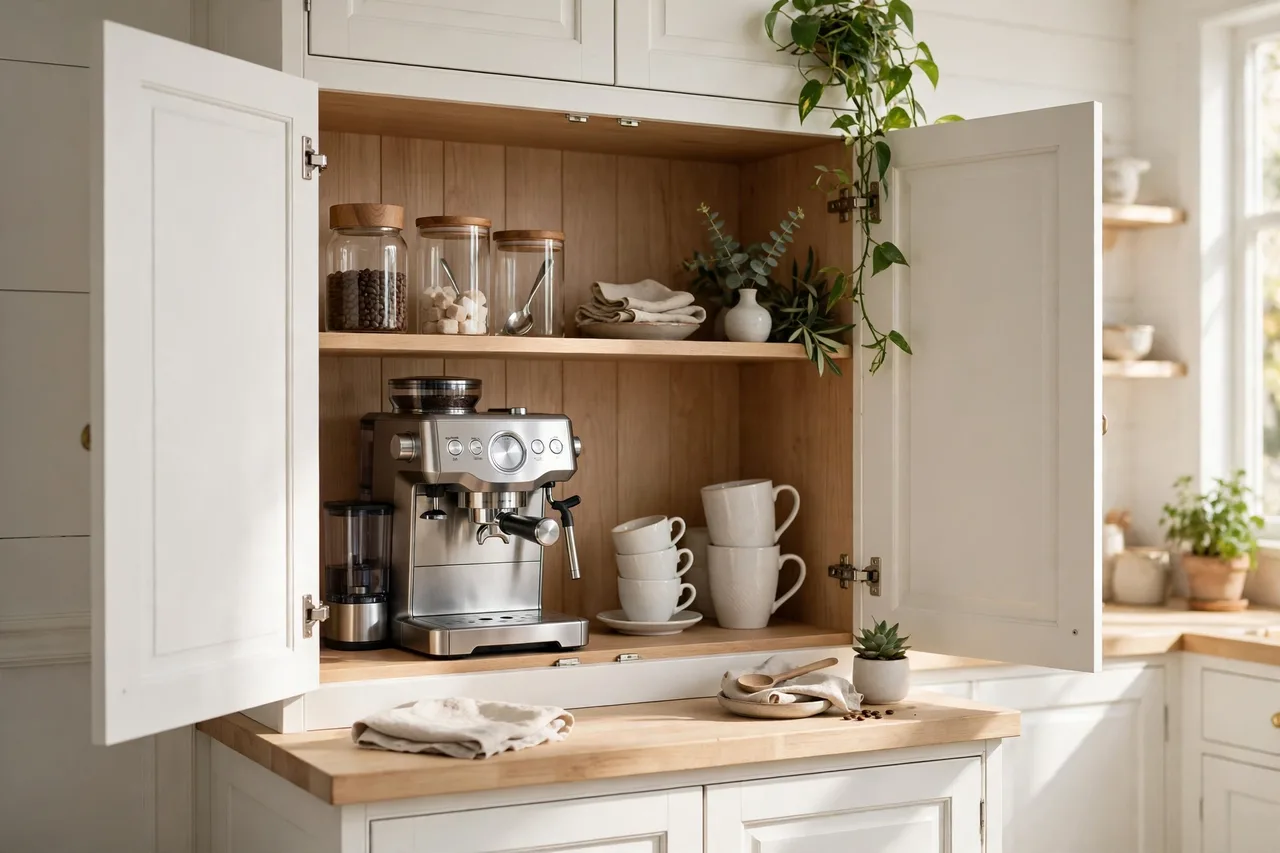
3. The Hidden Cabinet Coffee Bar
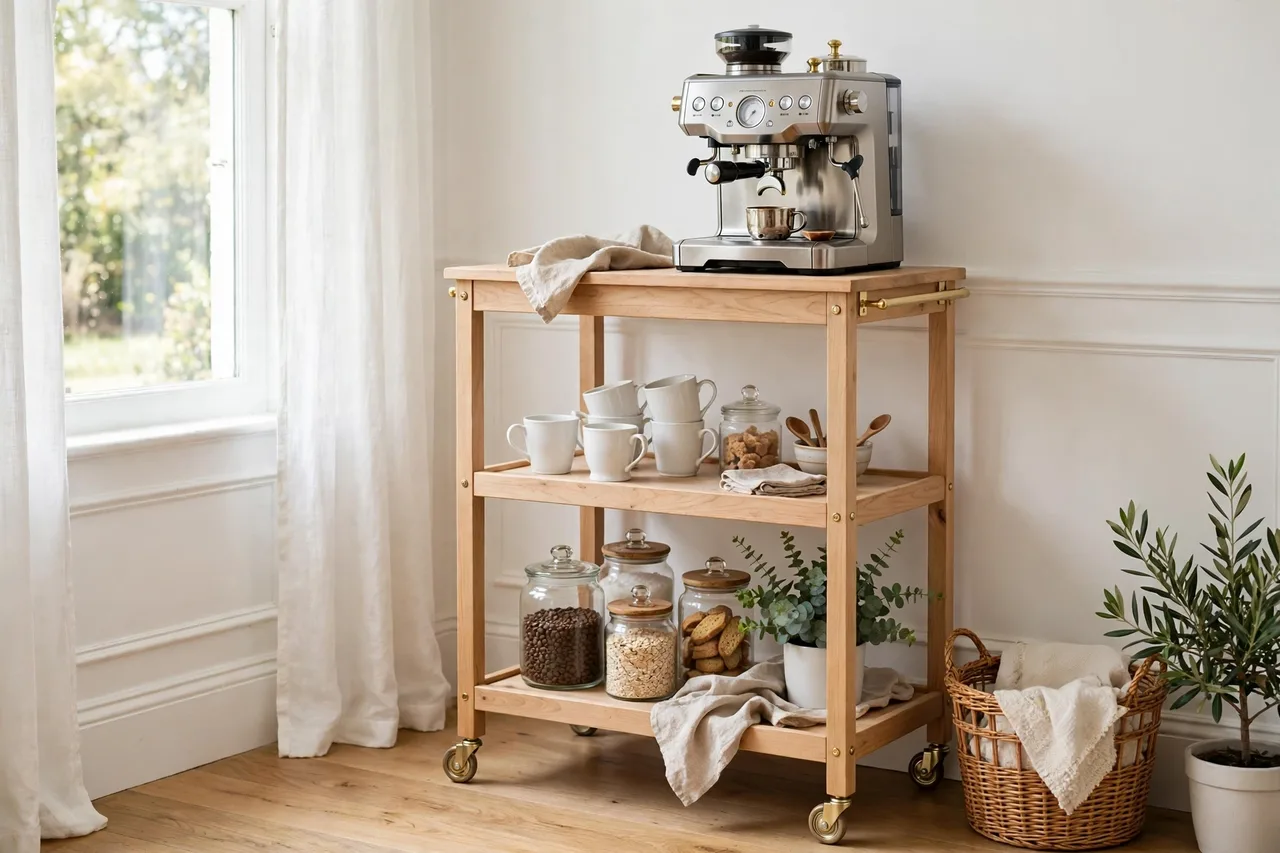
Open the doors: café. Close the doors: calm. A kitchen cabinet, armoire or larder with the machine inside is the tidiest trick in this whole list — the hidden coffee bar. Fit a pull-out shelf if you can, so the machine slides forward to brew and back to hide. Measure honestly first: the doors must open fully, the tank must lift out, and steam needs somewhere to go, so brew with the doors open. A coffee bar cabinet like this suits anyone who loves the ritual but not the sight of appliances. It is also the most guest-impressive five seconds in home decor: just open the doors.
4. Floating Shelves + a Small Table
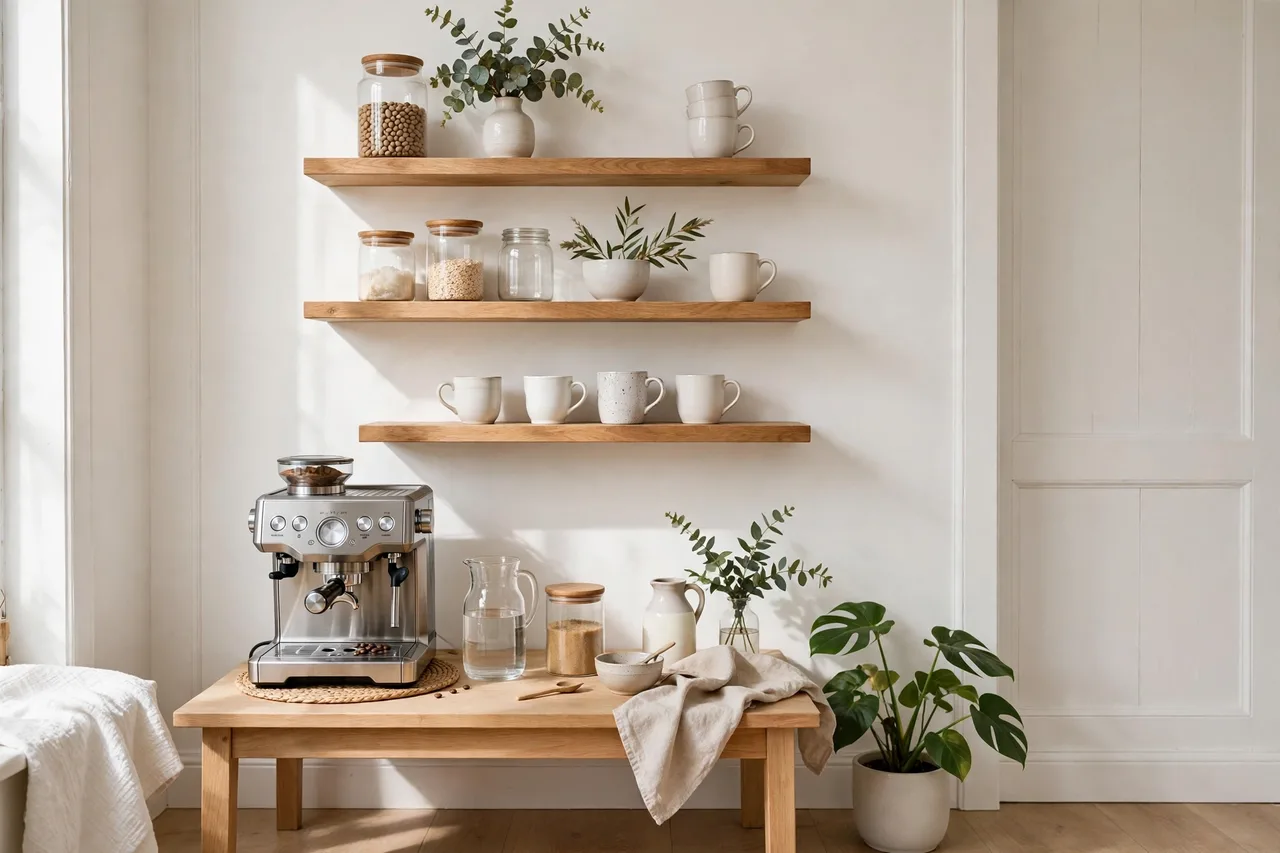
When the counter is full, go up the wall instead. Two floating shelves above a small table or narrow console make a complete wall station: machine on the table, mugs and canisters on the shelves, nothing on the counter at all. Keep shelves about 12 in (30 cm) apart so tall mugs and syrup bottles fit, and put the heaviest shelf items — full canisters — on the lowest shelf. If you are renting and drilling is off the table, skip the shelves and stack the same layers on the table itself with a tiered stand. Same picture, no holes.
5. A Repurposed Dresser, Bookshelf or Console
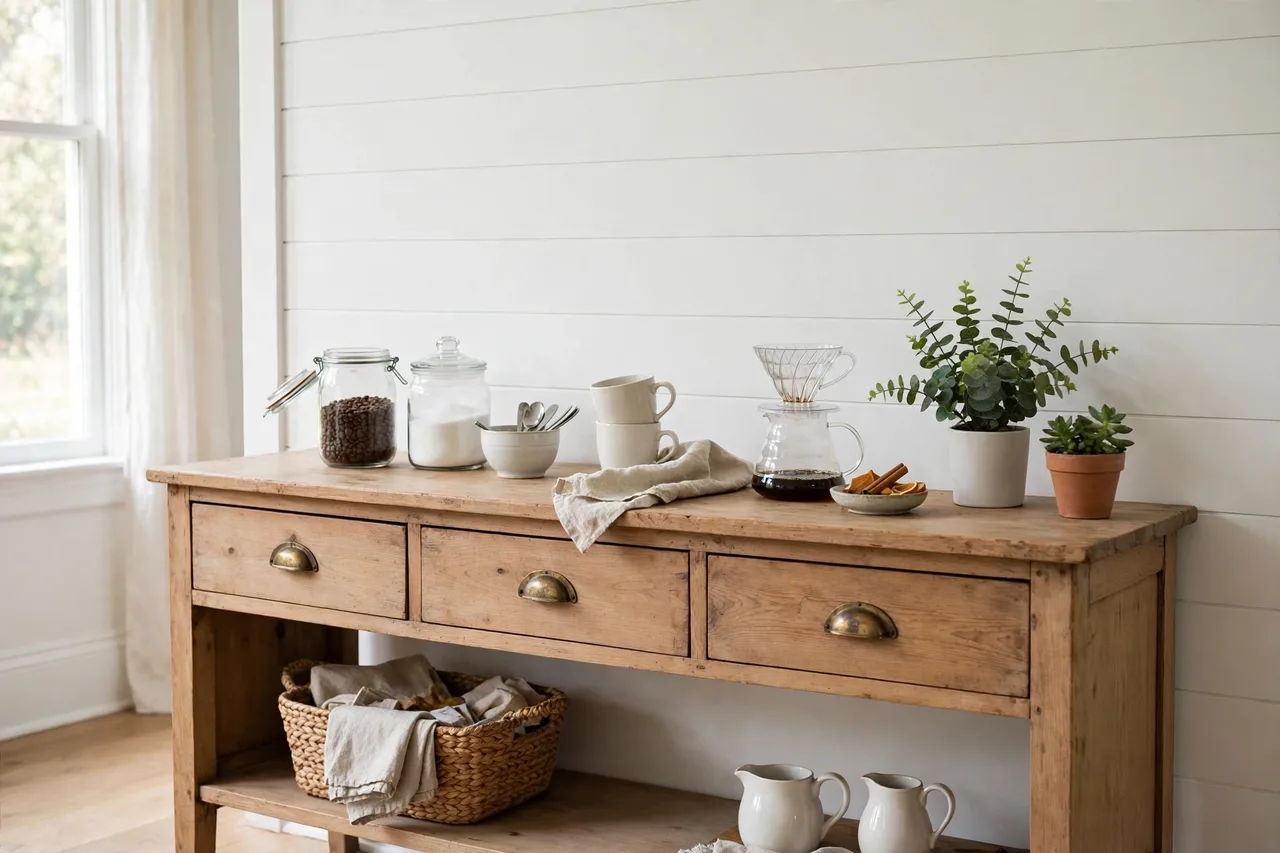
The best coffee bar furniture is often already in your home. A spare dresser, a low bookshelf or a hallway console becomes a coffee station with one tray and ten minutes — and it frees the kitchen entirely, which is a gift in small homes. Dining-room and living-room stations suit slow weekend coffee especially well. Check the surface first: wood tops want a tray or a heat mat under the machine, because steam and drips are daily events. A drawer below is gold — filters, pods and the spare parts you can never find suddenly have an address.
6. The Tray-Only Mini Station
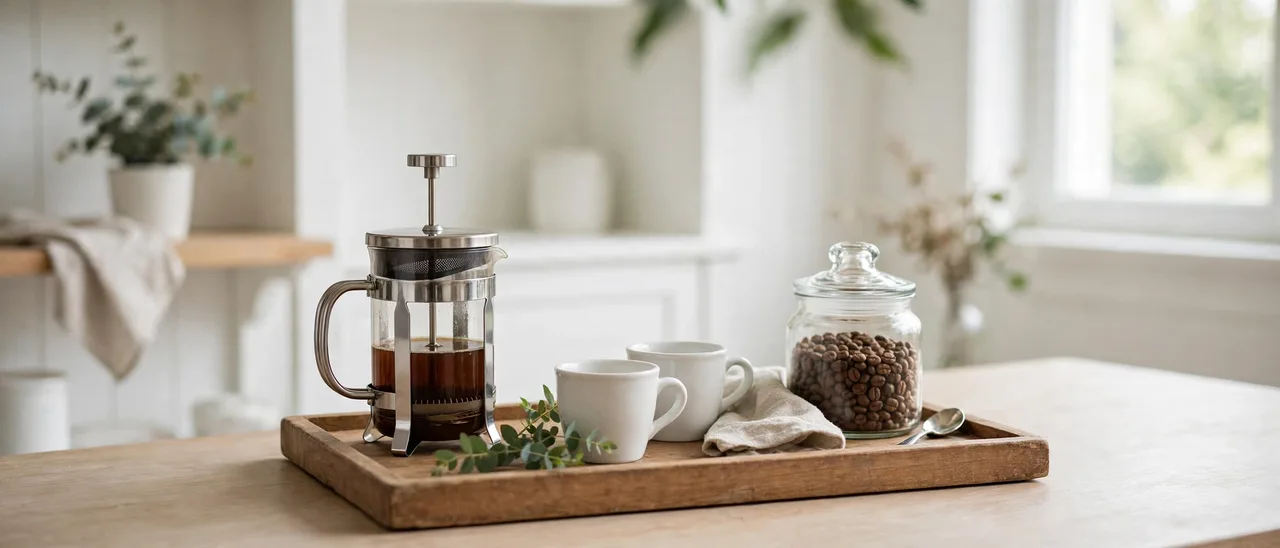
The smallest coffee bar in the world is one good tray. A tray about 18 in (46 cm) long holding a French press or small machine, one jar of beans, two mugs and a tiny sugar bowl is a complete station — on a counter end, a side table, even a desk corner. It is the kindest of all coffee bar ideas for small spaces, because it asks for almost nothing and still gives you the ritual. Everything travels to the sink in one trip for cleaning, and the whole café can move to the guest room when visitors come. Small footprint, full pleasure.
Stock It Right: The Working Layer
A pretty station that brews badly is just clutter wearing a cute label. This layer is about what actually earns a place out on display: the daily things, sorted so your half-awake morning self can work on autopilot. This is coffee bar organization at its most honest — beautiful because it is useful, not instead of it.
7. The Honest Essentials Lineup
If it is not used daily, it does not live on the station. The real coffee bar essentials are short: your machine, beans or grounds, filters or pods, the mugs you actually reach for, and one sweetener. That is the lineup. The second machine, the novelty syrups from 2023, the mug collection’s B-team — they belong in a cupboard or a donation box. A short lineup is also what makes the styling in the next section possible; you cannot style a crowd. Leave a little breathing room in the arrangement, because the machine needs its steam space and you need space to set down a hot mug mid-pour.
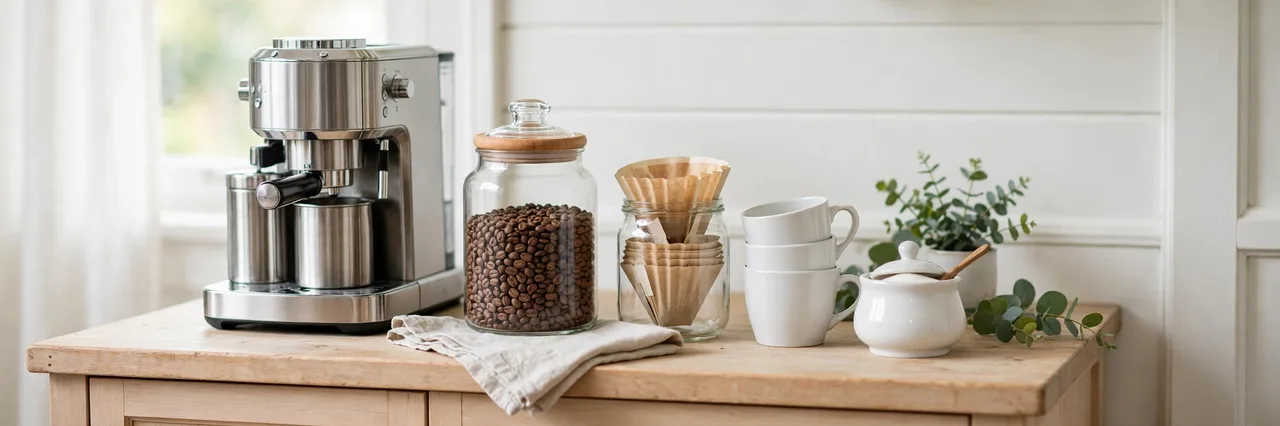
8. The Syrup & Flavor Station
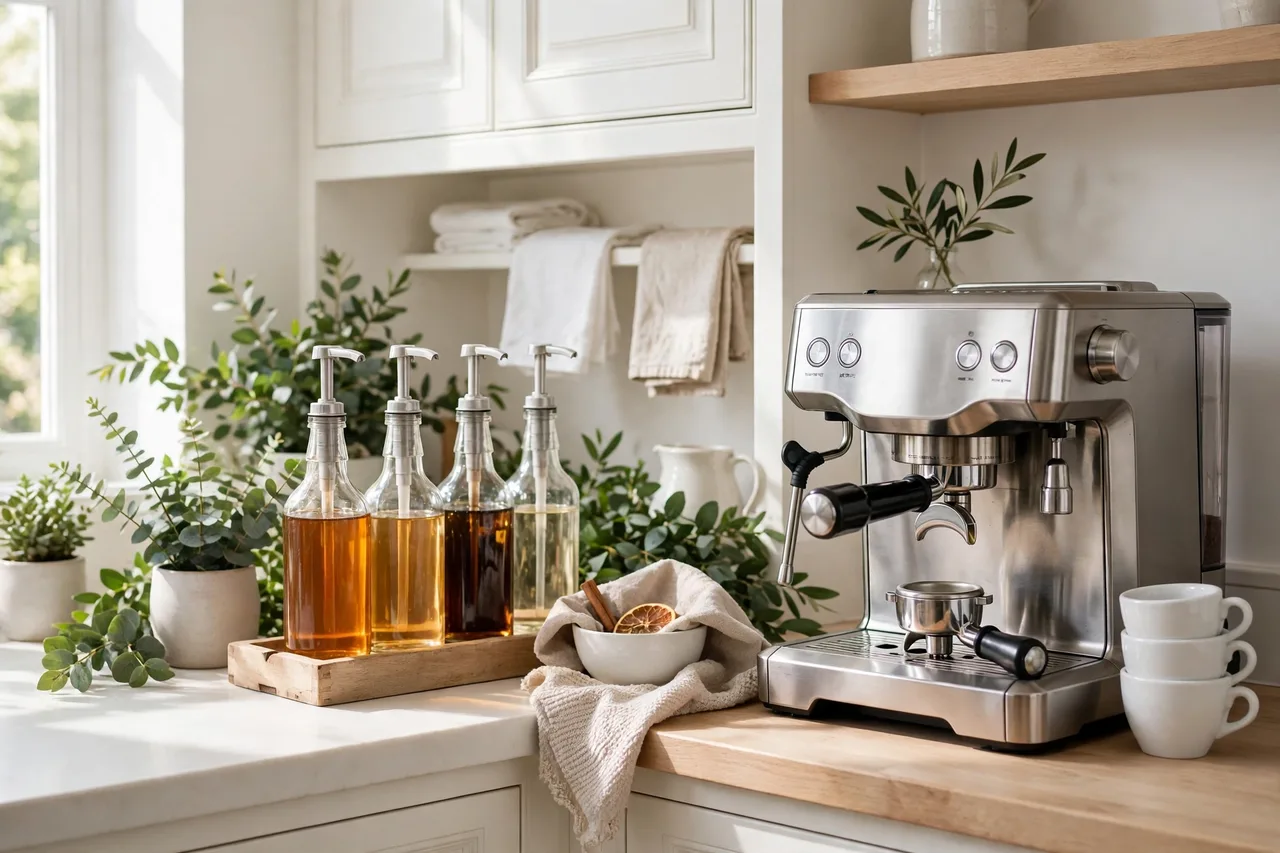
Decant the syrups and the café look appears. Three or four flavors you genuinely love — vanilla, caramel, hazelnut, maybe a seasonal one — poured into matching pump bottles (about $8–$14 for a set) on one small tray. The pump bottles are the secret: no sticky caps, no clashing labels, one clean row that looks like a café counter. Keep the tray small on purpose; it is a flavor station, not a shop shelf. A tiny dish of cinnamon and cocoa for dusting finishes it. If a bottle sits untouched for a month, it graduates back to the pantry.
9. Mug Display That Earns Its Keep
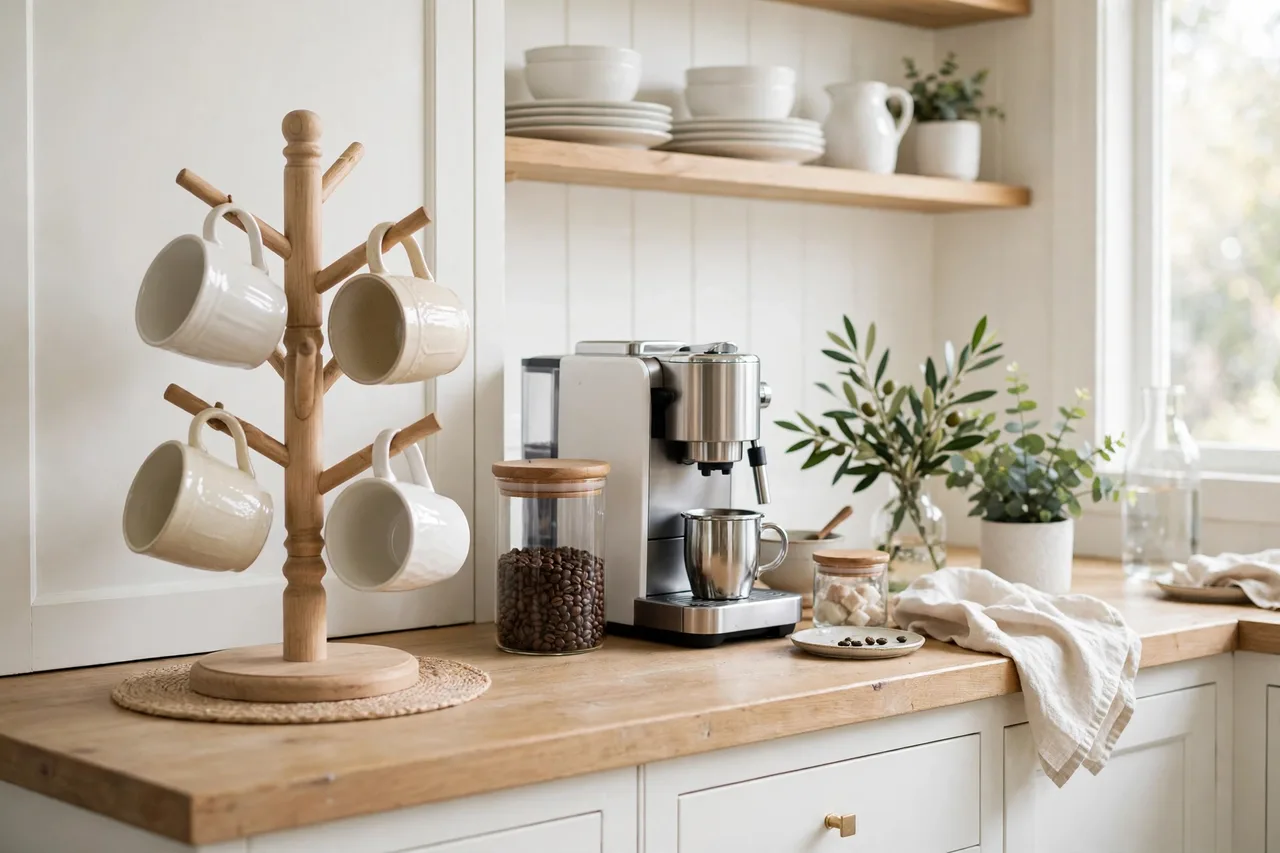
Four to six favorite mugs, displayed like they matter — because they do. A mug tree, a simple rail, or under-cabinet hooks (adhesive ones keep it renter-safe) turns daily mugs into the station’s decor. Same-family mugs in white or one soft accent color keep it calm; this is not the shelf for the novelty mug mountain. Rotate them with the seasons if you like — the cozy heavy mugs in winter, the lighter ones in summer. And a small mercy rule: mugs live here only if they are used weekly. The rest are storage, and storage has cupboards.
10. Pods, Filters & Sweeteners, Sorted
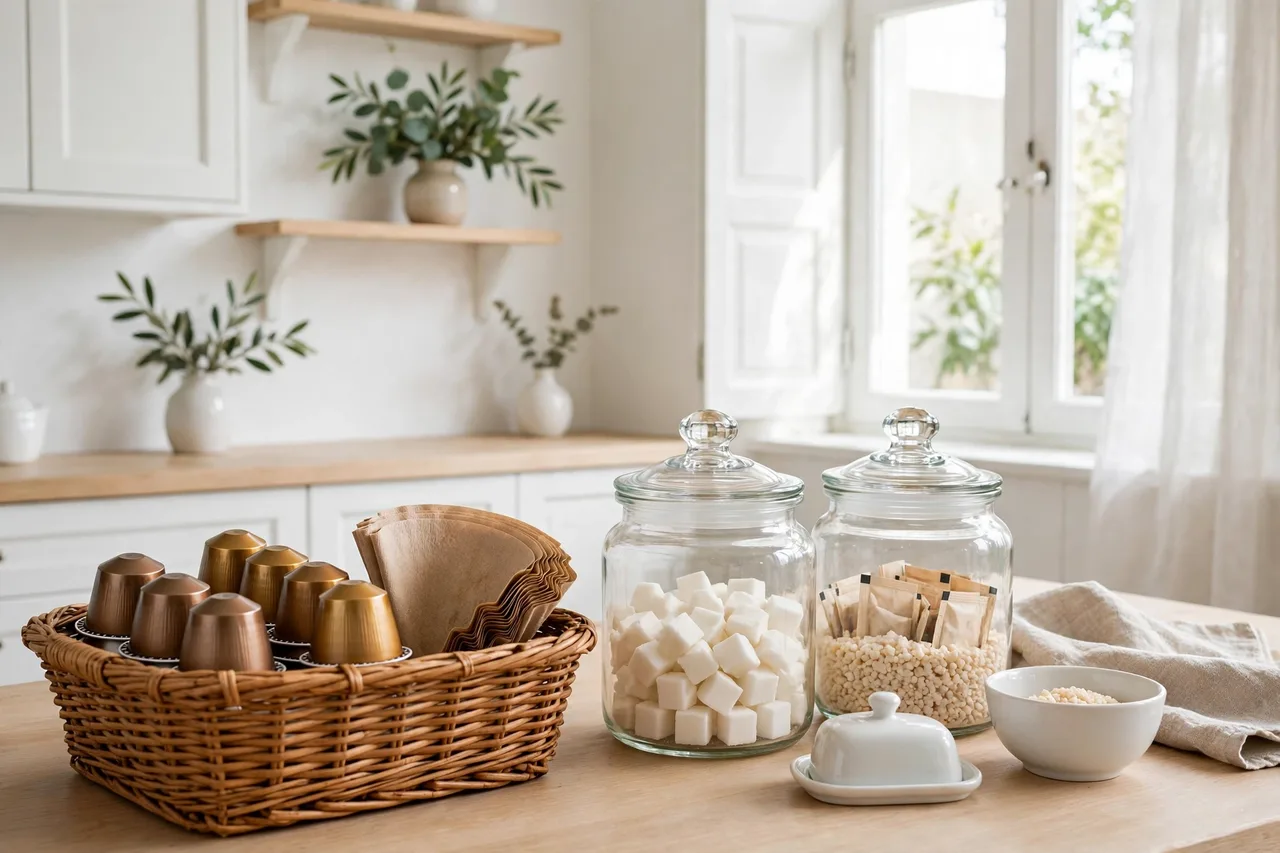
Every small thing gets one home, and only one. Pods in a glass jar or a slim drawer under the machine, filters in a small lidded box, sweeteners in a tiny crock or basket — sorted once, findable forever. This is the unglamorous layer that makes mornings feel smooth, and it photographs beautifully too: clear jars and one woven basket read as texture, not mess. Label nothing you can see through; the jar is the label. Keep a small backstock basket on a lower shelf or cart tier so the pretty jar never has to hold forty pods at once.
11. The Labeled Canister Trio
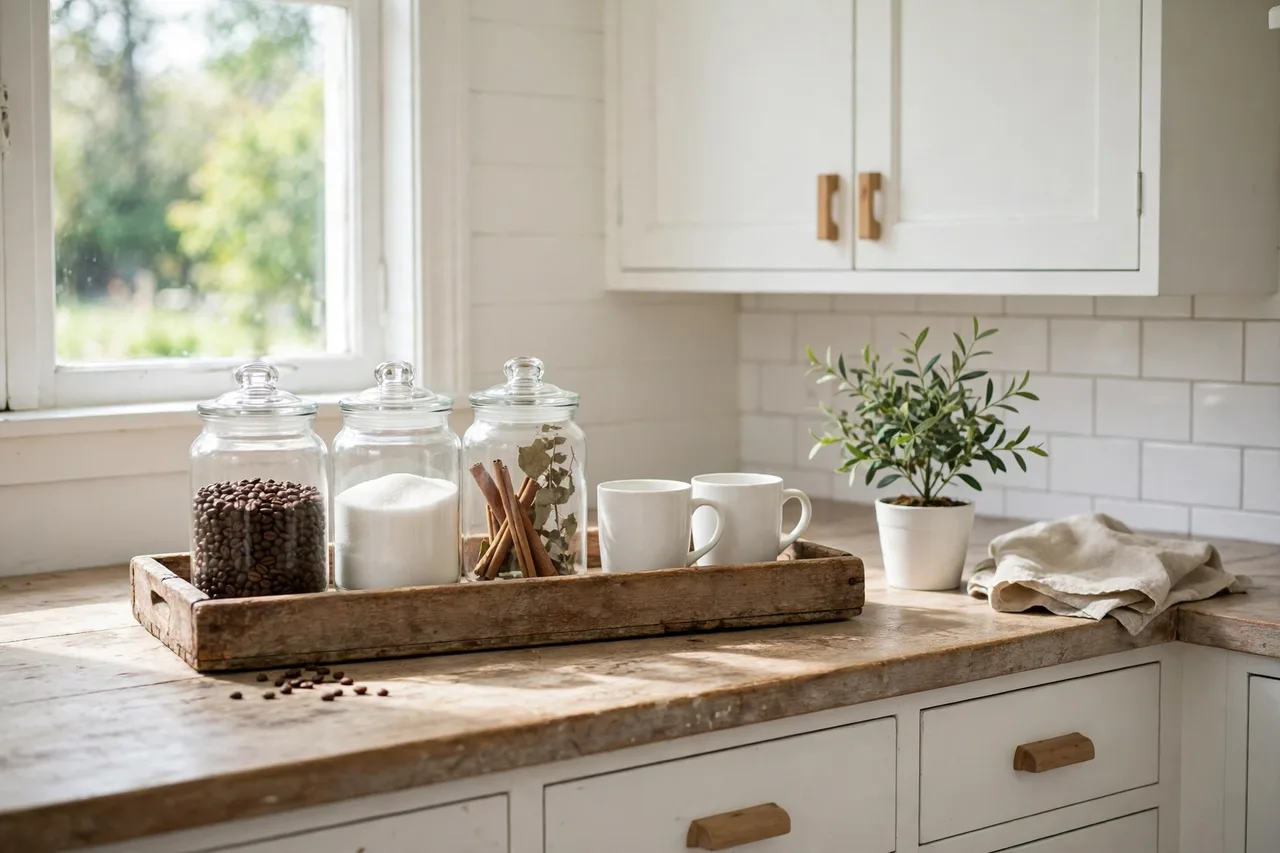
Beans, grounds and sugar in three airtight canisters — the station’s quiet backbone. Glass with light wood lids or white ceramic, simple labels, sizes matched to how fast you use each one (about $15–$30 for a set). One freshness rule matters more than the jars themselves: keep the beans away from heat and bright light, so the trio lives beside the machine, never on top of it and not in a sunny patch. Airtight lids do the rest. Three jars, not five — a trio always looks calmer than a crowd, and you can see at a glance when it is time to buy beans.
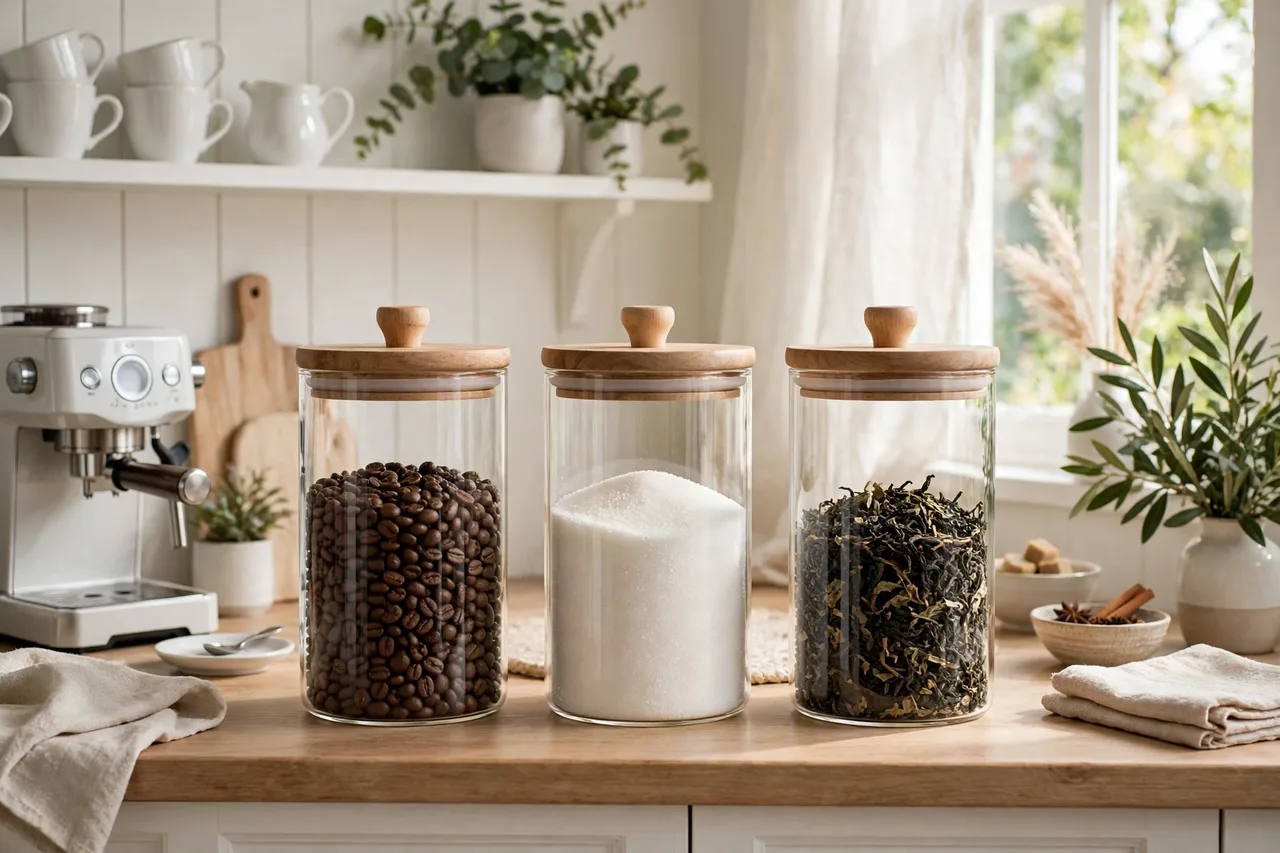
Style It White-Classic: The Calm Layer
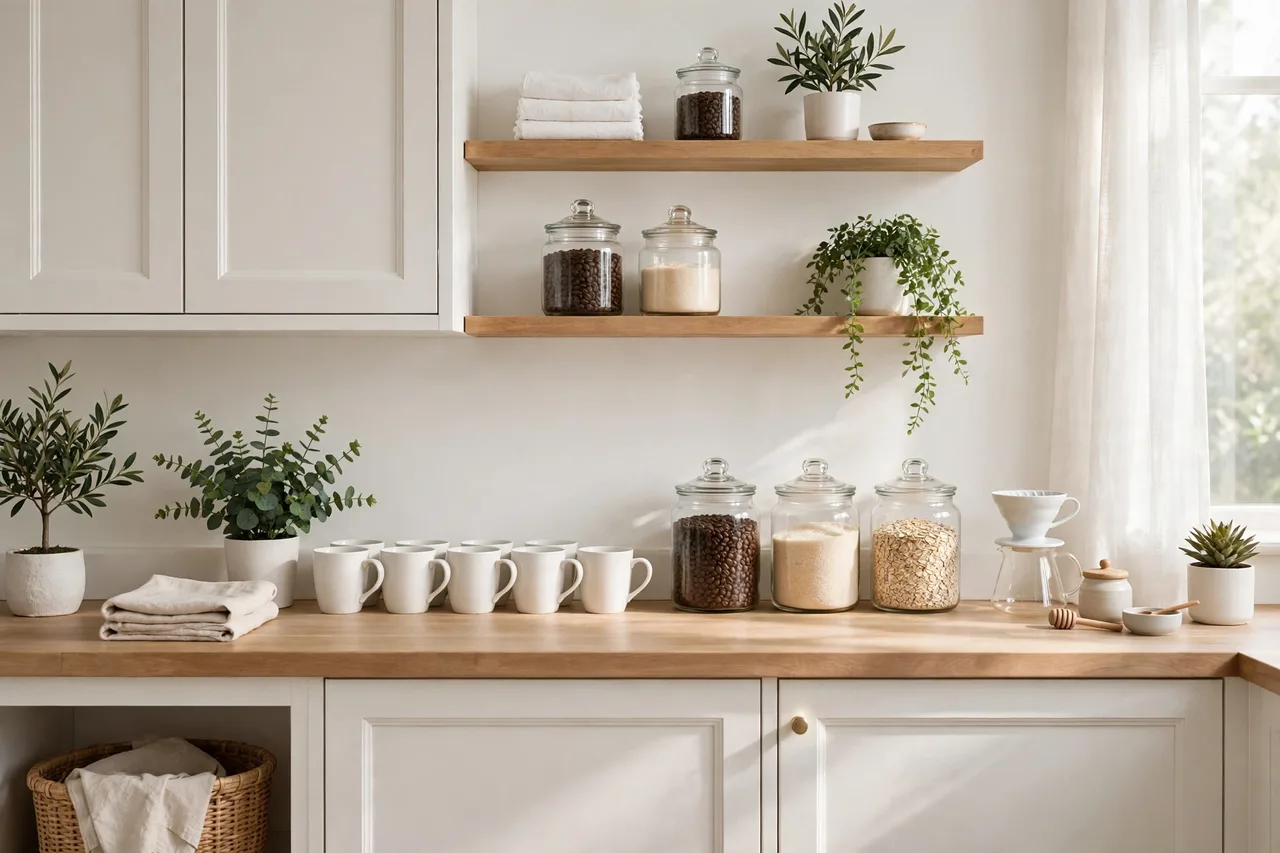
Now the part that makes a station look like HomelyNook: the calm layer. The formula is the same one we use everywhere — a white base, honest textures, greenery, and one light accent. It works beautifully against the farmhouse word-sign look that fills most coffee bar decor; here, the coffee does the talking, not the signage.
12. The Calm Palette
White ceramic, clear glass, light wood — and exactly one metal accent. That short list is the whole palette: white mugs and canisters, glass jars, a light wood tray or cart, and one warm metal — brass, copper or soft gold — in the pump tops, the mug rail or a small spoon rest. When everything new you buy must match this list, the station styles itself; when a bright branded tub sneaks in, decant it or cupboard it. The palette is also forgiving: it suits kitchens of nearly any color, because it adds calm instead of competing.
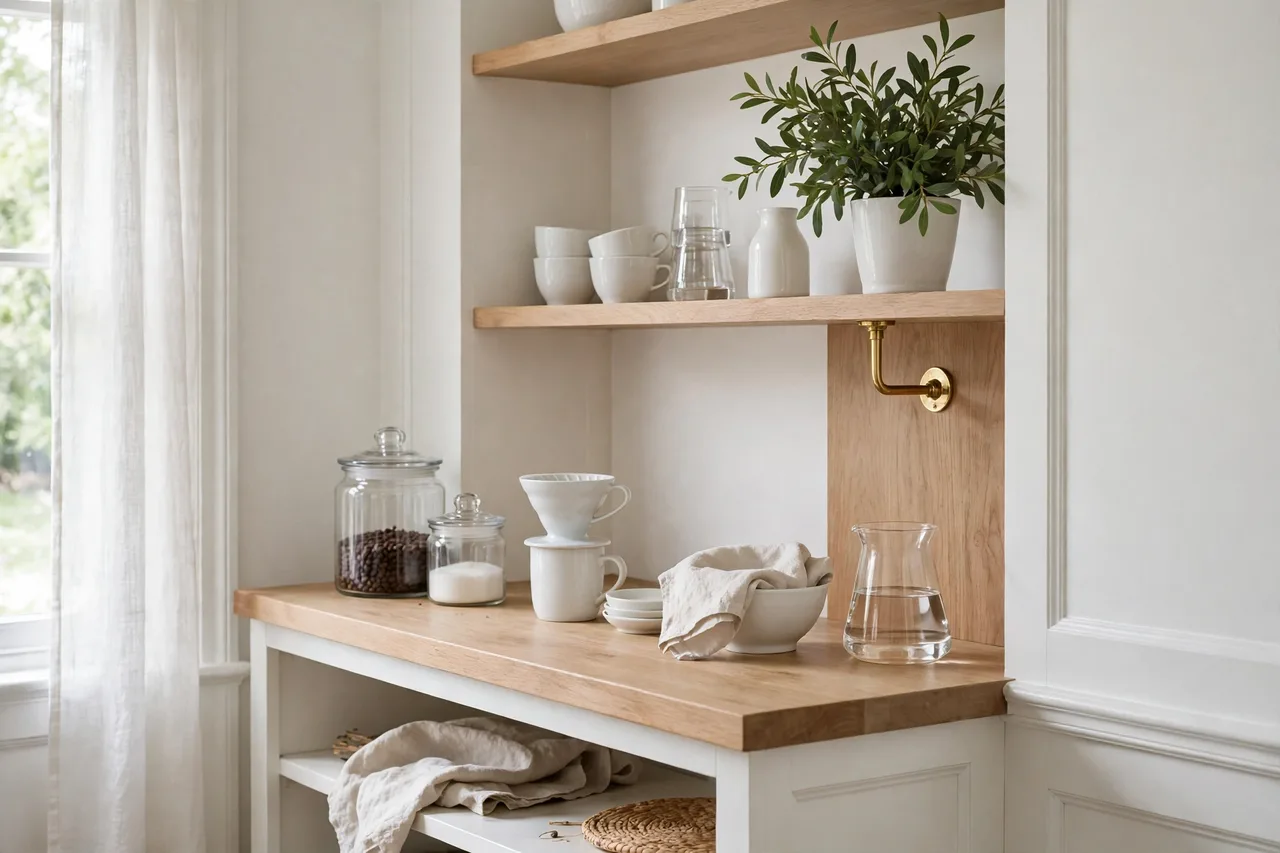
13. A Tiered Tray + Texture Layering
Height plus texture is what makes a flat counter look styled. A small tiered tray or stand (about $15–$25) lifts the sugar, spoons and a tiny plant above the machine’s level, so the eye reads layers instead of a row. Then layer textures the way you layer a bed: something smooth (ceramic), something warm (wood), something soft (a folded linen napkin under the mugs), one woven piece (the basket from idea #10). Four textures, one color family. If it starts to feel busy, remove the last thing you added — editing is the cheapest styling tool there is.
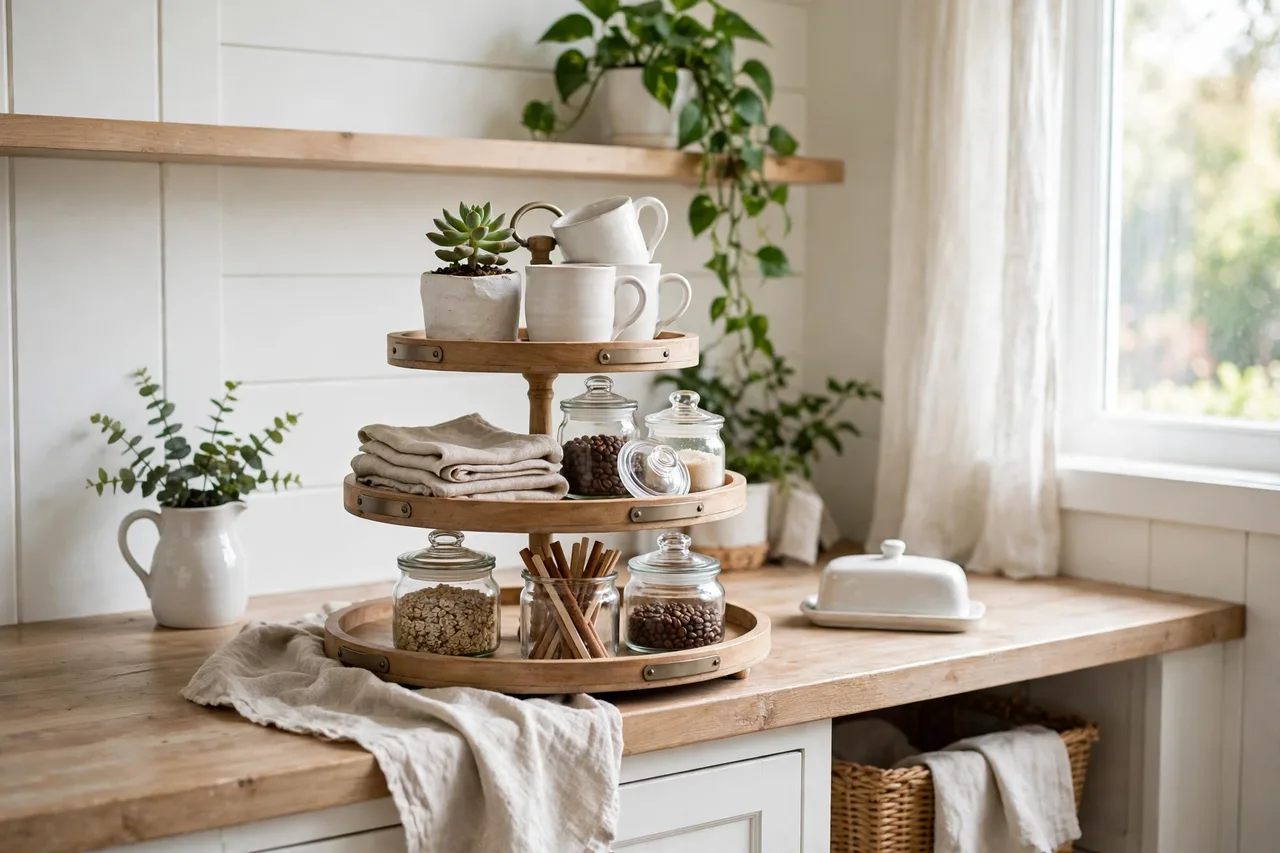
14. Warm Light for Slow Evenings
A coffee bar with its own little light becomes the coziest corner in the house. A small lamp on the station, a warm under-cabinet strip, or a short string of fairy lights along a shelf — warm white, around 2700K — turns the evening decaf or tea into a small ceremony. This is the idea almost every other coffee article skips, and it changes the room more than any object on this page. It is practical, too: soft light at the station means you can make a late cup without blasting the whole kitchen awake. Switch it on at dusk and the corner glows like a café window.
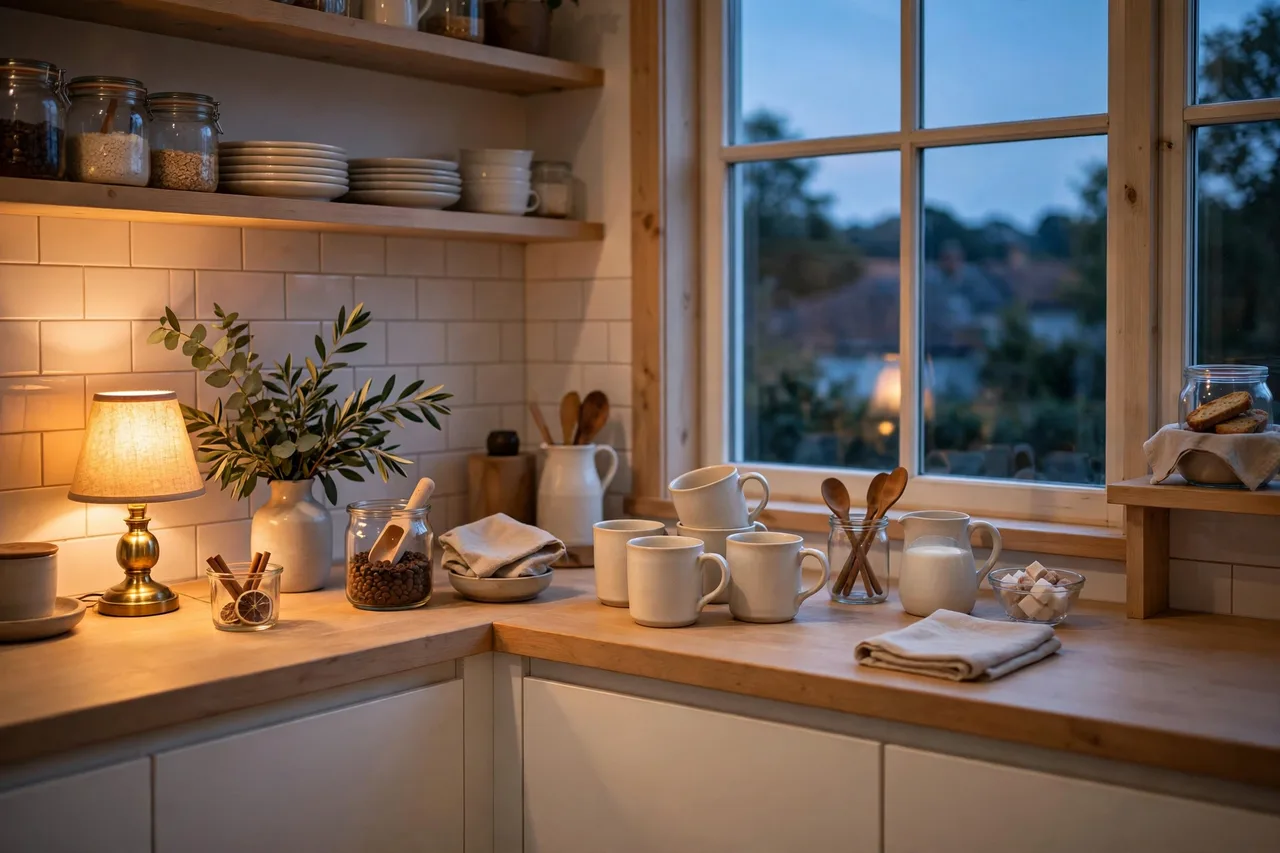
15. One Living Touch + Quiet Art
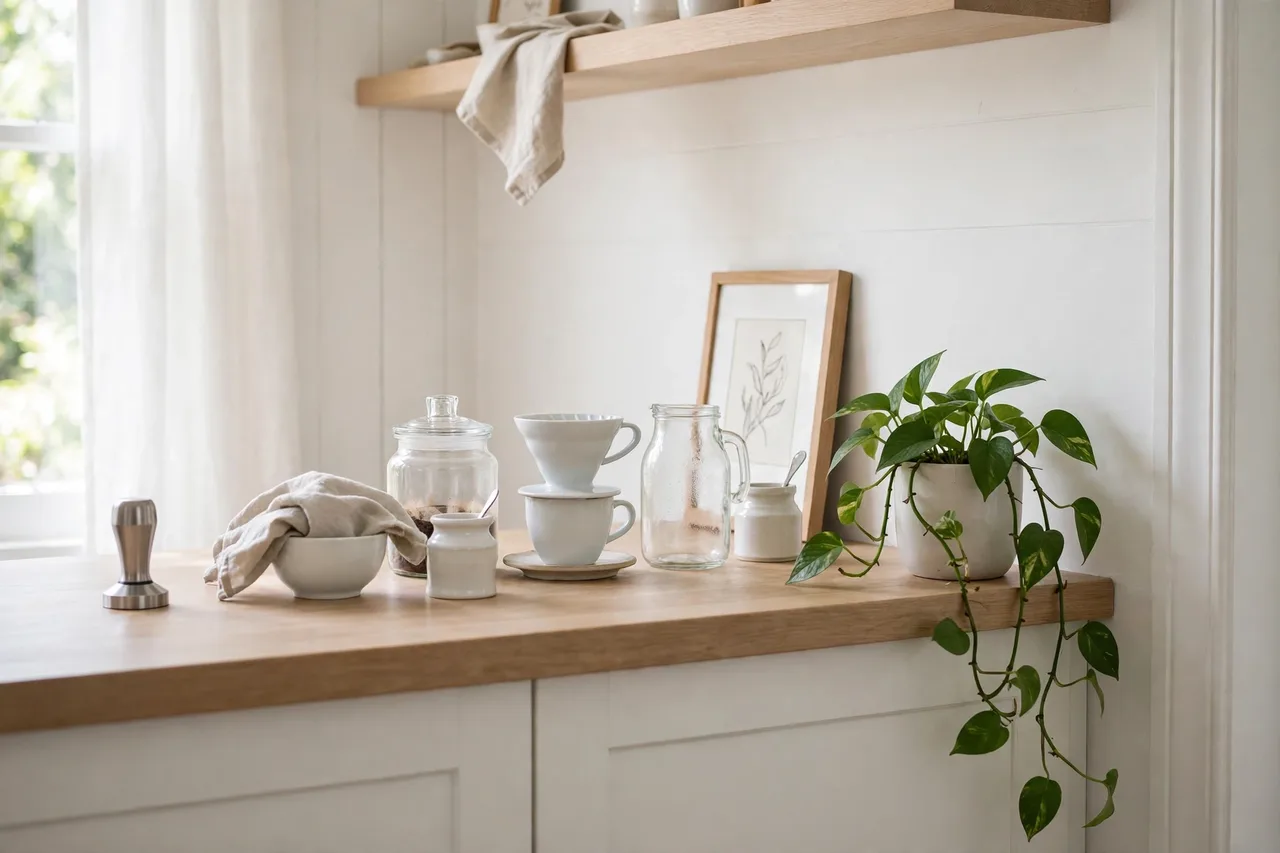
One small plant, one quiet picture — then stop. A little potted herb, a trailing pothos or a tiny vase of stems gives the station its living note; greenery is the accent that never clashes with coffee. Beside it, lean one small framed print against the wall or backsplash — a simple coffee sketch, a botanical, a photo you love. Leaned, not hung, so it swaps in seconds and drills nothing. And a gentle house rule: no word signs shouting about coffee. Your guests can see the machine. The calm is the message.
Seasonal, Budget & Keeping It Lovely
A coffee bar is a living corner — it should change a little with the year, stay honest about money, and take almost no effort to keep lovely. These last three ideas are the ones that separate a station you build once from a ritual you keep.
16. The Christmas Swap: Add a Hot Cocoa Side
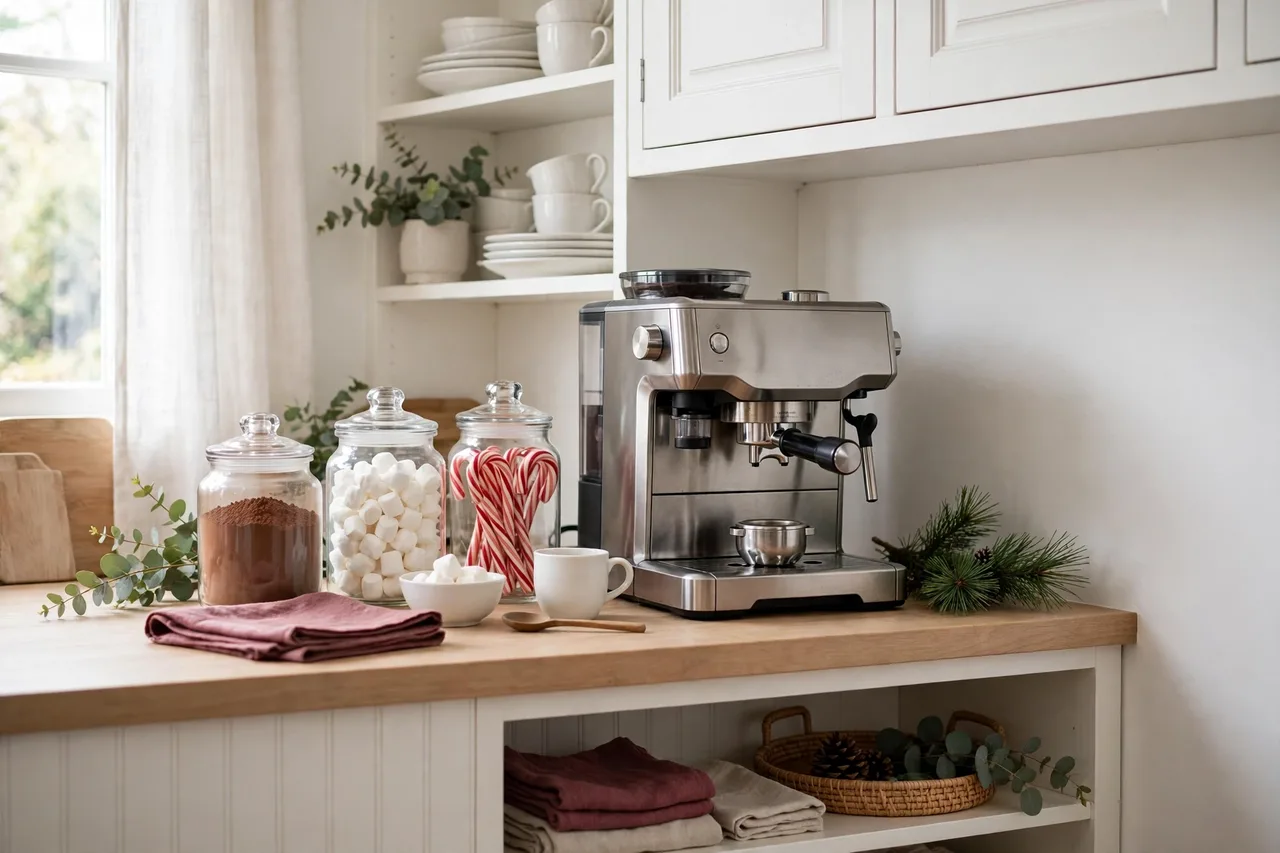
In December, your coffee bar learns a second trade. Add one tray or basket beside the machine: cocoa in a glass jar, mini marshmallows, candy canes standing in a mug, cinnamon sticks and a shaker of chocolate. Swap two everyday mugs for festive ones, add a tiny tree or a sprig of pine, and your coffee bar is now a coffee and hot cocoa bar — the exact crossover everyone searches for at Christmas. It takes ten minutes and one small tray. For the whole kitchen’s festive layer, our christmas kitchen decor ideas pick up right where this corner leaves off.
17. The Under-$50 Coffee Bar
The honest version: you already own the expensive part. Most people start with a machine they already have, so this tally is everything around it — the station itself. Thrifted, dollar-store and one or two small new pieces are all it takes, and the thrift-first spirit is the same one behind our dollar tree christmas decor ideas. Here is a real basket:
- Thrifted rolling cart or a sturdy wooden tray — $15
- Two glass canister jars (dollar store) — $2.50
- Two syrup pump bottles — $6
- Thrifted mug tree — $5
- Four thrifted mugs — $4
- Small woven basket for pods and filters — $3
- One small plant in a white pot — $5
- Linen tea towel — $3
Total: $43.50 — a complete, styled coffee station for less than a week of café cups. Of all the DIY coffee bar ideas out there, this is the one that survives contact with a real budget. Buy it in that order, too: the cart or tray first, because the home for everything decides how much “everything” you actually need.
18. The 5-Minute Weekly Reset
A coffee bar stays a pleasure only if resetting it is almost nothing. Once a week — Sunday evening is lovely — give it five honest minutes: wipe the tray and the machine’s drip tray, refill the canisters, wash and rotate the mugs, restock pods and filters from the backstock basket, and water the little plant. Put back only what belongs; stations collect strays the way junk drawers do, just prettier ones. This small reset is the whole maintenance plan. A station that takes five minutes to love will be loved for years; one that takes an hour becomes a chore with a machine on it.
FAQ
What do I need for a home coffee station?
Less than the internet suggests: a machine or brewer you already like, beans or pods, filters, four to six mugs, one sweetener, and a tray or cart to hold it all. Idea #7’s honest lineup is the full list. Everything else — syrups, a tiered tray, a little lamp — is layering you add when you are ready, not a starting requirement.
Where is the best place for a coffee bar?
Near a socket and a short walk from water, in the corner your morning already passes through. A counter corner is the classic answer, but a cart beside the kitchen, a cabinet, or a console in the dining room can be even better — the best place is the one that needs no new furniture and no renovation. Just respect the machine’s needs: steam headroom above, room to lift the water tank, and beans stored away from its heat.
How do I make a coffee station in a small space?
Shrink the station, not the ritual. Start with the tray-only mini (idea #6) or a slim cart about 24 in (60 cm) wide, keep the essentials lineup strict, and use one jar per thing. Coffee bar ideas for small spaces work when every item is used daily — in a tiny station, nothing can afford to be decorative only. Vertical help counts too: a mug tree holds six mugs in the space of two.
What should you put on a coffee bar or coffee cart?
On top: the machine, the canister trio and the mugs — the daily three. On a cart’s middle tier: syrups, the sorted pods and filters, a folded linen. Below: the hidden layer — backstock in a basket, spare filters, the descaler you use twice a year. If something has not been touched in a month at any level, it is not station stock; it is storage wearing a costume.
How much space do you need for a coffee bar?
A tray station needs about 18 in (46 cm) of length and a standard counter depth of 25 in (63 cm). A comfortable counter corner runs 24–36 in (60–90 cm). A cart needs roughly a 24 in (60 cm) square of floor. Add about 6 in (15 cm) of clear air above any machine for steam and tank access — that small gap is the difference between a station that works and one that fights you every morning.
Your Café, Two Steps Away
That is the whole secret of a great coffee bar: a spot that fits your real home, a short honest lineup, one calm palette, and a little warm light at the end of the day. Owners, renters, big kitchens, tiny corners — the ritual does not care. It only asks for one claimed corner and five minutes a week.
So pick your spot this week. Tray, cart or cabinet — set it up, line up the mugs, and make tomorrow’s first coffee at your own little café. Some mornings will still be rushed. But they will start in a prettier place.
Pin these coffee bar ideas for your next free Saturday, and share the cozy. ☕